'%20d='m0%200%2016%2011h61%2061%2061%2061%2060L47%2037h61%2061%2060%2061L16%2063h61%2061%2061%2061%2060L47%2089h61%2061%2060%2061L16%20115h61%2061%2061%2061%2060L47%20141h61%2061%2060%2061L16%20166h61%2061%2061%2061%2060L47%20192h61%2061%2060%2061L16%20218h61%2061%2061%2061%2060z'/%3e%3c/svg%3e)
About
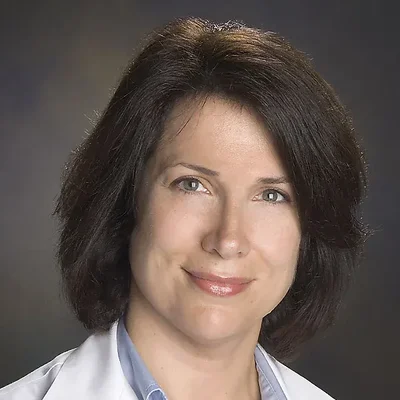
Most fertility programs list donor eggs and surrogacy as services. Brigham and Women’s runs it as a department with its own staffing — an administrative line, a physician assistant dedicated to the program, an insurance coordinator — and Rachel K. Ashby, MD is the physician who directs it. That distinction matters the first time a patient realizes an egg-donation cycle is not one medical procedure but five parallel ones: donor screening, synchronization, legal contracts, financial clearance and the transfer itself.
Her clinical interests, as recorded by the hospital, are assisted reproductive technologies and IVF, infertility, LGBTQ health, oocyte donation and gestational carrier care, and pregnancy in patients with a history of prior loss or infertility. Two of those are administrative specialties as much as medical ones. The Donor Egg and Gestational Carrier Program handles designated donation — eggs from someone the patient already knows — as well as anonymous donation, and the gestational carrier side runs on agency relationships: the center maintains a list of agencies it has worked well with and formally endorses none of them, and attorneys on both sides write the contracts before a cycle starts.
Ashby took her medical degree at Mercer University School of Medicine (1996), completed internship and obstetrics-gynecology residency at the University of Pennsylvania (1996-2000), and finished reproductive endocrinology and infertility fellowship at Brigham and Women’s Hospital in 2003. She has been on the same Boston faculty since, is an assistant professor at Harvard Medical School, holds ABOG certification in obstetrics and gynecology (recorded 2006 and 2009), and was named a top doctor by both Boston Magazine and Castle Connolly in 2022.
Clinical Expertise
- Donor egg IVF: Recipient evaluation and cycle preparation, donor screening coordinated through agency or designated donors, and embryo transfer. Premature ovarian failure is the most common reason patients seek donation; the center also supports absent or surgically removed ovaries, ovaries that stopped working after chemotherapy or radiation, and carriers of genetic abnormalities who want embryos from screened donor eggs.
- Gestational carrier programs: Medical screening of the carrier, creation of embryos from intended parents’ or donor gametes, transfer, and coordination with the legal process. Gestational carriers are often paid professionals represented by local agencies, sometimes family members or friends; the carrier has no genetic connection to the fetus.
- Third-party reproduction and parentage in Massachusetts: Massachusetts permits gestational surrogacy and the center files a pre-birth order with the court to establish the intended parents’ legal parentage before delivery, with contracts drawn by attorneys representing each side.
- Pregnancy after prior loss or infertility: Recurrent pregnancy loss means two or more consecutive losses, and the center runs a dedicated Recurrent Pregnancy Loss Program covering medical, surgical and psychological care — genetic factors, uterine abnormalities, cervical insufficiency and clotting disorders such as antiphospholipid syndrome being among the causes worked up.
- LGBTQ+ family building: Reciprocal and donor-gamete pathways for lesbian couples, sperm-donation insemination, and gestational carrier planning for male couples. The center states without exception that all of its fertility services are open to single individuals and couples regardless of gender or sexual orientation.
- Core ART practice: Stimulation, retrieval and transfer, with ICSI, assisted hatching, day-3 or day-5 transfer, and embryo banking in the center’s own certified laboratories.
Why Choose Dr. Rachel K. Ashby
She runs the program, not just the patient. Egg donation and surrogacy fail more often on logistics than on biology — a donor who does not respond, a carrier who does not clear screening, a contract that stalls. The physician accountable for that pipeline is the one doing her consultation.
Legal parentage handled the way Massachusetts expects. Intended parents who are not gestating need a pre-birth order and coordinated counsel. The center has done this long enough that the sequence — agency, screening, contracts, court filing — is standard workflow rather than an adventure.
Her named interest is the patient nobody wants. “Pregnancy, history of prior loss or infertility” is not a marketing line; it is the chart of someone who has already had a miscarriage or a failed cycle elsewhere. The center’s recurrent pregnancy loss program treats loss as a diagnostic problem with genetic, anatomic, cervical and immunologic causes rather than as bad luck.
Recognized twice in 2022, by Boston Magazine and by Castle Connolly, and an assistant professor at Harvard Medical School, which at this center means teaching the reproductive endocrinology fellows who rotate through.
Professional Affiliations
Assistant Professor, Harvard Medical School. Director, Donor Egg and Gestational Carrier Program, Center for Infertility and Reproductive Surgery, Brigham and Women’s Hospital, 75 Francis Street, Boston. Certified in Obstetrics and Gynecology by the American Board of Obstetrics and Gynecology (2006, re-recorded 2009). Boston Magazine Top Doctor (2022); Castle Connolly America’s Top Doctors (2022). Education: Mercer University School of Medicine (MD, 1996); University of Pennsylvania internship and residency (1996-2000); Brigham and Women’s Hospital fellowship (2000-2003). Program contact is through the center’s main fertility line and its dedicated donor egg and gestational carrier staff.
Suitable For
- Patients who need donor eggs — diminished or absent ovarian reserve, premature ovarian failure, prior chemotherapy, or a genetic condition they do not want to transmit — including those with a designated donor in mind.
- Intended parents using a gestational carrier, whether an agency-carried pregnancy or a known friend or relative, who need the medical, legal and financial sequence run by someone who has run it many times.
- Lesbian couples, gay male couples and single patients whose family-building plan involves donor sperm, donor eggs, reciprocal IVF or a carrier.
- Patients with two or more losses, or a failed cycle behind them, who want the loss evaluated rather than the next attempt simply repeated.
- Insurance-heavy cases. The program keeps its own insurance coordinator, which is worth something in Massachusetts, where plans must cover infertility diagnosis and treatment but interpret who qualifies for what rather differently.