'%20d='m0%200%2016%2011h61%2061%2061%2061%2060L47%2037h61%2061%2060%2061L16%2063h61%2061%2061%2061%2060L47%2089h61%2061%2060%2061L16%20115h61%2061%2061%2061%2060L47%20141h61%2061%2060%2061L16%20166h61%2061%2061%2061%2060L47%20192h61%2061%2060%2061L16%20218h61%2061%2061%2061%2060z'/%3e%3c/svg%3e)
About
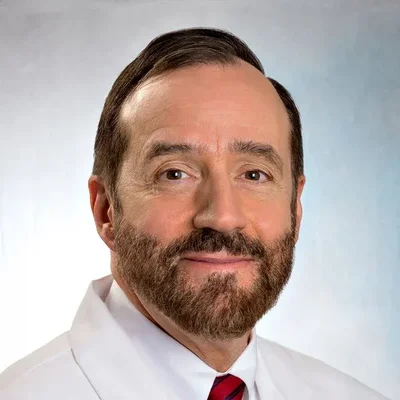
Robert L. Barbieri, MD has a distinction few practicing fertility physicians carry: his name is on the textbooks. His profile materials credit him as author or editor of multiple obstetrics and gynecology texts, the kind of volume that sets how an entire cohort of residents frames menopause, abnormal bleeding and endometriosis before they have seen a complex case themselves. That writing sits on top of a clinical and academic career at one institution — Harvard Medical School faculty since the late 1970s, and now chairman emeritus of Brigham and Women’s Hospital’s obstetrics and gynecology and reproductive biology department, the same department he joined as a resident.
The named professorship tells you his rank: Kate Macy Ladd Distinguished Professor of Obstetrics, Gynecology and Reproductive Biology. Emeritus means he has stepped down from the chair, but the title records that he held it, which is a different thing from being a senior faculty member who happened to sit in the office last. He trained through Brigham and Women’s residency program after Harvard Medical School and completed his reproductive endocrinology and infertility fellowship there in 1986.
What he actually sees is narrower than “infertility,” and patients should read his interests that way. His listed clinical focus is endometriosis, hirsutism, menopause, menstrual abnormalities and LGBTQ+ health — the hormonal and medical-gynecologic problems that sit underneath fertility complaints. He is certified in internal medicine as well as obstetrics and gynecology, an unusually broad pair for a reproductive specialist, and it shows in how he practices: metabolic and endocrine context, not just a stimulation protocol.
Clinical Expertise
- Endometriosis: Medical management, pain strategies and the decision about whether surgery is likely to help a given patient’s pain or her fertility, which are separate questions with separate answers.
- PCOS and hyperandogenic states: Hirsutism, insulin resistance and androgen-driven cycle disruption — the endocrine workup before the fertility treatment.
- Menstrual abnormalities: Dysfunctional uterine bleeding, anovulatory bleeding and perimenopausal cycle change, evaluated endocrinologically rather than treated by default with hormones.
- Menopause and perimenopause: Hormone therapy decisions for women years from average menopause age and for women whose ovarian function is being deliberately suppressed or removed.
- LGBTQ+ gynecologic care: A named clinical interest, delivered inside a center that opens all services to patients regardless of gender or sexual orientation.
- Complex medical-gynecologic overlap: Dual certification in internal medicine and obstetrics and gynecology is the practical reason he is consulted where reproductive disease travels with systemic disease.
Why Choose Dr. Robert Barbieri
He wrote some of the reference material. Being credited as author or editor on obstetrics and gynecology textbooks means his conclusions have survived external peer editing and use by other physicians, which is a harder standard than a patient-satisfaction rating.
Nearly five decades in practice. He has been at Brigham and Women’s since 1977, completed his residency there in 1984, and led the obstetrics and gynecology department as chair. Continuity like that means he has watched long-term outcome data on treatments that came and went.
An internist as well as a gynecologist. Certification in internal medicine (1982, 1983) and in obstetrics and gynecology (1987, 1988) makes him an outlier among the physicians at this center; patients with diabetes, thyroid disease, hypertension or thrombotic risk alongside a reproductive complaint are his territory.
He chaired the department that runs this center. Emeritus chairmanship is not a ceremonial courtesy — it reflects that he ran the academic unit whose fertility program he now practices in.
Professional Affiliations
Kate Macy Ladd Distinguished Professor of Obstetrics, Gynecology and Reproductive Biology and chairman emeritus of the same department at Brigham and Women’s Hospital, with Harvard Medical School faculty appointment. Certified by the American Board of Internal Medicine (1982, 1983) and by the American Board of Obstetrics and Gynecology (1987, 1988). Reproductive endocrinology and infertility fellowship completed at Brigham and Women’s Hospital in 1986. His practice sits inside a Center for Infertility and Reproductive Surgery that holds Society for Assisted Reproductive Technology membership and reports annually to the CDC.
Suitable For
- Endometriosis patients at a treatment crossroads: Particularly those told surgery is the only option, or those whose pain has not responded to suppression.
- PCOS patients with hormonal or metabolic features: Hirsutism, irregular bleeding and insulin resistance alongside a fertility goal.
- Women with unexplained abnormal bleeding: An endocrine evaluation of menstrual disruption rather than an immediate prescription.
- Menopause and perimenopause decisions: Including women with surgically or medically induced menopause from fertility treatment or cancer care.
- Patients whose reproductive disease travels with another condition: The internal medicine certification is the reason this is a sensible referral.
- LGBTQ+ patients looking for gynecologic care without explaining themselves: A named clinical interest at a program with explicit open-access policy.