'%20d='m0%200%2016%2011h61%2061%2061%2061%2060L47%2037h61%2061%2060%2061L16%2063h61%2061%2061%2061%2060L47%2089h61%2061%2060%2061L16%20115h61%2061%2061%2061%2060L47%20141h61%2061%2060%2061L16%20166h61%2061%2061%2061%2060L47%20192h61%2061%2060%2061L16%20218h61%2061%2061%2061%2060z'/%3e%3c/svg%3e)
About
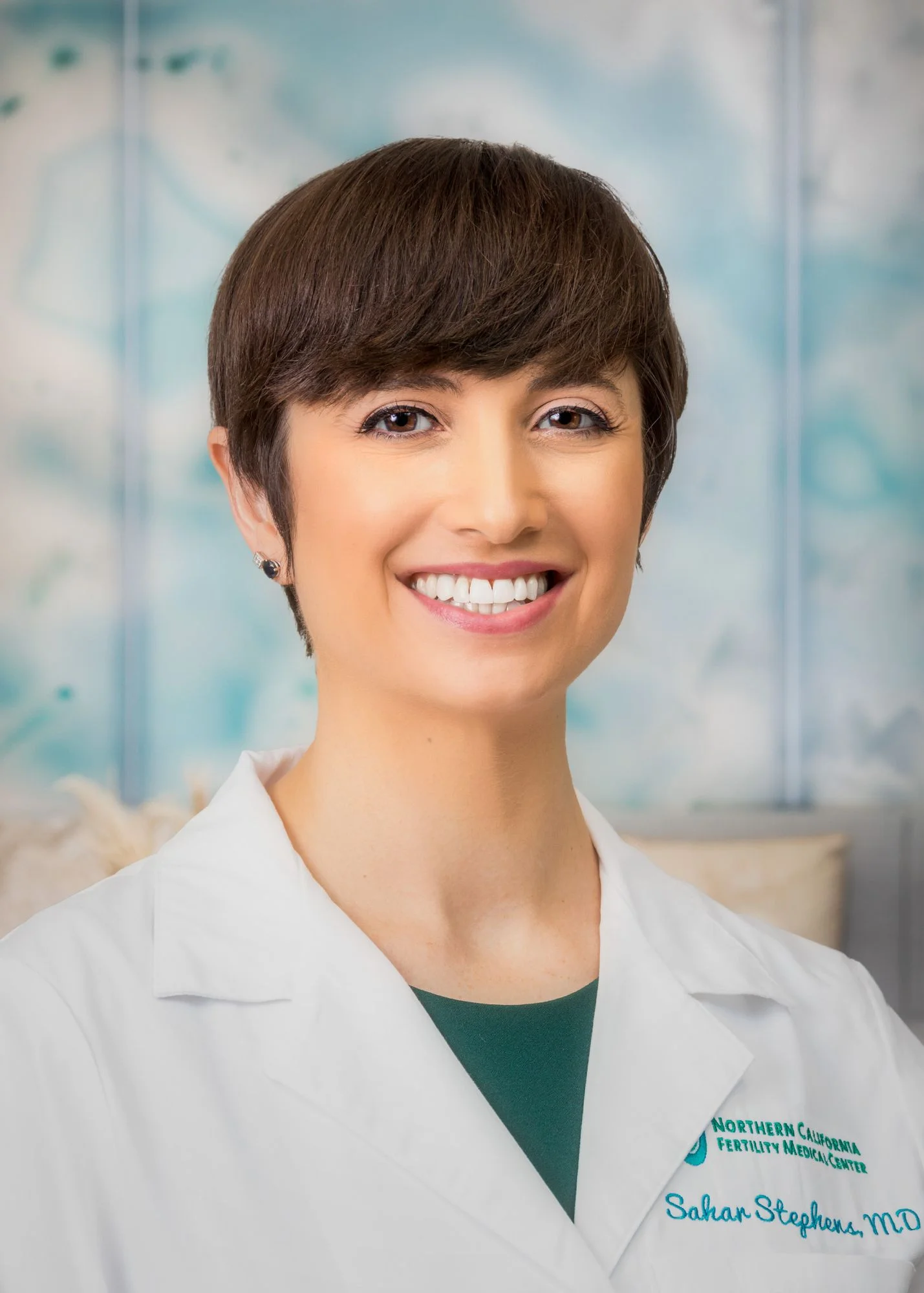
Most reproductive endocrinologists can tell you whether an operation is worth doing. Sahar Stephens trained to be the one holding the scope. She finished her obstetrics and gynecology residency at Washington University in 2011 as Administrative Chief Resident — the posting a department gives the resident it trusts with the running of the service, not only its cases — and took the program’s Excellence in Laparoscopy award the same year.
That surgical thread is the distinguishing item on her biography at Northern California Fertility Medical Center. Her named interests are reproductive surgery with minimally invasive technique, specifically laparoscopy and hysteroscopy, and she has experience with robotic-assisted laparoscopy. In a Sacramento practice that lists one other surgeon-interest physician (Dr. Michael Murray, laparoscopy and fibroid removal) and a urologist for male factor, she is the physician whose published profile centers on operating through small incisions, which is what patients with endometriosis or uterine factors are usually deciding about.
She completed her reproductive endocrinology and infertility fellowship at the University of Colorado Denver in 2014, has published in peer-reviewed medical journals, and has presented that work at multiple national research symposiums. She is board-certified in Obstetrics and Gynecology and in Reproductive Endocrinology and Infertility, and holds California license A129992.
Clinical Expertise
- Minimally invasive reproductive surgery: laparoscopy and hysteroscopy are her named techniques — the routes used to look for and treat endometriosis, adhesions, polyps and cavity distortions that block implantation
- Robotic-assisted laparoscopy: listed as experience, not as a case count; the clinic’s bio for her does not name a platform or volume
- In Vitro Fertilization: REI practice at a SART-reporting program whose in-house lab performs ICSI, assisted hatching and embryo biopsy for PGT
- Reproductive endocrinopathies: hormone and ovulatory disorders sit inside her stated interest set, which is the medical half of the same patient
- Women’s health: named as an additional interest area, consistent with an OB/GYN base rather than a lab-only practice
Why Choose Dr. Stephens
A chief resident year, in the administrative seat. Department leadership picks the person who keeps a service running. That appointment is in her biography as a fact, not as a descriptor.
Surgical recognition during training, in the specific technique that matters for fertility. The 2011 Excellence in Laparoscopy award predates her fellowship; the skill was already there before she specialized in reproduction.
She publishes. Several peer-reviewed articles and national symposium presentations, which is a different claim from “committed to staying current” — her clinic bio documents the work product.
Both sides of the decision. For a patient weighing laparoscopy against going straight to IVF, an REI with operative training can price that choice honestly, because she does not have to hand the surgical question to a colleague to get an answer.
Professional Affiliations
Board-certified in Obstetrics and Gynecology and in Reproductive Endocrinology and Infertility; California license A129992. Training: Washington University School of Medicine (MD, 2007), Washington University obstetrics and gynecology residency (2011, Administrative Chief Resident, Excellence in Laparoscopy), University of Colorado Denver REI fellowship (2014). Author of peer-reviewed publications with presentations at national research symposiums. Her published biography names no society memberships, and none are claimed here.
Suitable For
Patients told they may need surgery for endometriosis, adhesions or a uterine cavity problem, where the real question is whether operating improves the chance of a subsequent transfer — and who should make that call.
IVF patients with a structural question outstanding. Being evaluated by a physician with operative training means the imaging, the exam and the possible scope get considered together.
Hormonal and ovulatory disorders where cycle regulation, not surgery, is the barrier; her interest list covers reproductive endocrinopathies alongside ART.
Patients who want their care run by a double board-certified REI whose certification pair and license number are published, with a record of peer-reviewed work behind the clinical title.