'%20d='m0%200%2016%2011h61%2061%2061%2061%2060L47%2037h61%2061%2060%2061L16%2063h61%2061%2061%2061%2060L47%2089h61%2061%2060%2061L16%20115h61%2061%2061%2061%2060L47%20141h61%2061%2060%2061L16%20166h61%2061%2061%2061%2060L47%20192h61%2061%2060%2061L16%20218h61%2061%2061%2061%2060z'/%3e%3c/svg%3e)
About
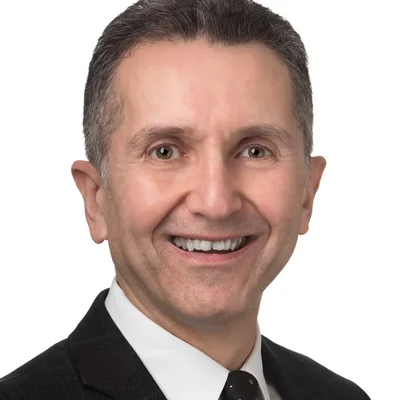
Pathology came first for Serdar Bulun, MD. After his medical degree at Istanbul University in 1983 he trained in pathology at the University of Arizona, then switched tracks: an Ob/Gyn internship at Columbia, residency at the State University of New York at Buffalo, and a reproductive endocrinology and infertility fellowship at UT Southwestern in Dallas, completed in 1993. He is now Chairman of the Department of Obstetrics and Gynecology at Northwestern University Feinberg School of Medicine, a tenured professorship, and one of the twelve physicians on the staff of the Center for Fertility and Reproductive Medicine.
He is also the kind of department chair who still runs a laboratory. His research program is the molecular mechanism of hormone-responsive disease — specifically how estrogen acts in uterine fibroids, endometriosis and breast cancer. Those three conditions share enough biology that progress in one moves the others, and that overlap is the reason a fibroid patient and an endometriosis patient might end up in the same clinic with the same underlying question: why does this tissue depend on estrogen, and what can be done about it without shutting estrogen down in someone trying to conceive.
He has served as President of the Society for Reproductive Investigation, the primary research society for reproductive biology and medicine, a role filled by nomination from within that field.
Clinical Expertise
- Uterine fibroids: diagnosis, medical suppression and surgical options, with attention to fertility outcomes after myomectomy
- Endometriosis: hormone-driven inflammation and adhesions, medical management, and the decision about whether surgery improves the chance of pregnancy
- Reproductive endocrinology: estrogen and progesterone action, ovulatory dysfunction, and the endocrine physiology that underlies stimulation protocols
- IVF and ICSI cycle oversight within a SART-reporting academic program of more than 3,300 cycles a year
- Hormone-dependent disease in patients who still want to conceive, the hardest corner of his research area, where suppression and preservation pull in opposite directions
- Complex referrals: cases worked up elsewhere and sent for a third opinion
Why Choose Dr. Serdar Bulun
The chair of the department. He runs the obstetrics and gynecology department at Feinberg, which sets the standard for every resident and fellow who rotates through this clinic — including the ones who will see you.
He studies the disease he treats. Fibroids and endometriosis are not side interests on his profile; they are the subject of a funded molecular research program on estrogen-dependent tissue, which is the mechanism most treatment options for both conditions are built on.
Field leadership, not just membership. President of the Society for Reproductive Investigation, the society whose meetings define what reproductive biology researchers consider the open questions.
Thirty-plus years since subspecialty training, across pathology, general Ob/Gyn and reproductive endocrinology — a breadth most clinicians never accumulate.
Professional Affiliations
Chairman, Department of Obstetrics and Gynecology, Northwestern University Feinberg School of Medicine. President of the Society for Reproductive Investigation. Certified in Reproductive Endocrinology and Infertility by the American Board of Obstetrics and Gynecology, practicing inside a clinic that reports cycles to SART and the CDC. Faculty mentor for the residents and REI fellows trained at Northwestern.
Suitable For
- Fibroid patients weighing myomectomy against suppression, particularly where fertility is the priority and the uterine cavity matters
- Endometriosis, especially recurrent or deeply infiltrative disease, where the question is hormonal strategy over years, not one operation
- Hormone-dependent gynecologic conditions in patients who want to preserve fertility, including cases where treatment for disease and treatment for pregnancy conflict
- Patients with a long, complicated workup elsewhere who want the academic view of their diagnosis
- Anyone whose case sits at the intersection of gynecology and reproduction, which is most of what this department does