'%20d='m0%200%2016%2011h61%2061%2061%2061%2060L47%2037h61%2061%2060%2061L16%2063h61%2061%2061%2061%2060L47%2089h61%2061%2060%2061L16%20115h61%2061%2061%2061%2060L47%20141h61%2061%2060%2061L16%20166h61%2061%2061%2061%2060L47%20192h61%2061%2060%2061L16%20218h61%2061%2061%2061%2060z'/%3e%3c/svg%3e)
About
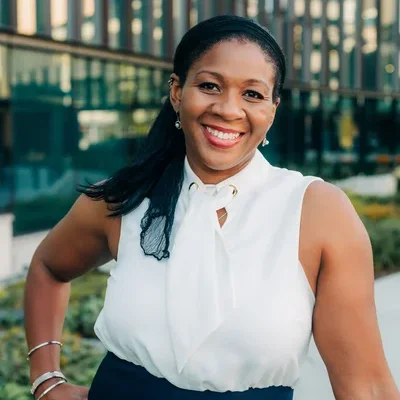
Shannel Adams came into reproductive medicine through ethics. She studied the subject as an undergraduate at Duke University before medical school at Oregon Health and Science University, residency at the University of Hawaii’s John A. Burns School of Medicine, and a reproductive endocrinology and infertility fellowship at the University of Cincinnati. It is a background that fits her chosen subspecialties closely: third-party reproduction and oncofertility are the two corners of fertility care where the hardest decisions are not technical ones. Who supplies the gametes, who carries the pregnancy, what happens to unused embryos, what a child conceived through donation is told later — these are consent and parentage questions before they are clinical ones.
Her stated areas of particular expertise are third-party reproduction, oncofertility, fertility preservation, male fertility, and holistic care of both mind and body. That last pairing is the point of her practice rather than an add-on: a patient facing chemotherapy next month, or a couple deciding between donor egg and gestational carrier, is carrying a psychological load that changes what they can absorb medically.
She has presented repeatedly on oncofertility, fertility preservation, chromosome screening technologies and infertility, and has received awards for contributions to medicine, reproductive endocrinology and family planning. She is one of the smaller number of US-based reproductive endocrinologists who also belong to the European Society of Human Reproduction and Embryology, alongside ASRM, the Society for Reproductive Endocrinology and Infertility and the Pacific Coast Reproductive Society.
Clinical Expertise
- Third-Party Reproduction: Her leading focus — donor egg, donor sperm and gestational carrier cycles, including matching and synchronization
- Oncofertility: Preservation squeezed into the window before chemotherapy, radiation or surgery begins
- Fertility Preservation: Egg and embryo freezing for medical indications and for planned delay
- Male Fertility: Evaluation and management of the male side inside her own practice
- Holistic Reproductive Care: Mind-and-body support named as part of her clinical scope
Why Choose Dr. Shannel Adams
The ethics degree is load-bearing in her chosen subspecialties. Third-party reproduction runs on informed consent, disclosure and parentage. PNWF’s own materials describe these paths as emotionally complex and require legal agreements before a gestational carrier cycle is scheduled. A physician trained in ethics as an undergraduate is equipped to have those conversations in the exam room instead of leaving them to a form.
Oncofertility is a scheduling discipline, and she works in it regularly. Oncologists set the start date for treatment, and a fertility physician has to decide within days whether a random-start stimulation is feasible, what to freeze, and how much the patient can safely defer. Adams has given repeated presentations on exactly this subject, which suggests she handles it as routine work.
She reads the male side herself. Roughly half of infertility involves sperm quantity or quality, by PNWF’s own estimate. An REI who keeps male fertility inside her practice means both partners get evaluated in the same clinic rather than the woman being worked up first and referred later.
She belongs to European as well as American societies. ESHRE membership is uncommon among US clinicians and keeps a physician inside a second body of guidance and data on stimulation protocols, PGT and laboratory standards.
She treats the psychological piece as clinical, not optional. Holistic care of mind and body is listed among her areas of expertise rather than as a general statement of philosophy — which matters most for the two populations she focuses on.
Professional Affiliations
American Society for Reproductive Medicine; European Society of Human Reproduction and Embryology; Society for Reproductive Endocrinology and Infertility; Pacific Coast Reproductive Society; Fellow of the American College of Obstetricians and Gynecologists. Board certified in Reproductive Endocrinology and Infertility and in Obstetrics and Gynecology. She has received multiple awards for contributions to medicine, reproductive endocrinology and family planning.
Suitable For
- A cancer diagnosis with treatment about to start: Oncofertility is her stated specialty, and the preservation window is short
- Donor egg, donor sperm or gestational carrier paths: Third-party reproduction is the focus she names first
- Couples wanting both partners assessed at the outset: Male fertility is inside her scope of practice
- Patients who want emotional support planned alongside the medicine: Holistic mind-and-body care is listed as clinical expertise
- Families wrestling with disclosure, disposition or parentage questions: An ethics-trained physician for the conversations that consent forms do not cover