'%3e%3cpath%20fill='red'%20d='M0%200h720v480H0z'/%3e%3cpath%20fill='%23000095'%20d='M0%200h360v240H0z'/%3e%3cg%20fill='%23fff'%3e%3cpath%20d='m154%20126.9-2.5%209.6%209.4%202.6-1.8-7.1zm46.9%205.1-1.8%207.1%209.4-2.6-2.5-9.6zm-41.8-24-5.1%205.1%201.9%206.9z'/%3e%3cpath%20d='m155.9%20120-1.9%206.9%205.1%205.1z'/%3e%3cpath%20d='m154%20113.1-6.9%206.9%206.9%206.9%201.9-6.9zm14%2027.8%205.1%205.1%206.9-1.9zm18.9%205.1%209.6%202.5%202.6-9.4-7.1%201.8z'/%3e%3cpath%20d='m192%20140.9%207.1-1.8%201.8-7.1zm-31.1-1.8%202.6%209.4%209.6-2.5-5.1-5.1zm19.1%205%206.9%201.9%205.1-5.1z'/%3e%3cpath%20d='m173.1%20146%206.9%206.9%206.9-6.9-6.9-1.9zm-12.2-45.1-9.4%202.6%202.5%209.6%205.1-5.1zm-1.8%2031.1%201.8%207.1%207.1%201.8zm45-12%201.9-6.9-5.1-5.1z'/%3e%3cpath%20d='m168%2099.1-7.1%201.8-1.8%207.1zm32.9%208.9-1.8-7.1-7.1-1.8zm5.1%2018.9%206.9-6.9-6.9-6.9-1.9%206.9z'/%3e%3cpath%20d='m200.9%20108-8.9-8.9-12-3.2-12%203.2-8.9%208.9-3.2%2012%203.2%2012%208.9%208.9%2012%203.2%2012-3.2%208.9-8.9%203.2-12z'/%3e%3cpath%20d='m200.9%20132%205.1-5.1-1.9-6.9zm5.1-18.9%202.5-9.6-9.4-2.6%201.8%207.1zm-6.9-12.2-2.6-9.4-9.6%202.5%205.1%205.1zm-26-6.9-9.6-2.5-2.6%209.4%207.1-1.8zm6.9%201.9-6.9-1.9-5.1%205.1z'/%3e%3cpath%20d='m186.9%2094-6.9-6.9-6.9%206.9%206.9%201.9z'/%3e%3cpath%20d='m192%2099.1-5.1-5.1-6.9%201.9zM173.1%20146l-9.6%202.5%204.5%2016.6%2012-12.2zm-5.1%2019.1%2012%2044.9%2012-44.9-12-12.2zm-7.1-26-9.4-2.6-4.4%2016.4%2016.4-4.4z'/%3e%3cpath%20d='m147.1%20152.9-12%2045.1%2032.9-32.9-4.5-16.6zm-12-20.9L102%20165.1l45.1-12.2%204.4-16.4z'/%3e%3cpath%20d='m154%20126.9-6.9-6.9-12%2012%2016.4%204.5zm0-13.8-2.5-9.6-16.4%204.5%2012%2012z'/%3e%3cpath%20d='M135.1%20108%2090%20120l45.1%2012%2012-12zm90%2024-16.6%204.5%204.4%2016.4%2045.1%2012.2z'/%3e%3cpath%20d='m199.1%20139.1-2.6%209.4%2016.4%204.4-4.4-16.4zm-12.2%206.9-6.9%206.9%2012%2012.2%204.5-16.6zm19.1-19.1%202.5%209.6%2016.6-4.5-12.2-12z'/%3e%3cpath%20d='m192%20165.1%2033.1%2032.9-12.2-45.1-16.4-4.4zm7.1-64.2%209.4%202.6%204.4-16.4-16.4%204.4z'/%3e%3cpath%20d='M225.1%20108%20258%2075.1l-45.1%2012-4.4%2016.4zm-12.2-20.9L225.1%2042%20192%2075.1l4.5%2016.4zm12.2%2044.9%2044.9-12-44.9-12-12.2%2012z'/%3e%3cpath%20d='m206%20113.1%206.9%206.9%2012.2-12-16.6-4.5zm-38-38L135.1%2042l12%2045.1%2016.4%204.4z'/%3e%3cpath%20d='m160.9%20100.9%202.6-9.4-16.4-4.4%204.4%2016.4z'/%3e%3cpath%20d='m147.1%2087.1-45.1-12%2033.1%2032.9%2016.4-4.5zm39.8%206.9%209.6-2.5-4.5-16.4-12%2012z'/%3e%3cpath%20d='M192%2075.1%20180%2030l-12%2045.1%2012%2012z'/%3e%3cpath%20d='m173.1%2094%206.9-6.9-12-12-4.5%2016.4z'/%3e%3c/g%3e%3ccircle%20cx='180'%20cy='120'%20r='51.1'%20fill='%23000095'/%3e%3ccircle%20cx='180'%20cy='120'%20r='45.1'%20fill='%23fff'/%3e%3c/g%3e%3c/svg%3e)
About
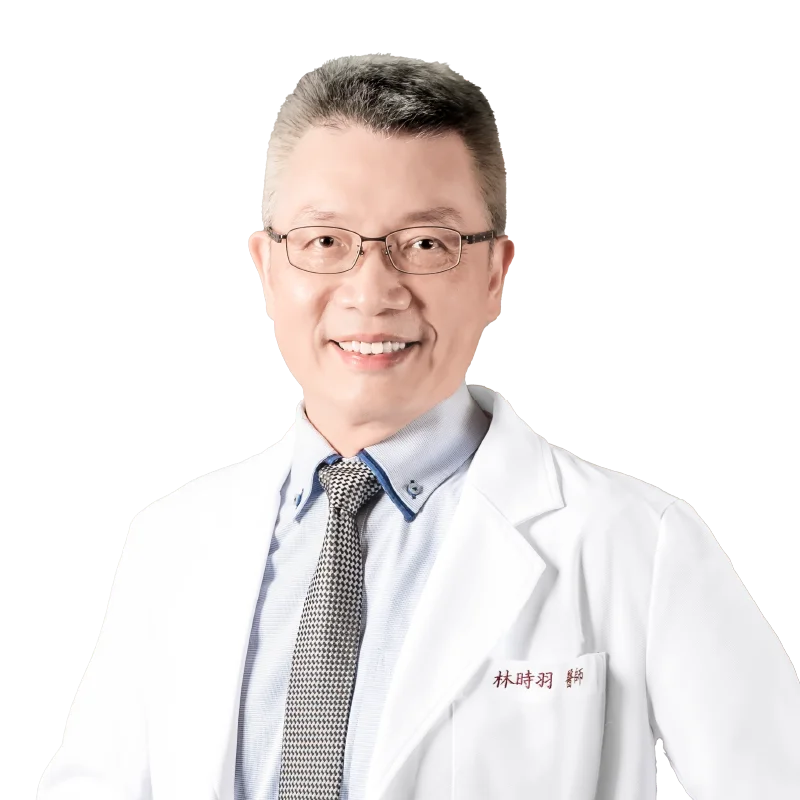
A doctorate in reproductive medicine itself, rather than in general obstetrics and gynecology, is uncommon among fertility physicians in Taiwan, and Dr. Shyr-Yeu Lin holds one: a Ph.D. from the School of Medicine at Monash University, an institution whose reproductive and developmental research program has been running for decades. The NUWA post is International Medical Director, a role defined as oversight of the diagnosis and service pathway for patients arriving from overseas, a coordinating function rather than an additional outpatient list.
The career then splits into three lines that rarely appear together on one profile. Clinical: attending physician in the reproductive medicine center of Taipei Medical University Hospital, senior attending physician in the obstetrics and gynecology infertility division at Mackay Memorial Hospital, and deputy medical director of TFC Fertility Center. Research: laboratory superintendent of the Research Center for Stem Cells at Mackay Memorial Hospital. Academic: assistant professor in the Department of Bio Science and Technology at National Yang-Ming Chiao Tung University and in the Department of Biomedical Sciences at Chung Shan Medical University, both science departments rather than clinical ones.
Twelve specialties are named, and they are wide in two directions at once. One direction is surgical — uterine reconstruction, laparoscopy and hysteroscopy sit next to IVF, IUI and PGD. The other is lifetime span: premature ovarian failure and egg and sperm freezing at one end, menopause medicine at the other, with endometriosis, polycystic ovary syndrome, recurrent miscarriage and reproductive endocrinology in between. Society roles follow the same spread, with directorships in the reproductive medicine, endometriosis, fertility preservation and menopause societies.
Clinical Expertise
- IVF and IUI: stimulation, retrieval and transfer at one end of the ladder, insemination at the other, with diagnosis, age and the record of earlier cycles deciding where a couple starts.
- Uterine reconstruction surgery: rebuilding a uterus that is congenitally malformed, most often a septate cavity, or one distorted by adhesions or previous surgery, so implantation and the maintenance of a pregnancy become possible. This is the point where reproductive medicine and gynecological surgery have to be combined in one operator.
- Laparoscopic and hysteroscopic surgery: pelvic disease, ovarian cysts and tubal problems approached from outside the cavity, cavity shape and endometrial problems from inside, which together cover most of the operative decisions in an infertility workup.
- PGD: genetic testing of embryos before transfer for a known inherited condition or chromosomal problem, which requires the laboratory, the genetic service and the counselling to be arranged before stimulation starts.
- Premature ovarian failure and cryopreservation: assessing how much reserve is left when ovarian function declines early, and freezing eggs or sperm either to preserve what remains or to bank gametes before a planned pregnancy is deferred.
- Recurrent miscarriage: past pregnancy history taken apart across embryo chromosome status, cavity anatomy, endocrine control and clotting, since the pattern of loss decides which of those gets investigated.
- Endometriosis and polycystic ovary syndrome: the two causes most often behind referrals, each with a decision that is not purely medical — whether surgery on endometriotic disease helps or harms the ovarian reserve, and how stimulation is dosed in PCOS.
- Reproductive endocrinology through to menopause medicine: hormonal assessment and correction during treatment, and then management of the transition after reproduction ends, which extends the same physician’s remit into long-term gynecological health.
Why Choose Dr. Lin
A doctorate in the specialty itself. Monash’s School of Medicine awarded the Ph.D., and the field is reproductive medicine rather than general obstetrics. Where a difficult cycle needs a judgment about embryo potential or stimulation biology, that training is a different knowledge base from protocol repetition, and NUWA positions it as the reason for the egg freezing and ovarian insufficiency emphasis.
Uterine reconstruction named explicitly. Fertility profiles usually stop at hysteroscopy. Listing reconstruction as its own specialty is a signal about a smaller group of patients — congenital uterine anomaly, severe adhesions, cavities changed by earlier operations — whose repeated failures and pregnancy losses have an anatomical explanation that a stimulation change cannot fix.
Directorships in four separate societies. Reproductive medicine, endometriosis, fertility preservation and menopause are four different subfields, and a director role in each is governance participation rather than passive membership. The spread matches the specialty list, which is unusual enough to be the clearest summary of the practice.
A stem cell laboratory supervised. The Mackay Research Center for Stem Cells post sits between the clinical appointments, alongside two assistant professorships in science departments. Gamete and embryo handling is where that laboratory background meets the clinical work most directly.
Consultation in the patient’s own language. English is listed among the working languages, and the international director role means the person who explains the protocol to a visiting family is the physician who will treat them, rather than an interpreter relaying a plan made elsewhere.
Professional Affiliations
Society governance: director of the Taiwanese Society for Reproductive Medicine, the Taiwanese Endometriosis Society, the Taiwanese Fertility Preservation Society and the Taiwanese Menopause Society. Academic appointments: assistant professor in the Department of Bio Science and Technology at National Yang-Ming Chiao Tung University, and in the Department of Biomedical Sciences at Chung Shan Medical University.
Clinical posts: international medical director at NUWA Fertility Center; deputy medical director of TFC Fertility Center; senior attending physician in the obstetrics and gynecology infertility division at Mackay Memorial Hospital, where Lin also served as laboratory superintendent of the Research Center for Stem Cells; attending physician in the reproductive medicine center of Taipei Medical University Hospital. Degree: Ph.D., School of Medicine, Monash University.
Suitable For
Uterine septum or other congenital anomaly: a malformed cavity can allow implantation but not a continuing pregnancy, so recurrent failure or mid-term loss in an untreated uterus is a surgical question first and a fertility question second.
Premature ovarian failure and freezing plans: declining reserve and cryopreservation are named next to each other on this profile, so the assessment of what is left and the decision about banking gametes happen in the same consultation rather than in two separate services.
Recurrent miscarriage with genetic testing: when losses repeat, embryo chromosome status, cavity anatomy and inherited conditions each have to be excluded, and PGD plus reconstruction plus miscarriage workup sit on one list here.
Endometriosis with a surgery decision: operating on endometriotic disease can improve pelvic anatomy and can also reduce the ovarian tissue available for the next stimulation. A physician who is a director of the endometriosis society and lists laparoscopy, hysteroscopy and IVF together is arguing that trade from inside the treatment plan.
International patients consulting in English: treatment in Taipei means several monitored visits across one cycle, and coordinating those with travel is the part of the international medical director role that determines whether a plan is executable.
Menopause and long-term hormone care: patients who have finished building a family still need management of the endocrine transition, and menopause medicine on the specialty list means follow-up continues with the same physician.