'%20d='m0%200%2016%2011h61%2061%2061%2061%2060L47%2037h61%2061%2060%2061L16%2063h61%2061%2061%2061%2060L47%2089h61%2061%2060%2061L16%20115h61%2061%2061%2061%2060L47%20141h61%2061%2060%2061L16%20166h61%2061%2061%2061%2060L47%20192h61%2061%2060%2061L16%20218h61%2061%2061%2061%2060z'/%3e%3c/svg%3e)
About
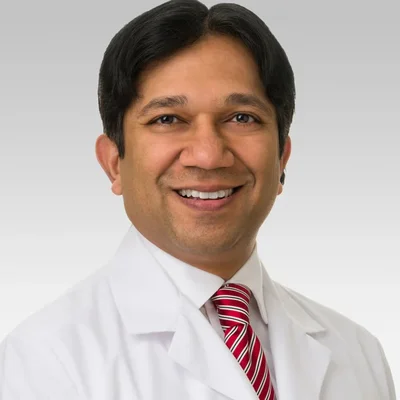
In 1991 Tarun Jain, MD left the University of Southern California with a dual degree in biomedical and electrical engineering. He took a master’s in biomedical engineering at the University of Texas at Austin the next year, returned to USC for medical school (MD, 1997), did Ob/Gyn residency at the University of Washington, and finished subspecialty training in reproductive endocrinology and infertility at Brigham and Women’s Hospital with Harvard Medical School in 2004. He is a professor at Northwestern University Feinberg School of Medicine and one of the twelve physicians at the Center for Fertility and Reproductive Medicine.
That sequence is unusual in a field where most entrants went from a biology undergraduate degree straight to medical school, and it shows up in how he talks about treatment. Assisted reproduction is a numbers business — follicle counts, estradiol rises, endometrial thickness, the percentage of a cohort that reaches blastocyst — and a physician trained to model systems tends to describe a protocol the way it actually works: as inputs, expected variance and a decision point at each stage. His stated commitment is to individualized care built around each patient’s specific situation rather than a house protocol.
His practice covers the third-party end of the field: donor egg cycles and gestational carrier paths sit alongside standard IVF, ICSI and embryo screening in a program reporting more than 3,300 ART cycles a year to SART.
Clinical Expertise
- IVF cycle management: stimulation design, monitoring, trigger timing, retrieval and transfer decisions across a high-volume academic program
- ICSI and PGT-A: fertilization strategy and embryo chromosome screening, coordinated with the center’s in-house andrology and embryology laboratory
- Donor egg IVF: donor-matched cycles, endometrial preparation and the sequencing of legal and medical steps
- Third-party reproduction: gestational carrier pregnancies, including the parentage and consent framework Illinois requires
- Complex infertility: diminished ovarian reserve, prior failed cycles, and cases where the plan has to change mid-stimulation
- Ovulatory and endocrine disorders in an REI practice: PCOS, thyroid and prolactin issues, and the metabolic work that belongs with them
Why Choose Dr. Tarun Jain
An engineering degree underneath the medical one. Biomedical and electrical engineering at USC, then a master’s in biomedical engineering at UT Austin — training most reproductive endocrinologists do not have, applied to protocols where measurement decides the next move.
Brigham and Women’s / Harvard subspecialty training, one of the longest-established REI fellowship programs in the country, completed in 2004. Twenty-two years of practice since.
Third-party reproduction is a working part of his practice, not a referral. Donor egg and gestational carrier paths involve more coordination — donors, carriers, lawyers, labs, timelines — and continuity of one physician through it matters.
He says what he is for. His own words: “I am committed to providing personalized care to meet the unique needs of each patient.”
Professional Affiliations
Certified in Reproductive Endocrinology and Infertility by the American Board of Obstetrics and Gynecology. Professor, Department of Obstetrics and Gynecology, Northwestern University Feinberg School of Medicine. Practices within a Society for Assisted Reproductive Technology member clinic that reports cycle-level outcomes to SART and the CDC, and an academic division whose faculty hold appointments in the national reproductive medicine societies, including the American Society for Reproductive Medicine.
Suitable For
- Patients planning donor egg IVF, whether using a known or matched donor, who want the medical and legal steps run by one clinic
- Families building through a gestational carrier, where Illinois surrogacy law has to be satisfied before transfer
- Long-standing or multi-failed infertility, especially cases where the previous protocols were changed without explanation
- Patients who want the numbers behind their cycle — why this dose, why this trigger, why this transfer day
- LGBTQ+ patients and single parents using donor gametes, in a center whose stated position is support for all family forms