'%20d='m0%200%2016%2011h61%2061%2061%2061%2060L47%2037h61%2061%2060%2061L16%2063h61%2061%2061%2061%2060L47%2089h61%2061%2060%2061L16%20115h61%2061%2061%2061%2060L47%20141h61%2061%2060%2061L16%20166h61%2061%2061%2061%2060L47%20192h61%2061%2060%2061L16%20218h61%2061%2061%2061%2060z'/%3e%3c/svg%3e)
About
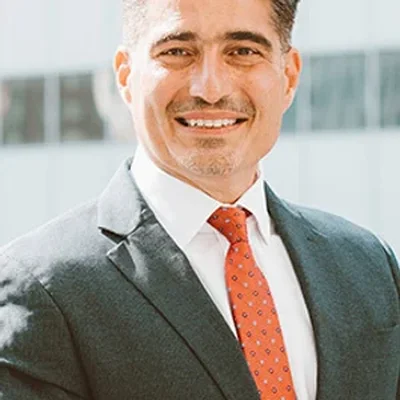
Most infertility workups start with the woman, because that is where the cycle has to happen. Dr. Vicken Sepilian’s practice starts with both people in the room: he evaluates male and female factors in parallel, on the view that hormonal imbalance, sperm quality, and uterine conditions frequently show up together in the same couple and that finding the second factor early changes which treatment is worth trying first.
He did his undergraduate work at Loyola Marymount University here in Los Angeles, earned his MD at Ross University School of Medicine, trained in obstetrics and gynecology at Drexel University School of Medicine, and completed his reproductive endocrinology and infertility fellowship at the University of Texas Medical Branch. His practice biography lists board certification from the American Board of Obstetrics and Gynecology in both OB-GYN and REI. He joined Pacific Fertility Center Los Angeles in the mid-2010s and splits his schedule between its Westwood and Glendale offices, which matters practically: patients monitoring injections need a site they can reach twice a week, and he covers both.
He also works in Armenian, and his biography describes community medical volunteering, including co-founding a health festival in Glendale that serves uninsured and underinsured residents, along with occasional media appearances explaining fertility treatment to general audiences. What is documented for patients is the clinical pattern — combined male and female evaluation, hormone-driven diagnoses, and cycle management in a private practice rather than an academic clinic.
Clinical Expertise
- IVF and ICSI: stimulation and monitoring through retrieval and transfer, with intracytoplasmic sperm injection where male factor is part of the picture
- Female infertility: tubal, uterine, and ovarian causes; endometriosis-related infertility; evaluation of the uterine cavity before transfer
- Male infertility: semen analysis interpretation and treatment pairing — deciding when ICSI is necessary versus when insemination or timed intercourse is reasonable
- Reproductive endocrinology: menstrual irregularity, thyroid and prolactin problems, and other hormone imbalances that block conception independently of anatomy
- PCOS: ovulation induction and stimulation protocol choice in polycystic ovary syndrome, including managing hyper-response risk
- Recurrent pregnancy loss: sequential evaluation of genetic, uterine, endocrine, and clotting contributors before another transfer attempt
- Second-opinion review of prior cycles: reading old stimulation records to see whether dose, trigger, or transfer timing was the limiting factor
Why Choose Dr. Vicken Sepilian
Two offices, one physician. If you are starting monitoring in Glendale, you do not have to choose between a doctor and a commute; he practices at both PFCLA locations.
Both partners treated as patients. Male factor contributes to a large share of infertility cases, and his stated approach is to test and treat it rather than assume the female workup will explain the cycle.
Fellowship-trained endocrinology. A REI fellowship at University of Texas Medical Branch plus OB-GYN board certification is the standard credential set, and hormonal diagnosis is the part of this field where endocrinology training actually earns its keep.
Local roots and community practice. Loyola Marymount training, Glendale health-festival volunteering, and Armenian-language consultations for patients in that community.
A private-practice schedule. Monitoring appointments, cycle starts, and questions run through the clinic’s own coordination system rather than a rotating resident service.
Professional Affiliations
His practice biography lists membership in the American Society for Reproductive Medicine, the American College of Obstetricians and Gynecologists, the Society for Reproductive Endocrinology and Infertility, and the Armenian American Medical Society. Board certification in Obstetrics and Gynecology and in Reproductive Endocrinology and Infertility, per that biography. Training: Drexel University School of Medicine residency and University of Texas Medical Branch fellowship.
Suitable For
- Couples who want a joint evaluation: one physician reading both partners’ results before a plan is written
- Hormonal infertility: irregular or absent ovulation, thyroid and prolactin issues, PCOS
- Male factor cases where ICSI is on the table: diagnosis and lab technique decided in the same consult
- Patients after two or more losses: structured recurrent-loss workup rather than an immediate repeat transfer
- Glendale and San Gabriel Valley residents: monitoring without crossing to Westwood twice a week
- Armenian-speaking patients: consultation in language