'%20d='m0%200%2016%2011h61%2061%2061%2061%2060L47%2037h61%2061%2060%2061L16%2063h61%2061%2061%2061%2060L47%2089h61%2061%2060%2061L16%20115h61%2061%2061%2061%2060L47%20141h61%2061%2060%2061L16%20166h61%2061%2061%2061%2060L47%20192h61%2061%2060%2061L16%20218h61%2061%2061%2061%2060z'/%3e%3c/svg%3e)
About
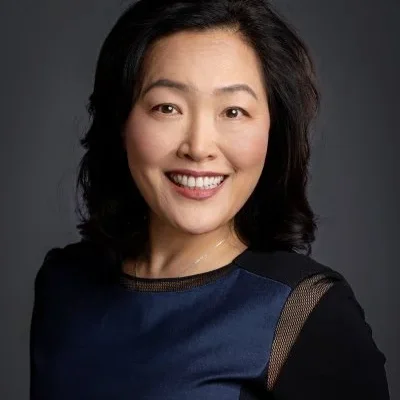
The most useful line on Dr. Wendy Chang’s résumé is a surgical one. She received the Outstanding Resident Surgeon Award from the American Society of Laparoscopic Surgeons during her obstetrics and gynecology training, which is a contest about hands rather than about reputation — instrument handling, tissue recognition, and time under pressure in the operating room. In fertility care that background maps onto a small set of procedures that decide outcomes: looking inside the uterus hysteroscopically and removing a septum, polyp, submucosal fibroid or adhesion that is blocking implantation, and managing endometriosis or a damaged tube laparoscopically before a cycle starts.
The training behind that award runs across two coasts. She took a biology degree at UCLA and an MD at UC Davis School of Medicine in 1998, then completed residency in obstetrics and gynecology with Harvard Medical School and its affiliated programs at Brigham and Women’s Hospital, Massachusetts General Hospital and Children’s Hospital, Boston, finishing in 2002. She returned to Los Angeles for a three-year clinical fellowship in reproductive endocrinology and infertility at the UCLA David Geffen School of Medicine, completed in 2005, and has practiced in Beverly Hills since — twenty-one years of fellowship-trained reproductive medicine, at a time when most patients in this field are seen by physicians earlier in that arc.
Her recognition is peer-based and repeated: fellow physicians have voted her a Southern California “Super Doctor” every year since 2010, and she has received Castle Connolly’s Top Doctors award, both of which rest on nomination by other doctors rather than on patient marketing. Alongside clinical work she sits on the UCLA Health System Board and is involved with the National Charity League Los Angeles, and her commentary has appeared on television programs and health outlets. Treat the media list as visibility; the board seat, the surgical prize and the annual peer votes are the parts with substance. She is a member of the Society for Assisted Reproductive Technology and the American Society for Reproductive Medicine, and practices at the group’s Beverly Hills campus, one of four physicians listed there.
Clinical Expertise
- IVF for complex and repeated-failure histories: protocol review across prior cycles, poor response and failed transfers, with stimulation, monitoring and transfer managed by the same physician
- Donor egg programs: recipient preparation, donor matching coordination and transfer timing, the pathway most often discussed with patients whose own egg supply has passed the point where their own eggs work
- Gestational carrier cycles: IVF with a surrogate, plus the California pre-birth order and parentage paperwork that establishes legal parentage for intended parents
- Preimplantation genetic testing: PGT-A screening for chromosome number and PGT-M for known hereditary conditions, with the practice’s embryologists performing the biopsy and an outside genetics laboratory running the assay; she is listed for genetic screening rather than treating PGT as automatic
- Recurrent pregnancy loss evaluation: the standard workup — uterine cavity assessment, antiphospholipid and endocrine causes, and genetic factors — before committing to another cycle
- Operative hysteroscopy and laparoscopy: an award-winning surgical training applied to cavity correction and endometriosis or tubal disease, so the decision about whether an operation helps a cycle gets made by someone who also runs cycles
Why Choose Dr. Wendy Chang
Twenty-one years since fellowship, and still in the same field. Physicians who finished training in 2005 have seen the whole transition that made modern IVF: ICSI becoming routine, single embryo transfer becoming the safety standard, freezing by vitrification replacing slow freezing, and PGT-A moving from experimental to expected. That history is useful when a clinic proposes something new, because she can say what changed and what did not.
A surgical prize, not a patient-choice badge. The Outstanding Resident Surgeon Award is the least promotional credential on her profile and the one most likely to matter if a cycle needs an operation on the uterus first.
Peer voting, every year since 2010. The Southern California Super Doctor designation is selected by other physicians. A run of annual selections says something different from a single listing, and it costs nothing to check which publisher a directory belongs to.
Both third-party pathways under one roof. Donor egg and gestational carrier work are both listed as her areas of focus, inside a practice that runs its own CAP-accredited embryology laboratory, so egg sharing, freezing and transfer logistics do not depend on an outside program.
Professional Affiliations
Society for Assisted Reproductive Technology; American Society for Reproductive Medicine. Board service with UCLA Health System; National Charity League Los Angeles. Fellowship-trained in reproductive endocrinology and infertility at the UCLA David Geffen School of Medicine, with Harvard Medical School residency training and an MD from UC Davis. Her Reproductive Partners profile states the training and awards without spelling out board certification status; the American Board of Obstetrics and Gynecology maintains a public certification lookup if you want it confirmed. On staff at the Beverly Hills campus of Reproductive Partners Medical Group, a SART-member practice whose 2023 clinic report (clinic ID 2254) lists 3,302 treatment cycles and a cumulative live birth rate of 43.6 percent per intended egg retrieval for patients under 35 across all transfers in that age band — 259 cycles, against a national figure of 53.2 percent for the same year and band. Those numbers cover the Beverly Hills, Long Beach and South Bay campuses together, because SART does not publish the offices separately, and they exclude Irvine monitoring.
Suitable For
- Patients in their early and mid forties who want an honest read of ovarian reserve testing before spending a cycle
- Anyone on a second or third failed IVF cycle, where reviewing the previous protocols matters more than repeating them
- Intended parents planning donor egg or a gestational carrier, including the legal steps California requires of them
- LGBTQ+ patients and single parents whose pathway involves donor sperm, donor eggs or surrogacy and who want one physician across the whole sequence
- Patients being offered PGT who want the tradeoffs of embryo biopsy and screening explained case by case