'%20d='m0%200%2016%2011h61%2061%2061%2061%2060L47%2037h61%2061%2060%2061L16%2063h61%2061%2061%2061%2060L47%2089h61%2061%2060%2061L16%20115h61%2061%2061%2061%2060L47%20141h61%2061%2060%2061L16%20166h61%2061%2061%2061%2060L47%20192h61%2061%2060%2061L16%20218h61%2061%2061%2061%2060z'/%3e%3c/svg%3e)
About
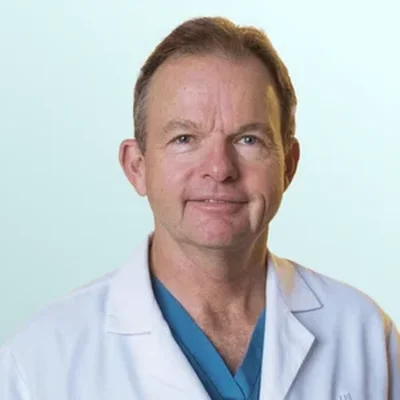
William Schoolcraft founded CCRM in 1987 and still holds the chief medical officer’s title at the practice he built, 38 years into a career in reproductive endocrinology and infertility. CCRM credits his teams with more than 100,000 babies conceived through fertility treatment. That is a company-stated number covering a network rather than an audited count for one office, and you should read it that way. What is verifiable is the technical record attached to his name: the practice’s own timeline puts Colorado’s first frozen embryo pregnancy and first donor-egg birth in 1990, the worldwide push of blastocyst culture in 1996, and the first clinical application of PGT-A on biopsied blastocysts across all 23 chromosome pairs, followed by transfer of euploid embryos, in 2007.
He earned his MD at the University of Kansas, then trained at UCLA in obstetrics and gynecology and in reproductive endocrinology and infertility — the same program where his fellowship work sat under Dr. David Meldrum, one of the physicians who moved IVF from research into clinical practice in the United States. After training he returned to Colorado and opened what became CCRM. His profile lists a high-complexity laboratory director credential alongside his medical degree, which is the throughline of his career: he has spent as much time arguing about culture conditions, biopsy timing and lab standards as about medications.
Board certification in reproductive endocrinology and infertility comes from the American Board of Obstetrics and Gynecology. He has written two books for patients — If At First You Don’t Conceive: A Complete Guide to Infertility and Your Fertility. Your Family.: The Many Roads to Conception — and has published peer-reviewed research alongside them. Interviewers from the New York Times, the Wall Street Journal, the Denver Post, Men’s Health and Today.com, and appearances on Good Morning America and The Doctors, have used him as the fertility specialist on record. Castle Connolly and 5280 magazine list him among top Denver-area physicians. The clinic’s profile shows him as not accepting new patients; check current availability before planning around an appointment with him.
Clinical Expertise
- Blastocyst culture and transfer: built the practice’s protocol for growing embryos to the blastocyst stage rather than transferring at day three, a shift CCRM dates to 1996 and that most US labs later adopted
- PGT-A and chromosome screening: named on the 2007 clinical application of comprehensive chromosome screening on trophectoderm biopsy, followed by transfer of euploid embryos in a frozen cycle
- Poor responders and diminished ovarian reserve: novel stimulation protocols for women who recruit few eggs on standard doses are a stated clinical and research focus
- Laboratory direction: high-complexity laboratory director credential, and a practice reputation built on lab conditions — cryostorage, vitrification, culture systems — as much as on prescriptions
- Donor egg and third-party reproduction: performed Colorado’s first donor-egg-conceived birth in 1990, per the practice timeline
- Recurrent IVF failure: the referral destination inside CCRM for cases that have not worked elsewhere
Why Choose Dr. William Schoolcraft
He founded the place, and he is still in it. Thirty-eight years and one organization: the protocols, the laboratory standards and the freeze-then-transfer strategy used at CCRM’s Colorado offices carry his fingerprints.
A technical record, not a slogan. Blastocyst culture, assisted hatching, comprehensive chromosome screening and the first Colorado frozen-embryo pregnancy are dated claims on the practice timeline, and they can be checked against publications rather than adjectives.
Depth in the hardest patient group. Poor responders and women with diminished ovarian reserve are the patients most clinics hand off early; developing stimulation protocols for them has been a career focus rather than an occasional case.
He writes for patients. Two general-interest books on infertility, plus four decades of press interviews, mean the explanation of what a cycle involves is unlikely to stop at a brochure.
Read the availability line. His profile lists him as not accepting new patients, and the 100,000-babies figure is a network claim. Both are worth knowing before you choose a doctor for that name alone.
Professional Affiliations
American Board of Obstetrics and Gynecology certification in Obstetrics and Gynecology and in Reproductive Endocrinology and Infertility. UCLA faculty lineage through Dr. David Meldrum. Castle Connolly Top Doctor and 5280 magazine Denver Top Doctor listings. Author, If At First You Don’t Conceive: A Complete Guide to Infertility and Your Fertility. Your Family.: The Many Roads to Conception. Peer-reviewed publications in reproductive medicine.
Suitable For
- Multiple failed IVF cycles: the practice’s designated second-opinion seat for cases that have not worked elsewhere
- Diminished ovarian reserve or a short window: protocols developed specifically for poor responders
- Patients interrogating the laboratory: culture systems, vitrification, biopsy and storage standards are the areas his career sits in
- Donor egg and third-party paths: he performed the first donor-egg birth in the state per the clinic timeline
- Network-wide coordination: complex cases needing input across CCRM’s Colorado offices and its genetics laboratory