'%20d='m0%200%2016%2011h61%2061%2061%2061%2060L47%2037h61%2061%2060%2061L16%2063h61%2061%2061%2061%2060L47%2089h61%2061%2060%2061L16%20115h61%2061%2061%2061%2060L47%20141h61%2061%2060%2061L16%20166h61%2061%2061%2061%2060L47%20192h61%2061%2060%2061L16%20218h61%2061%2061%2061%2060z'/%3e%3c/svg%3e)
About
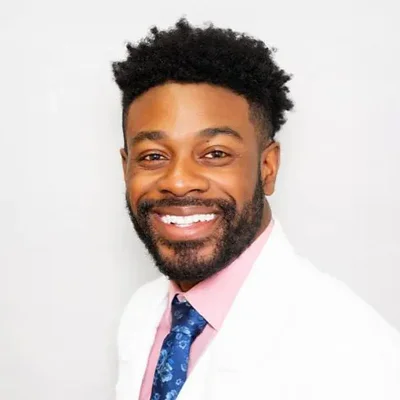
Read the clinical-interests line on Zachary W. Walker’s Brigham and Women’s Hospital profile and one entry does not belong with the others. Endometriosis, fibroids, polycystic ovarian syndrome, infertility, robotic surgery — that is an operative reproductive medicine list. Then: health disparities. Fertility care in the United States is distributed along income, race and geography, and very few physicians in the field put the sentence on their official profile. He did, and it sits next to LGBTQ health, which is the same problem from a different angle.
The rest of the line is a straight Midwestern-and-Southern path into Boston: Indiana University School of Medicine (2013-2017), obstetrics-gynecology residency at the University of Alabama at Birmingham (2017-2021), ABOG certification in obstetrics and gynecology in 2022, then reproductive endocrinology and infertility fellowship at Brigham and Women’s from 2021 to 2024, where he now practices on the faculty of the center’s staff — all of whom are Harvard Medical School appointees.
That timing is worth one honest note about what it means for a patient. He is the most recently trained physician on this roster, and his fellowship was done inside the program he now works in: the stimulation protocols, the laboratory standards and the surgical techniques he learned between 2021 and 2024 are the ones the center uses now, not the version a colleague adopted twenty years ago and kept. His named interests are the two diseases most likely to delay a diagnosis in a young woman — endometriosis and PCOS — plus fibroids, robotic surgery, LGBTQ health and infertility itself.
Clinical Expertise
- Endometriosis: Medical and surgical management of the disease that causes both pain and subfertility, at a center that runs a dedicated endometriosis service (the Boston Center for Endometriosis, shared between Brigham and Women’s and Boston Children’s Hospital) with sub-specialties in deep infiltrative and ovarian disease, pain management and computer-assisted surgery. Where excision is indicated, the constraint is ovarian reserve: removing disease without removing eggs.
- PCOS and ovulation disorders: CIRS lists polycystic ovary syndrome among the specific causes it treats with ovulation induction, alongside absent periods from abnormal prolactin secretion, diminished ovarian reserve and unexplained infertility. The trade-off it manages is deliberate: stimulating enough to release an egg without producing higher-order multiples.
- Uterine fibroids: Evaluation of whether fibroids are the reason a patient is not conceiving, then management that keeps the uterus — hysteroscopic removal of cavity fibroids, laparoscopic or robotic myomectomy, rather than hysterectomy.
- Robotic and minimally invasive reproductive surgery: Trained in a program that pioneered robotic approaches to gynecologic surgery, using 5-12 mm incisions to reduce blood loss, pain, recovery time and — the fertility-relevant one — adhesion formation after uterine surgery.
- IVF and infertility treatment: Full cycle management from workup through stimulation, retrieval and day-3 or day-5 transfer, with ICSI, assisted hatching and PGT available in the same program, whose outcomes are reported annually to SART and the CDC.
- Fertility preservation: Egg and embryo freezing for patients postponing childbearing or facing gonadotoxic treatment, run out of the center’s own certified laboratories.
Why Choose Dr. Zachary W. Walker
He lists access as a clinical interest. Health disparities on a physician’s official profile is a signal about the kind of patient panel he wants and the kind of conversation he expects to have about cost, insurance and delay — which is not abstract in Massachusetts, one of the small number of states that requires health plans to cover infertility diagnosis and treatment, with coverage limits that still vary plan by plan.
Current training, in the building where he now treats. Fellowship at Brigham and Women’s 2021-2024, residency at University of Alabama at Birmingham, Indiana medical school, board certified in 2022 at the end of residency — the youngest cohort of reproductive endocrinologists the center has hired.
Two slow-diagnosed diseases as his stated focus. Endometriosis and PCOS are both conditions American patients routinely spend years being told are normal. A physician who names them together, at a center with a dedicated endometriosis program, is configured to take the complaint seriously the second time.
LGBTQ health on the same list. All fertility services at the center are open to single individuals and same-sex couples as written policy, and his profile names LGBTQ health as a clinical interest rather than leaving it to a brochure.
Professional Affiliations
Certified in Obstetrics and Gynecology by the American Board of Obstetrics and Gynecology (2022). Brigham and Women’s Hospital Department of Obstetrics and Gynecology, Center for Infertility and Reproductive Surgery, 75 Francis Street, Boston; Harvard Medical School faculty. Education: Indiana University School of Medicine (MD, 2017); University of Alabama at Birmingham residency (2017-2021); Brigham and Women’s Hospital fellowship in reproductive endocrinology and infertility (2021-2024). The center is a Society for Assisted Reproductive Technology member, reports to the CDC annually, and carries ASRM’s Center of Nursing Excellence designation.
Suitable For
- Women whose endometriosis pain was dismissed for years and who now want the disease and the fertility question addressed in the same plan.
- PCOS patients deciding between ovulation induction with insemination and going straight to IVF, where the multiple-pregnancy risk is the real variable.
- Patients with fibroids who were told hysterectomy is the answer and are not finished with the question of children.
- LGBTQ+ patients and single individuals entering treatment at a program whose policy is that all services are open to them, with a physician who lists LGBTQ health as an interest.
- Anyone who wants the youngest reading of current practice, and is comfortable that patients at a Harvard teaching hospital also encounter fellows, residents and medical students along the way.