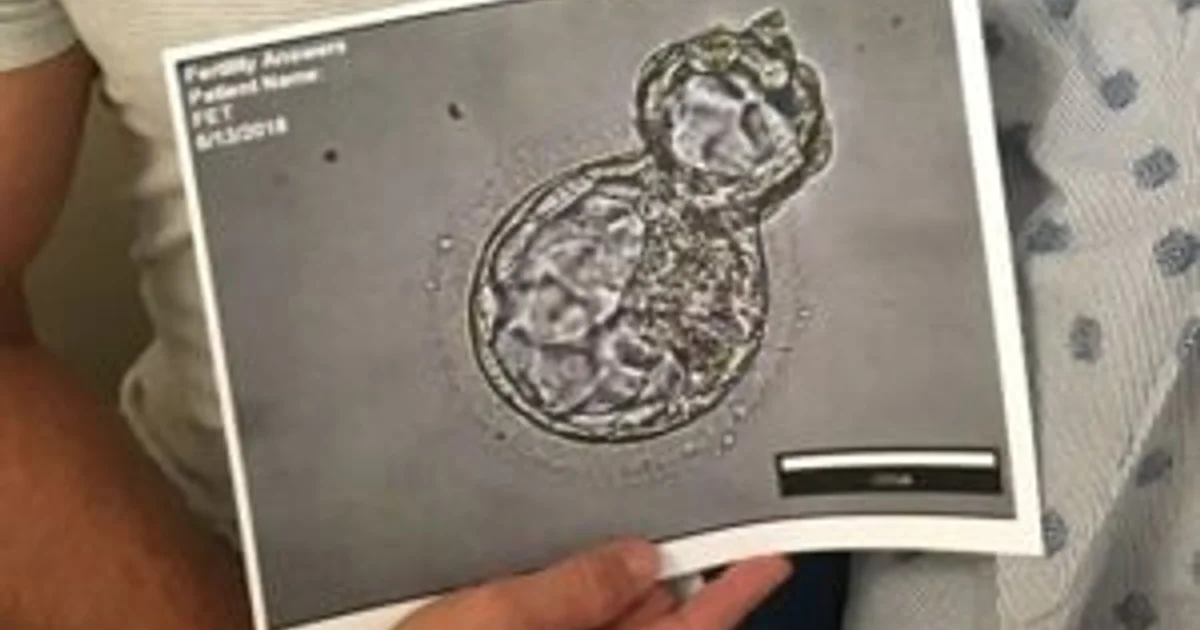
Embryo genetic testing — preimplantation genetic testing (PGT) — analyzes IVF embryos before transfer, because 50-80% of human embryos carry chromosomal abnormalities that cause implantation failure, miscarriage, or genetic disease. PGT is a family of three — PGT-A, PGT-M, PGT-SR — and the wrong choice, or testing that adds nothing, raises cost without improving outcomes.
More than 300,000 PGT cycles have been completed worldwide.
The Three Types of Embryo Genetic Testing at a Glance
| Feature | PGT-A | PGT-M | PGT-SR |
|---|---|---|---|
| What it detects | Extra or missing chromosomes | Single-gene disorders | Chromosomal structural changes |
| % embryos affected | 30-80% by maternal age | 25-50% by inheritance pattern | 50-70% unbalanced in carriers |
| Average cost (USD) | $2,000-$4,000 | $3,000-$5,000 + probe development ($2,000-$5,000) | $3,000-$5,000 |
| Result time | 7-14 days | 10-21 days | 10-21 days |
| Availability | Widely available | Specialized lab; restricted in some countries | Specialized lab |
How Does Embryo Testing Work, Step by Step?
PGT adds about 2-3 weeks to a standard IVF cycle timeline:
- Stimulation and retrieval — 10-14 days of hormone injections, then egg retrieval under sedation
- Fertilization and culture — PGT embryos are always fertilized by ICSI (intracytoplasmic sperm injection), even without male factor, so residual sperm DNA cannot contaminate the analysis; embryos culture 5-6 days to the blastocyst stage — roughly 100-200 cells: inner cell mass (future fetus), trophectoderm (future placenta)
- Biopsy on day 5-6 — a laser opens the zona pellucida and 3-10 trophectoderm cells are aspirated; cells go to the genetics lab, the embryo is vitrified (flash-frozen) awaiting results
- Safety data — a 2020 meta-analysis in Human Reproduction pooled 25 studies of biopsied vs non-biopsied embryos and found no significant difference in implantation (48.2% vs 49.1%), clinical pregnancy (55.3% vs 56.8%) or live birth (46.7% vs 47.2%); a minority report slightly lower implantation in specific subgroups
- Analysis — PGT-A (NGS — next-generation sequencing — or aCGH): copy number across all 23 chromosome pairs, detecting whole-chromosome aneuploidy (trisomy 21, 18, 13, monosomy X), segmental imbalances down to 5-10 Mb, and mosaicism (low, medium or high level). PGT-M (PCR with haplotype linkage, or NGS): targets the parental mutation. PGT-SR (NGS or aCGH with breakpoint mapping): finds unbalanced rearrangements and distinguishes balanced carriers from fully normal embryos — both transferable
- Frozen transfer — a single euploid (chromosomally normal) or unaffected embryo is selected for a later frozen embryo transfer (FET); remaining euploid embryos stay frozen
PGT-A: What Does Aneuploidy Screening Detect?
PGT-A accounts for 80% of all PGT cycles worldwide — find embryos with the correct 46 chromosomes; aneuploidy climbs steeply with maternal age.
| Maternal Age | Estimated Embryo Aneuploidy Rate |
|---|---|
| Under 30 | 25-35% |
| 30-34 | 30-40% |
| 35-37 | 40-50% |
| 38-40 | 55-70% |
| 41-42 | 70-85% |
| 43+ | 85-95% |
- Women 38 and older — aneuploidy exceeds 55%, and PGT-A cuts miscarriage rates from 30-40% to 10-15% per transfer
- Recurrent pregnancy loss (2+ miscarriages) — 50-60% of miscarriages in women over 35 are aneuploidy-related
- Severe male factor infertility — elevated sperm aneuploidy correlates with higher embryonic aneuploidy
The debate over younger patients: the 2021 STAR trial, a multicenter RCT, found PGT-A did not improve cumulative live birth in women under 35 despite better per-transfer results; most young-patient cycles yield a normal embryo anyway.
PGT-M: How Does Testing for Single-Gene Disorders Work?
PGT-M serves couples carrying a specific monogenic disease or family history of one: only embryos that did not inherit the mutation are transferred.
Conditions commonly tested with PGT-M: autosomal dominant (50% risk to offspring) — Huntington’s disease, myotonic dystrophy type 1, neurofibromatosis type 1, BRCA1/BRCA2 mutations, Marfan syndrome; autosomal recessive (25% risk) — cystic fibrosis, sickle cell disease, beta-thalassemia, spinal muscular atrophy (SMA), fragile X syndrome, Gaucher disease, Tay-Sachs disease; X-linked (50% risk to male offspring) — hemophilia A and B, Duchenne muscular dystrophy, X-linked ichthyosis.
HLA matching with PGT-M adds human leukocyte antigen (HLA) typing against an affected sibling, aiming for a disease-free, stem-cell-compatible child.
Why PGT-M takes longer and costs more: the lab must build a personalized assay before the cycle — carrier DNA, probe and linked-marker design, validation — taking 4-8 weeks and adding $1,500-$5,000; labs charge a flat fee or price by complexity.
Success rates: live birth per unaffected transfer matches age-matched conventional IVF, but with 25-50% of embryos affected, 1-3 cycles may be needed.
PGT-SR: Who Needs Translocation Testing?
PGT-SR is for carriers of balanced chromosomal rearrangements — usually reciprocal or Robertsonian translocations: carriers are healthy, but embryos frequently inherit unbalanced rearrangements causing miscarriage or birth defects.
Who carries a translocation:
- About 1 in 500 people carry one
- The rate rises to 3-5% among couples with recurrent pregnancy loss
| Carrier Type | % of Embryos Unbalanced | Mean Euploid Embryos per Cycle |
|---|---|---|
| Robertsonian translocation | 50-70% | 1.0-2.5 |
| Reciprocal translocation | 60-80% | 0.5-2.0 |
| Inversion carrier | 10-30% | 2.0-4.0 |
A carrier may create 10 embryos in one cycle, yet only 2-4 may be chromosomally balanced.
Why PGT-A alone is not enough: it catches whole-chromosome imbalances but can miss the smaller unbalanced products typical of reciprocal translocations; dedicated PGT-SR is the standard of care.
How Much Does Embryo Testing Cost by Country?
Prices below are USD, the additional cost above standard IVF:
| Country | PGT-A | PGT-M | Probe Development | PGT-SR | IVF Base Cost |
|---|---|---|---|---|---|
| United States | $3,500-$5,000 | $4,500-$6,500 | $3,000-$5,000 | $4,500-$6,500 | $12,000-$18,000 |
| United Kingdom | $2,500-$4,000 | $3,500-$5,000 | $2,500-$4,000 | $3,500-$5,000 | $6,000-$8,000 |
| Spain | $2,000-$3,500 | $3,000-$4,500 | $2,000-$3,500 | $3,000-$4,500 | $5,000-$7,000 |
| Greece | $1,800-$3,000 | $2,500-$4,000 | $2,000-$3,000 | $2,500-$4,000 | $4,500-$6,500 |
| Thailand | $1,500-$2,500 | $2,500-$3,500 | $1,500-$2,500 | $2,500-$3,500 | $5,000-$8,000 |
| Mexico | $1,500-$2,500 | $2,000-$3,500 | $1,500-$2,500 | $2,000-$3,500 | $4,000-$6,000 |
| Turkey | $1,200-$2,000 | $2,000-$3,000 | $1,500-$2,500 | $2,000-$3,000 | $3,500-$5,000 |
| India | $800-$1,500 | $1,500-$2,500 | $1,000-$2,000 | $1,500-$2,500 | $3,000-$5,000 |
Compiled from clinic fee schedules as of mid-2026; some clinics bundle PGT-A, others charge per embryo. Country detail in the IVF cost guide 2026.
Is Embryo Testing Covered by Insurance?
In the United States, 25 states plus Washington, D.C. have an infertility insurance law and 15 require plans to cover IVF; PGT-A is usually excluded unless there is recurrent pregnancy loss or advanced maternal age, while PGT-M is more likely covered when a genetic disease is documented. The UK, Spain, and Israel fund PGT-M publicly for qualifying conditions.
Does Embryo Testing Improve Success Rates?
Per transfer the advantage is clear; cumulatively it depends on age and embryo numbers.
Per-Transfer Rates: Clear Advantage
| Age Group | Live Birth per Transfer (Euploid, PGT-A) | Live Birth per Transfer (Untested) | Absolute Improvement |
|---|---|---|---|
| Under 35 | 55-60% | 45-50% | +8-12% |
| 35-37 | 50-55% | 38-44% | +10-14% |
| 38-40 | 42-48% | 25-33% | +14-18% |
| 41-42 | 32-38% | 12-18% | +18-22% |
| 43+ | 20-25% | 4-8% | +15-18% |
Data: SART 2022; see the IVF success rates by age guide.
Cumulative Live Birth: More Complex
Cumulative live birth — at least one birth across all transfers from one retrieval — is where the debate concentrates.
Under 38 with several embryos, cumulative rates may be similar — PGT-A’s gain there is faster time-to-pregnancy and fewer miscarriages, not a higher total.
For women 38 and older it does improve cumulative outcomes: untested, 4 embryos with 1 euploid means 3 failed transfers before the birth; PGT-A transfers the euploid first, reaching the same birth with less time and trauma.
Miscarriage Reduction: The Strongest Evidence
The most consistent benefit of PGT-A is lowering miscarriage rates:
| Age Group | Miscarriage Rate (Untested) | Miscarriage Rate (PGT-A) | Relative Risk Reduction |
|---|---|---|---|
| Under 35 | 12-15% | 8-10% | 25-33% |
| 35-37 | 18-22% | 10-13% | 38-44% |
| 38-40 | 28-35% | 14-18% | 48-55% |
| 41-42 | 40-50% | 18-22% | 55-60% |
Data: a meta-analysis of 12 studies covering 7,395 PGT-A cycles (Human Reproduction Update, 2022).
What Are the Limits and Risks of Embryo Testing?
“PGT-A does not create more normal embryos — it tells you which ones you already have. Its value rises with age and miscarriage history, and falls when embryo numbers are low.” — ProIVF Medical Advisory Board, 2026
Mosaicism: The Gray Zone
About 3-8% of embryo biopsies show mosaicism — normal and abnormal cells mixed in one embryo — and its meaning is unresolved: some mosaic embryos implant and become healthy babies, others fail or miscarry.
Consider mosaic embryos only when no euploid embryo exists, with genetic counseling — the higher the mosaicism level, the more cautious the recommendation.
No Test Predicts Everything
PGT-A cannot detect single-gene or structural issues (PGT-M/PGT-SR’s role), most de novo, polygenic and multifactorial conditions (congenital heart defects, neural tube defects, cleft lip/palate), epigenetic abnormalities, pregnancy-onset conditions such as preeclampsia or gestational diabetes, non-genetic developmental disorders, or uterine factors.
Embryo Attrition and Cost Without Guarantee
Patients with few blastocysts may have none to test, or none euploid to transfer — most consequential for diminished ovarian reserve; and when no euploid embryo is found, you paid $2,000-$5,000 for information and gained no transfer.
That outcome is not rare after 40 — 30-50% of cycles in this age group produce no euploid embryo.
What Do Real PGT Patients Report? Four Cases
Shared with consent; names and identifying details changed.
Case 1: Claire, 40 — One Normal Embryo Among Six
Claire tried for three years, miscarried at 9 weeks at 38 and 7 weeks at 39, AMH 1.4 ng/mL; one Madrid cycle produced 8 eggs, 6 ICSI fertilizations, 4 day-6 blastocysts — all biopsied: 1 euploid, 1 low-level mosaic, 2 aneuploid.
“The second miscarriage is what pushed me toward genetic testing. I could not survive another loss.” “That was a hard phone call. Three of my four embryos had chromosomal problems, and without testing I would have transferred them — an abnormal one first, and another miscarriage after.”
The single euploid transfer became a healthy baby girl; testing cost €2,400. “Was it worth it? Absolutely. I saved months of failed transfers and at least one more miscarriage.”
Case 2: Marco and Elena, Both 32 — PGT-M for Cystic Fibrosis
Both 32, both carrying the delta F508 cystic fibrosis mutation (25% risk of an affected child), Marco and Elena pursued PGT-M in Milan.
“The genetic counselor laid out three options: natural conception with prenatal testing and possible termination, donor gametes, or IVF with PGT-M. We wanted a child who was genetically ours but would not have CF,” Marco explains.
Their first cycle produced 12 eggs, 10 fertilized, 6 blastocysts: 2 unaffected non-carriers, 2 healthy carriers, 2 affected. Probe development cost €3,200 and PGT-M added €2,800; one unaffected transfer achieved pregnancy — €6,000 in testing, 3 embryos frozen.
“Many families with CF history gamble on natural conception,” Elena says. “For us, knowing we could prevent it entirely was worth the cost and the process. We never faced terminating a wanted pregnancy.”
Case 3: Anna, 34 — PGT-SR for a Reciprocal Translocation
Anna, 34, miscarried four times in two years; karyotyping showed a balanced reciprocal translocation between chromosomes 4 and 11 — leaving 60-70% of her embryos chromosomally unbalanced.
“Four miscarriages and nobody could tell me why. When the karyotype came back I felt relief — an explanation, and a solution.”
Two London cycles with PGT-SR yielded 18 eggs, 15 fertilized, 9 blastocysts and only 3 balanced embryos (1 carrier, 2 fully normal). The normal transfer failed; three months later the carrier embryo achieved pregnancy.
“The hardest part was the waiting — two retrievals, two transfers, months between every step. But without PGT-SR I would have kept miscarrying: 9 untested transfers would probably have meant 6-7 miscarriages. Instead I have a daughter.”
Case 4: Lena, 31 — PGT-A When Testing Did Not Help
After 18 months of trying with no known cause, Lena’s clinic recommended IVF with PGT-A at 31 to “maximize success per transfer.” The cycle produced 15 eggs, 13 fertilized, 7 blastocysts: 5 euploid, 1 mosaic, 1 aneuploid.
“Everyone said my odds were excellent — great egg count, great embryos. But I spent $4,500 on a test that told me what I already knew. At 31, most of my embryos were normal anyway.”
The first euploid transfer failed; the second achieved an ongoing pregnancy, with total US cost approaching $19,000.
“If I had skipped testing, I would have transferred the best-graded embryos one at a time. The first still would have failed and the second still would have worked — but I would have saved $4,500 and the anxiety of waiting for results.” “I don’t regret it — I wanted every advantage. But I would have had a more honest conversation about whether the cost made sense at my age.”
What Are the Ethical Questions Around Embryo Testing?
Discuss these with your fertility team — and, where appropriate, a genetic counselor:
- Embryo disposition — PGT creates embryos unsuitable for transfer; patients must decide whether to discard them, donate them to research, or in select cases (usually mosaic embryos) transfer them anyway
- Sex selection — PGT-A reveals every embryo’s sex; non-medical sex selection is prohibited in most countries, and disclosure policies vary
- Expanded carrier screening and incidental findings — some labs bundle panels covering hundreds of conditions; pre-test counseling lets you choose what to learn
- Access and equity — PGT adds $2,000-$6,000 per cycle, out of reach for many who could benefit — most starkly in PGT-M
FAQ
Q: Is embryo testing the same as prenatal testing?
No — PGT samples 3-10 cells from day 5-6 embryos before transfer, while prenatal testing (CVS, amniocentesis) diagnoses an established pregnancy.
PGT lowers the chance of an affected pregnancy but does not replace it; confirmatory testing is still recommended.
Q: How many embryos survive the biopsy?
Biopsy survival is above 97-99%; the bigger attrition is earlier — only 40-60% of fertilized eggs reach the blastocyst stage.
Q: Can embryo testing harm the baby?
The largest study — 1,514 children born after PGT — found no increase in congenital anomalies versus IVF controls (Fertility and Sterility, 2021); long-term follow-up remains limited.
Q: Does PGT-A guarantee a baby?
No, even euploid transfers result in live birth only about 50-60% of the time; the remaining 40-50% fail for reasons no test addresses — uterine receptivity, immune factors, transfer technique.
Q: Should I test if I only produce 2-3 embryos?
Value depends on age and diagnosis: at 35 with 3 embryos, 1-2 are likely euploid and testing may help; at 43 with 2 embryos, a 70% chance both are aneuploid means testing may leave nothing to transfer.
Q: How reliable is PGT-M for my specific condition?
Established labs report 97-99% accuracy for well-characterized mutations, using linked markers; rare recombination and allele dropout still cause errors (under 1%), so confirmatory prenatal testing is recommended for every PGT-M pregnancy.
Q: Does insurance cover embryo testing?
It varies: in the US, where 15 states require plans to cover IVF, PGT-M for a documented disorder is far more likely covered than age-related PGT-A; the UK’s NHS funds PGT-M for qualifying conditions.
Q: Can I ship my embryos to a different lab for testing?
Yes: embryos travel in a cryogenic dewar, and both clinic and lab need licensing and agreements; logistics add roughly $500-$1,000.
How Do You Decide Whether Embryo Testing Is Right for You?
PGT is a targeted tool whose value depends on your profile.
PGT-A offers the clearest value when: you are 38+ — under 35 optional, 35-37 consider, 38-40 recommended, 41+ strongly recommended — have had 2+ miscarriages or 3+ failed transfers, severe male factor or a previous aneuploid pregnancy, and accept the cost and the chance of no euploid embryo. Many combine PGT-A with PGT-M or PGT-SR in one cycle for roughly $1,500-$2,500 more.
PGT-M is indicated when: you carry a known single-gene disorder or strong family history and accept the preparation time and cost to block transmission.
PGT-SR is necessary when: you carry a balanced translocation or inversion, or have recurrent miscarriage with no other identified cause.
Testing is less likely to add value when: you are under 35 with normal reserve and no loss history, have strong moral objections to creating or discarding untransferable embryos, consistently produce very few embryos, or face unaffordable uncovered cost.
Anchor the decision in one conversation with your fertility specialist and genetic counselor. Browse the ProIVF hospital directory or contact our patient support team.
About this article: Written by the ProIVF Medical Editorial Team per ASRM (2023), ESHRE PGT Consortium, SART 2022 and CDC 2022 data; reviewed by the ProIVF Medical Advisory Board. Editorial standards on our About page.
Last updated: July 20, 2026. Informational only, not medical advice; decisions, success rates and costs vary with individual history and clinic. Consult a licensed reproductive endocrinologist and genetic counselor; verify pricing with your clinic.
Sources
- ASRM — PGT Practice Committee Guidelines
- ESHRE — PGT Consortium Data
- Franasiak JM et al. — aneuploidy rates across age in 15,000 blastocyst biopsies (Fertility and Sterility, 2014) PubMed
- Human Reproduction Update — PGT-A meta-analysis (2022) PubMed
- SART — National Summary Report 2022
- CDC — ART Success Rates
- STAR Trial — PGT-A in women under 35, multicenter RCT (2021) PubMed
- Human Reproduction — PGT-SR outcomes in 3,442 cycles (2019) PubMed
- Fertility and Sterility — long-term outcomes of children born after PGT (2021) PubMed
- HFEA — PGT availability and regulations