Across the largest randomised trials, fresh and frozen embryo transfer end in almost the same number of babies. A 2021 Cochrane review of 4,712 women found no meaningful difference in cumulative live birth rate.
A US national-data study of 8,642 elective single embryo transfers told the same story: 51.4% live birth with fresh versus 48.8% with frozen (Fertil Steril 2023). The real differences show up in safety and timing, not in your odds per transfer.
This guide is compiled by the ProIVF Medical Editorial Team from peer-reviewed trials and registry data, and reviewed by the ProIVF Medical Advisory Board. Every percentage below is linked to its published source. Clinic-level outcomes still vary with maternal age, embryo stage and laboratory quality, so the CDC ART success-rate reports let you check the clinic you are considering.
Fresh vs Frozen Embryo Transfer: the Headline Numbers
| Outcome | Fresh transfer | Frozen transfer | Source |
|---|---|---|---|
| Cumulative live birth rate (any live birth from all embryos of one retrieval) | Reference | OR 1.08 (95% CI 0.95–1.22), no clear difference | Cochrane review, 8 RCTs / 4,712 women (Cochrane Database Syst Rev 2021) |
| Live birth after first transfer, ovulatory women | 50.2% | 48.7% (RR 0.97, 95% CI 0.89–1.06) | 2,157 women, China multi-centre RCT (N Engl J Med 2018) |
| Ongoing pregnancy, non-PCOS women | 34.5% | 36.3% (RR 1.05, 95% CI 0.87–1.27) | 782 women, Vietnam RCT (N Engl J Med 2018) |
| Singleton live birth, elective single embryo transfer (one embryo transferred per cycle), ages 20–35 | 51.4% | 48.8% (fresh-vs-frozen adjusted RR 1.05, 95% CI 0.97–1.14) | US national registry, 8,642 cycles (Fertil Steril 2023) |
| Ovarian hyperstimulation syndrome (OHSS) | 2.0% | 0.6% (RR 0.32, 95% CI 0.14–0.74) | Same 2018 RCT of 2,157 women |
| Hypertensive disorders of pregnancy | Reference | OR 2.15 (95% CI 1.42–3.25) | Cochrane review, 3 RCTs / 3,940 women |
| Large-for-gestational-age baby | Reference | OR 1.96 (95% CI 1.51–2.55); birth weight +127 g | Cochrane review |
Frozen transfer is not a “stronger” embryo technique. It is the same embryo moved to a different calendar — and the trade-offs are mostly about your body’s response to stimulation, not about implantation power.
Is Frozen Embryo Transfer More Likely to Work?
No, not in unselected patients. The best available synthesis — the 2021 Cochrane review — concluded that one strategy is “probably not superior to the other in terms of cumulative live birth rate and ongoing pregnancy rate.”
“There is probably little or no difference in cumulative live birth rate between the ‘freeze all’ strategy and the conventional IVF/ICSI strategy.” — Zaat T, Zagers M, Mol F, et al., Cochrane Database of Systematic Reviews, 2021;2(2):CD011184 (PubMed)
The authors translated that odds ratio into plain risk: if a conventional fresh-transfer strategy gives a 58% cumulative live birth rate, a freeze-all strategy gives between 57% and 63%.
What about the older claim that frozen transfers win?
Earlier trials in women with polycystic ovary syndrome (PCOS) did show a frozen-transfer advantage. That subgroup point still matters if PCOS is part of your diagnosis — see our PCOS and IVF guide.
The 2018 Chinese trial opened by noting that elective frozen transfer “has been shown to result in a higher live-birth rate than fresh-embryo transfer among anovulatory women with the polycystic ovary syndrome” (N Engl J Med 2018). Two things have changed the picture since.
First, the two largest randomised trials transferred up to two day-3 cleavage-stage embryos each, and neither found a frozen advantage for ovulatory or non-PCOS patients (N Engl J Med 2018, N Engl J Med 2018). Second, a US national registry analysis of elective single embryo transfers in 2016–2017 covered women aged 20 to 35 who had at least four embryos cryopreserved. That restriction removes the “who got to freeze” bias, and the small fresh advantage lost statistical significance after adjustment (Fertil Steril 2023).
Why do success-rate charts sometimes look different?
Per-transfer numbers and cumulative numbers are not the same question. A freeze-all cycle reports its first transfer several weeks later, so early-pregnancy snapshots favour fresh by design.
Cumulative outcomes across all embryos from one retrieval converge. If you are comparing clinic statistics, read them against our IVF success rate by age guide.
Why Would a Clinic Freeze Every Embryo?
Four clinical reasons push a cycle toward “freeze-all,” where every usable embryo from the retrieval is stored and none is transferred fresh. Only one of the four is about implantation odds rather than safety or logistics.
1. Ovarian hyperstimulation syndrome risk
OHSS is the dangerous complication of stimulation: the ovaries swell, fluid shifts into the abdomen, and hCG from a pregnancy can make it far worse. In the 2018 trial of 2,157 ovulatory women, OHSS affected 2.0% of fresh versus 0.6% of frozen transfers (RR 0.32, 95% CI 0.14–0.74) (N Engl J Med 2018).
The Cochrane pooled estimate across six trials was an odds ratio of 0.26 (95% CI 0.17–0.39). Deferring transfer lets the stimulation hormones clear before pregnancy hormones arrive. If you were assigned a high OHSS risk, our guide to OHSS prevention after retrieval covers the grading and the watch-out window.
2. Biopsy and genetic testing (PGT-A)
When embryos are biopsied at the blastocyst stage for genetic screening, they are vitrified while results are pending, so the transfer is frozen by default. That is a logistics consequence, not a quality judgement — see PGT-A genetic screening.
3. A thin or out-of-sync lining
High oestradiol after stimulation can shift the window of implantation, the short stretch in which the lining can accept an embryo. Freezing gives the team a natural or medicated cycle built around the lining instead of around the ovaries.
4. Banking several transfers from one stimulation
Many clinics now freeze surplus embryos from one retrieval so later transfers avoid a second stimulation round — a cost and physical-burden argument as much as a medical one. Our frozen embryo transfer guide walks through a full FET cycle week by week, and egg freezing explains the same logic before any embryos exist.
What Are the Risks of Frozen Transfer?
Frozen transfer is not risk-neutral, and the honest comparison cuts both ways.
- High blood pressure in pregnancy. The Cochrane meta-analysis found hypertensive disorders of pregnancy more common after freeze-all (OR 2.15, 95% CI 1.42–3.25; low-quality evidence) (Cochrane Database Syst Rev 2021).
- Bigger babies. Large-for-gestational-age birth — bigger than expected for the gestational age — was more frequent (OR 1.96, 95% CI 1.51–2.55), and singletons averaged 127 g more birth weight (95% CI 77–178 g).
- A longer road to a positive test. Transfer is delayed by design, so time to pregnancy is shorter with a fresh strategy when cumulative live birth rates are comparable. The Cochrane authors could not formally pool that outcome, but the mechanism is arithmetic.
- Cycle cancellation. A frozen cycle can be cancelled before transfer for lining or timing reasons, which costs a month but not an embryo.
Does the type of frozen cycle matter?
Yes — and this is the fastest-moving evidence in the field. A 2026 systematic review and meta-analysis pooled 17 randomised trials with 10,611 participants (Ultrasound Obstet Gynecol 2026).
It compared endometrial preparation that keeps ovulation — natural, modified natural or stimulated cycles — against programmed artificial cycles without ovulation. Pregnancy loss was significantly lower when ovulation was kept (RR 0.75, 95% CI 0.65–0.86, high-certainty evidence), and live birth rates looked comparable overall (RR 1.07, 95% CI 0.95–1.22).
The picture sharpened in sensitivity analysis. Once studies at high risk of bias and one outlier with very unequal cycle-cancelation rates were dropped, live birth favoured the ovulation cycles (RR 1.15, 95% CI 1.01–1.31).
Hypertensive disorders trended lower with ovulation (RR 0.77, 95% CI 0.55–1.07), consistent with the freeze-all blood-pressure signal above.
Ask your clinic a concrete question: am I being scheduled into a natural or a programmed cycle, and why?
Are Frozen Embryos Still Healthy?
Survival after warming is now the least worrying part of the decision. In a 2026 single-centre analysis from Istanbul, post-warming survival exceeded 99% across 3,167 vitrified blastocyst warming cycles, under both a one-step and a conventional multi-step protocol (Reprod Biomed Online 2026).
Vitrification — ultra-rapid freezing that turns the cell into glass instead of letting ice crystals form — is why clinics stopped treating freezing as a gamble.
What freezing does not erase is the difference between embryos: a low-grade embryo frozen is still a low-grade embryo warmed. That study compared warming methods, not embryo quality — and its authors still reported better clinical outcomes with the simpler one-step protocol.
Which One Is Right for Me? A Decision Checklist
Your clinic makes the final call, but these are the factors that actually move it.
- Choose fresh when your OHSS risk is low, you want the shortest path to a first transfer, you are not planning genetic testing, and your lining looks receptive on monitoring day.
- Choose freeze-all when you have PCOS or a high egg count, your oestradiol or progesterone is running ahead of schedule, you are doing PGT-A, or you want to bank several transfers from one stimulation.
- Choose frozen when a prior fresh transfer failed despite good-looking embryos, or when you want a natural-cycle preparation with a corpus luteum — the follicle left in the ovary after ovulation, which keeps making progesterone.
- Ask for the numbers either way: clinic-level fresh and frozen live birth rates for your age band, from the CDC and SART reporting your clinic publishes.
Costs also differ. A fresh cycle front-loads stimulation and retrieval; a frozen cycle adds monitoring, warming and clinic fees but avoids a second stimulation. US self-pay cycles typically run $15,000–$30,000 including medication, and our IVF cost guide breaks down which line items move most.
How Three Patients Weighed the Choice
Names and identifying details have been changed. These composite patient accounts illustrate typical decision patterns and are not individual medical advice.
Ling, 34, software product manager — Shanghai to Los Angeles. Ling retrieved 17 eggs, was told her OHSS risk was elevated, and had all six blastocysts frozen. “My doctor said the safest version of me getting pregnant was a cycle where my ovaries were asleep,” she recalled. Her first programmed frozen transfer in Los Angeles failed, and the warming-and-transfer leg alone cost $9,500; her second, switched to a modified natural cycle, ended in a singleton birth. Total treatment spend: about $46,000 with medication.
Dana, 39, high-school teacher — Phoenix. Dana’s clinic did PGT-A, so freezing was automatic, and two of her five blastocysts came back euploid, meaning chromosomally normal. “I had a 39-year-old body and 28-year-old embryos on paper, and I spent my money on the waiting, not the stimulations,” she said. Her first frozen transfer ended in a chemical pregnancy, a positive test that faded before any scan; the second produced twins at 37 weeks. She paid $28,400 out of pocket because her self-funded employer plan treated IVF as an excluded benefit.
Marcus and Wei, 36 and 38, in Seattle. They used donor eggs, and their clinic’s protocol for recipients is same-cycle transfer, so they transferred fresh on day 5. “Nobody on our side was being stimulated, so there was no OHSS risk to avoid — freezing felt like paying rent on an empty apartment,” Marcus said. One fresh transfer, $22,900, one healthy daughter.
FAQ
Is a frozen embryo transfer safer than a fresh one?
For your ovaries, yes; for your pregnancy, not automatically. Frozen transfer cut OHSS from 2.0% to 0.6% in a 2,157-woman trial (RR 0.32, 95% CI 0.14–0.74).
Cochrane’s own pooling links freeze-all to more hypertensive disorders of pregnancy (OR 2.15, 95% CI 1.42–3.25) and larger babies (OR 1.96 for large-for-gestational-age).
The practical read: a first attempt with low OHSS risk and no genetic testing is the shorter road, while a high responder gains most from freeze-all. If you do freeze, ask how the lining will be built — keeping ovulation in that preparation lowered pregnancy loss in the 2026 meta-analysis (RR 0.75, 95% CI 0.65–0.86).
Does freezing lower embryo quality?
Freezing no longer destroys many embryos: post-warming survival exceeded 99% across 3,167 blastocyst warming cycles in a 2026 analysis. Embryo grade, not the freeze, remains the main predictor of what implants.
How long do I wait for a frozen transfer after retrieval?
Typically one to two full cycles — roughly 4 to 8 weeks — because the team lets stimulation hormones clear and then monitors or medicates a new lining. A fresh transfer happens 3 to 6 days after retrieval (day 3 or day 5/6).
Will a freeze-all strategy cost more?
Not usually more overall, but it moves money around. One frozen transfer adds monitoring, warming and lab fees — commonly $3,000–$7,000 in US self-pay settings, and more when medication and scanning are bundled into the same quote.
Storage runs about $500–$1,000 a year. The offset is a stimulation you do not repeat: roughly $3,000–$6,000 in medication if you would otherwise need a second retrieval.
Is one option better for women over 38?
No trial settled this for older patients; the US registry analysis covered women aged 20 to 35 only. What does change with age is embryo aneuploidy, the wrong number of chromosomes in an embryo.
Aneuploidy is the usual reason an embryo fails to implant, and it is why many clinics route patients over 38 through PGT-A. PGT-A practically always means a frozen transfer, so at 38-plus the two questions merge into one. Compare your band in the IVF success rate by age guide.
Can I decide after I see the embryos?
Often yes. Clinics make the fresh-versus-freeze call on retrieval day or at day 5, based on how many eggs were retrieved, hormone levels, the lining’s appearance and any biopsy plans.
Your decision window is real but short. Ask your team, before retrieval, which thresholds would trigger a freeze-all in your case.
Do I lose my embryos if I wait?
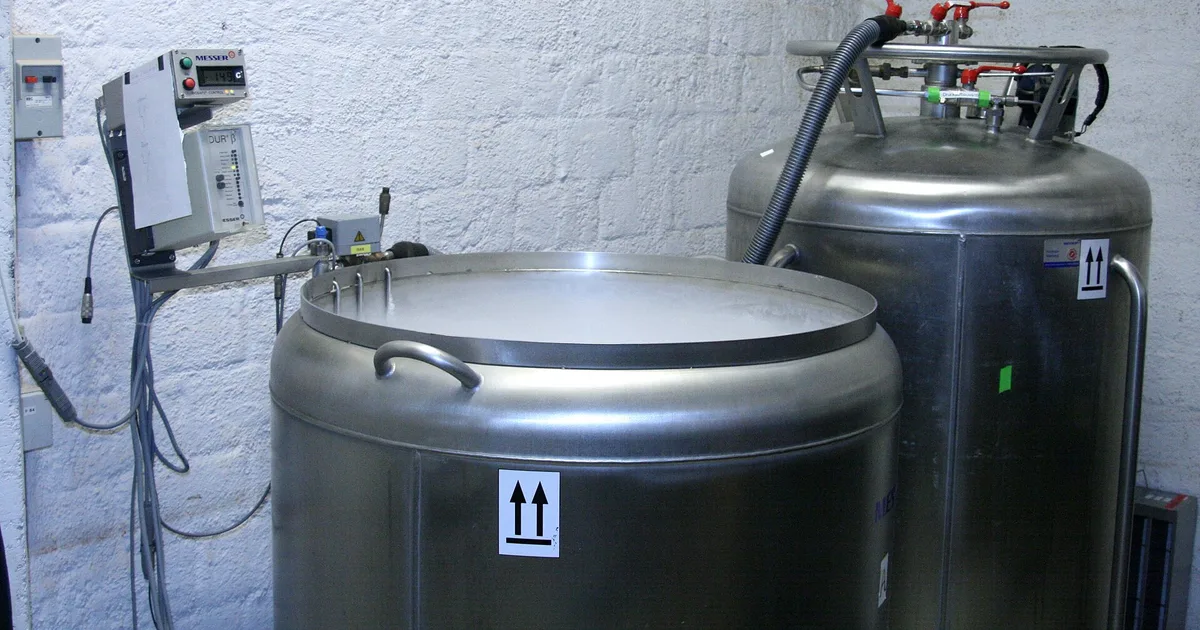
No — vitrified embryos sit in the lab’s cryogenic tanks until a storage contract ends, and waiting itself does not use them up: the 2026 series of 3,167 warming cycles still reported survival above 99%. The open question is contractual rather than biological, since storage runs about $500–$1,000 a year and clinics set their own terms for lapse.
Next Step
If you are comparing clinics on fresh-versus-frozen policy, ask each one for its freeze-all rate, OHSS rate and per-transfer live birth rate for your age band. The ProIVF clinic directory lists programmes with published CDC/SART reporting and Chinese-language support, and you can send us your protocol summary for a neutral second read.
This article is for information only and is not medical advice. Reproductive outcomes depend on your individual diagnosis, age, embryo stage and clinic laboratory performance; confirm protocols and pricing directly with your clinic. External links open third-party sites and are provided for reference only.
Prepared by the ProIVF Medical Editorial Team from peer-reviewed trials (Cochrane 2021, NEJM 2018, Fertility & Sterility 2023) and CDC ART reporting. The ProIVF Medical Advisory Board reviewed the clinical claims. We publish to support informed decisions, not to promote one protocol; both strategies are available at the clinics listed on this site.
Last updated: September 29, 2026.