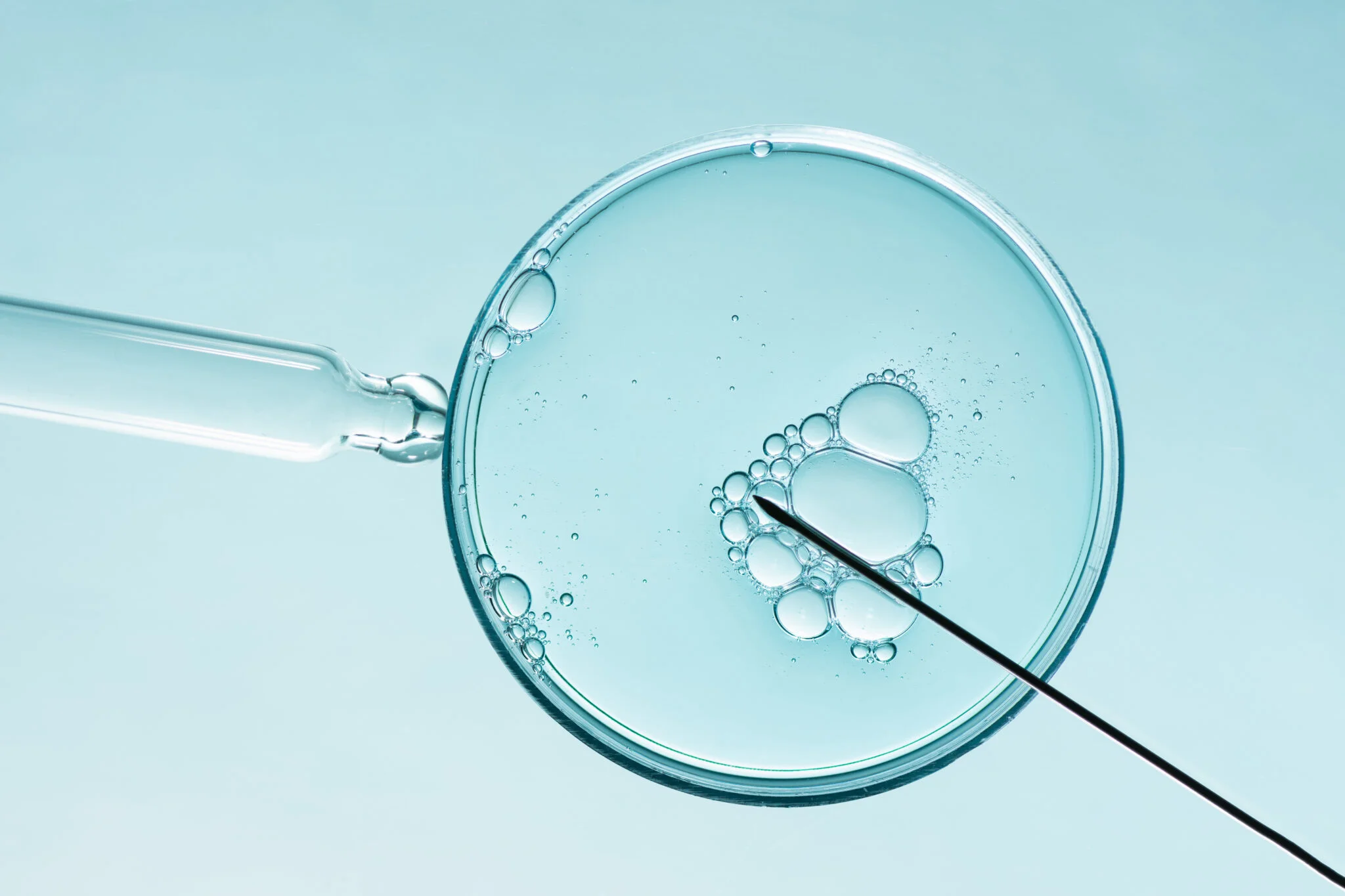
IVF (in vitro fertilization) is a fertility treatment in which an egg is fertilized by sperm outside the body in a laboratory dish, and the resulting embryo is transferred into the uterus. Since the world’s first IVF baby was born in 1978, more than 12 million babies have been conceived through this technology worldwide.
What Is IVF, or IVF とは?
IVF stands for in vitro fertilization — “in vitro” is Latin for “in glass,” meaning fertilization happens in a laboratory dish rather than inside the fallopian tube. “IVF とは” is simply the Japanese way of asking “What is IVF?”, one of the most-searched fertility questions in Japan.
“In vitro fertilization (IVF) is a series of procedures used to help with fertility or prevent genetic problems and assist with the conception of a child.” — American Society for Reproductive Medicine (ASRM), patient education materials, 2023
Interest in the question is well founded: in Japan, 1 in 16 babies is now born through assisted reproductive technology, among the highest shares in the developed world, and the Japan Society of Obstetrics and Gynecology (JSOG) reports more than 70,000 IVF cycles performed there each year.
How Does the IVF Process Work, Step by Step?
A complete IVF cycle moves through six steps — ovarian stimulation, egg retrieval, fertilization, embryo culture, embryo transfer, and a pregnancy blood test — in roughly 6-8 weeks.
Step 1: Ovarian Stimulation — 10-14 Days
Daily follicle-stimulating hormone (FSH) injections help several follicles mature at the same time. You visit the clinic every 2-3 days for ultrasound and blood tests to track follicle growth.
Step 2: Egg Retrieval
When the follicles are ready, an hCG “trigger shot” is given, and eggs are collected under anesthesia 36 hours later. The doctor guides a thin needle through the vaginal wall by ultrasound to aspirate the follicle fluid — a 20-30 minute procedure.
Step 3: Fertilization
The retrieved eggs are combined with sperm in the laboratory. If sperm quality is low, a single sperm is injected directly into each egg using ICSI (intracytoplasmic sperm injection).
Step 4: Embryo Culture
Fertilized embryos grow in an incubator for 3-6 days, reaching the cleavage or blastocyst stage. Some embryos can undergo PGT genetic screening to confirm their chromosomes are normal.
Step 5: Embryo Transfer
A doctor places one or two healthy embryos into the uterus through an extremely thin catheter. The procedure takes 5-10 minutes and is painless; surplus quality embryos can be frozen for later use.
Step 6: Pregnancy Test
A blood hCG test 10-14 days after transfer confirms whether implantation occurred.
Who Needs IVF Treatment?
IVF addresses a wide range of fertility problems, from blocked tubes to inherited disease risk.
| Condition | How IVF Helps |
|---|---|
| Blocked or removed fallopian tubes | Bypasses the tubes entirely |
| Male factor infertility (low count, weak motility) | ICSI injects a single sperm directly into the egg |
| Ovulation disorders (PCOS, premature ovarian failure) | Controlled stimulation retrieves eggs reliably |
| Endometriosis | Works around the impact of endometriosis on fertility |
| Unexplained infertility | Highest success rate per cycle of any treatment option |
| Advanced age (35+) | PGT-A selects chromosomally normal embryos |
| Inherited disease risk | PGT-M selects embryos that do not carry the disease gene |
| LGBTQ+ and single-parent family building | Donor sperm, donor eggs, or third-party reproduction |
How Successful Is IVF?
Age is the single biggest factor: according to CDC ART surveillance data, live birth rates per transfer with fresh, own eggs run from about 50-55% under age 35 to under 5% over 42.
| Age | Live Birth Rate per Transfer |
|---|---|
| Under 35 | ~50-55% |
| 35-37 | ~40% |
| 38-40 | ~25-30% |
| 40-42 | ~10-15% |
| Over 42 | ~5% or less |
Japanese outcomes are broadly similar: JSOG registry data show live birth rates of roughly 30% per transfer for women under 35, declining to about 5% over 42, and Japan hosts many clinics with advanced embryology laboratories. Additional data are available from SART and the JSOG registry.
How Much Does IVF Cost in Japan vs. Abroad?
A single IVF cycle costs roughly ¥500,000-¥800,000 in Japan and $15,000-$25,000 in the United States, while Thailand and Malaysia offer complete treatment at a fraction of the US price.
| Country / Region | Average Cost per Cycle | Notes |
|---|---|---|
| Japan | ¥500,000-¥800,000 (about RMB 25,000-40,000) | Since 2022, national insurance covers 1 cycle/year |
| United States | $15,000-$25,000 (about RMB 110,000-180,000) | The world’s most expensive market; some states mandate coverage |
| Mainland China | RMB 30,000-80,000 (1st/2nd generation) | Third-generation IVF with PGT costs about RMB 50,000-120,000 |
| Thailand | $8,000-$12,000 (about RMB 60,000-90,000) | High-value overseas option with package pricing |
| Malaysia | $6,000-$10,000 (about RMB 40,000-70,000) | Chinese-speaking staff at many clinics |
Since April 2022, Japan’s national health insurance has covered one IVF cycle per year for women under 43, though stimulation drugs and PGT genetic testing usually remain out-of-pocket. Many Japanese patients still choose treatment abroad — especially Thailand and Malaysia — where lower all-in costs often include PGT screening. For a full country-by-country breakdown, see our IVF cost guide.
What Are the Risks and Side Effects of IVF?
IVF is generally safe, but the hormone treatment carries real side effects worth understanding before starting.
- Ovarian hyperstimulation syndrome (OHSS) — Severe OHSS occurs in about 1% of cycles, with higher risk in women with PCOS.
- Multiple pregnancy — Transferring 2 or more embryos raises the chance of twins or triplets.
- Ectopic pregnancy — Occurs in about 2-5% of IVF pregnancies, slightly above the natural rate.
- Emotional strain — Hormone swings and the uncertainty while waiting for results are a genuine psychological burden.
- No guarantee of success — One cycle may not work, and some patients need several attempts.
What Do Real Patients Experience? Three Cases
These anonymized cases show how different paths — insurance-covered treatment, PGT-A at 42, and cross-border IVF — can each end in a baby.
Case 1: One Frozen Embryo Transfer at 36 — Tokyo
Ms. Yang, 36, Tokyo — tubal factor: Blocked fallopian tubes led the couple to IVF at a Tokyo clinic, where her first cycle produced 9 eggs, 6 fertilized, and 2 blastocysts frozen; one frozen embryo transfer resulted in pregnancy. With national insurance covering part of the treatment, out-of-pocket costs were about ¥350,000 (roughly RMB 18,000).
“I was terrified of the injections, but the nurses called me every day to guide me,” she says.
Case 2: PGT-A at 42 — Osaka
Ms. Lin, 42, Osaka — age-related infertility: After two years of trying naturally, she chose IVF with PGT-A screening: 6 eggs retrieved, 4 fertilized, and only 1 chromosomally normal embryo — and that single transfer succeeded. Total cost including PGT was about ¥600,000 (roughly RMB 30,000).
“One normal embryo is enough. The two weeks waiting for the genetic results were the hardest,” she recalls.
Case 3: Cross-Border IVF in Bangkok
Ms. Chen, 39, Fukuoka — cost-driven: Expecting to need multiple cycles, she traveled to Bangkok for treatment. Including travel, her total came to about ¥700,000 (roughly RMB 35,000) — comparable to a single Japanese cycle, but with PGT-A included — and her first cycle succeeded.
“The clinic arranged transfers and an interpreter; I only had to stay 12 days,” she says.
FAQ
Q: What does “IVF とは” mean?
“IVF とは” is Japanese for “What is IVF?” — the phrase Japanese users type when starting fertility research. This guide answers it in full: IVF is a treatment proven in 1978 that has since delivered more than 12 million babies worldwide.
Q: How long does one IVF cycle take?
A complete cycle — from stimulation to the pregnancy blood test — takes about 6-8 weeks: 10-14 days of stimulation, one retrieval day, 3-6 days of embryo culture, and a 10-14 day wait after transfer.
Q: Is IVF painful?
Daily injections cause mild soreness, egg retrieval is done under anesthesia, and transfer itself is painless. Most patients say the bloating during the last 2-3 days of stimulation is the most uncomfortable part.
Q: Are IVF babies as healthy as naturally conceived children?
Yes. Long-term follow-up studies of children born since 1978 show no differences in physical growth, intelligence, or psychological development, and PGT screening further lowers the risk of chromosomal disorders.
Q: Does Japanese health insurance cover IVF?
Since April 2022, national health insurance has covered 1 IVF cycle per year for women under 43. Fertility drugs and PGT genetic testing are usually not reimbursed — confirm the details with your clinic.
Q: What should I check when choosing an overseas IVF clinic?
Focus on 5 things: laboratory quality, doctor experience, transparent pricing, patient reviews, and published success rates.
Japanese patients most often choose Thailand, Malaysia, and the United States. You can compare vetted centers in our global fertility clinic directory.
Q: Should I choose Japan, Thailand, or Malaysia?
Japan offers mature laboratories and insurance coverage from about ¥500,000 per cycle, while Thailand and Malaysia cost less and more often bundle PGT-A into the package. The right choice depends on your age, budget, and diagnosis — a fertility assessment first is the safest step.
Is IVF Right for You?
Whether you searched “IVF とは”, “what is IVF”, or “test tube baby”, the answer is the same: in vitro fertilization is a mature, safe, and effective assisted reproductive technology. Understanding how the treatment works, what it costs, and what success rates look like at your age is the first step to an informed decision.
If you are considering IVF, the next step is comparing clinics that fit your diagnosis and budget. Browse our global fertility clinic directory or contact the ProIVF team for personalized guidance.
Last updated: July 6, 2026. This article is for general education only and does not constitute medical advice. IVF success rates and costs vary with individual circumstances, clinic quality, and location; ProIVF recommends consulting a licensed reproductive specialist and verifying all information directly with your chosen clinic.
Content Authorship
Written by the ProIVF Medical Editorial Team and reviewed by the ProIVF Medical Advisory Board, based on public data and clinical guidance from ASRM, the US Centers for Disease Control and Prevention (CDC), and the Japan Society of Obstetrics and Gynecology (JSOG).
Sources
- American Society for Reproductive Medicine (ASRM) — patient education materials
- Centers for Disease Control and Prevention (CDC) — ART success rates
- Society for Assisted Reproductive Technology (SART) — clinic outcome data
- Japan Society of Obstetrics and Gynecology (JSOG) — ART registry reports
- Human Fertilisation and Embryology Authority (HFEA) — UK IVF success rates