'%20d='m0%200%2016%2011h61%2061%2061%2061%2060L47%2037h61%2061%2060%2061L16%2063h61%2061%2061%2061%2060L47%2089h61%2061%2060%2061L16%20115h61%2061%2061%2061%2060L47%20141h61%2061%2060%2061L16%20166h61%2061%2061%2061%2060L47%20192h61%2061%2060%2061L16%20218h61%2061%2061%2061%2060z'/%3e%3c/svg%3e)
About Conceive Fertility Center - Frisco
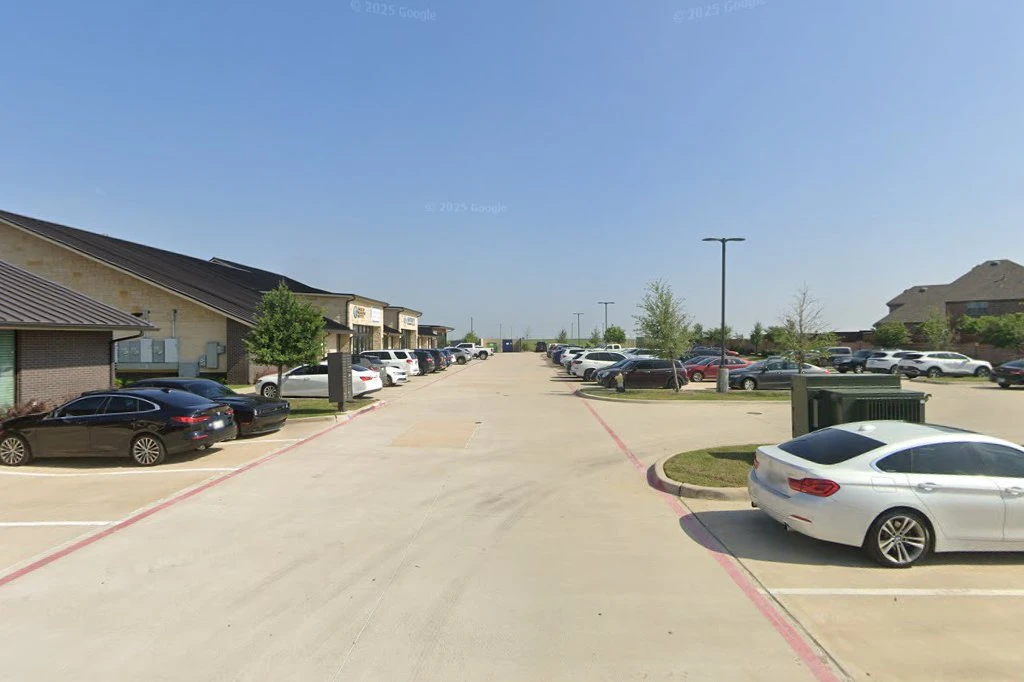
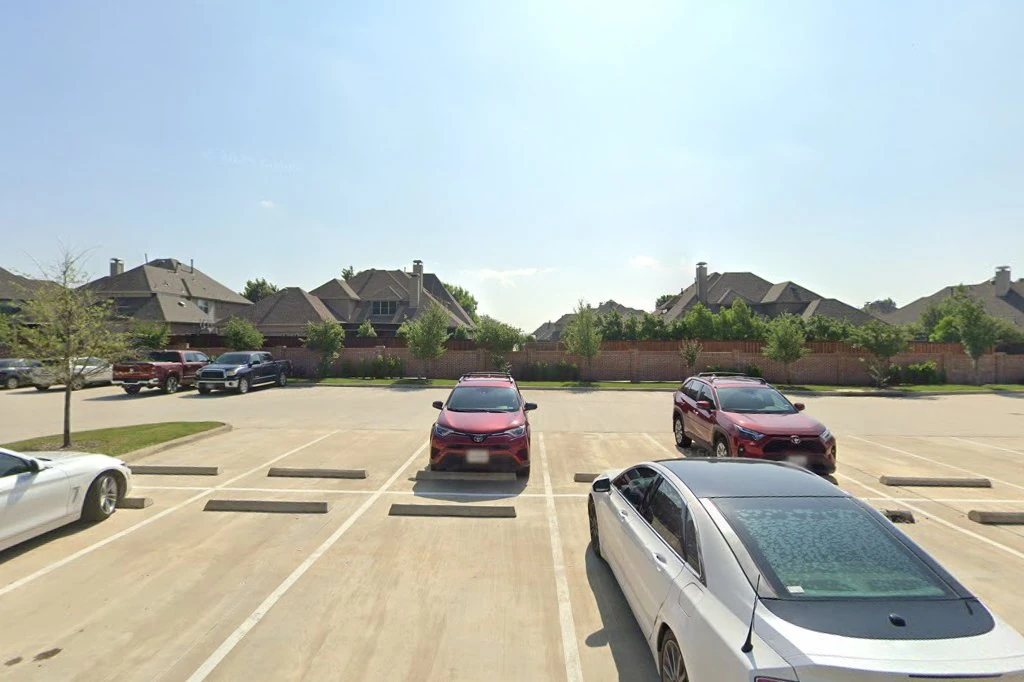
Frisco is a satellite office of the Conceive Fertility Center brand, at 13052 Dallas Pkwy Suite 230. Our sources describe this address as the outpatient side of the network: consultations, monitoring scans and bloodwork. The location page’s own service list runs to fertility evaluation, IVF, IUI, fertility preservation (egg, sperm and embryo freezing), LGBTQ+ fertility services, fertility surgery by hysteroscopy and laparoscopy, and preimplantation genetic testing. The catchment it names is its own: Frisco, Plano, The Colony, Lewisville, Prosper, Celina, Aubrey, Little Elm, Hackberry, Crossroads, Krugerville, Corinth and Oak Point.
Two things are not at this address, and the practice says so. Egg retrieval and embryo transfer take place at the brand’s partner outpatient surgery centers — Baylor Surgical Center on the Dallas/Las Colinas side, THR Surgery Center in Euless/Bedford and THR Surgery Center at Craig Ranch in McKinney — and embryo work is done at a third-party partner laboratory, Allen Reproductive Center, which cultures embryos to day 5 or 6. Our Frisco sources record no IVF laboratory here, and they do not say which of those three surgical centers takes Frisco patients. Ask before you book a retrieval date.
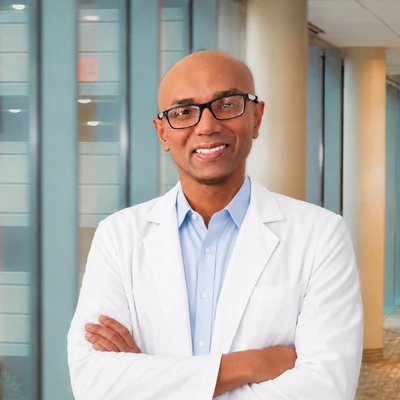
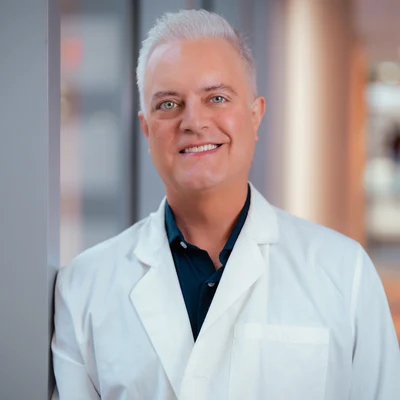
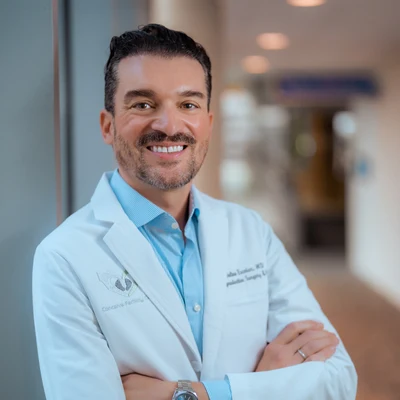
Three physicians appear in the practice’s Doctors navigation: Biren Patel, MD, Julian Escobar, MD and Derek Haas, MD. This page lists those three names and stops there. Our data records each of them against more than one of the brand’s DFW offices, and no source assigns a home site to any of them. The 2023 network report names Julian Escobar, MD as Medical Director and as the physician who verified the filing. Posted reviews on this listing also mention a clinician outside that MD list; our sources do not document that person’s credentials, so no profile is published here. Two identifiers cover the whole brand — SART ClinicPKID 2001104 (SARTNumber 0900, member since 2020-07-30) and CDC ArtClinicId 811 — and Frisco files nothing of its own. Our data stores 2015 as an establishment year, but nothing ties that date to this address: what we can document is a 2020 copyright line on the Frisco page and the 2020-07-30 SART membership date, so this page makes no “since 2015” claim. The location page’s own About block claims “over 30 years of quality training and experience” and a “world class facility”; that is clinic marketing text, and our sources do not support it as a site history.
Read the outcome chart as a brand figure, not a Frisco result. The 684 cycles and the age bands come from the network’s Dallas-registered report. Within our own library that single registration row has been captured in two different ways — the Conceive DFW pages carry two different sets of age-band values for ClinicPKID 2001104. This page reports the values held in its own fields (under 35 58.8%, 35-37 35.7%, 38-40 21.9%, over 40 5.0%) and takes no position on which stored set matches the published report line for line. Because of that, and because a satellite office files nothing separately, this page makes no comparison, ranking or “strongest of the DFW offices” claim. What does hold up: the practice reports to SART and to the CDC, and a per-office success rate is not published in our sources.
The metric behind the clinic bars is live births per intended egg retrieval counting all embryo transfers, using a patient’s own eggs, and the band sizes are small enough to matter: 102 retrievals under 35, 56 at 35-37, 73 at 38-40, 31 at 41-42 and 29 over 42. The over-40 bar is a cycle-weighted blend of those last two bands (6.5% and 3.4%), which is why it reads 5.0% rather than either raw number. Two reporting mechanics also sit inside that 684: 39 delayed-outcome cycles were counted, and 49 cycles that began in 2024 were pulled back into the 2023 report, so this is a reporting-year total rather than a calendar-year headcount.
The national row on the same chart is the SART 2023 Final national summary (53.2 / 39.9 / 26.2 / 9.4): same registry, same reporting year, so a band-by-band reading is legitimate. The brand row sits above that national line only in the under-35 band and below it at 35-37, 38-40 and over 40. Split out, the brand’s 41-42 result is 6.5% against a national 13.2%, and over-42 is 3.4% against 4.1%. Our extract names the denominator for the clinic bands and labels the national bands only as 2023 Final cumulative live-birth rates, and our sources show no patient-mix adjustment behind either row, so read this as direction rather than a verdict on your own cycle. The same report row carries other denominators, and they move in both directions: counting only the first transfer, the brand reports 47.1% under 35, 28.6% at 35-37 and 15.1% at 38-40, all below the bars on the chart; counting per new patient rather than per cycle, it reports 66.3%, 42.9% and 34.0%, all above them. Donor-cycle figures on that row read 35.4% and 50% for thawed donor embryos and donated embryos, and our extract does not name the denominator for those two.
One calculation we will not do: the national summary records 425,869 cycles in 2023 and an average of 932 cycles per reporting clinic, and this page’s fields store that 932. Our library holds four different versions of that per-clinic average on different pages, so 684 appears here as a volume, not as a fraction or multiple of a national mean.
Accreditations & Awards
- SART membership since 2020-07-30 — SARTNumber 0900 on the CORS profile. The report row behind this page’s chart, ClinicPKID 2001104, is the network’s Dallas registration.
- CAP laboratory accreditation recorded — “CAP Accredited” appears in the CertsAndAccredidations field of the SART member profile. The accredited lab is the partner facility, Allen Reproductive Center, not a Frisco bench.
- Joint Commission certification recorded — same profile field, same brand-level scope.
- CDC reporting — the network files annually under ArtClinicId 811. The 2022 filing there records 624 cycles, 152 pregnancies, 119 deliveries and 129 infants, with SART member and verified lab accreditation both flagged. This page’s chart uses the newer SART 2023 row instead.
- Google rating 4.4 stars across 80 reviews on the Frisco listing (collected 2026-08-27). Star counts break down 68 five-star and 11 one-star, with one four-star in between.
- Peer recognition for two physicians — the network’s Medical Director has been named a D Magazine Best Doctor (2013, 2015-2024) and a Texas Monthly Super Doctor (2016-2022), with Rising Star honors in 2012-2014; Dr. Haas is recorded as a D Magazine Best Doctor in 2018, 2021 and 2022 and a Texas Super Doctor in 2014 and 2017. These attach to individual physicians across the brand’s offices, not to this address.
Why Choose Conceive Fertility Center - Frisco
- Monitoring stays local, procedures do not. A stimulation cycle means repeat scans and bloodwork. Those happen at Dallas Pkwy — a review on this listing recalls bloodwork being drawn at the Frisco office — and only retrieval and transfer days move to a partner surgery center.
- The partners are named on the practice’s own site. You can find out before booking which laboratory handles your embryos (Allen Reproductive Center) and which surgical center takes your procedure; the third-party split is stated plainly rather than buried.
- Same price list as the rest of the brand. The network publishes one self-pay list, so the quote at this office should match the practice’s public page item for item.
- Preservation work shows up in the filing, not just the brochure. The 2023 report’s banking section for the network lists 36 oocyte banking cycles, 2 embryo banking cycles for fertility preservation, 22 thaw-for-refreeze cycles and no donor oocyte banking. That is freezing activity you can count.
- Spanish-language care is on the record. The network’s Medical Director is described as fluent in Spanish, and this listing’s language fields cover English, Simplified Chinese and Spanish.
- Eligibility screening is worth asking about early. Nothing in our sources publishes this practice’s age or body-mass cut-offs, the lab’s fertilization policy or whether single-embryo transfer is standard. Bring those questions to the consult.
IVF & Fertility Services
The Frisco page names seven service lines; the brand navigation adds the rest. All of it runs through the partner laboratory and partner surgical centers described above.
- In vitro fertilization (IVF) — the lead service on the location page, from consultation through embryo transfer.
- Mini IVF — a lighter-stimulation protocol on the brand’s treatment list, described as fewer injections and fewer visits, offered as a double-retrieval variant.
- Intrauterine insemination (IUI) — washed, concentrated sperm placed in the uterus in the fertile window.
- ICSI — single-sperm injection, listed in the brand’s treatment navigation.
- Fertility evaluation and testing — history review, physical exam and diagnostic testing to define a plan.
- PGT (preimplantation genetic testing) — the location page frames it as screening embryos before transfer to lower the risk of passing on a genetic condition; our sources do not say whether biopsy and analysis happen in house or go out to the partner lab.
- Fertility preservation — egg freezing, sperm freezing and embryo freezing, the emphasis of the Frisco page.
- Donor egg and donor sperm programs — both on the brand’s list.
- LGBTQ+ family building — the Frisco page lists donor sperm and gestational carriers among third-party reproduction options.
- Fertility surgery — hysteroscopic and laparoscopic treatment of endometriosis and uterine abnormalities, plus tubal reversal, performed at a partner surgical center.
- PRP for ovarian regeneration — a named item in the brand’s treatment list; our sources carry no outcome data for it, so read it as offered rather than proven.
Fees & Packages
There is no Frisco price list. The brand publishes one self-pay list on its Affordable Fertility Treatments page, captured 2026-08-27:
- IVF cycle: under $15,000. Covers one egg retrieval, physician management, monitoring sonograms and anesthesia. Excludes pre-cycle testing, medications, freezing and storage, the transfer cycle and embryo genetic testing.
- Mini Stim IVF (Double IVF): $18,150. Covers two retrievals, physician management, monitoring sonograms, IVF laboratory fees and anesthesia.
- Egg freezing: $6,700.
- Tubal reversal surgery: $8,310.
- Individual visits and tests: new patient visit $300; semen analysis $150; sonohysterogram $400; hysterosalpingogram $500.
- Medications run separately: the practice’s own estimate is $3,000 to $6,000 for an IVF cycle, about $2,500 for Mini IVF and under $500 for a typical frozen embryo transfer cycle.
The practice states that most plans cover diagnostic testing but not IUI or IVF treatment, and that financing is available. Nothing in our sources describes a refund program, a shared-risk arrangement or a multi-cycle package, and no medication, storage or PGT price is published beyond the ranges above.
Patient Journey
The brand’s IVF page sets out one sequence; only the buildings change at Frisco.
- Consult and evaluation — hormone testing, ultrasound and a review of your fertility history at the Frisco office.
- A written plan — the physician recommends IVF, Mini IVF, IUI, preservation, donor gametes or gestational-carrier care. The practice describes its approach as listening first, then tailoring.
- Stimulation with monitoring — injectable medication with ultrasound and hormone checks at Dallas Pkwy. The practice does not publish a stimulation day count or a monitoring schedule, and our sources do not document early-morning or weekend monitoring hours; the listed office hours are weekdays only.
- Egg retrieval — an ultrasound-guided outpatient procedure under anesthesia at a partner surgical center. Which center serves Frisco patients is not published.
- Fertilization and culture — eggs and sperm are handled at Allen Reproductive Center, with embryos grown to day 5 or 6.
- Transfer and freezing — one or more embryos placed in the uterus at the partner center; surplus viable embryos are cryopreserved for later use. The brand’s published materials do not state whether single-embryo transfer is its default.
- Pregnancy test and follow-up — the practice’s IVF page puts the test at two weeks after transfer, with monitoring afterward. How long the practice follows a positive test before handing off to obstetrics is not described.
Local Legal Framework
Frisco sits under Texas law, and Texas regulates assisted reproduction mainly through parentage statutes rather than through IVF-specific practice rules. The Frisco research points to Texas Family Code Chapter 160, the Uniform Parentage Act, and specifically to Subchapter I for gestational agreements.
- Surrogacy and gestational carriers: Subchapter I authorizes gestational agreements and gives a route to have one validated by a court before birth. The operative sections we verified against statute text for this network’s Texas pages are § 160.754 (“Gestational Agreement Authorized”), § 160.755 (“Petition to Validate Gestational Agreement”) and § 160.760 (“Parentage Under Validated Gestational Agreement”), and they match the chapter and subchapter the Frisco research cites. Who qualifies to use the procedure, including unmarried and same-sex intended parents, is not addressed in our sources; a Texas family-law attorney should map that before you sign anything.
- Egg, sperm and embryo donation: parentage of a gamete donor is set by § 160.702 (“Parental Status of Donor”) in the same chapter. The brand’s donor-egg, donor-sperm and donor-embryo programs sit inside that framework. Our sources say nothing about the practice’s own donor screening or consent paperwork, so ask.
- Insurance: our sources do not identify a Texas statute that requires most plans to cover IVF. The practice’s price page says plans typically cover diagnostics and exclude IUI and IVF treatment. Get your coverage in writing before you start a cycle.
- What we did not verify: the Frisco research describes Texas as relatively permissive toward LGBTQ+ family building and donor programs. That is an interpretation, and we do not restate it as law here. Nothing in our sources covers Texas rules on embryo disposition, embryo legal status, PGT restrictions, clinic licensure, donor compensation limits or this practice’s own eligibility cut-offs.
Location
- Address: 13052 Dallas Pkwy Suite 230, Frisco, TX 75033
- Phone: (214) 224-0778