'%20d='m0%200%2016%2011h61%2061%2061%2061%2060L47%2037h61%2061%2060%2061L16%2063h61%2061%2061%2061%2060L47%2089h61%2061%2060%2061L16%20115h61%2061%2061%2061%2060L47%20141h61%2061%2060%2061L16%20166h61%2061%2061%2061%2060L47%20192h61%2061%2060%2061L16%20218h61%2061%2061%2061%2060z'/%3e%3c/svg%3e)


About Gago Center for Fertility
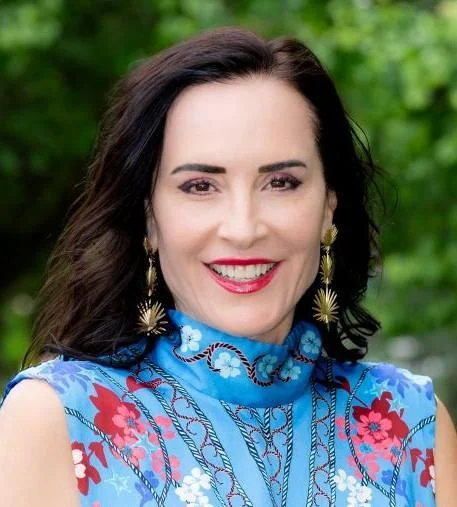
Gago Center for Fertility is a reproductive endocrinology and infertility (REI) practice in Brighton, Michigan, a Livingston County community in the Detroit suburbs. Dr. Laura April Gago opened it in 2007 after running the University of Michigan’s IVF program, where she built that school’s fertility preservation and donor oocyte programs. The same team also sees patients at the practice’s Lansing and Ann Arbor offices. The roster is small — three clinicians across those three locations: Gago, reproductive endocrinologist Elizabeth Pritts, who joined part-time after selling the Wisconsin clinic she co-founded and directed until 2024, and family nurse practitioner Shoshana Gruber.
One thing to understand before you read any number on this page: the clinic registers with SART and the CDC as a single reporting entity, “Gago IVF,” covering the Brighton, Lansing and Ann Arbor offices together. There is no Brighton-only outcome data. Dr. Gago is the medical director of record in both the SART 2023 report and the CDC 2022 clinic profile.
The laboratory work sits inside the practice: stimulation, egg retrieval, IVF and ICSI fertilization and embryo culture are handled with an on-site embryologist, and the lab is recorded as CAP-accredited. IUI, egg and sperm freezing, donor eggs, donor sperm and donated embryos are all listed services, along with in-office diagnostics such as semen analysis, sonohysterogram and hysteroscopy. What the clinic’s own materials do not document is where embryo biopsy for PGT is analyzed, or whether the lab uses time-lapse culture.
Outcomes, stated plainly. The SART 2023 Final report for this registration records 631 cycles and cumulative live birth per intended egg retrieval counting all embryo transfers: 39.9% under 35, 36.7% at 35-37, 17.5% at 38-40, and 6.8% at 41 and over. The national row in the comparison table on this page (SART 2023 National Summary, same metric) is 53.2 / 39.9 / 26.2 / 9.4. The clinic is below the national benchmark in every age band — by 13.3 points under 35, 3.2 points at 35-37, 8.7 points at 38-40 and 2.6 points at 41-plus. The narrowest gap is at 35-37; the widest is under 35. Four qualifications, all from the same report. The 41-plus figure pools 27 cycles at 11.1% for ages 41-42 with 17 cycles over 42 that produced no live births, so a handful of cases moves it. SART received data on 79.1% of the clinic’s retrieval starts, so these percentages describe the reported subset. The secondary rows on this page’s table are labelled fresh and frozen, but the metric behind the figures filled in there is live birth after the first embryo transfer — 34.8% under 35, 24.1% at 35-37, 2.3% at 41-plus — and the frozen-transfer row is blank because SART does not publish percentages for bands with fewer than 20 cycles; the clinic’s 2023 data records 96.5% of its transfers as frozen-embryo transfers rather than same-cycle fresh ones. And a separate tab of the report shows live birth per new patient after one retrieval running far higher — 63.4% under 35, 57.9% at 35-37, 33.3% at 38-40 — because it counts a different denominator over a selected new-patient group, and SART publishes no national figure for that tab, so this page does not compare it. On volume, the clinic reported 631 cycles in the 2023 cycle year; this page also carries a national per-clinic average of 932 cycles, and the source data does not say which year that average covers, so read it as an order-of-magnitude reference rather than a same-year matchup.
Accreditations & Awards
- SART member clinic since 2011 (SART #0778, registration ClinicPKID 2555). Outcomes are filed with SART and the CDC, which is what makes the numbers above checkable rather than marketing.
- CAP-accredited laboratory — the accreditation that governs how your eggs, sperm and embryos are handled. Recorded as CAP-accredited in the SART registration and as “verified lab accreditation” in the CDC clinic profile.
- Medical director of record: L. April Gago, MD, named in both the SART 2023 report and the CDC 2022 profile — registry confirmation that the physician described on the website is the physician responsible for the reported cycles.
- One registry flag worth asking about. When this profile’s data was pulled on 2026-09-03, SART’s clinic search returned an “in good standing” value of false for this registration, even though the 2023 final report itself reads in full. If you are choosing between clinics, ask the practice what that flag reflects.
- Patient ratings, two different instruments: 4.7 out of 5 across 484 reviews on the clinic’s Google Maps listing as of 2026-09-03, a spread that includes 28 one-star reviews, and a separate 4.83 average shown in the footer of the clinic’s own website booking platform. Neither is an accreditation, and the aggregate score hides what the recent low ratings name: a physician’s communication and the handling of a 2023 IVF cycle.
- Laura’s Hope — a nonprofit founded by Dr. Gago that awards fertility treatment grants to couples who have been through pregnancy loss, neonatal loss or recurrent pregnancy loss. This is the clinic’s own program description.
- No ranking applies to this clinic. The “top 100 fertility practice” honors on Dr. Elizabeth Pritts’s profile were earned by Wisconsin Fertility Institute, the practice she co-founded and directed until 2024, and her “Best Doctors in America since 2009” listing is sourced to the clinic’s own biography page. Neither is a Gago Center accreditation.
Why Choose Gago Center for Fertility
- A protocol set by the physician who runs the practice. This is a two-endocrinologist practice with an on-site embryologist, so the person who designs your stimulation works out of the same building where the eggs are fertilized and cultured. Dr. Gago ran the University of Michigan IVF program before opening here.
- Monitoring close to home, early enough to keep your job. Stimulation cycles need bloodwork and scans every couple of days. Brighton opens at 7:00 AM Monday through Friday and 8:00 AM Saturday until noon; Lansing and Ann Arbor run 7:00 AM to 3:30 PM and close on Wednesday.
- Diagnostic work that does not need a hospital referral. Semen analysis is available at all three offices; the uterine cavity evaluation with a hysteroscope in a saline-distended cavity is performed at the Brighton facility; sonohysterogram and tubal patency testing are in-office procedures. Operative hysteroscopy is done under IV sedation with an anesthesiologist, with one or two days off work afterward.
- A free, individualized success forecast. After your workup the practice runs a Univfy PreIVF Report at no charge — a prediction model developed from Stanford University research and calibrated on this clinic’s own data, using your age, BMI, ovarian reserve results, semen analysis and diagnosis. Your physician reviews it with you at the next visit, which puts a number in front of you before you commit money to a cycle.
- Discounted multi-cycle packages and embryo banking, sold as the practice’s Build Your Family program. Given that the clinic’s own 2023 report shows fewer than half of retrievals in the youngest age band ending in a live birth, the price structure of a second and third cycle is part of the treatment plan, not an afterthought.
- Grant money for loss patients. Laura’s Hope, the nonprofit Dr. Gago founded, awards fertility treatment grants to families after pregnancy loss, neonatal loss or recurrent miscarriage — the kind of program that exists at practices where the owner sets the charitable agenda.
- The honest trade-off. Two physicians means limited choice of prescriber and one of them, Dr. Pritts, practices part-time. If your schedule needs a specific weekday or a third opinion inside the same practice, ask about physician availability before you sign.
IVF & Fertility Services
- In Vitro Fertilization (IVF): ovarian stimulation with injectable or oral medication, cycle monitoring by bloodwork and ultrasound, transvaginal egg retrieval as an outpatient procedure, fertilization in the in-house lab, embryo culture for three to five days, and transfer of one or more embryos based on age and history.
- ICSI (Intracytoplasmic Sperm Injection): single-sperm injection for low count, poor motility or abnormal morphology, for frozen or surgically retrieved sperm, and after prior fertilization failure. The practice states that ICSI is recommended for all its IVF patients to improve fertilization.
- Preimplantation genetic testing: PGT-A for chromosome number, PGT-M for single-gene conditions, and PGT-SR for structural rearrangements. The clinic quotes about 98% accuracy and states clearly that testing cannot eliminate the risk of a genetic problem developing later. Ask whether biopsy and analysis are performed in house or sent to an outside laboratory; the practice’s own materials describe PGT results returning to its embryologist.
- IUI, including donor sperm IUI: washed, concentrated semen placed through the cervix within roughly 24 hours of the LH surge, with the option of two inseminations in one window. The practice notes IUI as a less invasive, less expensive first step for unexplained or mild male factor infertility.
- Egg freezing and fertility preservation: stimulation, retrieval and cryopreservation with the on-site embryologist, for planned-delay family building or before chemotherapy, radiation or autoimmune treatment.
- Sperm freezing and semen analysis: sperm cryopreservation with post-thaw evaluation of motile count, plus two-sample semen analysis testing count, motility, morphology, volume, liquefaction and pH.
- Donor eggs and donated embryos: fresh and frozen donor eggs sourced through donation organizations that follow FDA screening rules — the practice’s patient resources name outside programs including Complete Conceptions, Happy Beginnings Egg Donation and frozen donor egg banks — plus embryo adoption through programs such as Snowflakes, Embryos Alive, Nightlight, Adoption Services of Cedar Park, Miracles Waiting and ReproTech. Patients who finish their families can donate their own unused embryos. Check the registry before you assume volume: in the clinic’s 2023 SART report there were no fresh donor-egg cycles and two cycles using frozen donor eggs, against 31 frozen embryo transfers made with donor eggs at a 35.5% live birth rate, and 13 transfers of embryos donated by other families with two live births. Donor-egg care here means matching through outside agencies, not a bank this clinic operates.
- Ovulation disorders and ovulation induction: evaluation and treatment for PCOS, hypothalamic dysfunction, premature ovarian failure and high prolactin, with oral or injectable medication.
- Uterine and tubal evaluation, and operative hysteroscopy: in-office cavity assessment for polyps, fibroids, scar tissue and congenital anomalies, tubal patency testing, and hysteroscopic correction of what the diagnostic exam finds.
- Add-ons the practice lists: assisted hatching, endometrial receptivity array testing, growth hormone and dexamethasone protocols, acupuncture referral, and specialty pharmacy routing for fertility drugs.
- Third-party reproduction: gestational carrier work appears in the clinic’s CDC service registration, alongside donor egg, donated embryo, egg freezing and embryo freezing.
Fees & Packages
There is no published price list. The practice’s website carries no cycle, medication or testing prices, so ask for line-item numbers for monitoring, retrieval, anesthesia, ICSI, embryo biopsy, freezing and annual storage before you commit.
Financing is the part of the cost picture the practice documents in detail. Four lending partners are listed: Future Family, which covers IVF cycles, egg freezing, IUI, donor eggs or sperm, gestational carriers, surrogacy, reciprocal IVF, LGBTQ+ family building, medications and PGT, with prequalification that does not affect your credit score; Prosper Healthcare Lending, offering immediate decisions on loans under $35,000, longer terms, no collateral and no prepayment penalties; CapexMD, which the practice describes as its partner for customized loan programs including financing for fertility medications, with a loan specialist coordinating funds before treatment starts; and United Credit, which also connects patients to private adoption financing.
Three other cost levers: the Build Your Family program bundles the free Univfy PreIVF forecast with discounted multi-cycle packages and an embryo banking option; Laura’s Hope awards treatment grants to patients with a history of pregnancy loss, neonatal loss or recurrent pregnancy loss; and the practice maintains a recommended supplement list and four named specialty pharmacies for drug pricing.
Michigan has no state mandate requiring insurers to cover fertility treatment, so coverage, if you have it, comes from an employer plan that chose to offer it. Verify your benefits for both diagnosis and treatment codes before your first cycle.
Patient Journey
- Request an appointment through the website form or the clinic’s patient portal, and pick the office nearest you — Brighton, Lansing or Ann Arbor. New patient consultations are available at all three sites.
- Comprehensive fertility evaluation: history and physical, hormone and ovarian reserve testing, ultrasound, semen analysis (usually two samples, after 24-72 hours of abstinence and away from alcohol, caffeine and hormonal supplements), and assessment of the uterine cavity and fallopian tubes.
- Plan review with a written forecast: once testing is complete the clinic generates your Univfy PreIVF Report at no charge and goes through your predicted IVF and IUI odds, and your realistic next step, with your physician at a follow-up visit.
- Stimulation and monitoring: injections on a calendar built for your ovarian reserve, tracked with bloodwork and scans at whichever office is convenient — Brighton starts at 7:00 AM on weekdays and opens Saturday morning for exactly this reason. Results are delivered through the clinic’s patient portal, and an after-hours answering service covers nights and weekends.
- Retrieval and fertilization: eggs recovered in an outpatient procedure and taken to the in-house lab for conventional insemination or ICSI, then cultured three to five days, with biopsy for PGT if you are testing. Eggs, sperm and embryos can be banked for future transfers instead of transferred immediately.
- Transfer: embryos placed through the cervix, one or more depending on your age, embryo quality and history. The practice’s own patient FAQ points to SART and ASRM guidance on limiting the number transferred, because the stated goal is one healthy baby rather than a pregnancy at any risk.
- Pregnancy test and follow-up about two weeks after transfer or insemination, since implantation and hormone rise take several days to show in blood or urine.
Local Legal Framework
The sources behind this profile — the practice’s own pages and its SART and CDC registrations — name no Michigan statute that governs IVF, ICSI, embryo testing, egg freezing, or egg, sperm or embryo donation at this clinic, and none records a state restriction on performing them. Michigan also imposes no state requirement that insurers cover fertility treatment. Rather than fill that gap with assumed law, here is how to handle each point in practice:
- Insurance and costs. Ask your employer plan in writing whether it covers infertility diagnosis, treatment, medications, egg freezing and storage, and which codes it pays under. Absent a state mandate, coverage is a benefit you verify rather than a right you assume.
- Embryo paperwork is your legal document. Because no state statute reviewed here defines the legal status of embryos at this clinic, the consent forms you sign control what happens to them: who owns them, storage terms and annual fees, what happens if you stop paying, and disposition after treatment ends — discard, donate to research, or donate to another family. The practice refers long-term storage to a dedicated embryo storage company, so read that agreement’s terms as carefully as the consent. Get answers before creating embryos, not after.
- Donor gametes and donated embryos. Donor screening is governed federally by FDA rules, and the practice says it works only with donation organizations that follow those guidelines; its donor sperm materials note FDA screening requirements and a donor age range of 18 to 39. Ask for the written donor agreement and confirm what it says about contact, anonymity and the donor’s legal relationship to a child.
- Parentage. Who is legally a parent of a child conceived with a donor egg, donor sperm, donated embryo or a gestational carrier is a Michigan family-law question that the sources reviewed here do not address. Consult a Michigan reproductive attorney before your first donor or carrier cycle, and expect the clinic’s forms and the attorney’s orders to be reconciled. The practice’s patient resources list a full-service surrogacy agency it works with.
- Genetic testing. PGT-A, PGT-M and PGT-SR are offered, with the clinic stating roughly 98% accuracy and a plain acknowledgement that testing does not rule out every condition. Ask for genetic counseling before transfer decisions, and if a result is ambiguous, before any decision about continuing a pregnancy.
Location
- Address: 2250 Genoa Business Park Drive, Suite 110, Brighton, MI 48114, United States
- Phone: +1 810-546-4913