'%20d='m0%200%2016%2011h61%2061%2061%2061%2060L47%2037h61%2061%2060%2061L16%2063h61%2061%2061%2061%2060L47%2089h61%2061%2060%2061L16%20115h61%2061%2061%2061%2060L47%20141h61%2061%2060%2061L16%20166h61%2061%2061%2061%2060L47%20192h61%2061%2060%2061L16%20218h61%2061%2061%2061%2060z'/%3e%3c/svg%3e)
About Pacific Reproductive Center
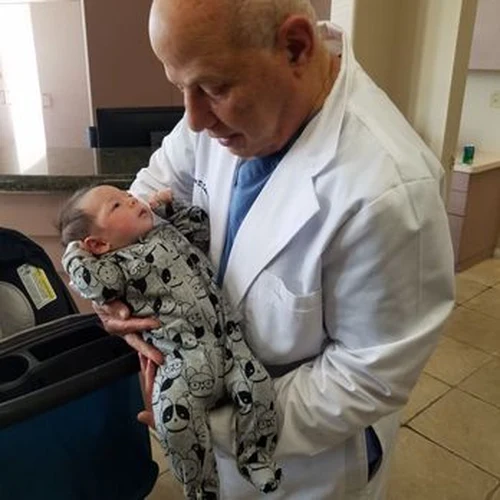
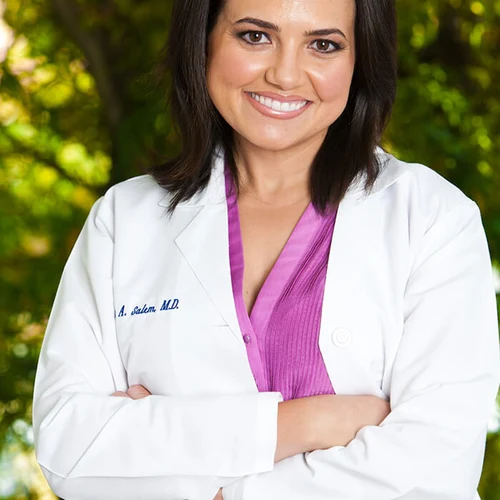
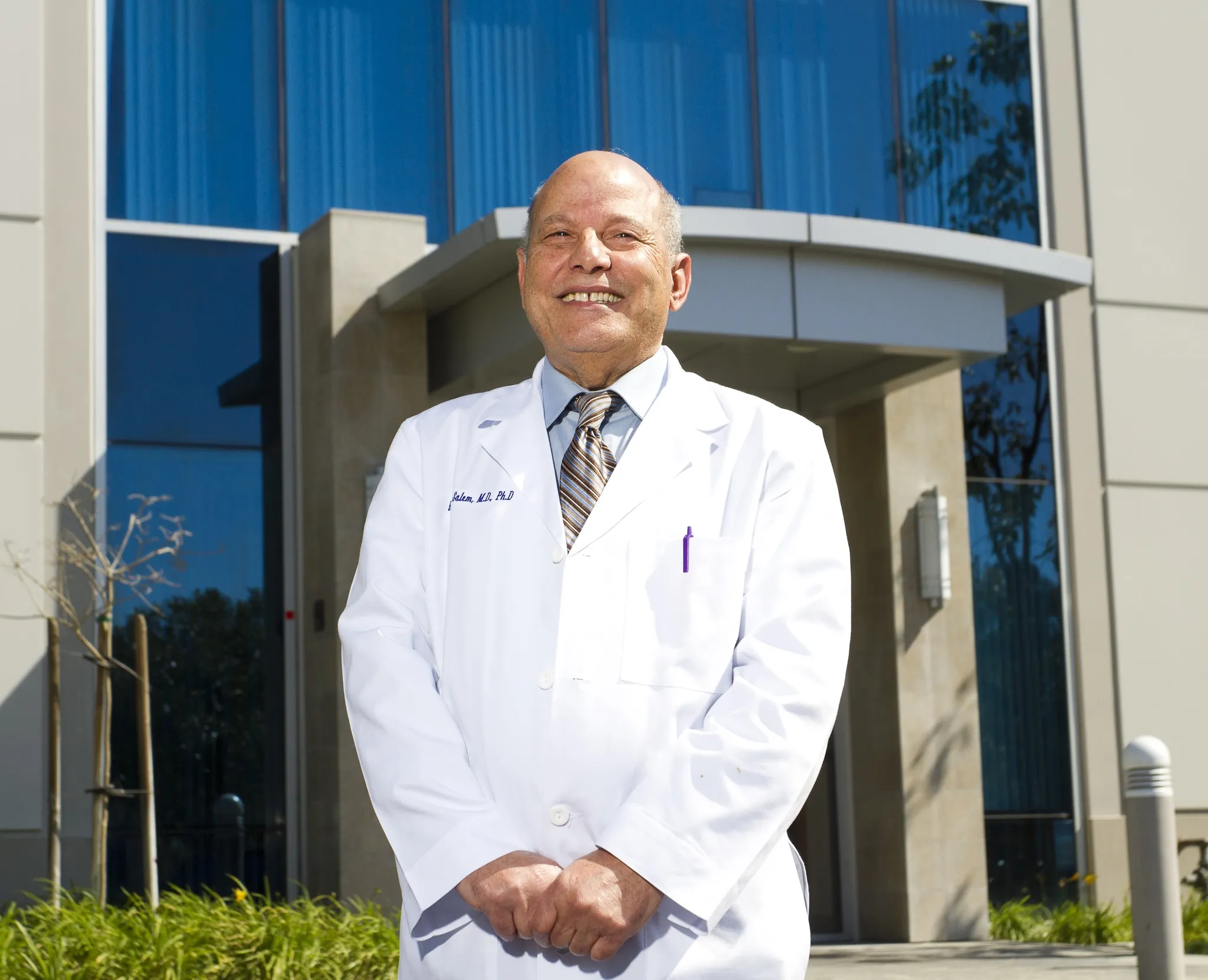
Pacific Reproductive Center (PRC) is a Southern California fertility practice whose headquarters and main laboratory are in Torrance, with additional locations in Glendale, Irvine and Corona. The practice is led by Medical Director & Chairman Rifaat D. Salem, MD, PhD (USC Medical School, PhD in Neuroendocrinology from UCLA), with Shala A. Salem, MD on the clinical team since 2009. PRC operates its own accredited in-house IVF laboratory: embryologists and geneticists with advanced degrees handle every step personally — fertilization, genetic screening and embryo assessment never leave the building. For many patients this is the key difference between PRC and centers that send samples to third-party labs.
Two registries, and this clinic only appears in one of them. PRC is not a SART member clinic, so it files no SART report; its cycle data goes to the CDC’s National ART Surveillance System (NASS). The CDC’s 2022 record shows 292 cycles at this Torrance laboratory and live birth per intended retrieval of 60.7% under 35, 42.1% at 35-37, 32.7% at 38-40 and 25.0% over 40. The clinic publishes the same 2022 figures on its homepage and says its rates run above national averages across age groups.
Read the national row carefully before you compare anything. The figures our data record pairs with the clinic numbers above — 53.5% under 35, 39.8% at 35-37, 25.6% at 38-40 and 9.5% over 40 — come from the SART 2022 National Summary, a different registry that covers SART member clinics only. Same year, different reporting base and different case mix, so a band-by-band gap here is indicative rather than verified. The denominators matter as much as the percentages: 56 intended retrievals under 35, 38 at 35-37, 49 at 38-40 and 20 over 40.
Accreditations & Awards
- Newsweek “America’s Best Fertility Clinics 2023” Top 100 (per clinic’s website): Named among the top 100 clinics in the third edition of Newsweek’s ranking.
- Among the first California centers with in-house aCGH (per clinic): One of the earliest IVF centers in California to bring aCGH (array comparative genomic hybridization) chromosome screening into its own laboratory — biopsy samples are not shipped out, results come back within 24 hours, and fresh transfers remain an option.
- CDC-verified laboratory (2022): Laboratory accreditation verified in the CDC’s National ART Surveillance System (NASS); cycle data is reported to the CDC annually.
Why Choose Pacific Reproductive Center
- In-house aCGH chromosome screening with 24-hour results: PRC reads the biopsied cells in its own lab and reports results in 24 hours. Clinics that send cells out have to hold the transfer until an outside lab answers; some of those labs sit in another country, which may mean freezing the embryos and shipping the biopsy. Keeping the assay in house is what makes a fresh transfer a live option.
- EmbryoScope time-lapse monitoring: The incubator records embryo development continuously; embryologists select embryos using time-lapse morphokinetic parameters rather than single-point snapshots. PRC states that few centers in the United States offer this capability.
- Doctorate-level embryologists at every step: The lab team is composed of embryologists and geneticists — many with PhDs — who personally perform each step from fertilization to genetic screening.
- The CDC 2022 numbers for older patients, with their denominators: 25.0% live birth per intended retrieval over 40, and 32.7% at 38-40. The over-40 figure rests on 20 intended retrievals, which is thin — treat it as a question to ask at consultation, not as proof of a program built for your age. The SART 2022 national row for the same bands reads 9.5% and 25.6%, but that is a different registry, so we are not publishing a multiple.
- Four South Bay/Southern California locations: The Torrance headquarters houses the IVF laboratory and surgical center; Glendale, Irvine and Corona locations provide monitoring and follow-up closer to home.
IVF & Fertility Services
| Service | Details |
|---|---|
| IVF | Conventional IVF with ICSI when indicated; ICSI was used in 98.5% of 2022 cycles |
| Mini IVF | Low-dose stimulation protocol for low ovarian reserve or patients wanting fewer medications |
| IUI | Intrauterine insemination, including donor insemination |
| Egg Freezing | Fertility preservation; cash-pay promotion of $3,000 off in 2026 |
| Donor Egg IVF | In-house donor egg program with embryo cryopreservation |
| PGT / PGD Genetic Testing | On-site PGD lab for aneuploidy screening and single-gene testing |
| Gender Selection | PGT-A based family balancing (legal in California) |
| Surrogacy | Gestational carrier coordination |
| LGBTQ+ Family Building | Reciprocal IVF and related family-building paths |
| Recurrent Pregnancy Loss | Evaluation and treatment for repeated miscarriage |
| Integrative Fertility Medicine | Acupuncture and whole-person supportive care |
| Testing & Diagnostics | Female fertility workup, semen analysis, hormonal and imaging assessment |
Fees & Packages
There is no published price list. What you pay depends on the procedures in your plan of care and on what your insurer will pay for them, which is why the clinic puts those numbers at the consultation rather than on a webpage. Its own pages do document the money mechanics: PRC accepts most insurance plans, collects your insurance information and confirms benefits before your first visit, and a dedicated financial counselor then walks through your coverage one on one. CapexMD medical loans can finance a full treatment plan, including IVF medications and genetic screening. The 2026 site runs a limited-time promotion of $3,000 off an egg-freezing cycle for cash-pay patients. For scale — not as a quote — one patient review in our records describes a self-pay IVF cycle in the region of $21,000.
Patient Journey
- Book a consultation on the website form or by phone, and choose the office you will actually attend: Torrance, Glendale, Irvine or Corona.
- First visit: a board-certified fertility specialist goes through both partners’ histories and prior treatment records and drafts a plan. A dedicated financial counselor sits with you at that same visit and reviews your benefits in detail.
- Testing in the building: blood work for hormone levels and ovarian reserve, transvaginal ultrasound of the uterus and ovaries, and semen analysis where a male partner is involved. Our sources do not state which of those results return same-day.
- Protocol: the plan is finalized — conventional IVF, mini IVF, ICSI, PGT, or a combination — and the stimulation calendar is set.
- Stimulation and retrieval: follicle growth is tracked with monitoring at the clinic; the retrieval takes place in PRC’s on-site surgical center and the eggs go straight into its own laboratory.
- Genetic screening, if you elect it: the biopsy is analyzed in house, chromosome results come back in 24 hours, and you settle the transfer strategy with your physician.
- Transfer and follow-up: a fresh or frozen transfer, then pregnancy follow-up, with the practice handing off obstetric care once a pregnancy is confirmed.
Local Legal Framework
The clinic operates in California, one of the most permissive assisted-reproduction environments in the United States. Egg and sperm donation are legal (California Family Code §7613 — donors are not legal parents and written agreements protect intended parents). Gestational surrogacy is legal, and pre-birth parentage orders can establish intended parents’ legal status before delivery (California Family Code §§7960-7962). PGT-A based gender selection is legal in California and offered by the clinic. LGBTQ+ individuals and single people can pursue treatment without legal barriers, including reciprocal IVF. IVF cycle data is reported annually to the CDC and published on art.cdc.gov. From 2026, California insurers must offer infertility benefits to group-plan employers; actual coverage depends on the individual policy.
Location
- Address: 3720 Lomita Blvd #200, Torrance, CA 90505
- Phone: +1 310-361-5337