'%20d='m0%200%2016%2011h61%2061%2061%2061%2060L47%2037h61%2061%2060%2061L16%2063h61%2061%2061%2061%2060L47%2089h61%2061%2060%2061L16%20115h61%2061%2061%2061%2060L47%20141h61%2061%2060%2061L16%20166h61%2061%2061%2061%2060L47%20192h61%2061%2060%2061L16%20218h61%2061%2061%2061%2060z'/%3e%3c/svg%3e)
About Pinnacle Fertility - Scottsdale
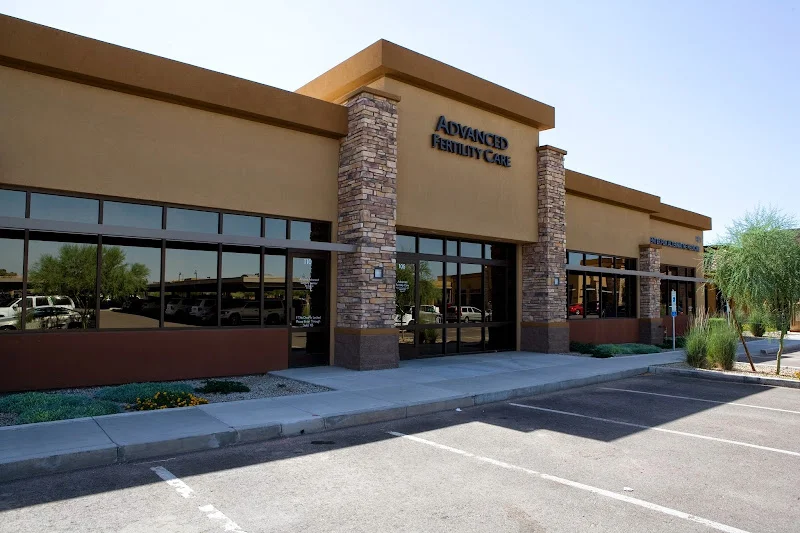
The clinic serving this address since 2005 was founded by Dr. Nathaniel Zoneraich as Advanced Fertility Care (AFC). In 2021 it became one of the founding clinics of Pinnacle Fertility, a management services organization (MSO) that runs non-clinical operations for independent practices rather than delivering medical care itself; this office keeps its own practice identity under that umbrella. The network’s own pages disagree about its size — the About page says “over 40+” locations in one place and “50+ Locations Nationwide” in another — so this page treats network scale as a range and sticks to what belongs to Scottsdale.
Scope matters here. Every number below traces to one SART registration: “Pinnacle Fertility Arizona - Scottsdale”, SART clinic number 0699, registry ID 2361. Pinnacle’s Arizona footprint covers four offices — Chandler, Glendale, Scottsdale and Tucson, all labeled “Formerly Advanced Fertility Care” — and a SART registry search for the Pinnacle name returns 14 clinic records across multiple states. Those other registrations do not feed the figures here.
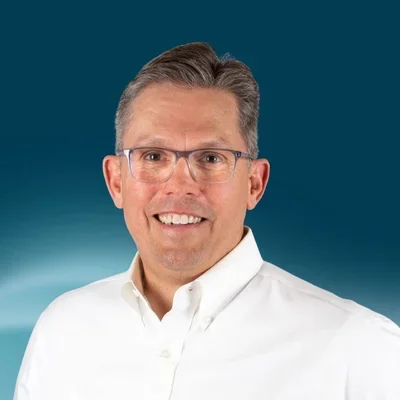
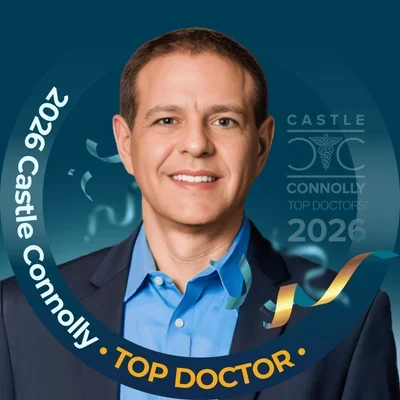
Five clinicians appear in the location page’s “Meet the Team” block: three physicians and two physician assistants (PAs). The physicians’ certification paths differ: Dr. Frederick Larsen holds board certification in both reproductive endocrinology and infertility and in obstetrics and gynecology; Dr. Kurt Peterson is a D.O. certified by the American Osteopathic Board of Obstetrics and Gynecology and a FACOOG fellow; Dr. Zoneraich is board-certified in obstetrics and gynecology and a fellow of the American College of Obstetricians and Gynecologists — the site does not claim an REI board certification for him. The two PA-C providers are not physicians. All three physicians also see patients in Chandler, Glendale and Tucson; both PAs also practice in Chandler and Glendale.
The location page lists exactly 11 services: IVF, IUI, egg retrieval, semen analysis, genetic testing, fertility medications, donor egg services, fertility preservation, laparoscopy, counseling and support, and LGBTQ+ care. ICSI, vitrification, egg-bank matching and surrogacy appear on Arizona state pages and network service pages — network-level offerings, not a published procedure list for this suite.
Outcomes, and what they measure. The metric is cumulative live birth per intended egg retrieval with the patient’s own eggs, counting all transfers — from the SART 2023 Final Clinic Summary for this registration, a report year that folded in 78 delayed-outcome cycles. Under 35: 56.5% (214 cycle starts). 35-37: 40.2% (127). 38-40: 34.7% (121). The chart’s over-40 figure of 15.6% combines 20.0% at 41-42 (60 cycles) and 6.7% over 42 (30 cycles), weighted by cycle count. The national row on this page is the SART 2023 National Summary — same registry, same year — so the comparison is like-for-like: this clinic sits above the national figures in every band, by 3.3 points under 35 (56.5 vs 53.2), 8.5 points at 38-40 (34.7 vs 26.2) and 6.2 points over 40 (15.6 vs 9.4), while at 35-37 the 0.3-point gap (40.2 vs 39.9) is effectively parity. The report’s confidence intervals (49.9-63.2 under 35, 31.6-48.7 at 35-37, 26.2-43.2 at 38-40) show how wide the honest reading of these bands is at this sample size.
Volume. The report’s top summary lists 1,338 total cycles for this registration, alongside 49 embryo bankings, 46 oocyte bankings, 13 donor-oocyte bankings and 46 thaw-for-refreeze procedures; retrieval-start capture ran at 97.8%. We deliberately do not turn 1,338 into a multiple of any “national average per clinic” figure — our US data extracts carry mixed denominators for that number, and a ratio built on them would describe the arithmetic, not this clinic. No fresh-versus-frozen split is published in this page’s data, so nothing here claims a transfer-type advantage.
Accreditations & Awards
- CAP accreditation of the embryology laboratory — stated on the clinic’s website. CAP’s official registry is a browser-only search and our fetch did not reach it; treat this as the site’s statement, not a registry pull
- CLIA certification for the laboratory, per the site, covering diagnostic and embryology testing
- AAAASF (Quad A) accreditation of the ambulatory surgery facility, per the site; egg retrievals are performed in that facility
- FDA registration — a registration, not an accreditation, as the site itself words it (“Registered with the FDA”)
- Newsweek rankings, clinic-published only: the Scottsdale page claims #53 in Newsweek’s 2024 list of America’s Best Fertility Clinics and inclusion in Newsweek’s 2023 Top 100. The rankings pages render their lists with JavaScript and our fetch could not confirm the placement — quote these as the clinic’s own claims
- SART reporting, not SART membership: the clinic filed 2023 data under registration 0699 (ClinicPKID 2361) with a 97.8% retrieval-start report rate. The Scottsdale page never displays the words “SART Member”, so this page calls it what the record shows — a clinic that reports to SART
- CDC: an archived 2017 ART clinic report exists under the predecessor name Advanced Fertility Care, PLLC (CDC clinic number 312), but no Pinnacle-era entity surfaced on CDC’s current Arizona clinic list — one more reason every rate on this page comes from SART, not CDC
- Patient rating: 4.7 across 166 ratings on the location’s public profile, with recent written reviews repeatedly crediting the nurse-navigator follow-up between appointments
Why Choose Pinnacle Fertility - Scottsdale
- The success-rate row is this address’s own: registration 0699, 2023 Final data, no blending with the network’s 14 registrations. When a multi-office chain quotes you a rate, ask whose registration it came from — this page answers that question
- Above the national SART row in every age band for 2023, with the real spread stated: strong at 38-40 and over 40, a modest edge under 35, and parity at 35-37
- Physicians and PAs as a working pair: two of the five team members are physician assistants who carry patient education and continuity across the cycle; Kelly Soares, PA-C built Pinnacle’s physician assistant training program and supervises newly hired PAs nationwide, so the explanation you get here follows one standard
- Accredited lab and surgical suite on site (per the site’s statements): retrievals happen in the AAAASF-accredited facility rather than a hospital, with the CAP/CLIA embryology lab in the same practice
- The first visit is virtual: the consultation happens online with a fertility expert reviewing history, lifestyle and prior attempts — no trip required to open care, and partners can join the video session
- Money paths are stated up front: PatientFi installment financing, Gaia Family risk-sharing plans, and help with Progyny, Carrot, Maven and employer fertility benefits
- LGBTQ+ family building appears in the location page’s own service grid, not just on network marketing pages
- What is not published here: no price list, no fresh-versus-frozen breakdown, no per-clinician outcome split, and no stated wait time from consult to cycle start beyond the site’s own “as early as next week” booking claim
IVF & Fertility Services
The 11 services the Scottsdale page names for this location:
- In Vitro Fertilization (IVF): the core program, with individualized stimulation protocols per the network’s IVF page
- IUI (intrauterine insemination): the first-line, lower-intervention option on the service grid
- Egg Retrieval: transvaginal, ultrasound-guided aspiration performed in the practice’s AAAASF-accredited ambulatory surgery facility, per the site
- Semen Analysis: sperm count, motility and morphology testing, the entry point for male-factor evaluation
- Genetic Testing (PGT): the site offers PGT-A (chromosome screening) and PGT-M (single-gene conditions); PGT-SR is not named anywhere in the pages we captured
- Fertility Medications: cycle prescriptions and medication guidance
- Donor Egg Services: donor-egg cycles; matching runs through the network’s Pinnacle Egg Bank (network-level resource)
- Fertility Preservation: egg and embryo banking, including before cancer treatment, with a dedicated network page for oncofertility support
- Laparoscopy: listed on the location page’s grid; hysteroscopy and robotic-assisted techniques appear on the physicians’ own profiles (Dr. Larsen, Dr. Zoneraich)
- Counseling and Support: a network fertility-counseling page sits behind this line item
- LGBTQ+: named directly in the location page’s service grid, with an Arizona state page for family building
Network-level offerings that our sources attach to the Arizona state pages or group service pages, not to this suite’s own procedure list: ICSI, vitrification and cryopreservation/storage, frozen embryo transfer as a named program, Pinnacle Egg Bank donor matching, Pinnacle Surrogacy (the program states it works exclusively with gestational carriers from surrogacy-friendly states), the IVF 100% Success Guarantee Plan, and the affiliated NewEra Pharmacy.
Fees & Packages
There is no published price list. A dollar-figure search across every page captured from the clinic’s site returns zero prices; what the Scottsdale page offers instead is a commitment — “Clear, Transparent Pricing You Can Trust,” with detailed cost breakdowns and flexible payment options delivered by the team after your plan is set. What is documented:
- PatientFi: third-party personalized financing. The financing page notes some plans require 50% down with repayment over 6 or 12 months, and that some patients may not qualify
- Gaia Family: risk-sharing plans the site describes as financial protection if treatment is unsuccessful
- Insurance navigation: coverage varies by state and plan; the site says its financial team works with benefits including Progyny, Carrot, Maven and employer plans. The appointment form states Medicaid and Medicare plans are currently considered out of network
- IVF 100% Success Guarantee Plan: a network-level guaranteed-try package with eligibility exclusions; the site notes that not qualifying does not mean IVF is inappropriate for you
No cycle fee, medication cost or add-on price is published, so treat the first financial conversation after your consultation as the real quote.
Patient Journey
- Virtual first consultation. You meet a fertility expert online — not in the clinic — to review medical history, lifestyle and any previous attempts at conception. Partners are explicitly welcome on the video call
- Booking. The Arizona scheduling wizard runs in three steps (Your Interest / About You / Final Details) and offers a virtual consult slot directly; when self-scheduling is empty, the clinic asks you to submit your details for a callback. The site advertises a first appointment “as early as next week” if one is available
- Preparation. The site asks you to gather prior records, surgeries and lab results, know your health and family history and menstrual cycle details, check insurance coverage beforehand, and write down questions
- Diagnostic workup. Per the location page: blood tests for hormone levels and ovarian reserve, ultrasound for ovarian health and uterine structure, semen analysis for male partners, an HSG (hysterosalpingogram) to check tubal patency if needed, plus genetic screening or thyroid tests based on history
- Your plan. The physician maps results to a treatment path — IUI, IVF, preservation, donor eggs — with timelines
- Stimulation and monitoring. Medication protocols are individualized; monitoring visits follow the clinic’s schedule. The site’s posted hours are Monday-Friday 7:30am-4:00pm, with Saturday and Sunday by appointment only. How many days stimulation runs here is not published
- Retrieval. Transvaginal ultrasound-guided egg retrieval in the practice’s on-site AAAASF-accredited surgery facility (per the site), with the CAP/CLIA embryology lab handling the lab work
- Transfer and follow-up. Fresh or frozen transfer options exist across the network; the frozen-embryo program itself is a network-level service page, and this location’s per-stage schedule is set in your plan
Local Legal Framework
The clinic publishes no Arizona ART law guide, and the 44 pages captured from its site contain no statute-level text — the only legally adjacent statements are the network surrogacy program’s policy and one physician’s personal clinical interest in reproductive law. So this section records what is actually documented, in the frontmatter framework above and on the site, and no more.
- Gamete donation is listed as a service (Donor Egg Services on this page, Pinnacle Egg Bank at network level), and the framework recorded for this page states Arizona permits egg and sperm donation under written informed-consent agreements. Our captured sources quote no Arizona statute on the point
- Surrogacy: the frontmatter records Arizona Revised Statutes, Title 25 as the general statutory home for gestational-carrier and parentage rules. Two practical facts are documented: the network’s surrogacy program “works exclusively with gestational carriers from surrogacy-friendly states” and never names Arizona, and our sources surface no Arizona-specific statute text to settle what that means for an Arizona-resident match. Anyone planning a carrier arrangement here should retain Arizona reproductive counsel before a cycle, not after
- Genetic testing: PGT-A and PGT-M are offered per the site and recorded as lawful practice in Arizona; PGT-SR is not mentioned in our sources at all
- LGBTQ+ family building: offered on this location’s service grid and an Arizona state page; parentage orders and birth-certificate mechanics are legal questions outside the clinical site’s published scope
- Compliance, as site statements: CLIA certification, CAP accreditation, FDA registration and a sitewide “FDA Compliance” footer link — plus, per the registry record, mandatory cycle reporting to SART
Location
- Address: 9819 N 95th St Ste 105, Scottsdale, AZ 85258
- Phone: +1 480-874-2229