'%20d='m0%200%2016%2011h61%2061%2061%2061%2060L47%2037h61%2061%2060%2061L16%2063h61%2061%2061%2061%2060L47%2089h61%2061%2060%2061L16%20115h61%2061%2061%2061%2060L47%20141h61%2061%2060%2061L16%20166h61%2061%2061%2061%2060L47%20192h61%2061%2060%2061L16%20218h61%2061%2061%2061%2060z'/%3e%3c/svg%3e)


About RMA of New York - Long Island: Melville
Melville is where the assisted reproduction actually happens at RMA of New York - Long Island. The practice carries two names for one history. It started in 1988 as Long Island IVF, merged with East Coast Fertility in 2012, and joined the RMA of New York network through a 2019 partnership. It now lists six offices on Long Island — Melville, Garden City, Lake Success, East Patchogue, West Islip and Stony Brook — serving Nassau and Suffolk counties, including Plainview, Syosset, Huntington and Dix Hills. This page covers the Melville office at 8 Corporate Center Drive, and that distinction matters for every number below.
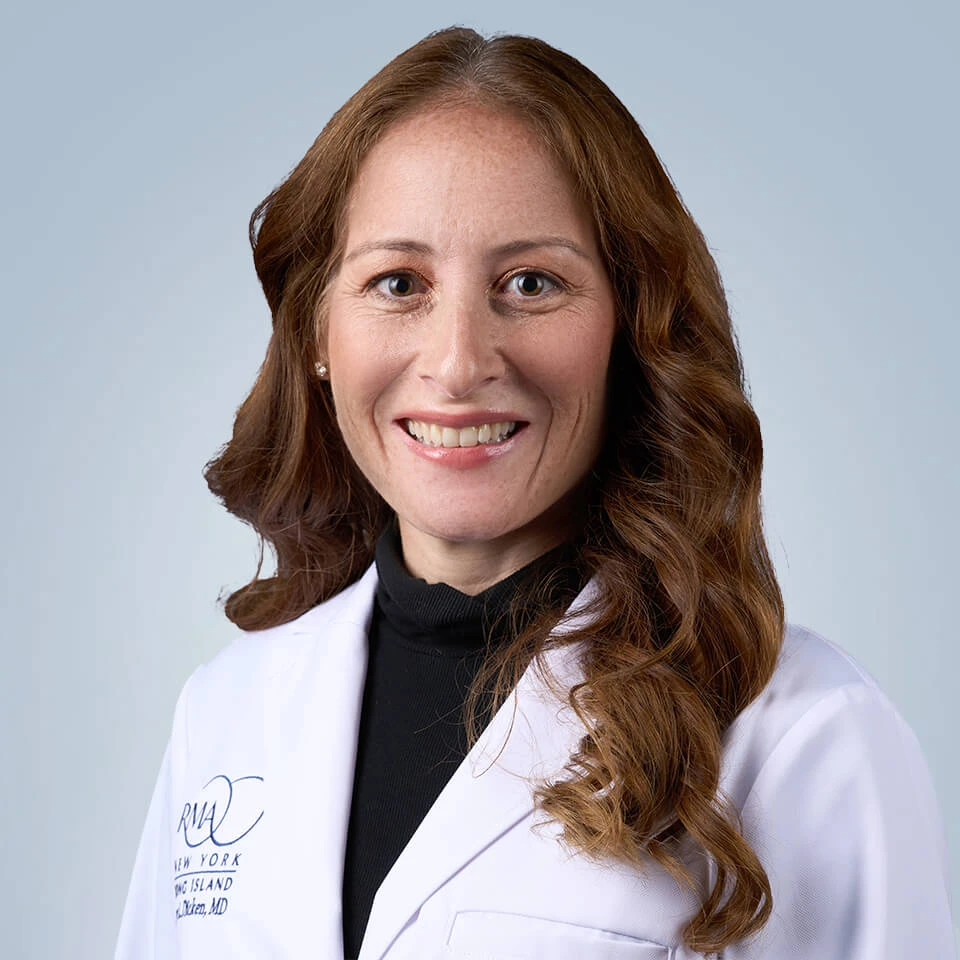
The practice’s own website states that egg retrieval and embryo transfer are performed at the Melville laboratory rather than in Manhattan or a hospital setting, which is the concrete reason this address exists as a treatment site. Consultations and monitoring appointments run across the network’s offices; the site does not publish a service list for each of the other five, so ask which appointments you would be scheduling at which address. Two reproductive endocrinologists appear on the Melville team page — Dr. Cary L. Dicken and Dr. Michelle Goldsammler. The group’s other physicians, including medical director of record Beth McAvey and co-founder Daniel Kenigsberg, are not listed as Melville clinicians.
The history is real, and it belongs to the brand rather than to one office. The practice reports the first IVF birth on Long Island in 1989, the first birth from a frozen embryo the same year, and the first birth from a donor egg on Long Island in 1994. It also credits itself with more than 7,600 babies since 1988. Read that figure as what it is: cumulative, network-wide, and self-reported — not an audited annual outcome for this office. SART’s registry separately records the clinic as a member since June 1989, which lines up.
Now the number the marketing copy does not spell out. SART’s 2023 Final report, on cumulative live birth per intended egg retrieval with all transfers counted, gives this registration 46.7% under 35, 27.9% at 35-37, 17.5% at 38-40 and 5.2% over 40. SART’s national figures for the same measure and the same year are 53.2%, 39.9%, 26.2% and 9.4%. That is below the US benchmark in all four age bands — by 6.5, 12.0, 8.7 and 4.2 percentage points. Website language on the practice’s pages claims success rates that surpass national averages; the registry data filed under its own name does not support that on this measure.
Understand the reporting unit before you compare clinics. SART publishes by registration, not by street address. The 2023 report filed as “RMA Long Island IVF” (SART clinic ID 1953, SART number 0141) covers the whole network across all six offices, and it records 2,314 ART cycles for that unit against a national clinic average of roughly 932. Melville has no separate SART report of its own, so those rates describe the network’s patients, and that cycle count should never be read as one office’s volume. One more piece of case mix: 85.5% of the network’s transfers used frozen embryos (CDC reporting table), consistent with a freeze-and-test-first program. Per intended retrieval is still the fairest single number to compare, because it counts everything one stimulation cycle produced.
The same 2023 filing breaks out patients who started at the practice as new patients: 65.1% live birth per intended retrieval under 35, 46.7% at 35-37, 32.3% at 38-40 and 6.3% over 40. That is a different cohort from the all-patient figures above, and the data behind this page has no matching national new-patient benchmark, so use it only to compare patients within the practice. Google reviews for this office average 3.7 across 72 ratings.
Accreditations & Awards
- SART member clinic reporting to SART and the CDC (registration “RMA Long Island IVF”, clinic ID 1953, SART number 0141, medical director of record Beth McAvey, MD). That filing is the reason age-band outcomes are public at all — and it is a network registration, not a Melville-only one
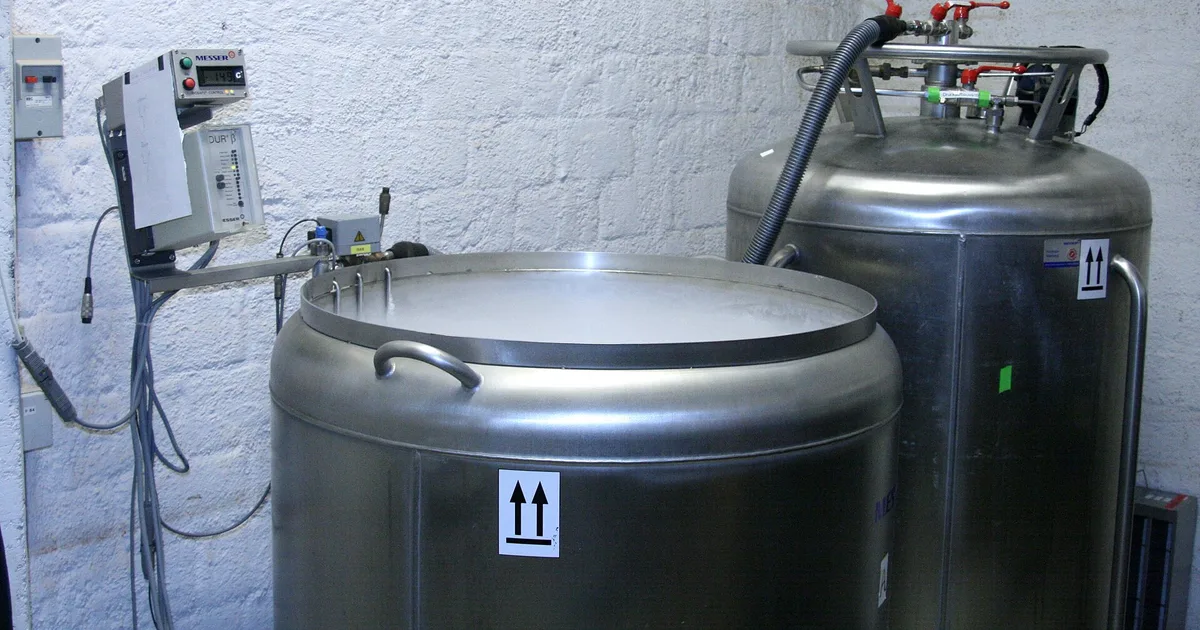
- CAP-accredited laboratory, recorded in the clinic’s SART registry entry — the accreditation that governs how your eggs, sperm and embryos are handled and stored
- QUAD A Accreditation Authority badge displayed in the website footer, alongside US Fertility, RESOLVE and Alliance for Fertility Preservation marks
- Firsts on Long Island, clinic-reported: first IVF birth (1989), first birth from a cryopreserved embryo (1989), first donor-egg birth (1994)
- “Best In Vitro Fertility Practice” from FourLeaf Best of Long Island, a local business award given to the brand rather than to this office, and not a clinical quality accreditation
- Physician honors the practice describes as recurring (Castle Connolly Top Doctors, Super Doctors). Individually documented in our research: Dr. Dicken’s Castle Connolly Top Doctor (2020-2023) and New York Super Doctor (2020), and Dr. Goldsammler’s 2014 Zelmanovich Award for Best PGY2 in Compassionate Outpatient Care
- 98% embryo survival after vitrification and rewarming, reported by the clinic for its laboratory. It is a freezing performance figure, not a pregnancy rate, and the calculation behind it is not published
- Worth stating next to the awards: none of the above changes the 2023 registry result. On live birth per intended retrieval, this registration falls short of the SART national average in every age band
Why Choose RMA of New York - Long Island: Melville
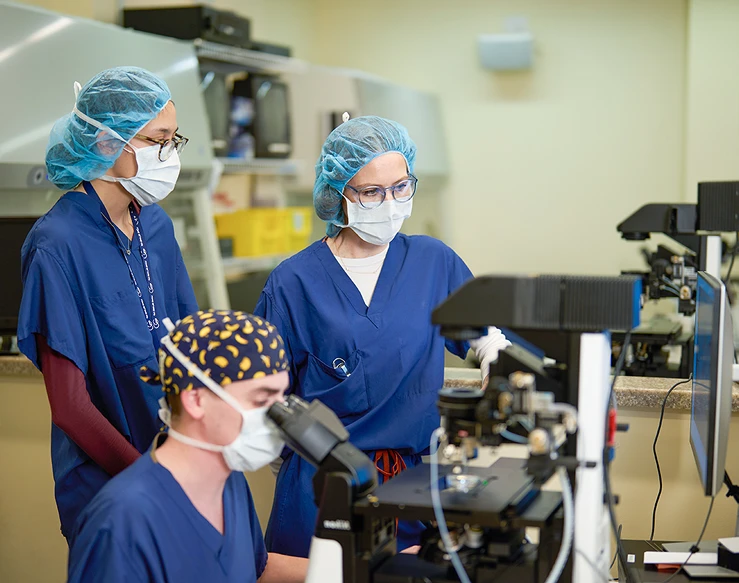
- The procedures happen here: the practice’s full-service IVF laboratory is at this address, and it lists egg retrieval and embryo transfer as on-site, so a complete cycle does not require a trip into Manhattan or a hospital
- Embryo testing runs through the same lab: PGT-A, PGT-M and PGT-SR, ICSI, embryo biopsy, assisted hatching, blastocyst culture and vitrification are all named in the laboratory’s service list
- Insurance work before treatment: financial counselors contact your carrier to verify coverage, estimate out-of-pocket costs and flag assistance programs, packages and discounts — which matters more than usual in a state with fertility insurance requirements
- A genetic counselor on staff: Risa Abittan, MS, CGC, covering carrier screening, PGT counseling and hereditary cancer risk assessment
- Access to a rare subspecialty niche: Halacha-compliant IVF with rabbinical supervision, through Dr. Goldsammler, whom the practice describes as the only female Orthodox reproductive endocrinologist on Long Island
- Network depth behind two local physicians: the practice says many of its clinicians have worked together for more than 30 years, and the laboratory leadership named on its lab page (Vice President of Laboratory Services Christine Briton-Jones, Associate Laboratory Director Andrea Victor) is a network role rather than a Melville-only one
- Questions worth asking before you sign: how many cycles the Melville office itself runs per year, which physician you would see at which address, and what the practice’s current SART report says about the gap to national averages
IVF & Fertility Services
- In Vitro Fertilization (IVF): injectable stimulation over 8-11 days with 5-7 monitoring visits of blood work and transvaginal ultrasound, hCG trigger about 36 hours before retrieval, ultrasound-guided egg retrieval under light sedation at Melville, embryo culture for 3-5 days, and ultrasound-guided transfer without anesthesia
- ICSI and lab add-ons: intracytoplasmic sperm injection, assisted hatching, embryo biopsy, embryo culture and warming, testicular sperm processing
- Genetic testing of embryos: PGT-A for chromosome number, PGT-M for single-gene conditions, PGT-SR for structural rearrangements, offered through the on-site embryology laboratory
- Frozen embryo transfer and elective single embryo transfer (eSET): both listed among the laboratory’s services; the network’s CDC data shows 85.5% of transfers using frozen embryos
- IUI: washed, prepared sperm placed at ovulation, with or without fertility medications — used for unexplained infertility, mild male factor, ovulatory disorders, and single women or LGBTQ+ patients using donor sperm
- Egg freezing, sperm banking and embryo freezing: elective preservation and oncofertility for patients facing cancer treatment or hereditary cancer risk, using vitrification
- Donor eggs: fresh donor cycles and frozen donor-egg bank programs, with anonymous or known donors who undergo medical and psychological screening
- Donor sperm conception: insemination and IVF paths using screened donor sperm
- Gestational surrogacy: the practice provides the medical side of gestational carrier cycles, including for gay male couples and single intended fathers
- Male reproductive medicine: semen analysis, hormonal evaluation, treatment for male factor infertility, and surgical sperm retrieval options — percutaneous testicular sperm aspiration (Perc TESA), open TESA and microsurgical epididymal sperm aspiration (MESA)
- LGBTQ+ family building: reciprocal and co-IVF for female partners, donor egg and surrogacy paths for male couples, and preservation for transgender patients
- Fertility evaluation: ovarian reserve testing including AMH, transvaginal ultrasound and semen analysis
- Support services: genetic counseling plus mental health, nutrition and wellness services
Where the record thins out: the practice lists fertility surgery among its network services without publishing which procedures are performed at Melville, and egg retrieval is the only procedure our sources tie to this address with an anesthetic. The research and publications the lab page describes are attributed to RMA of New York across the network, not to Melville specifically. Ask directly about any surgical plan, and ask where it would be performed.
Fees & Packages
There is no published price list. The practice’s cost page explains what drives a bill instead of quoting one: the type of treatment and how many cycles you plan, diagnostic testing and labs, ongoing monitoring, ovulation induction or IVF medications, freezing and thawing of eggs or embryos, and add-on laboratory procedures such as ICSI or PGT.
Relative costs as the clinic describes them: timed intercourse with monitoring and Clomid or letrozole is the least expensive path; IUI — sperm washing and processing, monitoring visits, medication, multiplied by cycles — is generally less costly than IVF; and IVF is the largest single investment, with medication a significant portion of it on top of retrieval and anesthesia, laboratory fertilization and culture, transfer, and any ICSI or PGT charges. The clinic also itemizes the cycle structures it prices around: fresh IVF with transfer, freeze-all with PGT plus a later frozen transfer, freeze-all with or without PGT, standalone frozen embryo transfer, and embryo thaw with biopsy and refreeze.
Practical step: ask for the financial counselor after your first visit. They verify benefits with your carrier, estimate what you will actually owe, and point to assistance programs, packages and discounts. No bundle prices, financing partners or medication cost caps appear in the material behind this page, so get a written estimate for your specific cycle type before starting.
Patient Journey
- New-patient visit with a reproductive endocrinologist: history, family-building goals, and a testing plan. Dr. Dicken’s page lists her as accepting new patients in person or by video; confirm current openings for either physician when you call
- Baseline testing: blood work including ovarian reserve (AMH), transvaginal ultrasound, and semen analysis for the male partner
- Treatment plan: IUI, ovulation induction, IVF or preservation, chosen against the test results
- Stimulation and monitoring: daily injectable medications for 8-11 days, with 5-7 monitoring visits combining blood tests and transvaginal ultrasound — book these at whichever network office is closest to you, and confirm that before the first injection
- Trigger and retrieval: an hCG trigger about 36 hours before egg retrieval, performed under light sedation at the Melville laboratory, with a 30-60 minute recovery
- Fertilization, culture and testing: conventional insemination or ICSI, embryos grown and monitored, biopsy if you have chosen PGT, then transfer or vitrification
- Transfer: 3-5 days after retrieval, ultrasound-guided and transvaginal, no anesthesia, with about 30 minutes of rest afterwards; remaining embryos are frozen and stored
- Pregnancy test: blood test 1-2 weeks after transfer, then referral for obstetric care
Financial counseling — carrier verification, out-of-pocket estimates, assistance programs — runs in parallel with steps 3 and 4 rather than after them.
Local Legal Framework
Gestational surrogacy is legal in New York. The Child-Parent Security Act, passed in 2019, authorized paid gestational carrier agreements. Agreements must be written and legally reviewed, and the surrogate has her own independent lawyer — so budget for two attorneys, not one. This practice runs gestational carrier cycles, which means you need the clinic and a reproductive-law attorney lined up in that order.
Egg and sperm donation are permitted and performed here. Gamete and embryo donation fall under FDA rules governing human cells, tissues and cellular and tissue-based products, which set donor eligibility screening, testing and record-keeping. That is a federal layer; clinic donor agreements handle the rest.
Health insurance. New York requires certain health insurance plans to cover fertility treatment, and many plans still route fertility medication through specific pharmacies with their own rules. Our sources do not name the statute behind the insurance mandate, and coverage turns on your employer’s plan language rather than on the clinic’s billing office — get the financial counselor’s written verification before you start.
What our sources do not settle for you: whether PGT is restricted anywhere in New York (the practice offers PGT-A, PGT-M and PGT-SR, and our research records no state limitation on it), the legal status of a stored embryo, compensation ceilings for egg donors, and how parentage orders work for unmarried intended parents. Family building for LGBTQ+ patients is protected under New York law. Treat the disposition consent you sign when embryos are created as the document that governs storage, transfer, donation or destruction — read it before signing.
Location
- Address: 8 Corporate Center Drive, Suite 101, Melville, NY 11747
- Phone: 631-752-0606