'%20d='m0%200%2016%2011h61%2061%2061%2061%2060L47%2037h61%2061%2060%2061L16%2063h61%2061%2061%2061%2060L47%2089h61%2061%2060%2061L16%20115h61%2061%2061%2061%2060L47%20141h61%2061%2060%2061L16%20166h61%2061%2061%2061%2060L47%20192h61%2061%2060%2061L16%20218h61%2061%2061%2061%2060z'/%3e%3c/svg%3e)
About
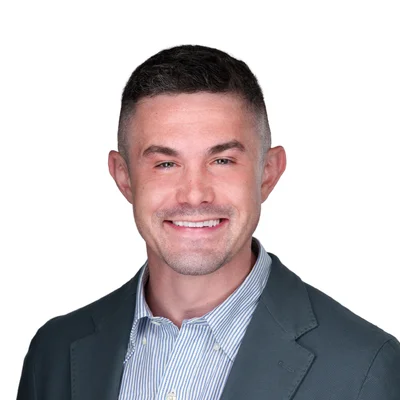
There is a specific question transgender patients ask about egg and sperm freezing: do I have to stop testosterone first, and does stopping cost me a cycle? Brett Stark published on exactly that in 2022 — fertility preservation in transgender men without discontinuation of testosterone — after a 2021 paper on sexual wellness in gay, lesbian and bisexual patients. Few physicians in a general IVF practice have a publication record on the protocol mechanics of trans fertility care; it is the center of his.
He trained at UCSF on both ends: residency in obstetrics and gynecology, then fellowship in Reproductive Endocrinology and Infertility, before joining Spring Fertility. Alongside the clinical track he earned an MPH from Harvard’s Chan School of Public Health and a medical degree from Georgetown University School of Medicine, and has worked with organizations including the World Bank and the American College of Obstetricians and Gynecologists. His Harvard scholarships are named and dated on his profile — Maternal Health Task Force field experience scholar in 2016, Maternal Child Health Scholar in 2017, Health Justice Scholar Track in 2018 — a paper trail pointing at health-equity work rather than lab science.
At Spring he practices out of the San Francisco SOMA and Oakland offices. His stated clinical interests are fertility treatment for same-sex individuals and couples, fertility treatment for transgender and gender-diverse people, and helping underserved communities reach reproductive care — which, in a practice organized around a financial navigator per patient, is the operational version of the third interest.
Clinical Expertise
- Transgender and gender-diverse fertility care: preservation planning around hormone therapy, including continued-testosterone protocols from his published work
- LGBTQ+ family building: donor sperm and donor egg pathways, co-legal-parent planning, and treatment sequencing for same-sex couples
- Fertility preservation: egg and embryo freezing, and sperm banking
- IVF and IUI: cycle management for donor-gamete and reciprocal arrangements
- Reproductive counseling for underrepresented communities: access and navigation as a named clinical interest
- Sexual wellness in LGBTQ+ patients: a documented research area, not just a service line
Why Choose Dr. Stark
He publishes on the population he treats. Two first-line research topics — preservation in transgender men without stopping testosterone (2022) and sexual wellness in gay, lesbian and bisexual patients (2021). If you are a trans patient being told the standard protocol does not apply to you, he has read and written the alternative.
Public-health training behind the clinical judgment. The Harvard MPH, plus the Health Justice Scholar Track and maternal-child-health scholarships, and work with the World Bank and ACOG, sit behind an interest in access rather than only in cycle mechanics.
Two offices on the east side of the bay. San Francisco SOMA and Oakland coverage, both transit-accessible, which is where appointment frequency stops being a burden.
An inclusive practice by design at Spring. The clinic’s homepage lists LGBTQ+ care as a service line, and in-network reproductive health psychologists are available for the parts of family building that are not medical.
Professional Affiliations
Practices within Spring Fertility’s SART-registered reporting unit (ClinicPKID 2000045), whose embryology laboratory is recorded as CAP-accredited. Education and training: Georgetown University School of Medicine (MD), Harvard University Chan School of Public Health (MPH), residency and fellowship at UCSF. Prior organizational work with the World Bank and the American College of Obstetricians and Gynecologists. His Spring biography documents training, publications and honors rather than board certification; verify certification status directly with the American Board of Obstetrics and Gynecology if it is a deciding factor.
Suitable For
- Transgender and gender-diverse patients planning egg, embryo or sperm preservation before or during transition-related care
- Same-sex couples mapping donor sperm, donor egg or shared-parentality treatment paths
- Patients who will not or cannot stop testosterone and need a preservation protocol built around that
- Anyone who wants fertility care from a physician with published LGBTQ+ reproductive health research
- Patients facing cost or access barriers, where Spring’s financial navigator role does the heavy lifting