
About
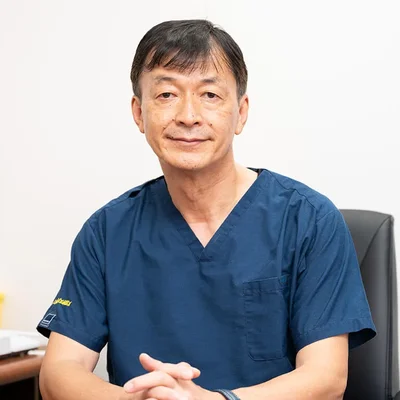
Dr. Naoki Yamashita opened Yume Clinic in Fujisawa, Kanagawa in April 2009 and has directed it since. Before he was a fertility physician he was a pathologist: an MD from Kanazawa University School of Medicine in 1984, a PhD from Kanazawa University Graduate School in 1988, then postgraduate work in the First Department of Pathology and qualification as a pathology physician in 1989. Very few reproductive specialists in Japan carry that second board credential, and it shows up in how he reads biopsy results and gynaecological pathology alongside fertility data.
His clinical career ran through Kanazawa Red Cross Hospital, where he became deputy head and then head of obstetrics and gynaecology, a Japanese Red Cross Society medical dispatch to Cambodia in 1995, and then the Towako reproductive group — Kato Ladies Clinic from 1999, vice director of Towako Fujino Women’s Clinic from 2004, and Kato Ladies Clinic again in 2007. He took the Japanese Society for Reproductive Medicine’s reproductive medicine specialist credential in 2009, the same year he founded the clinic.
He performs egg retrievals and embryo transfers himself and leads the clinic’s Institute of Advanced Reproductive Medicine, which develops its own consumables and devices. Yume Clinic’s protocol choices follow from that: no high-stimulation protocols, single embryo transfer in almost every cycle, and quarterly and monthly outcome figures published from the clinic’s own register rather than borrowed from overseas series.
Clinical Expertise
- IVF with minimal stimulation or natural cycles. Cycle protocols are chosen from day-3 hormone values — letrozole, clomiphene, a fully natural cycle for low reserve, or an estrogen-supplemented cycle — rather than a standard long protocol.
- ICSI for severe male factor, using piezo-driven membrane penetration with a flat-tip glass needle and artificial oocyte activation.
- Egg retrieval and embryo transfer surgery. Transvaginal ultrasound-guided retrieval with a 21–22G needle, normally without anaesthesia, and transfer through a 2Fr soft silicone catheter under ultrasound guidance.
- Embryology laboratory standards. He treats culture conditions as a modifiable variable of treatment, overseeing in-house low-outgassing labelling and time-lapse culture workflow.
- Recurrent implantation failure workup, rebuilding cycles with endometrial receptivity testing, SEET, chronic endometritis screening and paired transfer of good and poor-quality vitrified blastocysts.
Why Choose Dr. Yamashita
He invented the lab consumable, not the marketing line. Gas-nil — a culture-vessel label made without volatile organic compounds — exists because label adhesive outgassing suppresses embryo expansion. It is registered as Japanese patent No. 6774420 with Dr. Yamashita listed first among the inventors, and the same development work produced MAYU, a container that vitrifies sperm numbers too small for ordinary freezing. The clinic has also been iterating its own thin retrieval needle since 1999; that is the reason retrieval can be offered without general anaesthesia.
Pathology training inside a fertility practice. A board-qualified pathology physician is an unusual profile in an IVF clinic. It matters when a patient carries gynaecological pathology, when biopsy or genetic test results have to be interpreted, and in the ethics-committee-governed research the clinic runs with university and corporate partners.
Volume he publishes himself. The clinic’s October–December 2025 register shows 332 transfer cycles with a 47.6% fetal heartbeat confirmation rate at an average patient age of 36.9. He publishes the figures monthly and quarterly, and states the endpoint plainly — pregnancy test positivity and fetal heartbeat, not live birth — which is the more useful basis for judging a program than a single headline success rate.
A philosophy of doing less. His stated position is to use the patient’s own capacity to conceive and avoid unnecessary intervention, which is why the clinic does not offer high-stimulation protocols and transfers one embryo. Fewer eggs per retrieval, more repeatable cycles.
Professional Affiliations
Dr. Yamashita is board-certified in obstetrics and gynaecology by the Japan Society of Obstetrics and Gynecology (1994) and holds the Japanese Society for Reproductive Medicine’s reproductive medicine specialist credential (2009), alongside his MD, PhD and pathology physician qualification. He belongs to JSOG, the Japanese Society for Reproductive Medicine, the Japan Society for Fertilization and Implantation, the Japanese Society of Ova and Embryo, and ESHRE. Physicians from his clinic have first-author presentations at the annual meetings of the Japanese Society for Reproductive Medicine, and Yume Clinic is a designated institution in Kanagawa Prefecture’s fertility preservation programme.
Suitable For
- Patients who care about culture conditions. Labelling, media and time-lapse observation are all handled in-house, so questions about what the embryo is actually incubated in can be answered by the person who set the standard.
- Diminished ovarian reserve and advanced age. The clinic keeps natural-cycle and estrogen-supplemented protocols available instead of pushing higher gonadotropin doses, which suits patients whose ovaries respond poorly to stimulation.
- Recurrent implantation failure. Additional testing — receptivity assessment, SEET, CD138 biopsy, hysteroscopy — is done on site, so the workup does not have to be split across facilities.
- Patients who want minimal medication. Choosing this clinic means accepting lower oocyte yields in exchange for a lighter physical burden and a lower OHSS profile.