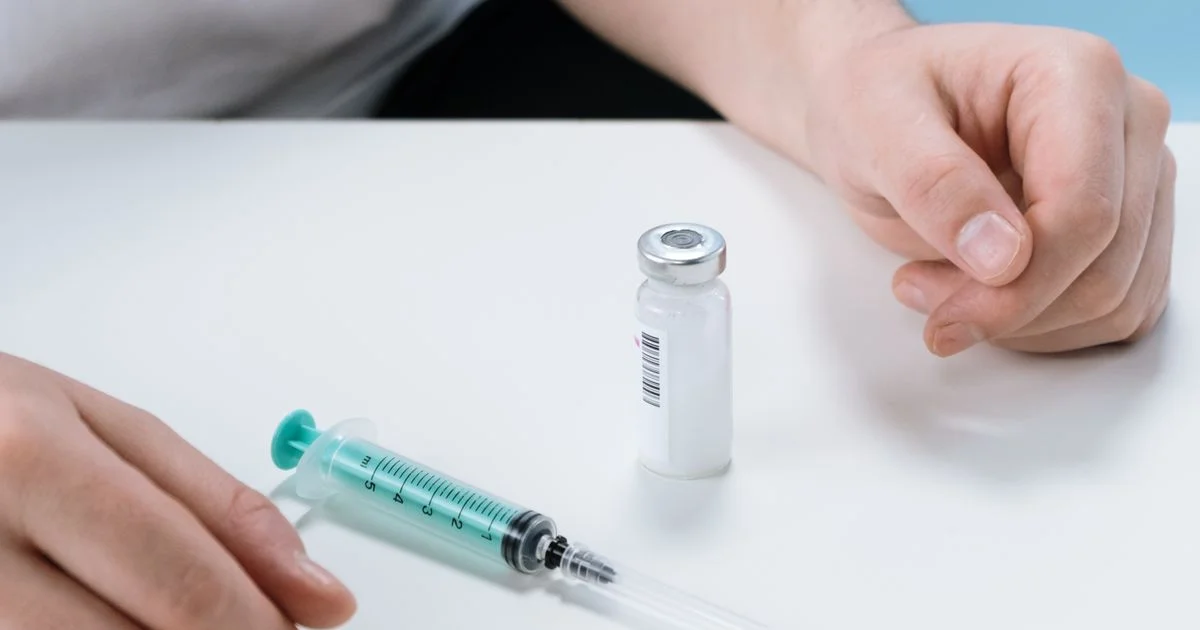
Fertility medication is the one line item on an IVF invoice that is usually not bundled into the procedure price. A prospective cost-diary study of 332 couples across 8 reproductive endocrinology clinics captured what people actually paid: a median of $912 out of pocket for medication-only care, and $19,234 for those who reached egg retrieval and transfer (J Urol, 2014).
This article was prepared by the ProIVF medical editorial team from the peer-reviewed literature and official insurance documents cited throughout, and reviewed by the ProIVF Medical Advisory Board. Drug prices shift with pharmacy, region and plan design, so treat the ranges here as a way to sanity-check a quote rather than as a fixed price list.
What does a cycle of stimulation medication cost?
Drug cost resists a single number because it is driven by dose, and dose is driven by ovarian reserve. The figures below come from one of the few studies that reports medication separately from the procedure, but they are 2013-era dollars and should be read for structure rather than absolute value.
| Cost category | Median (USD) | Notes |
|---|---|---|
| Total out-of-pocket fertility spend | 5,338 (IQR 1,197–19,840) | 332 couples, 8 clinics |
| Medication only | 912 | No retrieval or transfer |
| Reached an IVF cycle | 19,234 | Includes drugs, procedure, lab |
| Each additional IVF cycle | About 6,955 | Multivariable adjustment |
| IVF versus IUI | 15,435 more | Multivariable adjustment |
Read the structure, not the totals. The gap between the medication group and the IVF group also contains retrieval, laboratory work and transfer, so the difference between 19,234 and 912 is not a drug bill.
Against our site-wide US benchmark of $15,000–$30,000 per cycle (how much IVF costs in the US), medication is the only component that can keep growing after the cycle starts. A dose gets raised, a drug gets swapped, a cycle gets extended, and none of those three events is pre-printed on the quote.
Which drugs the money actually goes to
- Gonadotropins (FSH and HMG): priced per international unit, the largest block in any protocol, with dose scaling up with age, AMH and body weight.
- GnRH antagonists or agonists: used to suppress a premature LH surge, with a fairly fixed number of days and a mid-range unit price.
- Trigger medication (hCG or Lupron): used once or twice before retrieval, so the absolute amount is small.
- Luteal support (progesterone injections, gel or suppositories): runs from retrieval through the pregnancy test and sometimes to 10 weeks, which makes the cumulative total easy to underestimate.
- Oral ovulation drugs (letrozole, clomiphene): low unit price, mostly used in mild-stimulation or IUI cycles.
For what each drug does and what it does to your body, our fertility drug reference and IVF medication guide cover them one by one. The question here is narrower: why the money concentrates in gonadotropins.
The answer is volume times days. An antagonist cycle usually means 8–12 days of injections at 150–300 IU per day, and switching to a luteal-phase protocol or Mini IVF changes both numbers. When the same pen delivers twice as much drug, the bill roughly doubles with it.
Why identical protocols produce wildly different bills
The spread is not arbitrary pharmacy pricing. It is five variables stacking on top of each other, and separating them tells you where your own quote is expensive.
The first is ovarian reserve. AMH and antral follicle count set the starting dose, and the same protocol can differ by more than twofold between someone at AMH 0.5 and someone at 2.5 ng/mL. After age 35 that spread tends to widen.
The second is the drug molecule. Urinary HMG, recombinant FSH and long-acting gonadotropins sit in three different pricing systems, and at equivalent doses the price gap can be large. Brands within one class can also diverge by a meaningful margin.
The third is the protocol. Long down-regulation, antagonist, progestin-primed and Mini IVF all differ in days and dose, which makes protocol choice one of the biggest cost variables available to you.
The fourth is the channel. The same prescription often prices differently at a specialty fertility pharmacy, a retail chain and a hospital pharmacy, and cross-border or out-of-state ordering adds shipping and cold-chain cost on top.
The fifth is insurance and copay design. Drug benefits are frequently capped separately, and manufacturer copay cards, patient assistance programs and state formularies each cover a different slice.
Raising the dose does not buy a better outcome. The 2024 Cochrane review pooled 26 randomised trials and 8,520 women and found no statistically significant difference in live birth or ongoing pregnancy between 200 IU and 100 IU among predicted normal responders (OR 0.88, 95% CI 0.57–1.36; 2 trials, 522 participants), with overall certainty rated low to very low (Cochrane 2024).
The authors’ own conclusion is more restrained than most summaries of it:
“It is unclear whether individualising FSH dose improves clinical outcomes.” — Individualised gonadotropin dose selection, Cochrane Database of Systematic Reviews, 2024
The wallet-level implication is blunt. Pushing the dose to the ceiling “just to be safe” buys a larger drug bill and a higher risk of ovarian hyperstimulation, not a higher success rate. Dose should follow a response prediction, not an anxiety level.
Long-acting versus daily gonadotropins
Converting “fewer injections” into money is the most common calculation in reproductive pharmacoeconomics. Whether that conversion holds depends entirely on one equivalence assumption.
A 2026 Brazilian cost-minimisation analysis compared long-acting gonadotropin with daily recombinant FSH using official Brazilian drug reference prices (May 2025, taxes included). Under the assumption that a single 150 µg corifollitropin alfa dose equals 300 IU per day for 7 days, the long-acting option cut drug cost by roughly 52.1% against follitropin alfa and 56.3% against follitropin beta (Front Reprod Health, 2026).
Two caveats have to travel with that finding. Several authors are employees of the manufacturer, so the analysis has a commercial interest, and it measures cost under an equivalence assumption rather than which approach is more likely to produce a pregnancy.
Long-acting preparations also do not suit everyone. Patients with higher body weight, or low responders who need dose adjustments mid-cycle, usually stay on daily injections. Our stimulation protocol comparison sets out who each protocol fits and how much drug it consumes, which you can read against your own reserve results.
Does insurance actually cover stimulation drugs?
The answer depends on whether you are asking about a medical service or a medicine, because in China those are two separate lists.
Since 1 July 2023, Beijing has reimbursed 16 therapeutic assisted reproduction service items as Category A outpatient benefits, with inpatient care excluded (Beijing Medical Insurance Bureau policy note, document 京医保发〔2023〕13号). At the time 18 clinics in the city held assisted reproduction licences and 16 were designated insurance providers, so only care delivered at a designated site qualified.
All 16 items are service price items such as oocyte retrieval, embryo culture, embryo transfer, insemination and ICSI. None of them is a stimulation drug. Medication runs through the formulary and outpatient pooling rules instead, and those vary widely by province.
Nationwide coverage moved quickly. National Healthcare Security Administration data show that by the end of 2024 all 31 provincial-level regions plus the Xinjiang Production and Construction Corps had brought assisted reproduction into medical insurance, reaching more than 1 million recipients (NHSA). Provinces set their own terms: Hebei classifies the items as Category B with a 10% first-tier self-pay, then reimburses 60% for employees and 50% for residents, capped at 3 lifetime uses per item.
Hebei’s own worked example makes the arithmetic concrete: embryo culture priced at 3,000 yuan, 300 yuan paid first as the 10% self-pay share, 1,620 yuan reimbursed at 60% on the remaining 2,700, leaving the patient 1,380 yuan out of pocket.
There is also measured evidence of what the policy change did. A single-centre retrospective study in Beijing compared two 12-month outpatient windows, from July 2022 to June 2023 and from July 2023 to June 2024, and found urban employee basic medical insurance coverage rose from 75.22% to 77.59% while outpatient out-of-pocket costs fell significantly (BMC Health Serv Res, 2026).
To check what your own province or state plan covers, our IVF insurance guide lays out the differences by plan type and is a useful comparison point against the US system.
Five levers that genuinely lower the bill
Saving money here is not about finding the cheapest drug. It is about removing unnecessary volume and channel markups, and the five levers below run from easiest to hardest, with the last ones needing a clinician.
- Dose to your reserve: the starting dose should follow AMH, antral follicle count, age and weight rather than a friend’s protocol, because more drug does not raise live birth rates and does raise both cost and OHSS risk.
- Call three pharmacies: the same prescription often prices differently at a specialty fertility pharmacy, a retail chain and a hospital pharmacy, and a round of phone calls is the cheapest action available.
- Choose a protocol, not a bargain drug: Mini IVF and progestin-primed protocols use substantially less medication, but they fit different patients, so confirm with your doctor that your reserve suits one.
- Exhaust insurance before discussing copay: confirm whether the drug benefit is separately capped, then apply for a manufacturer copay card or assistance program, and the order of those two steps changes how much you save.
- Do not pay for prophylactic add-ons: extra drugs, extra tests and bundled extras without an indication only inflate the invoice.
Our cheap IVF guide covers the compressible items outside medication, and the two together form a complete price map.
For dose conversion and injection technique on individual drugs, see our guides to Gonal-F dosing, what Lupron does in an IVF cycle and progesterone injections, which between them cover the three drugs patients ask about most.
FAQ: IVF medication costs
What share of total IVF cost is medication?
In the US cohort cited here, medication-only care had a median out-of-pocket cost of $912 and IVF care $19,234, but that gap also contains retrieval, laboratory work and transfer, so it cannot be read as a drug percentage. The more reliable approach is to ask your clinic for a quote excluding medication, then request a separate drug estimate.
Do more expensive stimulation drugs work better?
No. In the 2024 Cochrane review, 200 IU and 100 IU produced no statistically significant difference in live birth (OR 0.88, 95% CI 0.57–1.36). Dose mainly moves oocyte yield, and oocyte yield does not translate linearly into live birth.
How do urinary and recombinant gonadotropins differ?
Mainly in purity, formulation and price. A standard urinary vial such as Menopur is labelled as 75 IU of FSH plus 75 IU of LH activity, while recombinant pens deliver pure FSH dosed in IU. Urinary products cost less but vary in FSH activity between batches; recombinant products are purer and more consistent. Which one you use should follow your response history rather than unit price alone.
How much will I still pay after insurance?
On Hebei’s official example, embryo culture at 3,000 yuan leaves an employee-insured patient with 1,380 yuan to pay. Stimulation drugs are usually settled separately through the formulary, so your real share depends on your province’s Category B self-pay rate and outpatient pooling limit.
Can leftover medication be used in a later cycle?
Usually yes, provided you confirm the expiry date and storage conditions. Most gonadotropins need refrigeration at 2–8 °C, protection from freezing and light, and an opened cartridge is typically usable for 28 days per the label.
Every study figure above links to its PubMed record or to the regulatory document it came from. Numbers presented as clinical convention, and figures in patient examples, are illustrative rather than individually sourced.





