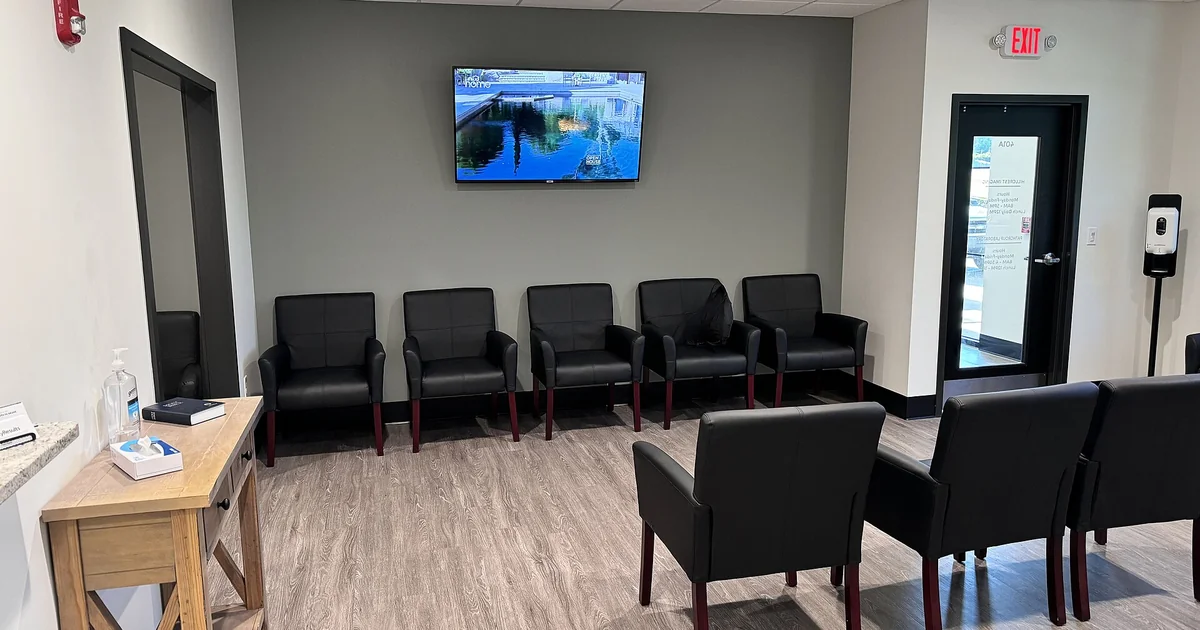
A fertility clinic is a medical center where doctors called reproductive endocrinologists diagnose and treat infertility — testing, medication, surgery, IUI, and IVF all happen there. Expect bloodwork, a semen analysis, and an ultrasound at your first visit, which most clinics book on cycle day 2 or 3 so baseline hormones can be drawn the same day.
This article was compiled by the ProIVF Medical Editorial Team from CDC assisted reproduction data, ASRM patient resources, and peer-reviewed literature, and reviewed by the ProIVF Medical Advisory Board. It is educational content, not medical advice.
Fertility Clinic vs. OB-GYN vs. IVF Clinic: Who Does What
A fertility clinic treats the “why can’t we conceive” problem; an OB-GYN manages pregnancy and general women’s health. Many people spend months with an OB-GYN who prescribes prenatal vitamins and says “keep trying” before they’re finally referred to a fertility specialist.
The division of labor is clear:
| Provider | Scope | Typical tools |
|---|---|---|
| OB-GYN | Pregnancy care, general reproductive health | Prenatal care, basic hormone tests, spotting obvious issues (e.g., a PCOS diagnosis) |
| Fertility clinic (reproductive endocrinologist) | Diagnosing and treating infertility itself | Ovulation induction, IUI, IVF/ICSI, fertility surgery, egg and sperm freezing |
| IVF clinic | The lab-dependent subset of services | Embryology lab, egg retrieval, embryo transfer, PGT-A (genetic screening of embryos before transfer) |
An “IVF clinic” and a “fertility clinic” are usually the same building — the “IVF” label just signals the center runs its own embryology lab. That matters because lab quality is one of the strongest drivers of IVF success: a center that ships eggs to an outside lab typically sees lower outcomes than one with an in-house accredited lab.
“Infertility is a disease of the male or female reproductive system defined by the failure to achieve a pregnancy after 12 months or more of regular unprotected sexual intercourse.” — American Society for Reproductive Medicine (ASRM), patient guidance, aligned with the WHO 2023 definition
At that 12-month mark — or 6 months if the female partner is 35 or older — evaluation stops being optional and becomes recommended. About 1 in 6 people of reproductive age experience infertility, according to WHO research published in 2023.
Do You Need a Referral to Go to a Fertility Clinic?
Usually no, and waiting for one costs time. Most US clinics accept self-referral: you book, send prior records, and are seen; only some insurance plans (typically HMOs that require in-network referrals) demand a referral form first.
Check your plan’s fertility benefits before booking, because some cover the diagnostic visit but not treatment. If you’re already past the 12-month (or 6-month at 35+) threshold, every month spent waiting for paperwork is a month off your fertility clock.
What Happens at Your First Fertility Clinic Visit
The first visit is an information-gathering appointment, not treatment day. Plan for 45–90 minutes, both partners if possible, and expect three things: a detailed history, a physical exam, and a set of tests — some sampled the same day.
Why Do Clinics Book You on Cycle Day 2 or 3?
Baseline bloodwork — FSH (follicle-stimulating hormone), LH (luteinizing hormone), estradiol, sometimes AMH (anti-Müllerian hormone, a blood marker of egg supply) and thyroid panels — is only interpretable in the first days of your period, when hormones sit at their starting values. Booking on day 2–3 lets the clinic draw those labs during the visit instead of scheduling a second trip.
If your cycles are very irregular or absent, the clinic will tell you to come anyway — an anovulatory patient simply gets the non-cycle-dependent tests first.
Bring to the visit:
- Menstrual history: cycle length, regularity, and the start date of your last period
- Prior pregnancy or loss history, surgeries, and STI history
- How long you’ve been trying, and how often
- Any previous test results (labs, imaging, semen analyses) — these may not need repeating
- A list of medications and supplements
- Your insurance card and, if you have one, the employer fertility-benefit summary
What Tests Should You Expect in the First Cycle?
A standard first-round workup answers three questions: are eggs being released, are the tubes open, and is the semen adequate.
| Test | What it checks | When |
|---|---|---|
| Day-3 bloodwork (FSH, LH, estradiol) | Ovarian reserve and ovulation signaling | Cycle days 2–4 |
| AMH blood test | Remaining egg supply (valid any day) | Any time |
| Transvaginal ultrasound with antral follicle count | Egg-bearing follicles visible on the ovaries | Early cycle |
| Semen analysis | Count, motility, morphology | After 2–5 days abstinence |
| HSG (dye X-ray of the tubes) | Whether the fallopian tubes are open | Cycle days 6–10 |
| Mid-luteal progesterone blood draw | Whether ovulation actually occurred | About 7 days after suspected ovulation |
Semen analysis is one of the first tests ordered — not a last resort. Male factor contributes to about half of couples’ infertility: a sole cause in roughly 20% of cases and a contributing factor in another 30%, and it is the cheapest and fastest test in the panel. WHO’s 2021 laboratory manual sets the current reference floors: 16 million sperm per mL, 42% total motility, and 4% normal forms.
What Can a Fertility Clinic Treat?
The full treatment ladder, from least to most intervention:
- Ovulation induction — oral medications like letrozole or clomiphene for irregular or absent ovulation, most often caused by PCOS; one or two monitored cycles often suffice.
- Trigger shot and timed intercourse — an hCG (human chorionic gonadotropin) injection times ovulation precisely, useful when ovulation is unpredictable or the couple’s schedule makes timing hard.
- IUI (intrauterine insemination) — washed sperm placed directly in the uterus, bypassing cervical factors; a first-line option for mild male factor, unexplained infertility, and single women or LGBTQ+ couples using donor sperm.
- IVF and ICSI — eggs are retrieved and fertilized in the lab (ICSI injects one sperm into one egg), and embryos are transferred back. It is the only treatment that bypasses blocked tubes, severe male factor, and most age-related egg-quality problems.
- Fertility preservation — egg, embryo, or sperm freezing before chemotherapy or gender-affirming care, or simply to delay childbearing.
- Surgery — hysteroscopic polyp or septum removal, laparoscopic endometriosis excision, varicocele repair.
- Donor egg, donor sperm, and gestational carriers — for depleted ovarian reserve, genetic disease avoidance, or an absent or unsafe uterus.
Secondary infertility — trouble conceiving after a previous pregnancy — is one of the most common reasons people walk in. Many are surprised to learn fertility can change between pregnancies: age, new tubal damage from infection or surgery, declining ovarian reserve, or a partner’s changed semen parameters. The workup is identical to primary infertility.
How Long Does the Whole Evaluation Take?
Once you’re booked, the diagnostic phase typically spans one to two menstrual cycles (about 4–8 weeks). Most of the delay is cycle-window timing — tests must land in specific windows — not clinic scheduling.
If you’re 35 or older, ask about “accelerated” or “parallel” workups, where testing and treatment planning run at the same time.
How Do You Know If a Fertility Clinic Is Good?
Ask for their success rates — a good clinic publishes them; a vague clinic does not. The numbers to demand are age-stratified live-birth rates per patient, not “pregnancy rates,” which can count any positive test.
US clinics are legally required to report to the CDC’s ART Success Rates program and the data is public, SART publishes clinic-level detail, and the UK’s HFEA posts per-clinic success with a red/amber/green comparison against national averages.
A clinic in a country without mandatory reporting should still volunteer its own audited data — see our how to choose an IVF clinic guide for the full checklist.
| Signal | Green flag | Red flag |
|---|---|---|
| Success data | Publishes age-stratified live-birth rates, links to registry filings | Quotes “our rate is 60%” with no methodology |
| Lab | In-house, accredited embryology lab | No information on whether the lab exists or who owns it |
| Treatment plan | Explains all options, including “watchful waiting” or “you don’t need IVF” | Pushes the most expensive protocol at the first visit |
| Costs | Written itemized estimate; explains packages and refund programs | Quote changes weekly; “per cycle” price excludes meds and monitoring |
| Communication | Answers arrive within days; names the doctor who will do your retrieval | Sales staff reply; the specialist is invisible until procedure day |
Two questions expose a clinic’s honesty fast. First: “What is your average number of embryos transferred, and your twin rate?” Responsible clinics keep single-embryo transfer high — US CDC ART data puts the twin rate at about 0.9% with one embryo transferred — chances of twins with IVF. Second: “What is your cycle cancellation rate, and what drives it?” A high cancellation rate the clinic can’t explain usually signals protocol problems.
What Does a Fertility Clinic Cost, and Does Insurance Cover It?
US price anchors (2026, before insurance):
- Initial consultation: $300–$750
- Full diagnostic workup (both partners): $1,500–$4,000
- Medications per IVF cycle: $3,000–$6,000
- IVF cycle (procedure + lab + monitoring, meds separate): $12,000–$20,000 at many centers; discount packages in the $5,000–$8,000 range exist, mostly marketed to self-pay patients
- Egg freezing: $10,000–$15,000 per retrieval plus annual storage fees
Insurance coverage splits sharply by state: as of 2026, 21 US states require some fertility treatment coverage, but the mandates vary widely in whether IVF itself is included. Even with a mandate, expect prior-authorization paperwork — clinics employ dedicated fertility-benefit specialists precisely because decoding an insurance plan is a skill. Get a written estimate itemized by cycle stage before starting treatment.
Some patients control costs by combining care geographies: diagnostic workup at home, treatment abroad at verified clinics that price 40–65% lower. If you go that route, verify hospital accreditation and doctor credentials on a transparent platform rather than trusting advertising.
When Should You Go to a Fertility Clinic?
Go now — don’t wait out the clock — if any of these apply:
- The female partner is 40 or older; the 3-month waiting threshold is nearly moot, so book directly
- Known endometriosis, a history of pelvic inflammatory disease, or one damaged or removed tube
- Two or more miscarriages (recurrent pregnancy loss follows a different workup path)
- Irregular or absent periods, or known PCOS
- Prior chemotherapy or pelvic radiation, or a testicular condition
- Semen parameters already known to be abnormal
- Male same-sex couples or single individuals planning donor eggs and a gestational carrier — the legal and medical pathway starts with a clinic consult regardless of how long you’ve been trying
Otherwise: 12 months of trying if under 35, 6 months if 35–39, and 3 months if 40 or older. ASRM guidance is explicit that evaluation before those thresholds is appropriate when risk factors exist — the clock rule is a floor, not a ceiling.
What If the Clinic Says “Everything Is Normal”?
About 15–30% of couples end up classified as unexplained infertility — all tests normal, no pregnancy. That is a diagnosis, not a clinic failure.
Unexplained infertility still responds to treatment: randomized controlled trials show IUI and especially IVF outperform continued natural trying in this group. The workup’s real value is that it rules out the treatable causes. Seek a second opinion only when the plan is “go home and keep trying” at an age where time is genuinely short.
Patient Stories: Two Different Care Paths
The following patient stories are shared with consent. Names and identifying details have been changed to protect privacy.
Case 1: Lin Lan, 36, Los Angeles — insurance covered the diagnosis, not the treatment Lin Lan and her husband tried for 14 months without success, and just after her 36th birthday they were referred to a reproductive endocrinology clinic. Her first visit was booked for cycle day 3, and the same appointment covered FSH, LH, and estradiol bloodwork plus a transvaginal antral follicle count. She paid $500 out of pocket for that visit (inside the $300–$750 pre-insurance band), and the follow-up tests ran through her insurance’s office-visit copay. The workup found one blocked tube, and her husband’s count came in just under the 16 million/mL floor, so the doctor recommended going straight to IVF. “The day we got the itemized quote, we sat in the parking lot for half an hour — $16,800 for the cycle excluding medications, and the drugs would add more than $4,000 on top,” Lin Lan recalled. One blastocyst transferred in her first cycle ended in a live birth, and she is now the mother of an 8-month-old girl.
Case 2: The Zhous, both 39 — a discount package that took two retrievals Mrs. Zhou, 39, had a low ovarian reserve, and a local academic center quoted $18,000 for a base cycle. They chose a Midwest clinic’s $6,500 discount package — two retrievals bundled, medications billed separately at roughly $4,500 per cycle. The first retrieval yielded only 2 embryos and the transfer ended in a chemical pregnancy; the second built up 4 usable embryos, one was cultured to blastocyst and transferred, and it ended in a live birth. “The clause about what happens if you go through both retrievals without a live birth — we redlined it with the billing office three times before signing,” Mr. Zhou said.
FAQ
Q: What’s the difference between a fertility clinic and an IVF clinic?
Same medical specialty; the “IVF” label means the center operates its own embryology lab. If your doctor recommends IVF, whether that lab is in-house and accredited matters — embryology lab conditions are one of the 3 main determinants of embryo outcomes.
A fertility clinic that outsources its lab only becomes an “IVF clinic” by referring you elsewhere when it’s time to treat.
Q: What should I bring to my first fertility clinic appointment?
Menstrual and trying history, prior test results, a medications and supplements list, your insurance card and benefit summary, and — ideally — your partner. A semen analysis is part of first-round testing, so if he abstains for 2–5 days beforehand, the sample can be given the same day instead of on a second trip.
Booking on cycle day 2 or 3 lets the clinic draw baseline hormones during the same visit.
Q: How much does a first fertility clinic visit cost without insurance?
$300–$750 for the consultation in the US; the full diagnostic round (bloodwork, ultrasound, semen analysis, HSG) adds $1,500–$4,000. Some plans cover diagnostics under standard fertility codes, and a few states’ mandates require diagnosis coverage even where treatment isn’t covered.
Q: Can a fertility clinic help if I’ve had a baby before and can’t conceive again?
Yes — that’s secondary infertility, one of the most common clinic visits. The workup is the same 4-part evaluation as primary infertility: ovulation, tubes, uterine cavity, and semen, re-checked against what changed since the first pregnancy — age, ovarian reserve, new tubal or uterine factors, or a partner’s fertility changes.
Q: How quickly does treatment start after the first visit?
Typically one to three cycles after the full results are back. A straightforward ovulation-induction or IUI plan can start in 6–12 weeks, while IVF scheduling takes longer — insurance prior authorization alone can add 2–6 weeks.
At 38 or older, ask up front whether testing and treatment planning can overlap.
Q: Are fertility clinic visits confidential, and will they treat me without a partner?
Yes to both. Solo patients — single women, LGBTQ+ individuals, and men seeking sperm freezing or an evaluation — are standard clinic patients, and in the US your own care needs no spousal signature.
Medical records are protected under the federal HIPAA privacy law, in force since 1996. Donor-sperm pathways carry extra paperwork (legal parentage documents vary by state), which the clinic coordinates.
Q: What success rates should a good fertility clinic report?
Age-stratified live-birth rates per retrieval or per transfer, sourced from mandatory registries (CDC/SART in the US, HFEA in the UK). CDC’s 2022 national benchmark for own-egg live birth per embryo transfer: roughly 42%–44% under 35, about 25%–28% at 41–42, and around 10% over 45.
A clinic’s numbers should sit near or above the age-specific benchmark — ask for its registry page, not a brochure.
Q: When should I switch fertility clinics?
When data transparency fails: the clinic won’t share registry filings, can’t explain its cancellation rate, or your treatment plan changes only in price. Medically, consider a second opinion after 2 fully executed retrieval cycles with reasonable embryo counts have failed.
Request your complete records, embryo, and lab data before transferring — the clinic is obligated to release them.
Start Your Care Plan
A fertility clinic is where “keep trying” ends and diagnosis begins. The three moves that matter: book inside the 12-month (or 6-month at 35+) window, demand age-stratified live-birth data in writing, and get an itemized cost estimate before starting treatment.
ProIVF publishes verified profiles of reproductive medicine centers across 6 countries — accreditation, lab information, and doctor credentials listed per hospital, so you can compare on data instead of advertising. Browse the fertility hospital directory or contact our editorial team for shortlisting help.
About this content: Compiled by the ProIVF Medical Editorial Team from CDC ART data, ASRM and WHO public guidance, and peer-reviewed literature; fact-checked against primary sources and reviewed by the ProIVF Medical Advisory Board. Educational content is not a substitute for individualized medical advice.
Data sources: CDC ART Success Rates · ASRM patient resources · SART · HFEA · WHO infertility fact sheet
Last updated: September 15, 2026