'%20d='m0%200%2016%2011h61%2061%2061%2061%2060L47%2037h61%2061%2060%2061L16%2063h61%2061%2061%2061%2060L47%2089h61%2061%2060%2061L16%20115h61%2061%2061%2061%2060L47%20141h61%2061%2060%2061L16%20166h61%2061%2061%2061%2060L47%20192h61%2061%2060%2061L16%20218h61%2061%2061%2061%2060z'/%3e%3c/svg%3e)



About Advanced Fertility Center of Chicago
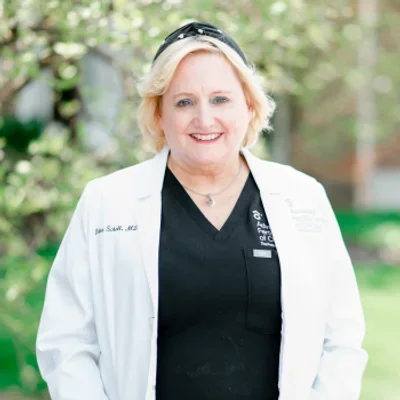
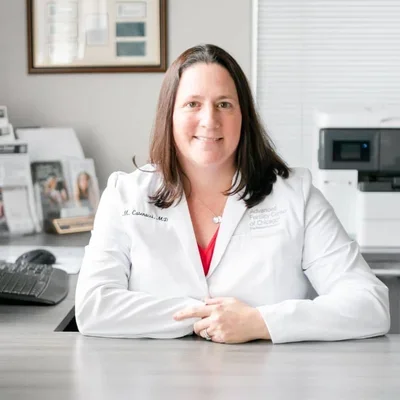
Advanced Fertility Center of Chicago (AFCC) has practiced reproductive medicine in the Chicago metro area since 1997 and belongs to The Prelude Network. It runs four outpatient offices: Chicago River North (20 W. Kinzie Ave, Suite 1130), Gurnee (30 Tower Court, Suite F), Downers Grove (3800 Highland Ave, Suite 110) and Arlington Heights (1640 N. Arlington Heights Rd., Suite 110). One naming trap worth knowing before you search the registries: AFCC’s CDC and SART records sit at the Gurnee address, so look it up as CDC ART clinic 300 or SART ClinicPKID 2410 rather than by city. Four reproductive endocrinologists practice here, each a partner in the group; Michelle Catenacci, MD, is the clinic’s Medical Director and the person who signed off on its federal data report.
The CDC’s 2022 ART report (NASS) records 2,031 cycles and 848 intended egg retrievals at this clinic. Cumulative live birth rates per intended retrieval, counting all embryo transfers in the cycle, came in at 62.2% under 35, 44.7% at 35-37, 33.9% at 38-40 and 8.4% over 40. The national rows in that same CDC 2022 dataset are 49.7%, 36.3%, 23.1% and 7.7%, so AFCC sits above the national figure in every age band. The comparison is fair because the patient mix is close: the clinic’s cycles split 39.0 / 22.8 / 19.1 / 19.0% across those bands against 36.0 / 23.5 / 20.6 / 20.0% nationally, so the gap is not explained by treating a markedly younger group. Singleton live birth rates — deliveries of one baby — from the same table were 51.1%, 39.4%, 32.1% and 7.8%. The same data puts the average number of retrievals needed per live birth at 1.6 under 35, 2.2 at 35-37, 2.9 at 38-40 and 11.9 over 40. Our registry extract carries no fresh-versus-frozen split for this clinic, so nothing here breaks outcomes down by transfer type.
Cycle volume: 2,031 cycles in the 2022 reporting year against a 953-cycle per-clinic national average in the same CDC dataset.
Two kinds of numbers appear on AFCC’s own site, and they are not the same kind of claim. The clinic states that its IVF rates have beaten the national average for more than 20 years, that it has delivered 8,300-plus babies, and that it has 28-plus years of experience — all self-reported, with no year-by-year third-party verification behind them. The CDC figures above are the registry-verified ones.
Patient ratings pull in a different direction from the marketing copy. The Chicago listing holds 3.4 out of 5 from 27 Google reviews, and the clinic carries 117 patient reviews on FertilityIQ. Written reviews split sharply. The positive ones describe physicians who listen and build protocols around your specific situation. The negative ones cluster around operations rather than medicine: waits of 30-60 minutes at appointments, messages sitting for days without a reply in the patient portal, difficulty booking a monitoring slot when injections are already scheduled, and billing disputes. If you start treatment here, put cost questions in writing through the portal and get a written figure before your first injection.
Accreditations & Awards
- SART member clinic (ClinicPKID 2410), reporting cycle data to SART and the CDC, which is what makes the outcomes above independently checkable
- CAP-accredited laboratories — the homepage badge “CAP-Accredited Labs” plus the third-party Gift of Parenthood clinic directory; the College of American Pathologists’ own searchable directory was not readable at collection time, so this rests on clinic self-report and one independent listing, not on the accreditor
- CDC-verified 2022 outcomes above the national average in all four age bands (62.2 / 44.7 / 33.9 / 8.4 vs 49.7 / 36.3 / 23.1 / 7.7)
- Physician recognition belongs to individuals, not the clinic. Medical Director Michelle Catenacci is listed as a Castle Connolly Top Doctor since 2019 (including 2026), a Castle Connolly Exceptional Woman in Medicine since 2020 (including 2026), and a Chicago Magazine Top Doctor. AFCC as an institution holds no Castle Connolly award in our sources.
- Membership and affiliation logos in the site footer: RESOLVE (National Fertility Association), SOCREI (Society for Reproductive Endocrinology and Infertility), an American Board of Obstetrics and Gynecology link, an REI Protect seal and a Best Doctors mark. These are memberships and badges, not accreditation audits.
- Not claimed, and not found: no JCI, ISO 15189, ASHLI or JABAS accreditation appears anywhere in the clinic’s own site or in the third-party checks we ran. Reports of a Newsweek “America’s Best Fertility Clinics” placement surfaced only in a Prelude Network-wide press context, with no confirmation that this clinic was listed on its own.
- Clinic-published totals, unverified by any registry: 8,300-plus babies born, 28-plus years in practice, and more than 20 consecutive years above the national average.
Why Choose Advanced Fertility Center of Chicago
- Monitoring before your workday starts. All four offices open at 6:30 a.m. on weekdays — River North, Gurnee and Downers Grove run to 4:00 p.m., Arlington Heights to 3:00 p.m. — and River North and Gurnee also take Saturday, Sunday and holiday appointments by arrangement. For a cycle built on early-morning scans and blood draws, that scheduling shape matters more than most marketing claims.
- Prices in writing. AFCC publishes a self-pay fee schedule covering consultation, testing, IUI, IVF, PGT, freezing, transfer and donor cycles, so you can price a plan before you call. The detail sits in Fees & Packages below.
- Insurance staff who do the verification. The clinic is in-network for Aetna, Blue Cross and Blue Choice, Cigna, Humana, Optum Health, Progyny, UnitedHealthcare, Carrot and Maven, and says it can work with any PPO plan. Financial coordinators contact your insurer to verify benefits before treatment, and every patient meets one before treatment begins. HSA and FSA funds are accepted. The clinic’s own page claims a 95% chance that an insured patient has some fertility coverage — that is a clinic figure, not a coverage guarantee.
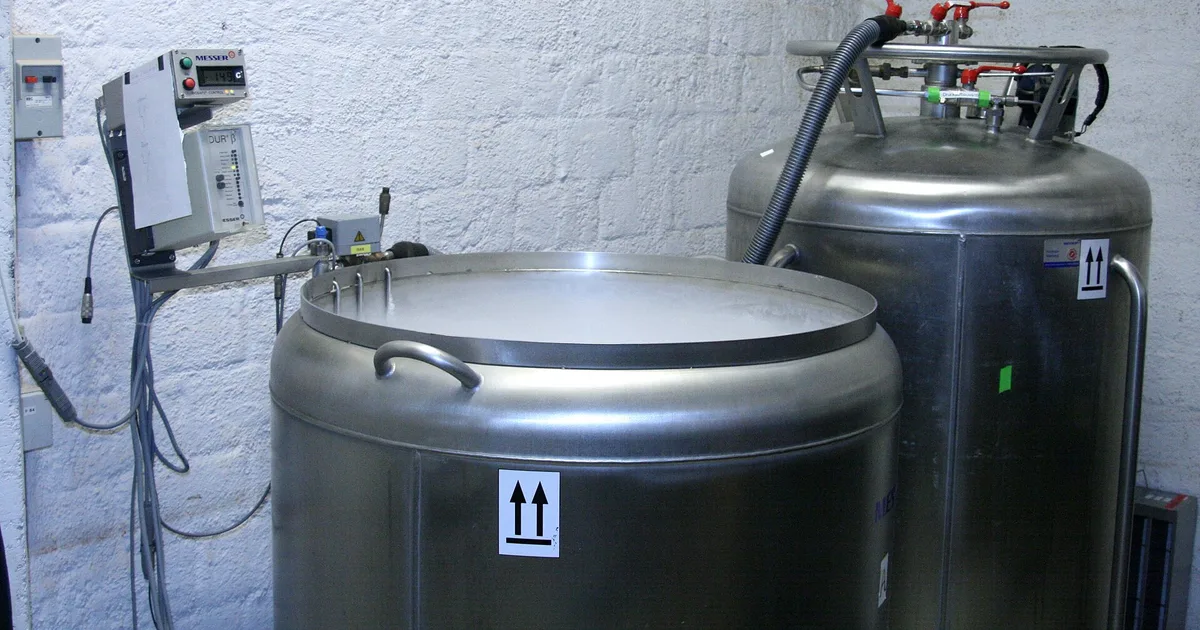
- Cryostorage engineered past the minimum. Liquid nitrogen tanks are retired after 10 years where the clinic notes an industry norm of up to 30. Internal and external temperature monitoring run side by side (PharmaWatch plus CryoSentinel thermographic monitoring on Azenta/Abeyance tanks), 24-hour continuous monitoring feeds a network Central Monitoring Command Center, and an alert goes to lab staff and directly to the CEO. This is a Prelude Network standard shared across that group’s clinics, not something unique to AFCC.
- Embryology lab services. Vitrification, blastocyst culture to day 5-6, ICSI, assisted hatching and PGT biopsy are all described on the clinic’s service pages. The clinic states its goal as the highest live birth rate while limiting high-order multiples, achieved by optimizing culture systems and staying conservative on how many embryos transfer. What the site does not publish: time-lapse culture, embryo witness systems, lab staffing, or which of the four offices houses the IVF lab and performs retrievals.
- Third-party reproduction under one roof. Fresh donor egg cycles from a local database plus frozen donor egg lots through MyEggBank; donor sperm sourced only through FDA-registered banks such as MySpermBank, because the clinic requires FDA registration; and gestational carrier cycles coordinated with your surrogacy agency and reproductive attorney, with legal paperwork in place before the IVF portion begins.
- LGBTQ+ pathways that go past a banner. Reciprocal IVF (one partner’s eggs, the other’s uterus), donor sperm IUI, donor egg IVF with a gestational carrier, and egg or sperm freezing for individuals planning to transition, before hormonal treatment affects fertility. English is the only service language the clinic advertises; no interpreter or other-language program appears anywhere in our sources.
IVF & Fertility Services
- IVF: full cycles with injectable or oral stimulation, ultrasound and blood monitoring, transvaginal retrieval under IV sedation, embryo culture to day 3 or day 5-6 blastocyst, and transfer, which the clinic describes as painless and needing no sedation
- ICSI: single-sperm injection used for male factor infertility or prior fertilization failure; the clinic reports conventional fertilization of about 75-85% of injected eggs as its expected range
- Frozen embryo transfer (FET): thawed blastocysts transferred in a later, monitored cycle
- Egg and embryo freezing: vitrification, with first-year storage priced into the cycle fee; surplus embryos from an IVF cycle can be frozen the same way
- Fertility preservation and oncofertility: dedicated pathway for patients about to start chemotherapy or radiation
- IUI: monitored and natural cycles, including donor sperm cycles, with package pricing for both formats
- PGT: PGT-A screens embryo chromosome count, PGT-M tests for a known single-gene condition (cystic fibrosis, sickle cell disease, Huntington’s disease and others), PGT-SR screens for structural rearrangements such as translocations. The clinic describes PGT as typically recommended at age 38 or older, after recurrent miscarriage, after repeated IVF failure, or where a heritable condition is in play
- Donor eggs: fresh donor cycles with clinic-screened donors (the clinic says only 1-2% of applicants are accepted, after medical, psychological, ovarian reserve and three-generation genetic screening) or frozen donor egg lots through MyEggBank; the clinic states an embryo development guarantee for frozen donor egg patients, committing to an embryo available for transfer
- Donor sperm: through FDA-registered banks, with the clinic ordering specimens on your behalf at the start of each cycle
- Gestational carrier support: the clinic handles the medical side — screening, cycle management, embryo transfer — while your agency and reproductive attorneys handle matching, compensation and parentage paperwork
- Male factor evaluation: semen analysis, sperm morphology scoring and targeted hormone testing
- Diagnostics: AMH, day-3 FSH, LH and estradiol, prolactin, testosterone, thyroid panel, transvaginal ultrasound with 3D antral follicle counting, HSG for tubal patency, PCOS workups and early pregnancy assessment. The clinic states that antral follicle count before stimulation is the best predictor of how the ovaries will respond and how many eggs retrieval will yield
- Low-cost screening for non-patients: a self-pay package of female blood work plus 3D antral follicle ultrasound and a male semen analysis, billed out of pocket with no insurance involved
- Reproductive surgery: operative hysteroscopy and laparoscopy, performed by the physicians rather than referred out, covering uterine fibroids, septum and adhesions, endometriosis and tubal repair. The clinic publishes no page for surgical sperm retrieval (TESE or micro-TESE), and no such service is documented in our sources
Fees & Packages
Every figure below is the clinic’s published self-pay (cash pay) rate, collected September 2026, and the clinic warns that prices exclude medication, pre-screening tests and pregnancy monitoring, and can change. Self-pay amounts are paid up front unless the insurer confirms coverage in writing; insurance cannot be billed for an “IVF package” because no single CPT code exists, so covered services get billed item by item.
Per-procedure schedule:
- New visit with a reproductive endocrinology specialist: $275
- Pelvic ultrasound to evaluate uterus and ovaries: $275
- Semen analysis: $100
- HSG tubal patency test: $600
- IUI, monitored or natural cycle: $850-3,000
- Single cycle IVF with ICSI: $15,000
- Single cycle IVF with PGT, including biopsy, freezing, shipping and PGT-A on up to 6 embryos: $18,000
- Add-on PGT for 1-6 embryos: $6,000
- Frozen embryo transfer with monitoring: $5,000
- Embryo freezing including first-year storage: $1,000; storage after year one $1,000/year
- Sperm freezing: $250
- Egg freezing cycle, including monitoring, anesthesia, retrieval and first-year storage: from $8,000
- Injectable IVF medications for one cycle: $3,500-8,000, averaging $4,000
- Clomid: $10-100
- Fresh donor egg IVF cycle with an AFCC donor: $35,000
- One frozen donor egg lot: from $18,750; single cycle IVF using one lot: $23,250
A second, separately maintained page presents the same treatments as package ranges: IVF with PGT $17,500-19,000, IVF without PGT $13,200-15,000, egg freezing $7,800-9,000, IUI procedure $2,500-3,500, FET $4,950-7,000. Those ranges do not line up exactly with the per-procedure table above — IUI in particular is quoted as $850-3,000 on one page and $2,500-3,500 on the other. Ask which schedule applies to your plan before you sign financial consent.
Egg freezing multi-cycle discounts: a second cycle within six months takes 15% off the cycle one fee; a third within nine months takes 20% off. IVF is also sold through multi-cycle plans, with or without a refund if treatment does not work — the clinic confirms those plans exist but publishes no bundle price and no refund terms, so there is no published price list for the money-back option.
Insurance context, from the clinic’s own pages: outside the state mandate, plans commonly exclude IVF outright or cap it at a lifetime maximum of $10,000-25,000. Elective egg freezing, PGT, donor eggs or sperm, and gestational surrogacy are the services the clinic lists as least likely to be covered.
Financing runs through third-party lenders the clinic partners with: PatientFi (funding up to $50,000, promotional zero-interest options, APRs from 6.99%, terms to 84 months, no hard credit pull), LendingClub Patient Solutions (one monthly payment bundling treatment, medication and genetic testing), and Future Family Financing through Prelude ($5,000-50,000, pre-approval stated to arrive within 48 hours, no early-payoff penalty).
Patient Journey
- Book a consult. No physician referral is required on AFCC’s side, though some insurance plans require one — check before you schedule. You pick the doctor, the office and the time.
- Before you arrive. New patient forms and the medical release go in through the Prelude Connect portal, so records from prior providers can be pulled. Bring photo ID, your insurance card and a co-pay or self-payment.
- First visit. History, goals and a review of options with a reproductive specialist, who then orders testing for you and your partner if applicable. Someone from the care team follows up with next steps and a likely timeline, usually through the portal.
- Testing. Day-3 FSH, LH and estradiol, AMH, prolactin, thyroid and testosterone bloodwork, transvaginal ultrasound with 3D antral follicle count, semen analysis, and HSG for tubal patency, which the clinic schedules between cycle days 6 and 13. Screening blood draws and ultrasound are timed to days 2-4 of your cycle, so call on the first day of bleeding. The clinic advises evaluation after 12 months of trying under 35, or after 6 months at 35 and older.
- Stimulation. Injectable FSH for roughly 7-12 days until multiple follicles reach mature size, tracked with frequent ultrasounds and blood hormone levels. The stated target is about 8-15 quality eggs, with at least 8 follicles in the 13-20 mm range considered ideal. Offices opening at 6:30 a.m. exist for exactly this phase.
- Trigger and retrieval. An HCG injection induces final egg maturation, and retrieval is scheduled 34-35 hours later, before the body would ovulate on its own. Eggs are aspirated through the vagina under ultrasound guidance with a fine needle, with IV anesthesia — the clinic notes patients feel nothing and remember nothing, and breathe on their own throughout.
- Fertilization and culture. Conventional insemination or ICSI, checked for fertilization 16-18 hours after injection, then cultured 2-5 more days. Assisted hatching, PGT biopsy and vitrification happen here if your plan includes them.
- Transfer. The embryo goes in through a catheter placed under ultrasound guidance near the middle of the uterine cavity; no sedation is needed. The clinic has patients lie back for an hour afterward and take it easy for the rest of that day, then resume normal activity — work, walking — from the next morning, while holding off on high-impact activity until the pregnancy test. How many embryos transfer is a joint decision with your physician, weighing embryo quality against the risk of multiples versus the risk of not conceiving.
- Pregnancy test. A blood HCG test about 9-11 days after transfer: 9 days after a day-5 blastocyst, 11 days after a day-3 embryo. The clinic advises against home urine tests because of false negatives.
- After a positive test. Early pregnancy monitoring continues on site, and the clinic maintains dedicated patient pages on early pregnancy and on reading early ultrasound findings. Our sources document no hand-off point to an outside obstetric practice for a patient carrying her own pregnancy; the clinic’s gestational carrier page does state that once a surrogate’s pregnancy is stable, typically around the end of the first trimester, her care moves to an obstetric provider.
Our sources document no wait time from consultation to cycle start, no night or weekend monitoring schedule beyond the appointment-only weekend note for two offices, and no named coordinator role assignments.
Local Legal Framework
Our sources for this section are the clinic’s own pages, not statute text. The clinic names no Illinois statute number anywhere, so nothing below should be read as a citation to law — confirm current requirements with a reproductive attorney and with your insurer.
Insurance mandate. The clinic describes Illinois as a mandated state: under the Illinois Insurance Code, as it summarizes the rule, group health plans of 25 or more employees that cover pregnancy must also cover infertility treatment, including infertility diagnosis, IVF, embryo transfer and IUI. One page adds that coverage extends to up to six egg retrievals subject to conditions. Employers with fewer than 25 employees, religious employers and self-insured companies sit outside the mandate, and the clinic notes that a large share of employers are self-insured, which is why so many Illinois patients end up with partial coverage rather than full. Practical step: verify your benefits before the first appointment, not after.
Gestational surrogacy. The clinic states that gestational surrogacy is legally recognized in Illinois, including the Chicago area, and that state law provides a clear framework for establishing intended parentage when specific requirements are met. Our sources name no statute and give no effective year, and the clinic’s page does not address compensated versus altruistic arrangements. In practice AFCC works alongside the intended parents’ surrogacy agency and reproductive law experts, and requires the legal documentation to be in place before starting the IVF portion of treatment. Intended parents handle compensation and contracts with their own counsel.
Donor gametes. Egg donation and donor insemination are active services here. The clinic requires donor sperm to come from sperm banks registered with the U.S. Food and Drug Administration, and applies its own medical, psychological and genetic screening to egg donors. Illinois-specific statutory rules on donor compensation or parentage do not appear in our sources; legal agreements are handled case by case with attorneys.
Genetic testing. PGT-A, PGT-M and PGT-SR are offered on site as part of IVF. Our sources identify no Illinois restriction on preimplantation genetic testing, and no clinic-published limit on the indications above the clinical criteria it lists.
Stored embryos and gametes. Patients should expect explicit consent documents covering creation, storage and disposition of embryos and eggs, since storage runs on the clinic’s network-wide cryostorage program and the site maintains a separate unclaimed tissue policy. Our sources record the existence of that policy page, not its terms, and no Illinois law on the legal status of embryos appears in what we collected. Storage duration is a live question here: the clinic’s frozen embryo transfer page states that embryos can be preserved indefinitely.
Location
- Chicago - River North: 20 W. Kinzie Ave, Suite 1130, Chicago, IL 60654 — (847) 662-1818
- Gurnee: 30 Tower Court, Suite F, Gurnee, IL 60031 — (847) 662-1818
- Downers Grove: 3800 Highland Ave, Suite 110, Downers Grove, IL 60515 — (847) 531-4790
- Arlington Heights: 1640 N. Arlington Heights Rd., Suite 110, Arlington Heights, IL 60004 — (847) 662-1818
- Main line: (847) 662-1818