'%20d='m0%200%2016%2011h61%2061%2061%2061%2060L47%2037h61%2061%2060%2061L16%2063h61%2061%2061%2061%2060L47%2089h61%2061%2060%2061L16%20115h61%2061%2061%2061%2060L47%20141h61%2061%2060%2061L16%20166h61%2061%2061%2061%2060L47%20192h61%2061%2060%2061L16%20218h61%2061%2061%2061%2060z'/%3e%3c/svg%3e)
About Fertility Centers of Illinois - Chicago
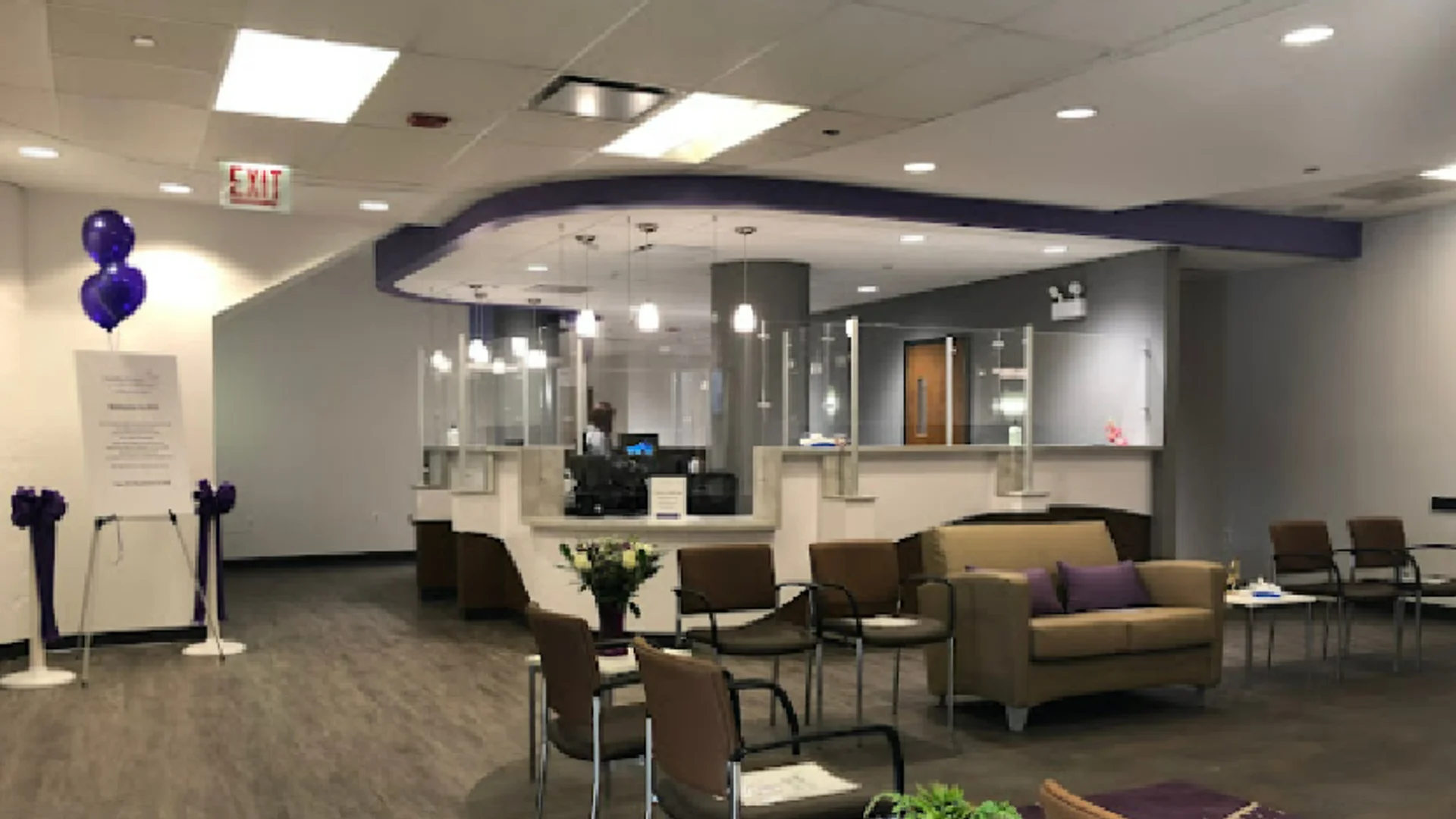
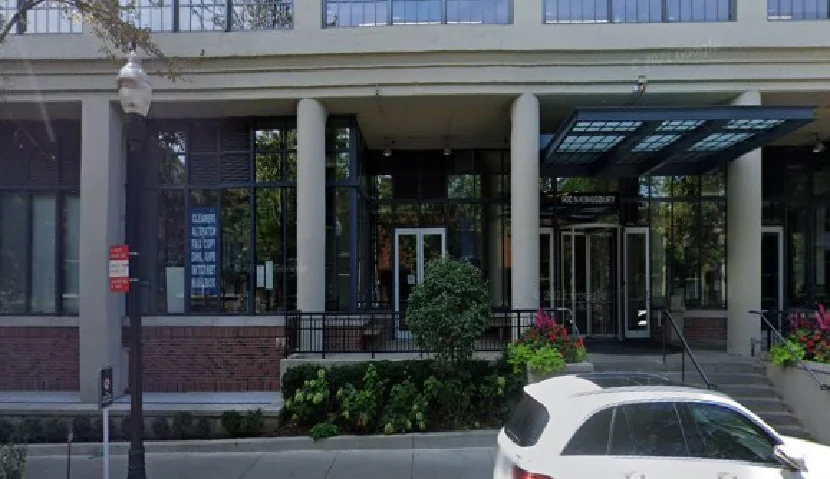
This page covers FCI’s Chicago on Kingsbury campus at 900 N. Kingsbury Street in River North, the practice’s original site and its busiest SART reporting unit. Fertility Centers of Illinois operates nine locations across the Chicago metro plus Milwaukee — eight clinics and a separate surgical and IVF laboratory center at 361 W. Chestnut. The practice is a member of US Fertility, a national network of affiliated clinics; network-level figures FCI publishes (more than 130,000 babies) are not this campus’s numbers, and FCI’s own practice-wide claim of 45,000+ babies born covers all locations, not Chicago on Kingsbury alone.
FCI says it has provided reproductive endocrinology care in the Chicagoland area for more than 40 years. Cycle outcomes here are published under SART’s standardized reporting rules: the SART CORS record is registered as “Fertility Centers of Illinois - River North IVF” (ClinicPKID 2277), and the 2023 Final report is signed by the site’s IVF medical director, Jennifer Hirshfeld-Cytron. So you can check every number on this page against the same source.
On the metric SART calls live births per intended egg retrieval, all embryo transfers — the cumulative figure that counts every transfer arising from one retrieval attempt — the 2023 Final data for this unit are 53.5% under 35, 42.2% at 35-37, 25.5% at 38-40, and 7.6% over 40. Against the SART 2023 National Summary (53.2 / 39.9 / 26.2 / 9.4), this unit is essentially at the national average under 35, about two points above it at 35-37, a point below at 38-40, and below for patients over 40. It is not a headline above-average clinic; it is a high-volume clinic whose results land close to the national baseline. Volume is the exception: 4,133 cycles in 2023, against a 932-cycle national per-clinic average in the same SART dataset — roughly four times the typical U.S. program. Read that ratio as scale rather than as a like-for-like treatment count: the national figure is the total cycles reported by every U.S. program divided by the number of reporting clinics, and FCI’s 4,133 is the top-line total on its SART report, which includes embryo and oocyte banking cycles alongside treatment cycles. The intended-retrieval cycles behind the four age bands above add up to 1,809.
Care is organized around what FCI calls a Stepped Care Approach: patients start with the least invasive, least expensive option likely to work for their diagnosis — often ovulation induction with IUI — and move up to IVF or other assisted reproductive technology when those options are unlikely to result in a pregnancy.
Accreditations & Awards
- SART member clinic with public reporting — 2023 Final data filed under ClinicPKID 2277 and signed by the IVF medical director, so outcomes are independently checkable rather than marketing figures
- Newsweek “America’s Best Fertility Clinics” 2026, ranked 42 nationally (per the published 2026 Newsweek list entry for FCI Chicago)
- Fertility Equity(TM) certified — FCI’s own statement, covering culturally competent care for communities facing reproductive health inequities; the issuing registry was not independently verifiable at the time of writing
- 2025 ASRM Arnold P. Gold Foundation Humanism in Medicine Award — held by IVF medical director Jennifer Hirshfeld-Cytron; one of the highest distinctions the American Society for Reproductive Medicine bestows
- US Fertility network member — shared clinical quality and laboratory infrastructure across affiliated practices
- 45,000+ babies — the practice’s own count across all locations, repeated on its homepage, About page and Why FCI page; treat it as a network figure, not a campus result
Why Choose Fertility Centers of Illinois - Chicago
- One of the most experienced IVF labs in the Midwest, in FCI’s own words: the Chicago IVF laboratory is described on the practice’s lab page as “among the most experienced IVF laboratories in the Midwest,” recognized for technology use and consistent outcomes — and the cycle volume behind that claim (4,133 in 2023) is public.
- A surgical center attached to the campus: FCI opened the River North Center for Reproductive Health at 361 W. Chestnut, a few blocks from Kingsbury — four operating and procedure rooms, a new IVF and embryology laboratory, and male and female services under one roof. The practice describes it as expanding its ability to surgically repair the underlying causes of infertility on site, rather than referring patients out.
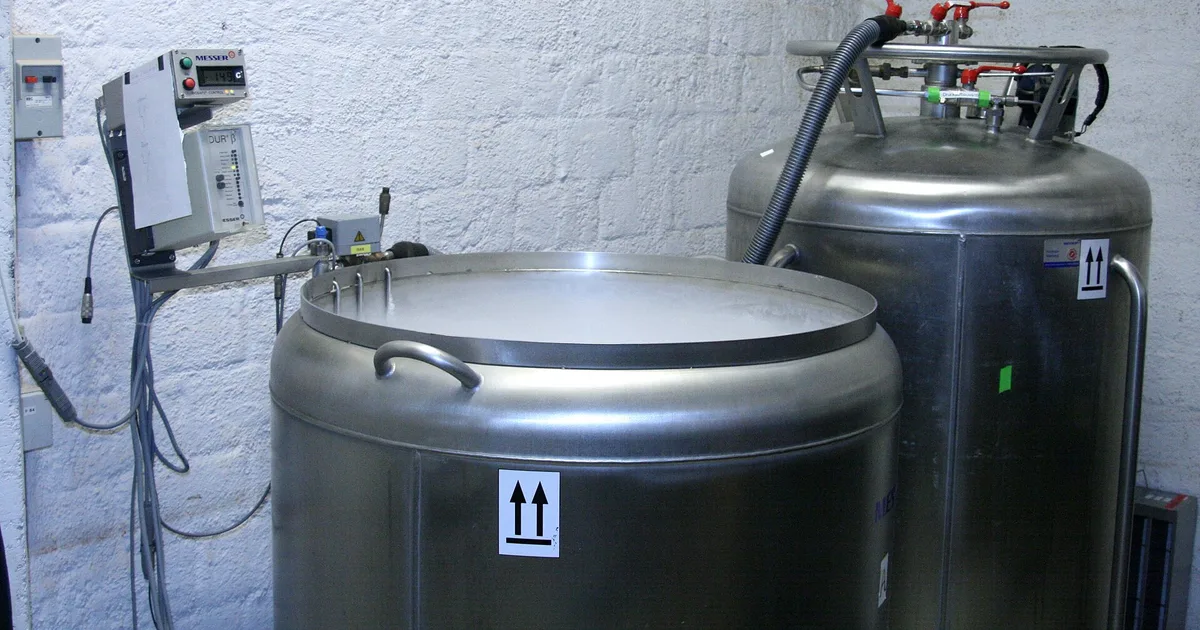
- A cryobank at unusual scale: vitrified (flash-frozen) eggs, embryos and sperm are held in more than 30 cryo storage tanks on site, currently holding over 30,000 samples. Storage enrollment runs through Luminary Health Technologies, with a dedicated cryostorage billing team.
- Chicagoland’s only private-practice INVOCELL program: FCI states it is the only private practice in the area offering Mini IVF with the INVOCELL intravaginal culture system — fertilization happens inside the body in a capsule placed vaginally after retrieval, at lower laboratory cost, with success and safety positioned as comparable to conventional IVF.
- Micro-TESE with the lab next door: complex testicular sperm extractions (TESE and micro-TESE) are performed on site, and the adjacent laboratory evaluates the specimen in real time — so if sperm are found, they can go straight to ICSI instead of a freeze-and-return cycle.
- Six monitoring hours a day starting at 6:30 AM CST: bloodwork and ultrasound monitoring run Monday-Friday 6:30-11:00 AM, bookable at any FCI clinic — relevant if you are stimulating and cannot miss a work morning for a scan.
- Two licensed mental health professionals on the care team, plus behavioral health specialists for donor and gestational carrier cases, patient education programs and free support groups.
- Financial counselors who work the mandate for you: prior authorization is initiated by your assigned Financial Educator, and a written cost estimate is issued about three weeks before your cycle starts.
IVF & Fertility Services
- In Vitro Fertilization (IVF): stimulation, monitoring, trigger timed 36 hours before a transvaginal retrieval, fertilization, culture and transfer, with a published step-by-step timeline
- ICSI and assisted hatching: available as selectable line items on your cost estimate
- IUI (intrauterine insemination): the entry point of the stepped-care pathway, including donor IUI
- Ovulation induction: the least-invasive tier, paired with IUI where appropriate
- Mini IVF with INVOCELL: mild stimulation, retrieval under conscious sedation, and intravaginal culture rather than conventional laboratory fertilization
- PGT-A and PGT-M: preimplantation genetic screening and testing; FCI names candidates including advanced maternal age, two or more unexplained miscarriages, a prior chromosomally abnormal pregnancy, two failed ART cycles, or a low sperm concentration
- Egg freezing and fertility preservation: vitrification, on-site cryobank, plus OncoFertility preservation ahead of cancer treatment
- Donor eggs: fresh matching through the Center for Collaborative Reproduction, or frozen donor eggs through partner bank Fairfax EggBank — FCI says it performs more than 400 egg donation cycles a year
- Donor sperm: through Fairfax Cryobank and other accredited banks, or a known donor with a written legal agreement
- Embryo donation: a defined pathway for both donating and receiving
- Gestational carrier: program with matched pre-screened carriers and a legal-resources list
- Male infertility: evaluation and testing through microsurgical technique, including varicocele repair, vasectomy reversal and micro-TESE, run by a board-certified urologist on staff
- Reproductive surgery: hysteroscopy and other surgical procedures performed at the on-site surgical center
- LGBTQ+ family building: reciprocal IVF, transgender care, and a dedicated Third Party Reproduction Program
- Single parents by choice: an organized path with donor matching and legal guidance
- Counseling and patient education: licensed mental health professionals, support groups, and financial education sessions
Fees & Packages
There is no published price list for a cycle at FCI. What the practice does publish is how it structures payment, and the specifics are unusually concrete:
- Fertility Access Program — bundled upfront-fee programs with three tiers: a 100% Refund Program (2 retrievals plus unlimited frozen embryo transfers; full refund if you do not take home a baby), a 50% Refund Program, and a Multi-Cycle Discount Program (3 retrievals plus unlimited FET) that every IVF patient qualifies for automatically. Eligibility review takes 24-48 business hours.
- Grant matching — FCI matches 100% of a fertility grant from a 501(c)(3) organization, up to 25% of the service charge. Grants do not stack with discounts.
- Named grants patients can apply to — the Cade Foundation Family Building Grant (up to $10,000) and Chick Mission’s Hope Grant (up to $7,500 for young women newly diagnosed with cancer who want to preserve fertility).
- Medication assistance — manufacturer programs including Heart for Heroes (Ferring) and Compassionate Corp (EMD Serono) for veterans, plus a Follistim AQ cartridge coupon of up to $300 per qualifying prescription for privately insured patients.
- Veterans — a 25% FCI Veteran Discount for qualifying patients and eligible family members, plus the Defense Health Agency cryopreservation demonstration program (reimbursement caps of $500/year for sperm and $10,000/year for eggs).
- Donor-cycle savings — Fairfax bank benefits for FCI patients, including up to $1,800 in Preferred Pricing donor savings, two free donor holds plus a complimentary genetic match consultation, and up to six months of free storage.
- Mechanics — insurance prior authorization typically takes 1-3 weeks after submission; your Financial Educator issues a portal cost estimate roughly three weeks before start; full payment is due at least 48 hours before treatment begins, invoiced through Phreesia. Cryostorage is billed separately through Luminary.
Illinois is a mandated-insurance state, which changes the arithmetic here compared with most of the country — see the legal section below.
Patient Journey
Drawn from FCI’s New Patient Journey, Next Steps and Care Team pages; these are the practice’s own named milestones.
- Consultation — an appointment with a reproductive endocrinologist, in person or virtual, to review history and options
- Financial Educator contact, about two days after the consult — your assigned educator introduces themselves, gives you a direct number, and walks through coverage, diagnostic benefits, prior-authorization requirements and self-pay costs. A 1:1 session is optional
- Fertility testing — for female patients, bloodwork (FSH, LH, AMH, E2) and a transvaginal ultrasound on cycle days 2-4; FCI instructs you to call on Day 1 of your period, or the Monday if it starts on a weekend. HSG or SIS may be added to evaluate the uterine cavity. For male partners, semen analysis, collected at home in an FCI kit or in a private collection room
- Approve Treatment Plan — the named decision gate: you and your physician choose IUI, IVF or ovulation induction, and if IVF, whether to add PGT, ICSI, assisted hatching, and whether the transfer is fresh or frozen
- Prepare for Treatment — consents signed, medical and financial clearance obtained, pharmacy confirmed, medications ordered and received, calendar reviewed. Some patients are put on birth control beforehand to prepare the ovaries. The trigger shot is timed to a specific clock hour around days 9-12, with retrieval 36 hours later
- Cycle delivery with a named care team — physician and nurses lead; clinical, embryology, financial, front desk, insurance and billing teams support in parallel. Embryologists handle fertilization, culture and cryopreservation under documented quality controls
- Cryostorage enrollment before treatment starts — activation instructions come from your Financial Educator; a separate cryo billing team handles storage questions
- Post-transfer support — follow-up after bloodwork or monitoring the same day, pregnancy confirmation, and ongoing access to nursing, financial and counseling resources
Local Legal Framework
Illinois is a mandated-insurance state, and FCI’s own FAQ spells out the limits. The practice states: “Illinois law requires insurance companies to provide coverage for diagnostic tests and treatment to those receiving insurance from an employer with more than 25 employees. As of January 1, 2022, the law is applicable for same-sex couples, women over 35, single persons, and those who cannot get pregnant naturally due to a medical reason.”
The exceptions matter as much as the mandate. It does not apply to individual (non-employer) policies, small group policies under 25 employees, or policies issued outside Illinois — so living in Illinois while insured through an employer in another state can leave you uncovered. Plans also differ internally: some are diagnostic-only, and coverage for medications, outside monitoring, embryo cryopreservation and genetic testing varies policy by policy. Confirm benefits before you commit to a plan.
Third-party reproduction is contract-driven here. FCI requires patients to retain a reproductive attorney and execute a written agreement in any case involving an egg, sperm or embryo donor or a gestational carrier, and also for unmarried couples. For known donors, each side must have its own counsel — FCI’s materials state parties in collaborative reproduction must retain separate attorneys from different firms. If you use FCI’s anonymous donor egg program, you must choose from the practice’s recommended attorney list. The practice publishes a legal resources list for this purpose.
PGT: FCI’s genetic testing materials describe no Illinois-specific restriction on PGT-A or PGT-M beyond standard informed consent. Do not read that as a national rule — restrictions differ state by state.
Parentage and surrogacy in Illinois are governed by state parentage statute, and FCI runs gestational carrier programs on site with the contract requirements above. Specific statute citations are not in FCI’s published materials and are deliberately not reproduced here; have your reproductive attorney confirm the applicable provisions before treatment.
Location
- Address: 900 N Kingsbury St Suite RW6, Chicago, IL 60610
- Phone: +1 877-324-4483