'%20d='m0%200%2016%2011h61%2061%2061%2061%2060L47%2037h61%2061%2060%2061L16%2063h61%2061%2061%2061%2060L47%2089h61%2061%2060%2061L16%20115h61%2061%2061%2061%2060L47%20141h61%2061%2060%2061L16%20166h61%2061%2061%2061%2060L47%20192h61%2061%2060%2061L16%20218h61%2061%2061%2061%2060z'/%3e%3c/svg%3e)



About Global Fertility & Genetics
Global Fertility & Genetics (GFG) is an assisted reproduction practice in Midtown Manhattan, at 115 East 57th Street. Stimulation, retrieval, ICSI, embryo culture, biopsy for genetic testing, freezing and transfer all happen in-house, and third-party reproduction — egg donation, sperm donation, gestational surrogacy — is a core service line rather than an afterthought. The clinic’s treatment menu lists eight services: IVF, ICSI, IUI, egg freezing, egg donation, PGT, male infertility, and gestational surrogacy.
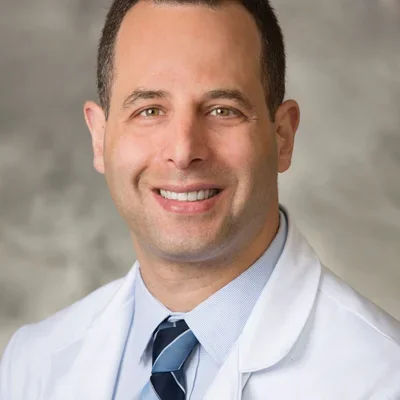
Since November 2024 the practice has been owned and medically directed by Dr. Melvin Thornton II, a reproductive endocrinologist who is board-certified twice over, in obstetrics and gynecology and in reproductive endocrinology and infertility. GFG announced the ownership and management change itself. His published work covers egg donation, surrogacy, and fertility treatment for HIV-positive couples. Our sources document this clinic from that change forward; the practice publishes no institutional history, so we make no claim about how long it has been open.
The embryology lab has its own leadership bench: Peter Wieckowski (PhD, HCLD) as clinical embryology lab director, Andrea Westerlund (MSc, TS, CLT) as assistant laboratory director, and Nurgul Yilmaz as senior embryologist. HCLD means high complexity clinical laboratory director, the CLIA-side credential for running a lab of this type. Embryos are cultured in an EmbryoScope time-lapse incubator, which photographs developing embryos on a schedule instead of pulling them out of the incubator for inspection, and eggs and embryos are frozen by vitrification. The clinic’s lab materials describe optimized embryo selection and non-invasive monitoring; the research record flags CLIA and New York State CLEP standing, and notes that CAP accreditation is plausible but not stated by the clinic.
What the CDC numbers say, and where they stop. GFG’s 2022 outcomes and the national comparison rows on this page both come from CDC NASS reporting for the same year, so unlike many clinic pages here the two sets are on the same registry and the same clock. Live birth per intended egg retrieval: 51.6% under 35 against a national 49.4%, and 57.7% at 35-37 against 42.8%. The first gap is small on 90 retrievals and could easily be noise; the second is the more interesting number, but note that this clinic’s 35-37 band out reports its own under-35 band, which is the opposite of the expected age gradient and a sign of a modest denominator (95 cycles) rather than of fertility improving with age.
The two older bands are where the data gives out. Our record carries 20.0% at 38-40 and 8.1% over 40 against national 32.8% and 17.0%, but CDC marked both of GFG’s groups as masked because fewer than 20 cycles were reported. Read those two clinic figures as uninformative, not as a below-average result — with a denominator that small, one or two cycles flip the percentage by double digits. Nothing else on this page ranks GFG against the national row.
Two further limits. The clinic row carries no separate fresh-embryo and frozen-embryo breakdown, so this page makes no per-protocol claims, and the donor-side line that matters most to a third-party reproduction practice is reported separately: 68 frozen donor-embryo cycles at 32.4% live birth. Volume sits at 471 cycles in the reporting year; the national per-clinic average stored in our data is 738, but that field mixes reporting bases across the corpus, so we do not present 471 as a fraction of it.
Accreditations & Awards
- CDC-verified cycle data: GFG’s 2022 outcomes appear in the CDC ART report, which is where the rates discussed above come from. The clinic itself publishes no success-rate page.
- SART membership, self-reported: the clinic states SART membership on its site. SART members follow ASRM ethics rules and report cycles to the CDC. Our sources could not re-confirm the listing inside SART’s online registry.
- CLIA-certified laboratory, with a New York State Clinical Laboratory Evaluation Program (CLEP) record in our research notes. Lab director credential: PhD, HCLD.
- Medical director board certification: ABOG in obstetrics and gynecology and in reproductive endocrinology and infertility; Fellow of ACOG.
- Castle Connolly Top Doctor, 2017-2022: awarded to Dr. Thornton for the New York metropolitan region.
- Lab accreditation gaps stated plainly: no CAP seal is claimed by the clinic, and no JCI or other international accreditation appears in our sources.
Why Choose Global Fertility & Genetics
- Genetic testing is in the clinic’s name, and in its volume: PGT-A for chromosome count, PGT-M for known single-gene disease, and PGT-P, a newer polygenic risk screen the clinic wrote about in December 2025. In the 2022 CDC data, 58% of GFG cycles included genetic testing.
- Third-party reproduction has its own desk: three coordinators hold the title Third Party Coordinator (Diamond Turner, Maya Levine, Lisa Mercado), with a financial director and a billing specialist behind them. Egg donation, donor sperm, and surrogacy run as programs, not as one-off referrals.
- Recruiting egg donors directly: the clinic recruits its own donors, age 21 to 30, with compensation up to $10,000.
- A same-day lab pipeline: retrieval, ICSI, time-lapse culture, biopsy and vitrification sit under one roof, so embryos are not shipped and you are not chasing an outside lab for results.
- Language desks, not a translation phone line: the site maintains separate Chinese, Japanese and Korean pages, with Tomoko Okamoto as international infertility coordinator and Jen Vuong as Korean IVF coordinator, and a Chinese-speaking team member listed on the Chinese page.
- HIV-serodiscordant and LGBTQ+ family building: fertility treatment for HIV-positive couples is a stated research focus of the medical director, and the surrogacy program names gay male couples and single men among its intended users.
- Saturday hours: open 7:30 AM to 5:00 PM weekdays and 8:00 AM to noon Saturday, which matters when monitoring scans cannot slip past a workday.
IVF & Fertility Services
- In Vitro Fertilization (IVF): hormonal stimulation to grow multiple follicles, retrieval, fertilization in the lab, embryo culture, transfer, and freezing of remaining viable embryos. The clinic lists endometriosis, blocked fallopian tubes, fibroids, genetic disease, sperm damage, sterilization reversal, ovarian failure, fertility preservation and unexplained infertility as reasons patients come to IVF.
- ICSI (Intracytoplasmic Sperm Injection): one sperm injected into one egg, used for male factor infertility, no sperm in the ejaculate, prior IVF fertilization failure, or when genetic testing on embryos is planned.
- IUI (intrauterine insemination): washed sperm placed into the uterus around ovulation. The clinic’s own guidance: move to IVF after 3 to 6 unsuccessful IUI cycles.
- Frozen embryo transfer: embryos are vitrified and transferred in a later cycle. The clinic’s published cycle steps run through freeze-then-transfer after testing. Our dataset carries no separate fresh-versus-frozen live birth rates for GFG.
- Egg donation: for patients who cannot use their own eggs, and for same-sex couples. Donor path in five steps: initial screening, in-depth screening, legal and financial agreements, synchronization with the recipient, retrieval.
- Gestational surrogacy: an embryo is transferred to a gestational carrier who has no genetic link to the baby. Carriers are 21 to 42, must have had at least one healthy pregnancy and delivery, and must be financially stable. Screening covers ultrasound, infectious disease testing and drug testing, plus a psychological evaluation and a legal screen.
- Egg freezing and fertility preservation: ovarian reserve workup with AMH, ovarian volume and antral follicle count, roughly 10 days of stimulation, then retrieval and vitrification. The clinic names pre-chemotherapy preservation as a use case.
- PGT: PGT-A, PGT-M and PGT-P on embryos. The clinic’s stated benefits are higher implantation per transfer, lower miscarriage risk, and safer elective single embryo transfer.
- Male infertility: semen analysis for count, motility and morphology, hormone therapy, lifestyle changes, surgery, sperm retrieval, and ART with IUI, IVF or ICSI. The clinic cites male factors in roughly 40-50% of infertility cases.
- International patient program: consultation and cycle support in English, Chinese, Japanese and Korean, with an on-site fertility decision seminar series.
Fees & Packages
There is no published price list. GFG’s treatment pages carry no fee table, and its site has an “Affordable Fertility Care” page whose content our sources did not capture in detail, so we cannot tell you what a cycle costs, what sits inside a cycle fee, or what is billed separately for medications, anesthesia, PGT biopsy, storage or donor compensation. Ask for those numbers in writing before you start medications.
Two cost paths appear in the record: the clinic runs periodic discounts (it advertised 10% off select services with a promo code for June 2026), and it accepts credit cards. Egg donor compensation of up to $10,000 is paid to the donor, not quoted as a patient price — a donor egg cycle’s own cost is not published.
Patient Journey
- Consultation: booked by phone or through the site. A fertility decision seminar, hosted by the international infertility coordinator, is the clinic’s group format for people still weighing options.
- Assessment: hormone testing, AMH, ultrasound with antral follicle count, and semen analysis for the male partner.
- Plan: the physician sets the protocol — own-egg IVF, donor eggs, gestational carrier, freezing, or a lower-intervention path such as IUI.
- Stimulation and monitoring: about 10 days of injections, tracked by ultrasound and bloodwork.
- Retrieval: eggs are collected transvaginally under sedation; ICSI fertilizes them, and embryos grow in the EmbryoScope time-lapse incubator.
- Testing and freezing: biopsy for PGT where planned, then vitrification of embryos.
- Transfer and confirmation: frozen embryo transfer in a later cycle, a blood test roughly 10 to 12 days after transfer, and ultrasound follow-up until a heartbeat is seen.
- Coordination for patients from abroad: translation, insurance paperwork and scheduling run through the international, Korean and Chinese-speaking coordinators.
Local Legal Framework
New York is one of the clearer states for third-party reproduction, and that is why a donor egg and surrogacy practice can operate openly in Manhattan.
- Gestational surrogacy: lawful under the Child-Parent Security Act of 2021. Intended parents confirm legal parentage through a court process rather than assuming it at birth, so budget for reproductive counsel before a carrier’s cycle starts.
- Egg and sperm donation: lawful, and the donor gives up parental rights. Our research record cites New York Domestic Relations Law §121 for that relinquishment. Treat statute numbers in this section as citations we copied from our own data file, not as legal advice; the statute text and its current scope need confirming with a New York family-law attorney.
- PGT: our sources identify no New York statute that restricts PGT-A, PGT-M or PGT-P. Testing proceeds on standard informed consent.
- LGBTQ+ parents: same-sex marriage has been lawful in the state since the Marriage Equality Act of 2011. The clinic’s surrogacy materials name gay male couples and single men as intended users; parentage for those families still runs through the CPSA court route.
- Embryo status: New York does not define an embryo as a person, so embryo storage and disposition are governed by the consent forms you sign rather than by a personhood statute.
- Our sources note no other New York ART statute bearing on these services.
Location
- Address: 115 E 57th St suite 420 & 430, New York, NY 10022
- Phone: +1 212-381-9558