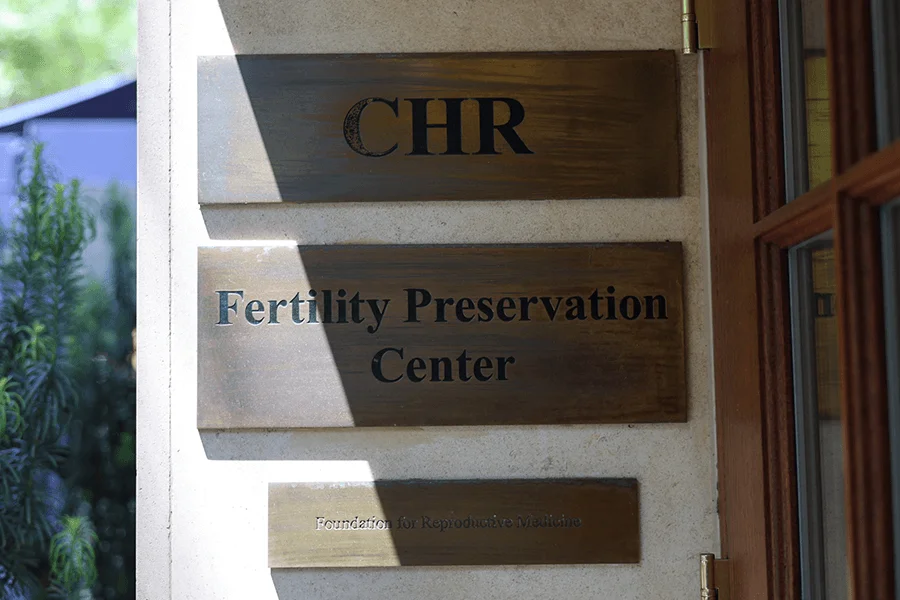
About Center for Human Reproduction
Center for Human Reproduction (CHR) sits at 21 E 69th St on Manhattan’s Upper East Side. Norbert Gleicher founded it in Chicago in 1981, establishing the first IVF program in Chicago and the Midwest, before the center moved its practice to New York. The website labels CHR a “center of last resort,” and the patient mix supports the label: of the 529 ART cycles the CDC’s National ART Surveillance System recorded for 2022, 74.3% were in women over 40 and only 8.7% in women under 35, with diminished ovarian reserve and premature ovarian aging accounting for 82.8% of diagnoses. CHR’s own outcome pages put the median IVF patient age at 42 to 45 against a national median near 36.
That denominator is the first thing to read before comparing numbers. On the SART 2023 final report, cumulative live birth per intended retrieval with a patient’s own eggs came out at 8.0% at 38 to 40 and 0.8% over 40 (the over-40 figure is the weighted merge of the 41-42 and over-42 bands); the under-35 and 35-to-37 groups are suppressed by SART because fewer than 20 cycles were reported. As cross-validation, the CDC’s 2022 dataset gives 20.8% under 35, 8.1% at 38 to 40 and 1.2% over 40 — different year and different denominator, but consistently low in the older bands, so the two sources corroborate each other. The SART 2023 national summary, which pools clinics treating a much younger population, lists 53.2%, 26.2% and 9.4% for those bands. A head-to-head ranking does not follow from those figures — CHR’s results describe what happens when a clinic accepts the age and ovarian reserve profile other centers turn away or route straight to donor eggs. The clinic adds its own caveats to the report: it performs significant numbers of non-traditional stimulation cycles, day-3 (cleavage-stage) transfers, and in-vitro maturation cycles, all of which affect the headline rates.
The clinical response to that population is individualized stimulation, androgen supplementation, and a lab run in house. CHR introduced DHEA into fertility care in 2005 and has run registered trials on DHEA in premature ovarian aging (NCT00650754) and premature ovarian failure (NCT00948857), with testosterone and human growth hormone protocols still under study there. It is also one of the few well-known centers that argues against routine PGT-A for older patients, holding that screening adds cost without proven benefit, and reserves genetic testing for PGD on a defined medical indication. Every cycle goes to both the CDC and SART, and the clinic publishes preliminary cycle outcomes each year before the registries release theirs.
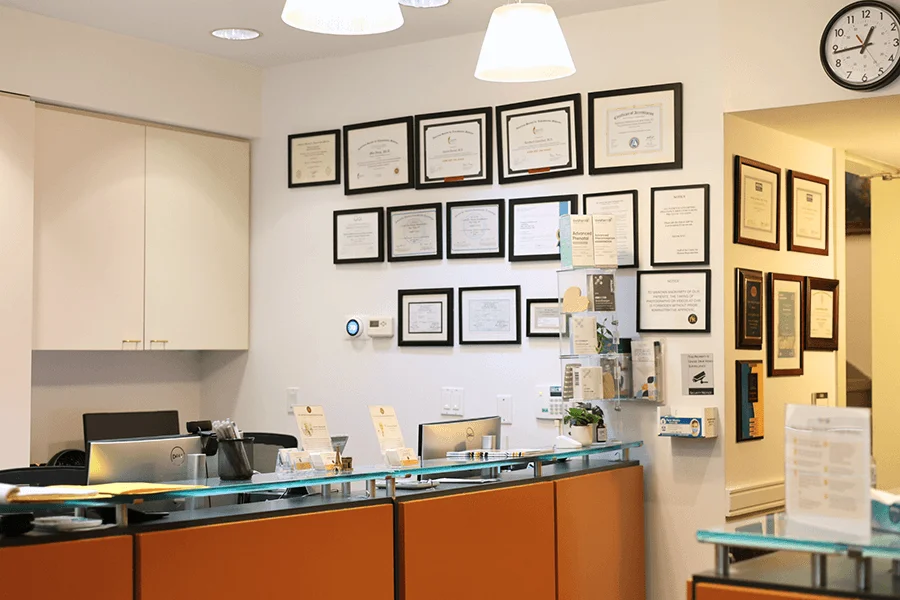
Accreditations & Awards
- SART member clinic since 1999 — the clinic profile is signed by Medical Director Norbert Gleicher, and laboratory accreditation is recorded as verified (SART ClinicID 2030).
- CAP-accredited embryology laboratory, as listed in the SART clinic record.
- 1983, The Lancet — the first successful transvaginal egg retrieval in the world, a technique that became standard practice in IVF.
- 1981 — first IVF program in Chicago and the Midwest.
- 2005 — first published paper on DHEA improving fertility in women with premature ovarian aging, in Fertility & Sterility; DHEA and androgen supplementation are now used widely in low-responder protocols.
- 1980s–2000s — CHR was among the first institutions to publish critiques of routine preimplantation genetic screening, beginning in 2008.
- Own-egg pregnancy at 47 and delivery at 48 — the clinic states this remains the world record for the oldest successful pregnancy and birth with a patient’s own eggs.
- Close to 500 peer-reviewed papers by the medical director, per CHR’s publication listing, with a laboratory research group of doctoral scientists working alongside the clinical practice.
Why Choose Center for Human Reproduction
- Own-egg treatment as the default, not the exception — over half of CHR’s fresh non-donor cycles involve women aged 42 and older, according to the clinic’s outcome pages. Patients who were told donor eggs were their only option are the routine referral, not a special case.
- Androgen supplementation backed by published trials — DHEA is given as oral tablets from at least six weeks before a cycle until a positive pregnancy test, and micronized DHEA was developed for this use at CHR. Testosterone and ovarian reserve remain an active study topic at the center.
- It publishes the argument against routine PGT-A — CHR’s position is that genetic screening in this age group raises cost without demonstrated benefit, so PGT is used for monogenic disease blocking where there is an indication. Its own-egg cycles show PGT use of roughly one in ten in the older age bands, in contrast to mainstream practice.
- Everything happens in one building — monitoring, retrieval, fertilization, culture, freezing and transfer are done in the center’s own laboratory, with no embryos sent to an outside genetics lab.
- Income-tiered pricing and risk-sharing — three discounted uninsured cycle rates by gross family income, a Multiple IVF Cycle Program bundling up to four cycles, shared risk donor egg programs, a frozen donor egg program, an IVF discount for active-duty military families, and third-party financing from $3,000 to $50,000.
- One coordinator per patient, and language support — each patient is assigned a clinical coordinator who stays with the case from start to finish, arranges local monitoring for long-distance patients, and answers injection and prescription questions. Beyond English, physicians and staff speak Chinese (Mandarin and Cantonese), Russian, Polish, Italian, Spanish, Hungarian, Georgian, Romanian, Japanese, Tagalog, German and Hebrew, with interpretation arranged for other languages. Consultations can be in person, by telephone or by video.
IVF & Fertility Services
- IVF — individualized ovarian stimulation for low responders, with natural-cycle and low-stimulation Eco-IVF options
- Eco-IVF and consecutive-cycle protocols — reduced-medication and back-to-back cycle approaches studied for diminished reserve
- ICSI — for male factor or limited sperm numbers
- IUI — washed sperm insemination
- Frozen embryo transfer (FET)
- Egg, embryo and ovarian tissue freezing — fertility preservation before cancer treatment, and preservation for children, men and women delaying parenthood
- Donor egg programs — CHR’s own donor database, a shared risk (refund) donor egg program, and EcoDEP frozen donor eggs
- PGD — monogenic disease blocking on medical indication only; the center recommends against routine PGT-A
- Reproductive immunology and recurrent pregnancy loss — evaluation and treatment of autoimmune and immunological causes of infertility and repeated loss
- Diagnosis — hysterosonogram (HSN), hysterosalpingogram (HSG), semen analysis, and interpretation of hormone and immune laboratory levels
- Gender selection — where offered and lawful in New York
- Second opinions — remote review of records with a written report
- LGBTQ+ family building — paths for lesbian couples, gay male couples, and single women and men, including gestational surrogacy under New York’s CPSA framework
- Clinical trials — human growth hormone, testosterone and ovarian reserve, and other studies open through the center’s research program
Fees & Packages
CHR publishes cycle prices. The figures below are the current USD list prices on the center’s own pricing pages; they are not insurance estimates.
| Item | Price |
|---|---|
| Uninsured IVF cycle, gross family income up to $50,000 | $10,440 |
| Uninsured IVF cycle, gross family income up to $75,000 | $11,600 |
| Uninsured IVF cycle, gross family income up to $100,000 | $12,550 |
| Included in the discounted cycle | Pre-retrieval monitoring with ultrasounds and bloodwork, egg retrieval (anesthesia excluded), embryo transfer |
| Not included | All medications, diagnostic pre-testing for both partners, treatment of complications, anesthesia, ICSI, assisted zona hatching, PGD, gender selection, embryo freezing, frozen embryo transfer |
| Anesthesia | $650, paid to an independent anesthesiologist |
| Multiple IVF Cycle Program (qualifying patients with very low reserve) | 4 cycles $50,000; 3 cycles $40,000; 2 cycles $30,000 — medications and outside laboratory costs excluded |
| EcoDEP frozen donor eggs | Six eggs $29,950, additional eggs $2,600 each; recipient medications, pre-testing and add-ons excluded |
| Shared risk donor egg program, standard | Eight mature donor eggs included, additional eggs $1,000 each; donor fees, compensation, consultation, workup and donor insurance included; recipient medications, anesthesia and ICSI excluded; donor and anesthesia fees are non-refundable |
| Second opinion written report | $350, with an optional follow-up consultation for a further $250 |
| Egg donor compensation | $10,000 for a completed retrieval cycle; $1,000 if a cycle is canceled through no fault of the donor |
| Third-party financing | Loans from $3,000 to $50,000 |
Three conditions on the discount programs are worth reading before you budget. They apply only to patients in the United States without insurance coverage for IVF, so overseas patients and insured patients are not eligible. Accepting a discounted rate means confirming that your income is under the stated limit and that you will not seek reimbursement from any third party, and CHR then issues a summary financial statement rather than an itemized bill. Separately, the center notes that in New York most insurance plans cover the diagnostic workup but not necessarily IVF itself, and it will provide receipts for out-of-network claims where you do have a benefit.
Patient Journey
- Book a consultation by phone or through the site’s contact form; the first appointment can be in person, by telephone or by video, for local and overseas patients alike.
- Complete registration in the secure patient portal before the visit. Insurance cards, authorizations and referrals are required at the first appointment if coverage is involved.
- Sit through a one-hour initial consultation with full medical records in hand. The physician works through the complete fertility history, and CHR asks patients to bring prior cycle records, embryology lab reports and test results — the review of previous cycles is where low-responder protocols get rebuilt.
- Get a dedicated clinical coordinator. Assigned right after the first visit, the coordinator handles monitoring schedules, prescriptions and injection questions, and arranges testing and scan monitoring at a local IVF center for long-distance patients.
- Complete the center’s required evaluation — the workup CHR describes as an IVF checklist, covering ovarian reserve, immune status, genetic risk and general health, with additional tests added by age and history. This stage usually takes a few weeks to a month, and longer for patients arriving from health systems where records are not yet translated; tests completed within the past year do not need repeating.
- Confirm the protocol and pay for the cycle. A follow-up conversation may be scheduled to walk through findings; it is waived when results hold no surprises. Consent forms are signed, donor eggs are selected at this point if the plan uses them, and payment covers the full cycle including a small cancellation fee, with unused services refunded immediately if a cycle is canceled.
- Start stimulation and monitoring. The coordinator gives prescriptions and specifies the start date for each medication and the first monitoring appointment. Scans are scheduled early in the morning to limit time away from work, and frequency depends on ovarian response — locally at CHR, or at a partner IVF center for patients who live away.
For patients traveling to New York, the required stay depends on the protocol: about four days for a standard IVF cycle, five to six when monitoring or embryo culture needs closer follow-up, and often only one to two days for a donor egg cycle. Because CHR works with physicians abroad to complete monitoring locally before arrival, donor and frozen-embryo paths are the shortest. Advance notice of arrival dates lets the center arrange accommodation near 69th Street and language assistance during physician visits. A remote second opinion, which starts with an online consultation form and costs $350, returns a written report through the patient portal within about two weeks.
Local Legal Framework
CHR operates in New York, where assisted reproduction and third-party family building are governed by state statute rather than by clinic policy.
- Gestational surrogacy is legal under the Child-Parent Security Act (CPSA), effective February 15, 2021. New York was the first state to license gestational carrier matching organizations, which are registered with the Department of Health.
- Contract requirements are set out in Family Court Act Article 5-C, Part 4, with the surrogate’s bill of rights in Part 6. Both sides must be represented by independent New York attorneys familiar with the CPSA; agreements that do not meet the statute’s conditions may be unenforceable.
- The surrogate’s bill of rights is mandatory and covers independent counsel licensed in New York, health insurance and related medical expenses, life insurance, and protections if the agreement is terminated.
- ART Service Providers are registered and supervised. Any clinic performing IVF or embryo transfer for a gestational surrogacy agreement is an ART Service Provider (ARTSP) under Department of Health oversight; practicing as an ARTSP does not require a separate matching-organization license.
- Egg donation is legal and registered. Once registered as an ARTSP, the center participates in New York’s central oocyte donor registry (Ova Donor Registry), and donor participation is voluntary. Flows involving tissue banking require an organ/tissue bank license under state law, and HIV testing is a statutory requirement.
- Genetic testing of embryos is lawful in New York. CHR applies it restrictively — PGD for a defined medical indication, not screening as a standard step for older patients.
- LGBTQ+ family building is protected, and the center serves lesbian and gay couples and single individuals, combining ART with CPSA surrogacy pathways where needed.
Location
- Address: 21 E 69th St, New York, NY 10021
- Phone: 845-581-2953