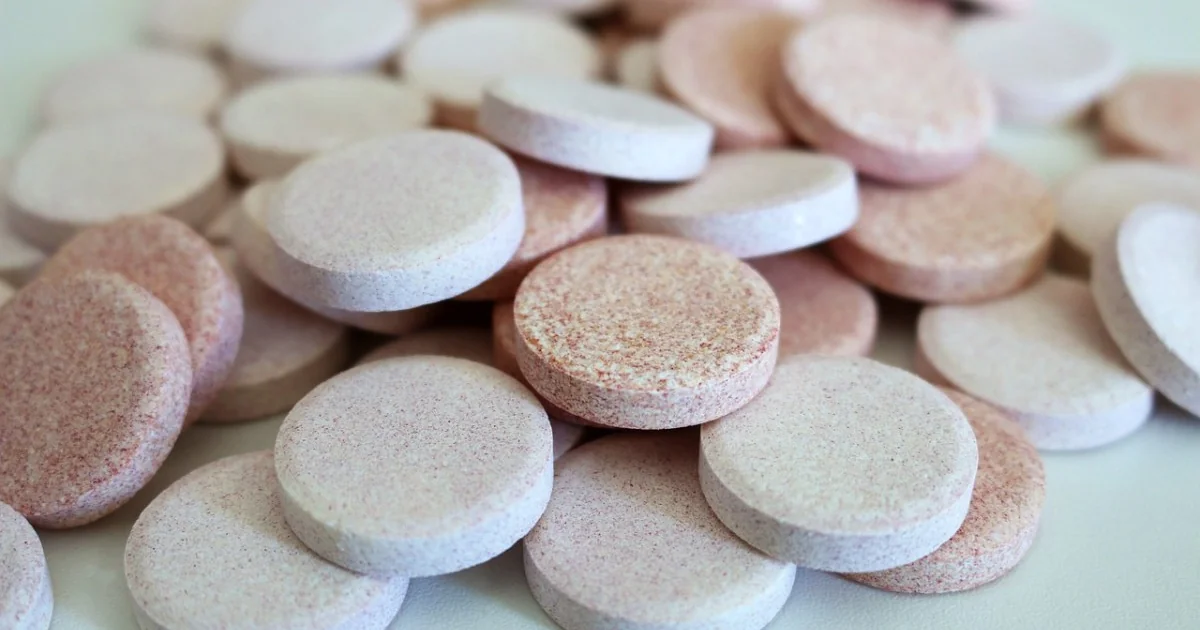
Clomiphene citrate — sold as Clomid and Serophene — is the classic first fertility pill: one tablet a day for five days, starting around day 5 of your cycle. It blocks estrogen receptors in the brain, so your pituitary releases more follicle-stimulating hormone (FSH) and an egg is released.
Prescribed since 1967, it is still the first drug most women are offered — and the one most often compared against: in polycystic ovary syndrome (PCOS), letrozole now produces a higher live birth rate.
How this article was researched: the ProIVF Medical Editorial Team worked from the FDA prescribing information, randomized trials, Cochrane reviews and registry cohorts; every figure links to its source, and the ProIVF Medical Advisory Board reviewed the draft.
What is clomiphene citrate and how does it work?
Clomiphene citrate is an oral selective estrogen receptor modulator (SERM) that induces ovulation by convincing the brain that estrogen is low: it blocks the hypothalamic-pituitary feedback signal, and the pituitary responds by increasing FSH output.
Extra FSH recruits and matures a follicle. Ovulation typically follows 5 to 10 days after the last tablet, per the FDA label.
Why clomiphene’s mechanism creates its main drawback
The same estrogen blockade acts on receptors elsewhere — including the endometrium. A thinner lining is the price of the mechanism, not an idiosyncratic reaction.
One study in poor ovarian responders measured endometrial thickness of 7.3 ± 2.2 mm in clomiphene-based minimal stimulation cycles, compared with 11.4 ± 3.3 mm and 12.9 ± 3.8 mm in mild and conventional gonadotropin protocols (p < 0.0001) — JBRA Assist Reprod, 2018. The same patients reached 10.3 ± 1.8 mm on a later frozen-embryo transfer cycle — the reason freeze-all protocols accompany clomiphene stimulation.
Clomid, clomiphene and Serophene: same drug?
Yes. Clomid and Serophene are brand names for the same molecule; generic 50 mg tablets are chemically interchangeable.
Letrozole’s brand Femara is FDA-approved for breast cancer; clomiphene citrate is FDA-approved specifically for ovulatory dysfunction. Every use in IVF stimulation or in men is off-label.
How well does clomiphene work? The numbers by diagnosis
Results swing enormously by diagnosis, so a single “success rate” is close to meaningless — read the figure that matches yours.
Ovulatory dysfunction and PCOS: 19.1% cumulative live birth
In the 750-woman PPCOS II trial (PCOS, up to five cycles): cumulative live birth 19.1% with clomiphene versus 27.5% with letrozole — rate ratio 1.44 (95% CI 1.10–1.87) in letrozole’s favour.
Cumulative ovulation was 48.3% of clomiphene cycles versus 61.7% of letrozole cycles — Legro et al., N Engl J Med, 2014.
A Cochrane review of 41 trials and 6,522 women agreed, at high certainty: letrozole live-birth odds ratio 1.72 (95% CI 1.40–2.11) vs clomiphene and similar SERMs; number needed to treat 10 — Cochrane, 2022.
It is still far better than nothing: against placebo, clinical pregnancy odds rise 5.91-fold (95% CI 1.77–19.68) across 28 randomized trials — Cochrane, 2016.
Unexplained infertility: 26% versus 31% ongoing pregnancy per couple
The relevant comparison is oral clomiphene plus IUI versus injectable gonadotropins plus IUI: in a 738-couple randomized trial, ongoing pregnancy per couple was 26% on clomiphene and 31% on gonadotropins (relative risk 1.16, 95% CI 0.93–1.47, not significant) — Reprod Biomed Online, 2020.
Mean cost per couple was €1,067 with clomiphene versus €1,534 with gonadotropins, producing an incremental cost-effectiveness ratio of €17,044 per additional live birth. A separate meta-analysis of 2,989 patients and 6,590 cycles found gonadotropins raised the relative risk of live birth by only 1.09, with a multiple-gestation relative risk of 1.06 — Fertil Steril, 2020.
How many cycles of clomiphene should you do?
Three to four — the ASRM figure for oral stimulation plus IUI as first-line therapy, followed by IVF if unsuccessful.
“For most couples, the best initial therapy is a course (typically 3 or 4 cycles) of ovarian stimulation with oral medications and intrauterine insemination (OS-IUI) followed by in vitro fertilization for those unsuccessful with OS-IUI treatments.” — ASRM Practice Committee, Fertility and Sterility, 2020, PMID 32106976
After four ovulatory cycles without pregnancy, the odds a fifth succeeds are poor. Agree the next-step plan before cycle one — our guide to IUI versus IVF maps that fork.
How do you take clomiphene, and what monitoring do you need?
The US label is prescriptive, removing most guesswork. Start at 50 mg daily for five days, then escalate once if you do not ovulate.
The standard five-day protocol
“Treatment of the selected patient should begin with a low dose, 50 mg daily (1 tablet) for 5 days.” — Clomiphene citrate tablets, USP, FDA prescribing information, section 2, issued 06/2026, DailyMed
The full label sequence is: 50 mg daily for five days starting on or about day 5 of the cycle; if ovulation does not occur, a second course at 100 mg daily for five days; and no escalation beyond 100 mg/day for five days.
What are the options if the first dose does not work?
A randomized crossover trial of an early-start 50 mg daily × 5 days (63 cycles) vs the same dose on the conventional schedule (40 cycles): the earlier protocol produced more ovulation, thicker endometrium and more follicles ≥18 mm (p < 0.001 throughout) — J Obstet Gynaecol Res, 2016. Cycle timing is therefore worth discussing, not assuming.
Monitoring: what should actually be checked?
At minimum, a baseline pelvic exam or ultrasound before each course — the label lists pre-existing ovarian enlargement, other than in PCOS, as a reason not to start.
Practically: a mid-cycle ultrasound for follicular growth, plus a progesterone check or home ovulation test to confirm ovulation actually occurred. Inducing ovulation without confirming it is an avoidable waste of cycles.
Clomiphene side effects: what 8,029 patients reported
The FDA label’s clinical-studies table pools trial exposure rather than anecdotes. Ovarian enlargement and hot flushes are the most common effects.
| Adverse event | Incidence (n = 8,029) |
|---|---|
| Ovarian enlargement | 13.6% |
| Vasomotor flushes (hot flushes) | 10.4% |
| Abdominal-pelvic discomfort, distension or bloating | 5.5% |
| Nausea and vomiting | 2.2% |
| Breast discomfort | 2.1% |
| Visual symptoms (blurring, lights, floaters) | 1.5% |
| Headache | 1.3% |
Source: FDA prescribing information for clomiphene citrate tablets, clinical-studies adverse-event table.
Visual symptoms: the one to report immediately
Visual disturbance affected 1.5% of patients; the label warns it becomes more frequent with higher total dose and longer treatment. Usually reversible, but some cases persisted after stopping.
The rule: report any new blurring, floaters, flashes or scotomata and stop the drug — don’t wait it out.
Multiple pregnancy: 7.98% of reported pregnancies
In the label’s trial pregnancies, multiple gestations accounted for 7.98% — 6.9% twins, 0.5% triplets, 0.3% quadruplets and 0.1% quintuplets. Among 165 twin pregnancies with adequate data, the monozygotic-to-dizygotic ratio was about 1:5.
Survival was 98.16% for singleton live births versus 83.25% for multiple live births; overall survival across multiple pregnancies, counting spontaneous abortion, stillbirth and neonatal death, was 73%.
PPCOS II found twins in 7.4% of clomiphene pregnancies versus 3.4% of letrozole pregnancies — a direct consequence of clomiphene driving more follicles per cycle.
Does clomiphene cause birth defects?
The best evidence on the drug itself is reassuring.
A 2024 cohort study of post-conceptional exposure found no increased risk of major malformation (crude relative risk 0.64, 95% CI 0.19–2.15) but an increase in minor malformations with no specific pattern (relative risk 4.05, 95% CI 1.70–9.64) — Drug Saf, 2024. In a series of 911 newborns conceived after ovulation induction, overall malformations were 4.8% with clomiphene versus 2.4% with letrozole, major malformations 3.0% versus 1.2%, and cardiac anomalies 1.8% versus 0.2% — Fertil Steril, 2006.
Study designs differ, but the honest reading: clomiphene is not a known teratogen; letrozole’s anomaly signal in the same cohorts is lower.
Ovarian cancer risk: what a 4.7-million-woman review found
A Danish population cohort found no overall increase in ovarian cancer after clomiphene use, with a rate ratio of 1.14 (95% CI 0.79–1.64) — BMJ, 2009.
A Cochrane review covering 4,684,724 women concluded the evidence on ovarian cancer is of very low certainty. One cohort reported a hazard ratio of 1.93 (95% CI 1.18–3.18) in clomiphene-treated subfertile women, the signal concentrated among those who remained nulligravid (HR 2.49, 95% CI 1.30–4.78). Borderline ovarian tumours showed a higher reported risk — a standardised incidence ratio of 7.47 (95% CI 1.54–21.83) from just 12 cases — Cochrane, 2019.
Twelve cases is not grounds for alarm — infertility itself is an independent ovarian cancer risk factor — but clomiphene is no harmless vitamin across repeated cycles.
Can men take clomiphene?
Yes, off-label, and the effect on sperm is measurable. It raises gonadotropins the same way as in women — hence its use in hypogonadism and some male-factor infertility.
A retrospective study of 151 men treated with at least 25 mg daily found sperm concentration rose from 14 to 21 million/mL (p < 0.05), and a third of men starting below 5 million motile sperm improved above 5 million total motile count — enough to change the recommendation from IVF to IUI — Andrologia, 2019.
A 2025 meta-analysis of randomized trials in male hypogonadism found SERM therapy raised total testosterone by 273.76 ng/dL and FSH by 4.59 IU/L. In a phase II randomized trial, enclomiphene 25 mg daily produced total testosterone of 604 ± 160 ng/dL, statistically indistinguishable from transdermal testosterone’s 500 ± 278 ng/dL, without suppressing sperm production — BJU Int, 2013.
Two caveats. Clomiphene plus hCG before sperm retrieval in non-obstructive azoospermia did not improve retrieval (45% versus 50%), so it is not a universal add-on — Front Reprod Health, 2026. And men trying to conceive should never be given exogenous testosterone for low testosterone — it suppresses sperm production, and men’s fertility care has its own evaluation pathway.
What should you do if clomiphene does not work?
Clomiphene resistance is common in PCOS and has a defined escalation ladder. The first question — did you ovulate at all? — determines the next step.
If you did not ovulate
Weight and metabolic factors come first. Adding metformin to clomiphene raises clinical pregnancy (odds ratio 1.59, 95% CI 1.27–1.99) and ovulation (odds ratio 1.57, 95% CI 1.28–1.92) but not live birth (odds ratio 1.21, 95% CI 0.92–1.59), and it triples the odds of gastrointestinal side effects — Cochrane, 2017.
Cochrane also found clomiphene plus dexamethasone raised pregnancy rates substantially over clomiphene alone (odds ratio 9.46, 95% CI 5.1–17.7) — Cochrane, 2009.
If you ovulated but did not conceive
Switching drug class is the highest-yield move. In a randomized trial of women with anovulatory PCOS, letrozole and clomiphene achieved similar cumulative ovulation (86.7% versus 85.2%).
Pregnancy occurred in 42.2% versus 20.0% of women (p = 0.04). Letrozole also produced a single dominant follicle in 68.4% of ovulatory cycles, against 44.8% on clomiphene — Int J Gynaecol Obstet, 2021.
Our letrozole guide covers switching; if oral cycles fail despite confirmed ovulation, the ASRM pathway is IVF.
Clomiphene or letrozole: which comes first?
Letrozole now comes first for PCOS, and the two drugs are close to equivalent in unexplained infertility.
For PCOS, the Cochrane high-certainty evidence favours letrozole for live birth (odds ratio 1.72, 95% CI 1.40–2.11) with identical rates of ovarian hyperstimulation syndrome (OHSS) of 0.5% in both arms. For unexplained infertility, clomiphene remains fully reasonable at roughly two-thirds the cost of a gonadotropin cycle.
| Clomiphene citrate | Letrozole | |
|---|---|---|
| Cumulative live birth, PCOS (5 cycles) | 19.1% | 27.5% |
| Twin pregnancy, PCOS | 7.4% | 3.4% |
| Ovulation per cycle, PCOS | 48.3% | 61.7% |
| Cost per couple, IUI cycle | €1,067 | Comparable |
| Uterine lining effect | Anti-estrogenic, thinner | Favourable |
Where clomiphene still makes sense: cost-sensitive cycles, unexplained infertility, availability where letrozole is unregistered, and male hypogonadism.
What did three clomiphene cycles actually look like?
Patient details below are composite accounts drawn from published case series and clinic-level patient reports. Names, ages and locations have been changed, and no individual patient is identifiable.
A 29-year-old in Texas, three cycles, $340. Her PCOS diagnosis came after 14 months of irregular cycles. Clomiphene 50 mg produced ovulation on cycle one, confirmed by a day-21 progesterone, but no pregnancy. Cycle two rose to 100 mg; a 6 mm lining on mid-cycle ultrasound prompted vaginal estradiol. Cycle three produced two follicles and an unexpected twin discussion. “I had budgeted for the pills,” she said. “Nobody told me the monitoring and the estrogen were going to be the expensive part.” She conceived on cycle four, singleton, after adding metformin.
A 35-year-old in Kuala Lumpur, four cycles, about RM 4,200 — then a switch. Four ovulatory cycles, four negative tests. After cycle four her doctor ordered a repeat semen analysis rather than a higher clomiphene dose; total motile count had dropped from 22 million to 6 million since the original test two years earlier. They moved to IVF with ICSI. “The frustrating part was losing a year to a number that had already changed,” she said.
A 41-year-old in Manchester, one cycle, £180. Her odds: clomiphene’s per-cycle live birth rate at her age with unexplained infertility sat below 5%, and an AMH of 0.5 ng/mL made injectable stimulation a poor bet too. After one non-responsive clomiphene cycle — antral follicle count three on day 5 — she went straight to IVF with her own eggs. “I’d rather spend the money on the thing that costs more and actually gives me a number,” she said.
FAQ
Q: How long does clomiphene take to work?
Ovulation typically occurs 5 to 10 days after the last tablet, per the FDA label. A five-day course starting on day 5 places ovulation around days 14 to 19 — later than the textbook day-14 assumption.
Q: What is the clomiphene success rate per cycle?
Per-cycle live birth varies by diagnosis: PCOS shows 19.1% cumulative over five cycles — under 4% per cycle.
In unexplained infertility with IUI, ongoing pregnancy reaches 26% per couple over a typical course, meaning roughly 6–9% per cycle.
Q: Can I take clomiphene if I have PCOS and a high BMI?
You can, but response falls with metabolic severity; adding metformin raises ovulation (odds ratio 1.57, 95% CI 1.28–1.92) and clinical pregnancy (odds ratio 1.59, 95% CI 1.27–1.99).
No proven live-birth benefit, and gastrointestinal side-effect odds roughly quadruple (odds ratio 3.97) — discuss it, don’t assume it.
Q: Does clomiphene thin the uterine lining?
Yes — this anti-estrogen effect was measured directly: in clomiphene-based minimal stimulation cycles, endometrial thickness was 7.3 ± 2.2 mm against 12.9 ± 3.8 mm in conventional gonadotropin protocols, which is why estradiol supplementation or a freeze-all strategy is often added.
Q: Is clomiphene safe to take for many months in a row?
ASRM frames oral stimulation as typically 3 or 4 cycles, not open-ended. The label warns that visual effects increase with cumulative dose and duration, and the very-low-certainty ovarian-cancer evidence points to repeated exposure without conception as the pattern worth monitoring.
Q: Can I take clomiphene if I am already pregnant?
No — pregnancy is a contraindication on the label, and treatment stops once pregnancy is confirmed; for conceptions during a treatment cycle, a 2024 cohort of post-conceptional exposure found no increase in major malformations (crude relative risk 0.64, 95% CI 0.19–2.15), while minor malformations rose (relative risk 4.05, 95% CI 1.70–9.64).
Q: Are Clomid and clomiphene the same thing?
Yes — Clomid and Serophene are brands of clomiphene citrate; generic 50 mg tablets are bioequivalent, and the FDA label used throughout is the generic product’s.
Q: Do I need a trigger shot with clomiphene?
Not always: in clomiphene-stimulated IUI cycles, a randomized study found insemination at 24 or 36 hours after an hCG trigger gave similar clinical pregnancy rates, so timing is flexible when a trigger is used — SpringerPlus, 2016; many clinicians skip the trigger and rely on an LH test instead.
Planning your next step
Clomiphene is cheap, oral, well-studied and genuinely effective in the right diagnosis — and it is the wrong first choice for PCOS in 2026, where letrozole has the better evidence.
- Confirm the diagnosis before the drug. Anovulatory PCOS is clomiphene’s strongest indication; unexplained infertility its most debatable — ask which group you are in.
- Insist that ovulation is confirmed. A day-21 progesterone or a mid-cycle ultrasound turns a guess into a data point.
- Write down the exit plan. Agree the switch point — letrozole, IUI or IVF — before cycle one (ASRM: typically 3–4 cycles).
- Ask for the lining measurement. Under 7 mm on clomiphene — ask about estradiol supplementation or another drug class.
- Request separate pricing. Pills, ultrasound monitoring and blood work are three separate line items that vary far more by country than by drug.
To choose where to run a monitored stimulation or IUI cycle, browse verified clinic profiles covering published success rates, pricing and reviews, or contact our team to match your diagnosis to clinics that treat it; the medication overview and PCOS guide cover the rest of the pathway.
Disclaimer: this article is for education only and is not medical advice. Clomiphene citrate is a prescription drug; it must be taken under the supervision of a licensed reproductive endocrinologist or fertility specialist.
Success rates and side-effect incidences quoted above are population-level figures from the cited studies and cannot predict any individual’s outcome. Do not start, stop or adjust any fertility medication without consulting your own clinical team.
Written by the ProIVF Medical Editorial Team, reviewed by the ProIVF Medical Advisory Board; figures come from the linked primary sources.
Last updated: 25 September 2026