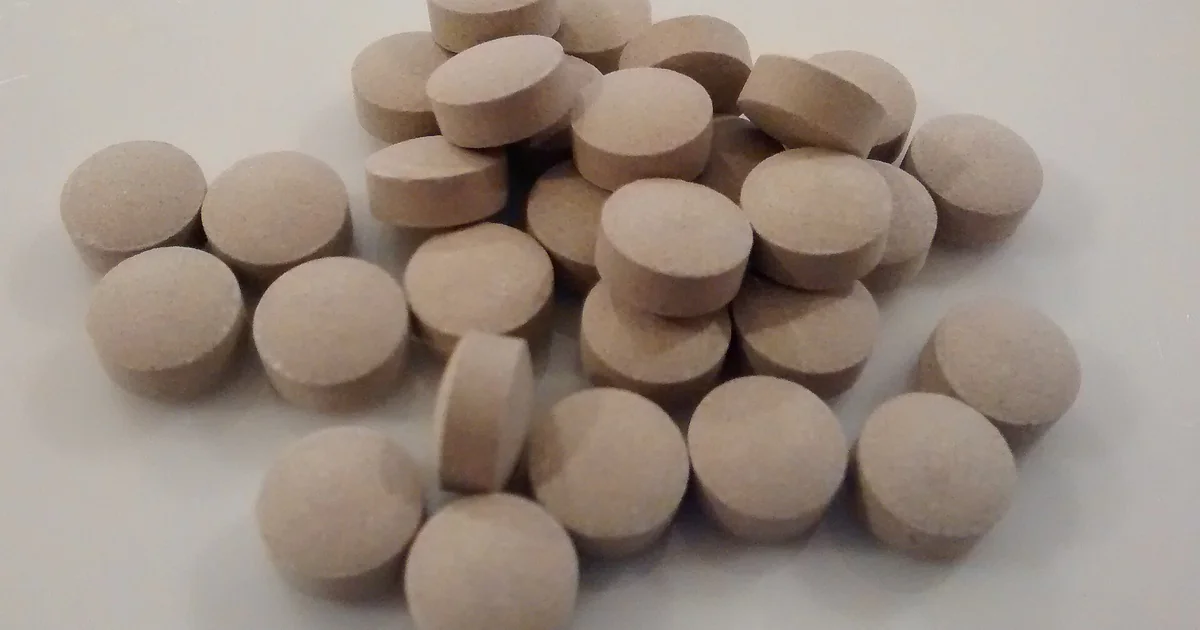
A short list of fertility supplements has real randomized-trial support: CoQ10 raised sperm concentration 10.22 million/mL across nine trials — World J Mens Health 2025 — and clinical pregnancy odds to OR 1.84 in diminished ovarian reserve — Ann Med 2024. The most popular male combination — folic acid plus zinc — failed outright: live birth 34% versus 35% across 2,370 couples — JAMA 2020.
Which Fertility Supplements Have Real Evidence?
Read the final column — low or very low certainty — as closely as the effect sizes.
| Supplement | Population studied | Strongest evidence | Reported effect | Certainty |
|---|---|---|---|---|
| Coenzyme Q10 | Men, idiopathic infertility | Meta-analysis, 9 RCTs / 781 men (2025) | Concentration +10.2 M/mL; total motility +4.95% | Low–moderate |
| Coenzyme Q10 | Women with DOR | Meta-analysis, 6 RCTs / 1,529 women (2024) | Clinical pregnancy OR 1.84 (1.33–2.53) | Low |
| Myo-inositol | Women with PCOS | Meta-analysis, 11 studies / 981 women (2025) | MII oocyte rate OR 1.55 (1.04–2.31) | Low |
| DHEA | Women with DOR | Meta-analysis (2017) | Clinical pregnancy OR 1.47 (1.09–1.99); not significant in RCT-only subset | Low |
| Melatonin | Women undergoing ART | Meta-analysis (2025) | Clinical pregnancy RR up to 1.47; fertilization RR 1.10 (1.03–1.17) | Low |
| Folic acid + zinc | Men in couples seeking treatment | RCT, 2,370 couples (JAMA 2020) | Live birth 34% vs 35% — no benefit | High-quality negative |
“Low certainty” is not a polite way of saying “wrong” — the trials were small or inconsistent, so the effect may be real while its size remains uncertain.
Which Supplements Work for Male Fertility?
Infertility affects roughly one in six adults worldwide, and male factors contribute to about half of all cases — WHO infertility fact sheet.
CoQ10: the best-supported single supplement for sperm
CoQ10 is a fat-soluble molecule the mitochondria use in energy production, and it is a lipid-phase antioxidant. Sperm are unusually dependent on both — they are mitochondria-dense, and their membranes are rich in polyunsaturated fatty acids vulnerable to oxidative damage.
A 2025 meta-analysis of nine randomized trials, 781 men (430 treatment, 351 control) with idiopathic infertility found CoQ10 significantly improved (mean differences):
- Sperm concentration: +10.22 million/mL (95% CI 3.51–16.93, p = 0.003)
- Total sperm motility: +4.95% (95% CI 1.15–8.75, p = 0.01)
- Semen volume: +0.17 mL (95% CI 0.03–0.31, p = 0.02)
- Seminal CoQ10 levels: +37.04 ng/mL (95% CI 31.24–42.84)
The benefit was clearest beyond three months of supplementation — World J Mens Health 2025 — spermatogenesis takes roughly 74 days, and no supplement can change sperm already made.
An earlier network meta-analysis of eight antioxidants in subfertile men ranked CoQ10 first for sperm concentration (mean difference 5.95 million/mL, 95% CI 0.05–10.79; highest SUCRA score at 79.4%) — Adv Nutr 2022. In one randomized trial of 212 men with idiopathic oligoasthenoteratospermia, 300 mg daily for 26 weeks significantly improved sperm density and motility (p = 0.01 each), with the acrosome reaction rising from 14% to 31% — J Urol 2009.
Omega-3, zinc and selenium: smaller effects, but measurable
A 2018 meta-analysis of randomized trials in men found, against placebo — Adv Nutr 2018:
- Omega-3 fatty acids: sperm count +18.70 million/mL, concentration +10.98 million/mL, total motility +7.55%
- Zinc: total motility +7.03%
- Selenium: concentration +3.91 million/mL, total motility +3.30%
The folic acid plus zinc combination that failed
The Folic Acid and Zinc Supplementation Trial, a multicenter randomized trial, enrolled 2,370 couples at four US centers. Men received 5 mg of folic acid plus 30 mg of elemental zinc daily or placebo for six months:
- Live birth: 404 (34%) in the treatment group versus 416 (35%) with placebo — risk difference −0.9% (95% CI −4.7% to 2.8%)
- Semen quality: concentration, motility, morphology and count were not significantly different
“These findings do not support the use of folic acid and zinc supplementation by male partners in the treatment of infertility.” — Folic Acid and Zinc Supplementation Trial authors, JAMA, 2020, JAMA 2020
Two caveats: folic-acid dose matters — the earlier FOLFIV trial used 15 mg, far above the 400 µg prenatal dose, and reported a higher biochemical pregnancy rate (44.1% versus 22.4%) in a much smaller cohort — J Clin Med 2021 — and a positive semen parameter is not a live birth: the JAMA trial was negative.
Which Supplements Work for Female Fertility?
The evidence splits by diagnosis: CoQ10 and DHEA in diminished ovarian reserve (DOR), myo-inositol in PCOS, vitamin D in deficiency, melatonin in ART cycles.
Diminished ovarian reserve: CoQ10 and DHEA
CoQ10 is the more consistent signal: a 2024 meta-analysis of six randomized trials in 1,529 women with DOR undergoing IVF or ICSI found higher clinical pregnancy rates with pretreatment (OR 1.84, 95% CI 1.33–2.53) — Ann Med 2024. An earlier randomized study of 600 mg daily reported an aneuploidy rate of 46.5% versus 62.8% in controls, with clinical pregnancy of 33% versus 26.7% — Clin Med Insights Reprod Health 2014.
DHEA is where the evidence requires more care. An influential meta-analysis found higher clinical pregnancy in DOR patients pretreated with DHEA — OR 1.47 (95% CI 1.09–1.99) — J Gynecol Obstet Hum Reprod 2017 — but reported that restricted to randomized trials alone, the difference was no longer significant (OR 1.08, 95% CI 0.67–1.73).
A 2025 review in Fertility and Sterility found DHEA increased oocytes retrieved (weighted mean difference +0.60, 95% CI 0.07–1.13, four studies, 418 patients); testosterone supplementation was associated with higher live birth rates (OR 2.19, 95% CI 1.11–4.32) — Fertil Steril 2025..
PCOS: myo-inositol
A 2025 meta-analysis of 11 studies, 981 participants found higher metaphase II (MII) oocyte rates (OR 1.55, 95% CI 1.04–2.31) and improved fertilization rates — Front Endocrinol 2025.
The 2018 Cochrane review of inositol for PCOS (13 trials, 1,472 women) found very low-quality evidence on live birth and was uncertain whether it improved it; at an assumed 26% baseline, the range with inositol was 24–40% — Cochrane 2018.
No proof yet of more babies — for PCOS, myo-inositol remains reasonable to discuss alongside metabolic management, which has stronger evidence — PCOS and IVF guide.
Vitamin D: only if you are deficient
In a 2025 cohort of women with PCOS undergoing IVF, deficiency (below 20 ng/mL) predicted lower clinical pregnancy: 58.3% (211/367) versus 67.1% (163/246) — Front Endocrinol 2025.
Expert consensus recommends 800–2,000 IU/day to maintain sufficiency, up to 6,000 IU/day for the first 4–12 weeks to correct a documented deficiency, and a target serum range of 30–50 ng/mL — Nutrients 2022.
Test before you supplement: above 30 ng/mL, more vitamin D is unlikely to change your IVF outcome; under 20 ng/mL, correcting it is basic medical care.
Melatonin: promising, and still early
Studied as an antioxidant adjunct in ART cycles, melatonin was associated in a 2025 meta-analysis with higher clinical pregnancy rates (upper bound RR 1.47), more MII oocytes (+1.39), more top-quality embryos (+0.56) and a higher fertilization rate (RR 1.10, 95% CI 1.03–1.17) — BMC Pregnancy Childbirth 2025.
Typical protocols used 3–6 mg per day; the trials are small and mostly single-center, so discuss it with your clinic rather than self-starting.
Why Does Cochrane Say “Very Low Certainty”?
The certainty pattern across the whole field explains why clinics stay cautious.
- Male antioxidants (Cochrane 2022): live birth OR 1.43 (95% CI 1.07–1.91) from 12 randomized trials, 1,283 men — low to very low certainty, with only 20 of 67 studies reporting clinical pregnancy at all — Cochrane 2022.
- Female antioxidants (Cochrane 2020): the review covered broad antioxidant combinations (NAC, melatonin, L-arginine, myo-inositol, carnitine, selenium, vitamins, CoQ10, omega-3) and concluded that, due to very low-quality evidence, it is uncertain whether antioxidants improve live birth — Cochrane 2020.
- Nutrient supplements overall (umbrella review 2024): multiple micronutrients and antioxidants raised live birth rates (OR 2.59 and 1.81), while CoQ10, melatonin, myo-inositol, NAC and vitamin D were tied to higher clinical pregnancy in PCOS or ART — all on very low certainty evidence — Nutrients 2024.
Supplements are a plausible, low-risk, low-cost adjunct with small average effects; the existing trials are too small and heterogeneous to promise anything to an individual, and they are never a substitute for diagnosis and treatment.
How Much Should You Take, and How Early?
Timing is the most commonly missed part of supplement use — and the one with the clearest biological logic.
| Supplement | Common research dose | How long before it can matter |
|---|---|---|
| CoQ10 (men) | 200–300 mg/day | >3 months (spermatogenesis ≈ 74 days) |
| CoQ10 (women) | 200–600 mg/day | 1–3 months before stimulation |
| Omega-3 | 1–2 g/day EPA+DHA | ≥3 months |
| Zinc | 15–30 mg/day (elemental) | ≥3 months |
| Selenium | 100–200 µg/day | ≥3 months |
| Myo-inositol | 2 g twice daily (4 g/day) | 3 months |
| DHEA | 50–75 mg/day | ≥4 months |
| Vitamin D | 800–2,000 IU/day; up to 6,000 IU/day for correction | Re-test after 6–12 weeks |
| Melatonin | 3–6 mg/day | From cycle start |
Start three months before the cycle you care about — the 74-day sperm cycle and follicular recruitment window both exceed it — and test rather than guess for vitamin D.
Our IVF diet guide covers the food side, which has broader evidence than any single pill.
Four Mistakes We See Most Often
- Assuming more is better — very high doses of individual antioxidants have disappointed or even harmed in other fields; the doses in the table above are the ones actually tested.
- Buying a blended “male” or “female fertility” product — unknown contents and doses, and blends usually lean on folic acid plus zinc, the combination that failed its largest trial.
- Starting too late, or stopping too early — a supplement started two weeks before egg retrieval will not change that cycle’s eggs, and a CoQ10 course stopped after one month never reached the window where benefit was reported.
- Not telling the clinic — DHEA is a hormone precursor, melatonin interacts with several drug classes, and St John’s wort alters liver enzyme activity; your clinic needs the full list, including online purchases.
Patient Stories: Male Factor, PCOS and Diminished Reserve
Three patients — male factor, PCOS and DOR — describe what four to six months of CoQ10, myo-inositol or DHEA changed for them, at roughly $25–$70 a month.
Shared with consent; names and identifying details changed.
Marcus, 38 — Chicago, United States. Male factor, CoQ10 for four months. Marcus’s first semen analysis: concentration 9 million/mL, 28% total motility — both below the WHO reference range. He took 300 mg of CoQ10 daily and changed nothing else. “I kept a spreadsheet, because I didn’t trust that I’d remember. Four months, 300 mg, same brand,” he recalled. The repeat: 21 million/mL, 41% motility. “My doctor was careful to say that could be the supplement, could be the second test, could be that I slept better. I’ll take it either way,” he said. CoQ10 cost roughly $35 a month; the couple went on to ICSI.
Priya, 31 — Singapore. PCOS, myo-inositol alongside metabolic management. Priya’s PCOS came with insulin resistance; her endocrinologist started metformin and suggested myo-inositol 2 g twice daily. “I had read that inositol was the ‘natural’ option, so I assumed it replaced the metformin. It doesn’t. They were doing different jobs,” she said. Five months in, her first stimulated cycle produced 9 oocytes, 7 mature. “The mature number was the thing my doctor kept pointing at — she said that was the endpoint the inositol trials measure,” she recalled. Myo-inositol cost about $25 a month. The first cycle did not result in pregnancy; the second transfer produced a live birth.
Lin, 40 — Shanghai, China. Diminished ovarian reserve, DHEA plus CoQ10 for six months. At 40, Lin’s AMH was 0.6 ng/mL and a first cycle had yielded three oocytes. “I wanted to know whether the randomized data supported it, not whether the internet liked it,” she said. Her clinician agreed to a supervised trial of DHEA 75 mg daily with CoQ10 600 mg daily, with bloodwork at eight weeks to check androgens. She took both for six months before her next retrieval. “The second cycle gave us five oocytes, and two made it to blastocyst. That’s not a miracle. But it was the first time I felt like I was doing something with a mechanism instead of hoping,” she said. Cost: roughly $70 a month for both. Mild acne in the first month settled, and the second transfer resulted in an ongoing pregnancy.
How to Plan Your Next Step
Supplements attract unfounded confidence precisely because they are cheap and low-risk. Three things to do before buying anything:
- Match the supplement to the diagnosis, not the shelf — CoQ10 for sperm quality or DOR, myo-inositol for PCOS, vitamin D only for documented deficiency, DHEA only under supervision. If nobody has explained which group you are in, ask that first.
- Set the calendar before you set the dose — 74-day spermatogenesis and four-month DHEA protocols both demand at least three months’ lead time; put the re-test date in the plan too.
- Tell your clinician the full list, and ask what it should replace: “which of these has evidence for my diagnosis, and which is just expensive urine?” A good clinic will answer it; for when treatment rather than supplements is indicated, see ACOG’s Treating Infertility FAQ.
Browse verified hospital profiles for published success rates, pricing and reviews, or contact our team to match your diagnosis to a clinic. For the male side: semen analysis and male infertility and IVF; for the female side: egg quality and low AMH guides.
FAQ
Q: Do fertility supplements actually work?
For a few — modestly, and on low-certainty evidence.
CoQ10 raised sperm concentration 10.22 million/mL across nine trials — World J Mens Health 2025 — and clinical pregnancy odds to OR 1.84 in DOR — Ann Med 2024; the largest single trial — 2,370 couples on folic acid plus zinc — found no live-birth benefit — JAMA 2020.
Q: What are the best supplements for sperm health?
The best-evidenced single agent is CoQ10 at 200–300 mg daily for more than three months — World J Mens Health 2025.
A reasonable plan is two or three agents chosen for evidence, started at least three months before the cycle — not a blended product.
Q: How long before IVF should I start supplements?
At least three months, because spermatogenesis takes roughly 74 days.
On the female side, published DHEA protocols run four months or longer. If your retrieval is inside a month, supplements will not change that cycle.
Q: Which supplements improve egg quality?
The strongest evidence is CoQ10 in women with DOR rather than unselected IVF patients: a 2024 meta-analysis of six randomized trials and 1,529 women found significantly higher clinical pregnancy rates with pretreatment (OR 1.84, 95% CI 1.33–2.53) — Ann Med 2024.
The endpoint in these trials is pregnancy rate, not live birth, and “egg quality” is measured only indirectly.
Q: Is DHEA safe for fertility, and what dose is used?
It is a hormone precursor, not a vitamin, so use it under supervision: published protocols run 50–75 mg daily for at least four months in women with DOR — Curr Opin Obstet Gynecol 2009.
Efficacy data are mixed: restricted to randomized trials alone, the difference is no longer significant — J Gynecol Obstet Hum Reprod 2017. Side effects include acne, hair and mood changes; DHEA is inappropriate for hormone-sensitive conditions, so get a baseline hormone panel.
Q: Should I take a prenatal vitamin if I’m doing IVF?
Yes — a standard prenatal provides 400 µg of folic acid, the recommended dose for preventing neural tube defects, and that recommendation is not affected by fertility treatment. What the evidence does not support is escalating to high-dose folic acid: the much larger 2,370-couple JAMA trial of folic acid plus zinc found no live birth benefit — JAMA 2020.
Treat it as basic antenatal care.
Q: Can supplements replace IVF or IUI treatment?
No — the most expensive mistake in the category: the largest antioxidant meta-analysis pooled only 12 randomized trials, and Cochrane rated the evidence low to very low certainty — Cochrane 2022.
Effects are limited to surrogate outcomes — sperm parameters, oocyte maturity, clinical pregnancy — and no supplement has randomized evidence of replacing a medically indicated cycle. Fertility declines with age, and time is the one resource no supplement restores.
Q: Can I take fertility supplements without telling my doctor?
You can, but you should not: published DOR protocols reach 50–75 mg daily for at least four months of a hormone precursor, which your clinician cannot assess for androgen risk unless you disclose it.
Bring the actual bottles or label photos with doses noted — “a fertility supplement” is not enough information to check interactions.
Disclaimer: This article is for educational purposes only and does not constitute medical advice. Dietary supplements are not approved to treat, cure or prevent infertility, and their use during fertility treatment should be discussed with a licensed reproductive specialist or pharmacist. Most effects described here are population-level averages from the cited studies and do not predict any individual’s outcome. Never start, stop or change a supplement or medication without your own clinical team.
This article was written by the ProIVF Medical Editorial Team and reviewed by the ProIVF Medical Advisory Board. It draws on the primary sources linked throughout the text, plus reference material from WHO, ASRM, ACOG and the HFEA.
Last updated: September 11, 2026