Turkey is one of the world’s leading IVF destinations, with a standard cycle costing €2,000 to €4,000 (roughly $2,200–$4,500) — about 70–85% less than the $15,000–$25,000 typical in the United States. But one condition many patients overlook is decisive: Turkish law only allows married heterosexual couples to use their own eggs and sperm, banning egg donation, sperm donation, surrogacy and gender selection, which makes Turkey an excellent fit for some patients and an illegal option for everyone else.
Data in this article is sourced from the European Society of Human Reproduction and Embryology (ESHRE), the World Health Organization (WHO), clinic-published pricing from leading Turkish fertility centers, and ProIVF patient research, compiled by the ProIVF Medical Editorial Team and reviewed by the ProIVF Medical Advisory Board.
Why Choose Turkey for IVF Treatment
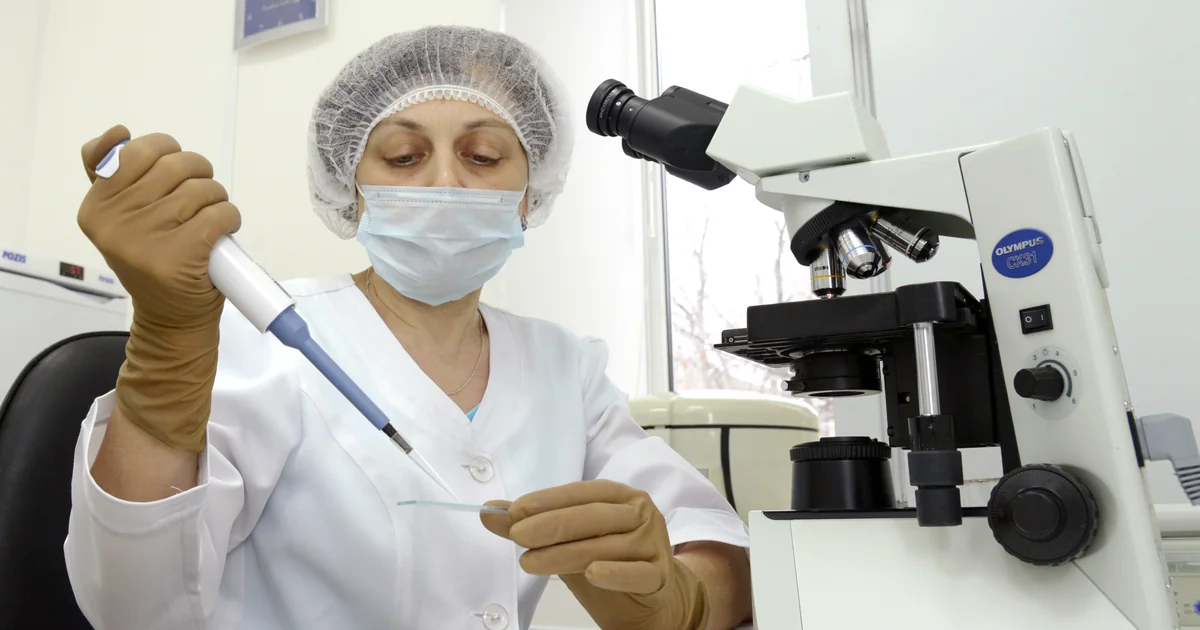
Turkey has built one of the most active assisted reproduction sectors in the world over the past two decades. The country’s leading private fertility clinics operate Class 100 clean-room embryology laboratories equipped with EmbryoScope time-lapse monitoring, RI Witness electronic witnessing systems, and next-generation sequencing (NGS) for preimplantation genetic testing — the same technology found in top-tier US and European centers.
The value proposition is compelling for self-paying patients, especially given how common infertility is.
“Infertility affects an estimated 1 in 6 people of reproductive age worldwide.” — World Health Organization, infertility fact sheet, 2023
Yet treatment costs remain a major barrier in many countries. Turkey’s combination of European-standard laboratory infrastructure, experienced reproductive specialists, and a price point that is a fraction of Western costs has made it a magnet for patients from the UK, Germany, the Netherlands, the Middle East, and Central Asia.
Geography also matters. Istanbul sits at the crossroads of Europe and Asia, with direct flights from most major European and Middle Eastern cities taking 2–4 hours. For Chinese patients, direct flights from Beijing and Shanghai take about 10–11 hours, and Turkey offers an e-Visa system that most eligible passport holders can complete online within minutes.
IVF Cost in Turkey vs USA: Detailed Breakdown
A standard IVF cycle in Turkey typically costs €2,000 to €4,000, usually including stimulation medications, monitoring ultrasounds, egg retrieval, ICSI fertilization, embryo culture, and embryo transfer. In the United States, a comparable cycle costs $15,000 to $25,000 before medications.
| Treatment Component | Turkey | United States |
|---|---|---|
| Standard IVF cycle | €2,000–€4,000 ($2,200–$4,500) | $15,000–$25,000 |
| IVF with ICSI | €2,500–€4,500 | $17,000–$28,000 |
| IVF medications | €500–€1,500 | $3,000–$6,000 |
| PGT-A genetic testing (per embryo) | €250–€400 | $500–$1,000 |
| Embryo freezing & first-year storage | €300–€600 | $500–$1,500 |
| Annual storage (subsequent years) | €150–€300 | $500–$1,000 |
Prices vary by clinic and city — clinics in Istanbul’s central districts tend to be the most expensive, while Antalya and other coastal cities offer slightly lower rates. Many Turkish clinics publish all-inclusive package prices on their websites specifically for international patients, a transparency practice that is more common in Turkey than in many Western markets.
What is typically included in a Turkey IVF package:
- Initial consultation (in-person or video)
- Ovarian stimulation medications
- Follicle monitoring via ultrasound and blood work
- Egg retrieval under sedation
- ICSI fertilization (included in most packages)
- Embryo culture with time-lapse monitoring (at top centers)
- Fresh or frozen embryo transfer
- One year of embryo cryopreservation
Legal Requirements and Restrictions: What You Must Know First
This is the most important section of this guide — and the one most agency websites avoid. Turkish law restricts IVF treatment more strictly than almost any other popular medical tourism destination:
- Only married heterosexual couples are eligible for IVF in Turkey. The law requires a marriage certificate; single women and same-sex couples cannot legally access treatment.
- Egg donation is banned. You must use your own eggs — a critical difference from countries like Mexico, Spain, Greece, or the US, where donor eggs are widely available.
- Sperm donation is banned. Couples must use the male partner’s own sperm, and if the male partner has azoospermia (zero sperm count) with no retrievable sperm, IVF is not possible in Turkey.
- Surrogacy is banned for both domestic and international patients.
- Gender selection is prohibited unless medically necessary (for example, to prevent a sex-linked genetic disorder). PGT-A for chromosomal screening is allowed, but selecting an embryo for its sex is not.
These restrictions mean Turkey is an excellent choice for married couples using their own gametes — which is in fact the majority of IVF patients worldwide. But if you need donor eggs, donor sperm, surrogacy, or are a single woman or same-sex couple, Turkey is not a legal option and you should consider destinations such as Mexico or other countries with permissive ART laws.
Major IVF Destinations in Turkey
Istanbul
Turkey’s largest city hosts the greatest concentration of internationally oriented fertility clinics, including Bahçeci, one of the country’s most established networks with more than 150,000 completed cycles reported on its website. Istanbul clinics typically have the most multilingual staff and the largest international patient infrastructure, with dedicated coordinators handling translation, airport transfers, and hotel arrangements.
Antalya
Located on the Mediterranean coast, Antalya has grown into a major medical tourism hub with several well-equipped fertility centers. Prices are often slightly lower than Istanbul, and the city’s resort infrastructure makes it a popular choice for patients combining treatment with a recovery-oriented stay.
Ankara
Turkey’s capital hosts several university-affiliated reproductive medicine departments and reputable private clinics. It is a good option for patients who prefer a less tourist-oriented medical environment, though international patient services are fewer than in Istanbul.
The IVF Process for International Patients in Turkey
Before you travel (2–6 weeks):
- Submit medical history, blood test results, and prior treatment records for a remote review
- Have a video consultation with the reproductive specialist
- Receive a treatment plan and medication protocol
- Apply for an e-Visa online and book flights and accommodation
Ovarian stimulation (in Turkey, 8–14 days):
- Daily injections of follicle-stimulating hormone (FSH), typically Gonal-F or similar
- Monitoring every 1–3 days with ultrasound and blood tests
- A trigger shot (human chorionic gonadotropin [hCG] or gonadotropin-releasing hormone [GnRH] agonist) when follicles reach maturity
Egg retrieval:
- Performed 36 hours after the trigger shot
- Outpatient procedure under sedation, lasting 20–30 minutes
- Most patients recover the same day
After retrieval (2–5 days):
- Embryos are cultured and monitored in the laboratory
- Day-5 fresh transfer, or embryos are frozen for a future frozen embryo transfer (FET)
- You may return home after transfer or after embryo freezing
Frozen embryo transfer (if applicable):
- Return to Turkey for a short 3–5 day stay
- Uterine lining is prepared with medication
- Transfer is a quick, painless procedure
Follow-up:
- Pregnancy test 12–14 days after transfer, done at home or with local support
- Remote follow-up with the clinic
- Coordination with your local obstetrician for prenatal care
Success Rates in Turkey
Turkey does not have a single national registry like the CDC in the United States or the HFEA in the United Kingdom, so success rate reporting is clinic-by-clinic. Leading Turkish centers report live birth rates broadly comparable to European averages — roughly 50–60% clinical pregnancy rate per transfer for women under 35 using their own eggs, declining with age — and the ESHRE publishes European ART surveillance data that provides a useful benchmark for interpreting clinic-reported numbers.
As with any country, always ask for age-stratified success rates rather than a single overall average, and understand how the clinic defines success (clinical pregnancy vs live birth). Our IVF success rates by age guide explains the standard ranges and how to interpret them.
Patient Stories
The following patient stories are shared with consent. Names and identifying details have been changed to protect privacy.
Zeynep & Tom, 36 & 38 — London to Istanbul
After two failed NHS-funded cycles, the London couple faced a third cycle at £10,000–£12,000 privately. “We had done our research and knew Turkey was cheaper, but what convinced us was the lab. They showed us the EmbryoScope, the air filtration readings, the whole quality-control checklist. It looked exactly like the clinic we’d used in London, at a third of the price.” Their cycle in Istanbul cost €3,800 including ICSI and medications.
“The hardest part was being away from home during stimulation — I cried on the phone to my mum more than once. The coordinator called us every morning with the hormone results, which made a huge difference.” Their first frozen embryo transfer resulted in a healthy baby girl.
Elena & Marco, 41 & 43 — Frankfurt to Antalya
Elena had been through two failed IVFs in Germany for diminished ovarian reserve. “At 41, every clinic in Germany wanted to talk about donor eggs. My doctor told me honestly: ‘With your own eggs, your chances are low.’ We went to Antalya because the clinic was willing to try a mild-stimulation protocol with my own eggs before discussing donors.” The cycle cost €2,900 including medication.
“The doctor in Turkey said exactly the same thing about my odds — no false promises. But he gave us the choice, and we had one good embryo. The transfer failed, and that hurt. Then we went back for a frozen transfer with that same embryo the following spring, and it stuck.” Elena gave birth at 42, and says being treated like an adult who could make her own decision meant everything.
Priya & Rohan, 33 & 36 — Dubai to Istanbul
The couple had been trying to conceive for four years and Rohan had borderline sperm parameters. “Dubai has good clinics but the cost is very high for us — around $12,000–$14,000 per cycle. Istanbul was half that with the flights included. We chose a clinic that had a full andrology lab, because ICSI with sperm selection was our main issue.”
Their cycle with ICSI and PGT-A cost €4,200. “The PGT-A results gave us two normal embryos from five. I still remember sitting in the hotel room when the coordinator called with the news — I was sobbing into my breakfast. The first transfer worked.” Their son was born in Dubai nine months later.
FAQ
Q: Is IVF in Turkey safe?
Yes, at a licensed, accredited clinic — Turkey’s leading fertility centers follow international laboratory standards, many with labs certified to ISO 15189 and memberships recognized by European reproductive medicine bodies — and the European Society of Human Reproduction and Embryology, ESHRE publishes quality standards and European ART surveillance data that can help you benchmark clinic performance.
Q: How much does IVF cost in Turkey?
A standard IVF cycle costs €2,000–€4,000 including medications and ICSI at most clinics, or €2,500–€4,500 with PGT-A testing. This is 70–85% less than the US average of $15,000–$25,000; for a broader comparison across destinations, see our IVF cost guide.
Q: Can foreigners do IVF in Turkey?
Yes — international patients typically need a 12–16 day stay for a fresh cycle, and Turkey offers a streamlined e-Visa system for online applications. You will need a marriage certificate (translated and, in some cases, apostilled) because Turkish law requires patients to be married.
Q: Can I use donor eggs in Turkey?
No — egg donation is banned in Turkey, one of the 4 services Turkish law prohibits (along with sperm donation, surrogacy and gender selection) — so you must use your own eggs.
If you need donor eggs, consider Mexico, Spain, Greece, or the United States instead, and read our donor egg IVF guide for the legal landscape elsewhere.
Q: Can single women or same-sex couples have IVF in Turkey?
No — Turkish law recognizes exactly 2 eligibility conditions: being married and being a heterosexual couple using your own gametes, so single women and same-sex couples have 0 legal pathways to treatment in Turkey.
Q: Can I choose the gender of my baby with IVF in Turkey?
No. Gender selection is prohibited unless medically necessary, such as preventing a sex-linked genetic disorder.
Standard PGT-A chromosomal screening — €250–€400 per embryo at most clinics — is allowed and commonly used.
Q: How long do I need to stay in Turkey?
For a fresh IVF cycle, plan on 12–16 days covering stimulation, retrieval, and transfer; a frozen embryo transfer (FET) usually needs only 3–5 days. See our IVF timeline guide for the full process breakdown.
Q: How does Turkey compare with other IVF destinations?
Turkey’s main advantages are low cost (€2,000–€4,000 vs $15,000–$25,000 in the US) and high-quality laboratories; its main limitation is the strict legal framework. If you need donor gametes or surrogacy, look elsewhere — for a married couple using their own eggs and sperm, Turkey is one of the most cost-effective destinations in the world, as our IVF abroad overview compares destination by destination.
How to Choose a Fertility Clinic in Turkey
Licensing and accreditation. Verify that the clinic is licensed by the Turkish Ministry of Health and holds international memberships such as ESHRE.
Check whether the laboratory is certified to ISO 15189 standards.
Laboratory quality. Ask about the embryology lab: clean-room class, incubator type (standard vs time-lapse), witnessing system, and vitrification protocol. A well-equipped lab is the foundation of IVF success.
Transparent, age-stratified success rates. Demand data broken down by age group, not a single overall average, and cross-check with European ART surveillance benchmarks published by ESHRE.
International patient support. Confirm the clinic has a dedicated coordinator who handles translation, medication logistics, travel arrangements, and remote follow-up after you return home.
Honesty about legal limits. A trustworthy clinic will clearly explain the restrictions on donor gametes, surrogacy, and gender selection before you commit. Be wary of any clinic or agency that promises donor eggs or gender selection — these services are not legally available in Turkey, and offers to “arrange” them indicate an unlicensed or referral-only operation.
Full written pricing. Ask for a complete itemized quote in writing, including medications, monitoring, anesthesia, PGT-A, and storage, to avoid surprise fees.
Next Steps
For married couples using their own eggs and sperm, Turkey offers an outstanding combination of European-standard laboratories and costs that are a fraction of Western prices — a standard cycle at €2,000–€4,000 can mean the difference between one attempt and several. But the legal framework is strict, so verify your eligibility (marriage, own gametes, no surrogacy needs) before booking anything.
Do your homework: verify clinic licensing, read recent patient reviews, request itemized pricing in writing, and have a video consultation with the actual medical team before you travel. Turkey’s fertility sector is mature and highly competitive — thousands of international families build their families there every year.
Ready to explore your options? Compare IVF clinics worldwide to see how Turkey stacks up against other destinations, or contact our team for personalized clinic recommendations.
Last updated: September 2, 2026. This article was written by the ProIVF Medical Editorial Team, reviewed by the ProIVF Medical Advisory Board, and is based on publicly available data from ESHRE, WHO, and clinic-published pricing to provide objective, accurate information for patients. Clinic fees and data cited here (such as Bahçeci’s published cycle figures) come from the centers’ public disclosures; ProIVF has no commercial relationship with Bahçeci or any other clinic mentioned in this article. This content is for informational purposes only and does not constitute medical advice. Costs are based on publicly available clinic quotes and may vary. ProIVF recommends verifying all prices and credentials directly with clinics before making decisions.