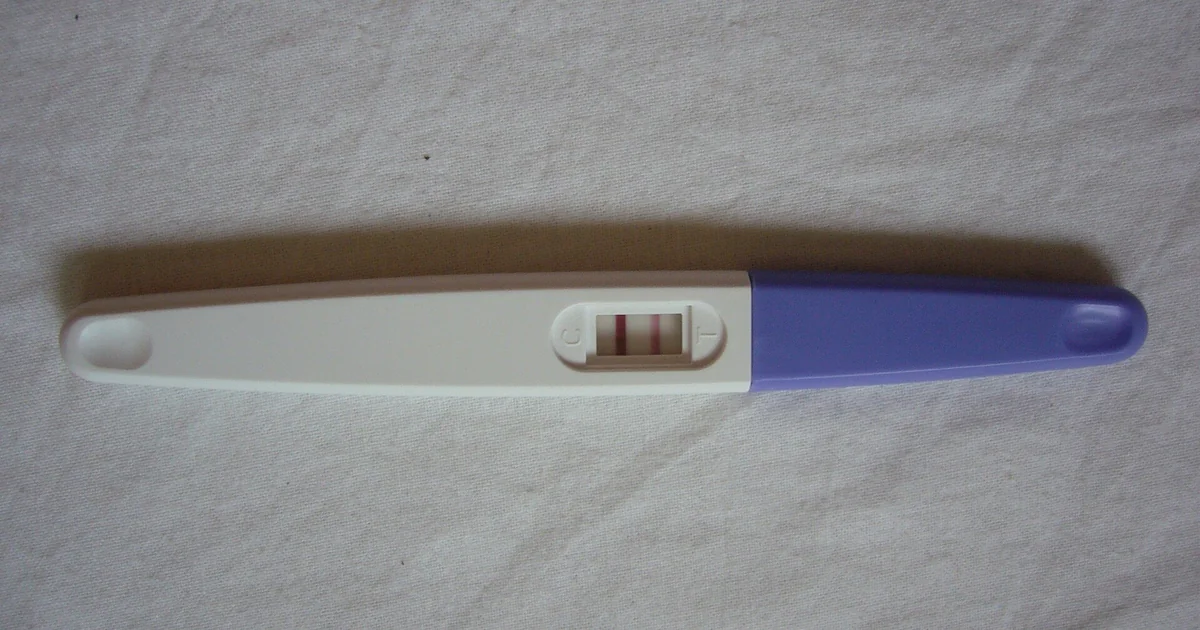
The question that makes the two-week wait unbearable: “When can I get a reliable result after transfer?” Your clinic’s blood draw at 9 days after a day-5 blastocyst transfer (9dp5dt) is the earliest sensible test date, and a blank home strip before then does not mean the transfer failed.
Implantation happens 6–12 days after ovulation, with 84% on days 8–10 — N Engl J Med 1999 — so hCG barely exists when early testers measure. Home strips also underperform their labels: a blinded 18-brand study found that catching 95% of pregnancies at the missed period requires 12.5 mIU/mL sensitivity — achieved by only 1 of 18 brands — Am J Obstet Gynecol 2004. When you test matters more than which brand you buy.
Sources: PubMed-indexed 2023 and 2026 beta-hCG studies and meta-analyses, plus patient data from ACOG and surveillance data from the US CDC. Compiled by the ProIVF Medical Editorial Team and reviewed by our Medical Advisory Board; ProIVF sells no tests or services and endorses no brand.
When Should You Test After an IVF Transfer?
Pregnancy testing after IVF is two events: a home strip for an early signal, then a quantitative blood test to confirm and follow the trend.
| Feature | Home urine pregnancy test | Clinic serum beta-hCG |
|---|---|---|
| What it measures | Urine hCG, qualitative or semi-quantitative | Serum beta-hCG, quantitative (mIU/mL) |
| Stated threshold | Commonly 10–25 mIU/mL, but real-world performance often misses the label | Set by the lab’s immunoassay, below strip thresholds |
| Result format | Lines / plus sign / “pregnant–not pregnant” | A number, read against a second draw 48 hours later |
| Earliest useful | Usually 9–12 days after transfer for a believable positive | 9–14 days after transfer (9dp5dt for a day-5 blastocyst) |
| Main limitation | Low sensitivity causes false negatives; dilution and reading time matter | A single value cannot locate the pregnancy (intrauterine vs ectopic) or count embryos |
The difference is quantitative versus qualitative: a strip says only whether hCG crossed a detection line; the serum beta-hCG gives the level and the 48-hour rise, and every later judgment rests on the latter.
How Many Days After Transfer Can You Test? The Day-by-Day Timeline
Times below use a day-5 blastocyst transfer; DPT means days past transfer (day 0). For a day-3 embryo, add 2 days to every milestone; frozen and fresh are calculated identically — frozen embryo transfer guide.
| Timing | What is happening | Home strip | Clinic |
|---|---|---|---|
| 0–3 DPT (5–8 days post-ovulation) | Blastocyst selects an implantation site; no hCG yet | Negative is the only possible result | — |
| 4–6 DPT (9–11 days post-ovulation) | Implantation begins; trophoblast secretes hCG (84% of implantations on days 8–10) | Possibly a very faint line | — |
| 7–8 DPT (12–13 days post-ovulation) | hCG rises rapidly, doubling every 48–72 hours | A sensitive strip may show a line | — |
| 9 DPT (14 days post-ovulation) | Community data: median ~159 mIU/mL for singletons, 232 mIU/mL for twins | Most standard strips turn positive | First serum beta-hCG draw |
| 11 DPT (16 days post-ovulation) | Repeat: a 48-hour rise of ≥35% is the minimum for a viable intrauterine pregnancy | — | Second draw |
| 23–25 DPT (6 weeks’ gestation) | Gestational sac visible on ultrasound | — | First ultrasound |
| 30 DPT (7 weeks’ gestation) | Fetal pole and heartbeat | — | Confirmed viable intrauterine pregnancy |
Your clinic’s 9dp5dt draw is not conservative scheduling — it covers the 84% implantation window. Testing at 5–6 DPT measures your patience, not your embryo.
How Accurate Are Home Pregnancy Tests? 18 Brands, Blinded
Home pregnancy tests are among the least standardized devices people use without training. The 2004 AJOG study above tested 18 brands blind, six times each at five hCG concentrations from 0 to 100 mIU/mL, counting only a clean 6-of-6 positive as sensitive:
- Detecting 95% of pregnancies on the day of a missed period requires 12.5 mIU/mL sensitivity — only 1 of 18 brands managed it;
- At 100 mIU/mL, not an especially low concentration, only 44% of brands produced a clear positive;
- A test with 100 mIU/mL sensitivity detects roughly 16% of pregnancies at the missed period;
- 2 brands returned false-positive or invalid results.
A 2014 review went further: claims like “detects pregnancy 8 days before your missed period” are unrealistic, and with no common standards for test performance, results frequently did not match the package insert — Strips of Hope, 2014.
“The utility of HPTs is questioned. Clinicians need to be aware of the limitations of current HPT brands.” — Blinded 18-brand home pregnancy test study, American Journal of Obstetrics & Gynecology, 2004
What “Sensitivity 25 mIU/mL” on the Box Really Means
Stated sensitivity is the hCG concentration the strip is designed to detect, with three practical implications:
- Not a precise cutoff but a statistical claim: at exactly 25 mIU/mL, batch performance varies;
- Early hCG doubles every 48–72 hours, so 25 to 50 takes a day or two — “blank today, faint line later” is normal;
- Higher sensitivity brings earlier answers and earlier wrong ones, because very early hCG hovers at the detection line.
Does Morning Urine Matter After IVF?
First-morning urine is more concentrated — useful when ovulation day is only estimated. After IVF the implantation window is known: move your self-test one day later rather than agonizing over urine timing.
The bigger trap is fluid: drinking a lot beforehand dilutes a just-positive sample back below the line. If you retest the same day, use your first morning void.
Why Do Pregnancy Tests Show False Negatives? Four Real Causes
A laboratory study of 9,447 negative urine hCG results found 11 cases later confirmed by serum hCG as missed diagnoses; the top reason was early gestational age, then beta-core fragment hook effects — antibody misreads of an hCG breakdown fragment — Lab Med 2020. False negatives are rare but real, and overwhelmingly mean you tested too early.
Cause 1: Testing too early — the most common reason
Implantation occurs 6–12 days after ovulation, and hCG is secreted only once it begins. Testing at 4–6 DPT asks a 25 mIU/mL strip to catch a signal that has barely doubled once — a negative there carries no prognostic value.
Cause 2: The hook effect — when hCG is so high the test fails
Strips work by antibodies binding hCG to produce a line. At extreme concentrations the antigen saturates both capture and labeled antibodies, so the sandwich complex cannot form — the hook effect (prozone phenomenon): more hormone, weaker signal.
Case reports describe a molar pregnancy whose qualitative hCG test was negative while ultrasound showed classic molar features — Oxf Med Case Reports 2024.
Reassuringly, a simulation of one point-of-care hCG device at early-pregnancy urine concentrations (≤44 days post-ovulation) found false negatives from intact hCG or hCG beta-subunit unlikely; only the beta-core fragment caused hook interference — Clin Biochem 2015. For IVF patients: the hook effect explains a negative alongside an abnormally high value, not a blank strip.
Cause 3: Handling and reading time
Reading too early, an evaporation line after the window, a damp or expired strip — all produce false results. Any shadow outside the manufacturer’s reading window does not count.
Cause 4: Over-diluted urine
Drinking heavily before testing, afternoon urine, or sampling right after a previous void can drop urine hCG below the detection line.
Can a Pregnancy Test Be Falsely Positive After IVF?
Retained hCG from the trigger injection is the most common source after IVF
The hCG trigger shot is hCG itself, and neither urine strips nor serum assays distinguish injected from embryo-derived hCG — which is why clinics schedule the test about two weeks after the trigger.
Clearance varies. In 115 IVF patients, day-after-trigger serum hCG was set mainly by body mass index (BMI) and follicles >14 mm (cumulative R² = 0.30, P < 0.001); age, peak estradiol and oocyte yield were not independent predictors — Fertil Steril 2007. “My friend tested reliably on day 7” proves nothing for you.
Other medications interfere too — a false-positive serum hCG after corifollitropin alfa (single-dose long-acting FSH) is published — Hum Reprod 2018. Any hCG-containing injection means your clinic must read a positive against the injection date — see our trigger shot guide.
A positive strip is not a live birth: biochemical pregnancy is real
Even after implantation there is a high-risk window. A biochemical pregnancy is detected only by hCG and never seen on ultrasound — it ends before becoming visible.
A cohort of 221 women tracked with daily urine samples found 22% of implantations were lost before clinical detection — the pattern patients know as a positive test followed by a period. Total post-implantation loss, including recognized miscarriages, was about 31% — N Engl J Med 1988.
Implantation timing affects outcome: loss was about 13% on day 9 or earlier, 26% on day 10, 52% on day 11 and 82% after day 11 — N Engl J Med 1999 — an early faint positive that later fades usually reflects late implantation loss, not an inaccurate test. See our IVF miscarriage rates by week.
What Is a Good Beta hCG Level at 9dp5dt?
At the blood draw the data become far more reliable. A cohort of 3,238 single blastocyst transfers reported 9dp5dt values:
| Final outcome | Fresh transfer mean (IU/L) | Frozen transfer mean (IU/L) |
|---|---|---|
| Live birth | 171.76 ± 109.64 | 193.57 ± 100.38 |
| Clinical pregnancy loss | 114.86 ± 72.42 | 149.29 ± 96.99 |
| Biochemical pregnancy | 50.37 ± 24.31 | 68.41 ± 51.85 |
The live-birth thresholds in that study were 116.5 IU/L for fresh transfers (sensitivity 80%, specificity 70%, positive predictive value 90%, negative predictive value 54%) and 131.5 IU/L for frozen transfers (71%, 68%, 87%, 50%) — Medicine 2023.
A 2026 meta-analysis of 12 studies shows where the test is strong: sensitivity (catching a real pregnancy) and specificity (clearing a false one) split cleanly:
- Predicting clinical pregnancy: sensitivity 0.91, specificity 0.89, diagnostic odds ratio 65.07, AUC 0.95 — highly reliable;
- Predicting live birth: sensitivity 0.87, specificity 0.70, odds ratio 15.07, AUC 0.82 — weaker.
In short, the first draw can say whether you are pregnant; it cannot say whether the pregnancy reaches live birth — a probability, not a verdict — Front Endocrinol 2026.
Why a Single Value Has Limits — and Why the 48-Hour Draw Matters
Early hCG doubles every 48–72 hours below 1,200 mIU/mL, every 72–96 hours between 1,200 and 6,000, and more slowly above 6,000. A 48-hour rise of ≥35% is the minimum for a viable intrauterine pregnancy, so the trend carries more information than any single number.
One below-average value is not bad news on its own: a pregnancy starting low but rising 60% in 48 hours can outrun a prettier first number. For singleton and twin median curves, see our twin hCG levels chart.
From a Positive Test to Ultrasound: What Happens Next?
- Positive test day: do not stop your luteal support. Progesterone is a physician decision, unrelated to a strip result — progesterone levels after transfer.
- 48 hours later: repeat serum beta-hCG. The goal is not “doubling” but the ≥35% rise floor.
- If the value is low or rising slowly, your clinic looks for an ectopic pregnancy. Abnormal growth with pain or bleeding calls for ultrasound — know the early signs of ectopic pregnancy in advance.
- Around 6 weeks: first ultrasound shows a gestational sac; at 7 weeks a fetal pole and heartbeat confirm it clinically.
- Severe abdominal pain or heavy bleeding at any point: go to the emergency department — this matters more than any number.
For day-to-day care — activity, medication timing, bleeding — see our embryo transfer aftercare guide.
Patient Stories: A Blank Strip, a Trigger Positive and a Low Number
These are composite accounts of real cases; names and identifying details have been changed.
Case 1: “A blank strip on day 7 — I cried all night”
Ms. Lin, 33, from Shanghai, had a single day-5 blastocyst transfer at a Bangkok clinic (about US$12,000) and self-tested on day 7 — negative.
“I sent my husband a photo of the strip and said it was over,” she recalls. Her serum beta-hCG at 9dp5dt was 132 IU/L, rising 71% at 48 hours. “My doctor said my embryo probably implanted on day 10.” She delivered a healthy girl at 39 weeks.
Case 2: “I trusted the strip — but it was the trigger shot talking”
Aisha, 38, travelled from Dubai to a US clinic (about US$18,000 per cycle). A high-sensitivity strip on day 5 showed a faint positive, and she told her family that evening.
“My nurse told me not to test early. I didn’t listen,” she admits. Her 9dp5dt draw: 8 IU/L, not pregnant — the faint line was residual trigger hCG. She conceived the next cycle with a frozen embryo transfer. “Now I tell every patient: lock the strips in a drawer.”
Case 3: “My number sat in the ‘biochemical pregnancy’ row — and she’s a healthy baby”
Emily, 41, in Los Angeles, paid about US$19,000 for a self-funded cycle including PGT-A (embryo chromosome screening). Her 9dp5dt serum beta-hCG was 41 IU/L — below the cohort’s 116.5 IU/L live-birth threshold.
“My doctor was honest: ‘this number is not encouraging.’ I cried right there,” she says. Her 48-hour repeat rose to 66 IU/L (a 61% increase), with a heartbeat visible a week later. “Averages are for populations; the trend is for me.” She delivered a healthy girl by caesarean at 37 weeks.
FAQ
Q: On what day after transfer can I start using a home pregnancy test?
A faint line can appear at 7–8 days after transfer but carries no diagnostic value: do not self-test before 9 DPT (day-5 blastocyst, 14 days post-ovulation) and treat the clinic’s blood draw as the real answer.
Q: My strip was blank — is there still hope?
Often yes — the most common reason is that it is too early: implantation takes 6–12 days after ovulation (84% on days 8–10), so testing at 4–6 DPT draws a conclusion before the signal exists.
Q: How accurate are home pregnancy tests — can they simply be wrong?
Reliable at the right time, wrong too early: only 1 of 18 brands reached the 12.5 mIU/mL sensitivity that detects 95% of pregnancies at the missed period, and 2 returned invalid results (see the blinded study above). A box label is a design target, not a guarantee.
Q: What is a good serum beta-hCG level at 9dp5dt?
Live-birth cycles averaged 171.8 IU/L (fresh) / 193.6 IU/L (frozen) against thresholds of 116.5 IU/L and 131.5 IU/L; biochemical pregnancies averaged 50.4 / 68.4 IU/L, and negative predictive value is only 50–54% — below the threshold is not failure; the 48-hour rise decides.
Q: My strip was already positive, so why does my doctor want a blood test?
They answer different questions: a strip says only that hCG crossed a detection line; the quantitative draw gives the level and the 48-hour rise clinicians act on.
Q: Can an hCG trigger injection cause a false-positive pregnancy test?
Yes — the trigger is hCG itself, indistinguishable from embryo-derived hCG: the most common false positive after IVF, with clearance varying by BMI and follicles >14 mm (115 patients, R² = 0.30). Read any positive against your injection date.
Q: Why would a very high hCG level produce a negative test?
The hook effect — extreme hCG saturating both antibody populations so the signal weakens — appears in published molar-pregnancy negatives, but at early-pregnancy urine concentrations (≤44 days post-ovulation) point-of-care devices rarely fail this way; it explains a negative alongside an abnormally high value, not a blank strip.
Q: My test was positive but my blood value is low — is that a biochemical pregnancy?
Not necessarily — later implantation means higher loss risk (13% on day 9 or earlier, 26% on day 10, 52% on day 11), and about 22% of implantations end before clinical detection. The 48-hour repeat and the 6–7 week ultrasound decide, not a single value.
Planning Your IVF Journey
Three rules: test from 9 DPT — earlier testing changes no outcome and invites a false negative; log your injection dates — in an hCG-triggered cycle an early positive is read against days since injection; and anchor on two events, not line darkness — the 48-hour serum repeat, then the 6–7 week ultrasound.
Compare testing protocols and beta-hCG monitoring schedules across clinics via our global hospital directory or contact the ProIVF team; how a clinic explains early monitoring shows how clearly it communicates.
Written by the ProIVF Medical Editorial Team and reviewed by the ProIVF Medical Advisory Board, from the cited PubMed literature plus ACOG and CDC surveillance data, for objective, accurate patient information.
Medical disclaimer: Educational purposes only; it does not replace individualized advice from your reproductive endocrinologist. Medication and monitoring schedules follow your own physician’s judgment. For severe abdominal pain, shoulder pain or heavy bleeding, seek emergency care immediately.
Last updated: September 14, 2026