AMH falls with age, and the useful comparison is your result against your own age band rather than a single pass-or-fail line: across 22,920 hospital AMH tests the median was 4.2 ng/mL at age 20, 2.5 ng/mL at 30 and 1.1 ng/mL at 36 [1]. A low number predicts fewer eggs in a stimulation cycle, not a lost chance at a baby: the American Society for Reproductive Medicine states plainly that ovarian reserve markers are poor predictors of reproductive potential on their own [2].
What Is AMH and What Does It Actually Measure?
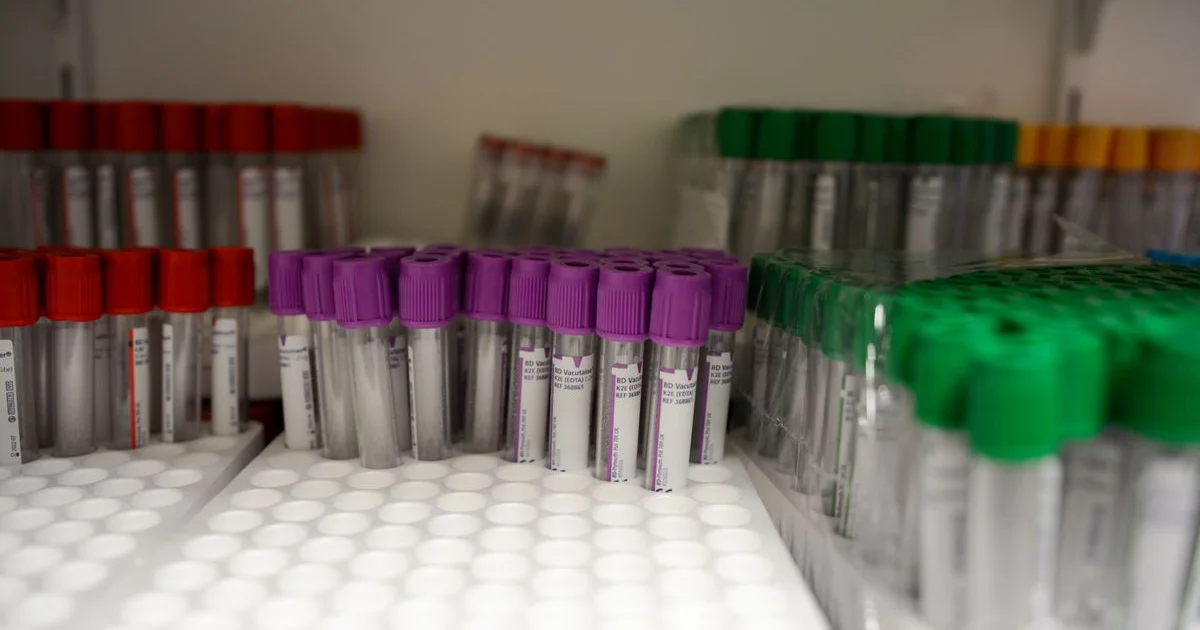
AMH (anti-Müllerian hormone) is a protein released by the small growing follicles that surround each immature egg, so a blood result roughly counts the queue still waiting in the ovaries.
In an adult ovary its job is narrower: it regulates how fast resting follicles enter the growth track. Because the signal comes from that early-growing pool, AMH tracks oocyte number rather than oocyte quality, which is driven mainly by age.
Why clinics draw AMH before writing a stimulation plan
An AMH result lets a clinic size the gonadotropin dose and flag over-response before any injection is booked. In a 2024 meta-analysis of 26 diagnostic-accuracy studies, AMH and antral follicle count (AFC) separated poor and high responders better than basal FSH or estradiol, with pooled log diagnostic odds ratios of 2.68 (95% CI 1.90–3.45) for poor response and 2.76 (1.57–3.95) for high response, though heterogeneity was extreme (I² = 95.7%) [3].
AMH, FSH and antral follicle count compared
AMH counts the pool, basal FSH reports how hard the brain is driving it, and AFC shows that same pool on ultrasound. Clinics order all three because they answer different questions [2][3].
| Marker | What it reflects | Cycle-day constraint | Strongest use |
|---|---|---|---|
| AMH | Size of the growing-follicle pool | None — relatively stable across the cycle [4] | Predicting egg yield and over-response |
| Basal FSH + estradiol | How hard the brain is pushing on day 2–4 | Must be drawn cycle day 2–4 | Flagging an ovary already being driven hard |
| Antral follicle count | Visible recruitable follicles on ultrasound | Any day, operator-dependent | Predicting yield alongside AMH [3] |
Does AMH change during the month?
It moves less than the day-3 hormones do. In a prospective multi-centre study of 50 women with regular cycles, 384 serial samples gave a within-subject coefficient of variation of 23.8% across the cycle and an intra-class correlation of 0.91, leading the authors to conclude that clinicians may draw AMH at any time in the cycle [4].
Read that as reassurance rather than proof: several authors were employees of the assay manufacturer.
What Is a Normal AMH Level for Your Age?
There is one honest answer and one comforting answer; the honest one is more useful: normal is a distribution around an age-specific median.
The table below is the largest single-hospital age-stratified AMH dataset published: 22,920 results from women aged 18–45 at a Turkish university hospital, 2015–2024 [1].
| Age | Tests | Median AMH (ng/mL) | Middle half (Q1–Q3) | Share below 1.2 ng/mL |
|---|---|---|---|---|
| 18 | 277 | 3.8 | 1.9–7.0 | 15.9% |
| 19 | 463 | 4.0 | 2.3–6.8 | 11.7% |
| 20 | 578 | 4.2 | 2.5–6.7 | 8.5% |
| 21 | 647 | 4.2 | 2.6–6.8 | 8.2% |
| 22 | 838 | 4.1 | 2.2–6.4 | 10.5% |
| 23 | 916 | 3.9 | 2.1–6.3 | 11.2% |
| 24 | 1,013 | 3.6 | 2.0–6.1 | 12.2% |
| 25 | 1,035 | 3.3 | 1.9–5.7 | 13.5% |
| 26 | 1,055 | 3.4 | 1.9–6.0 | 14.6% |
| 27 | 1,184 | 3.1 | 1.7–5.3 | 16.2% |
| 28 | 1,246 | 2.8 | 1.5–4.9 | 18.6% |
| 29 | 1,180 | 2.6 | 1.3–4.6 | 23.2% |
| 30 | 1,164 | 2.5 | 1.2–4.3 | 24.3% |
| 31 | 1,109 | 2.3 | 1.1–3.9 | 27.3% |
| 32 | 1,122 | 2.0 | 0.9–3.8 | 33.2% |
| 33 | 1,126 | 1.8 | 0.8–3.3 | 36.7% |
| 34 | 985 | 1.7 | 0.7–3.3 | 39.3% |
| 35 | 1,015 | 1.4 | 0.5–2.9 | 45.7% |
| 36 | 929 | 1.1 | 0.4–2.3 | 52.9% |
| 37 | 905 | 1.0 | 0.3–2.3 | 55.8% |
| 38 | 919 | 0.7 | 0.2–1.7 | 64.0% |
| 39 | 728 | 0.7 | 0.2–1.6 | 66.0% |
| 40 | 582 | 0.5 | 0.2–1.3 | 73.0% |
| 41 | 509 | 0.4 | 0.1–0.9 | 82.0% |
| 42 | 444 | 0.3 | 0.1–0.8 | 85.0% |
| 43 | 390 | 0.2 | 0.1–0.6 | 89.0% |
| 44 | 332 | 0.2 | 0.1–0.5 | 91.0% |
| 45 | 229 | 0.1 | 0.05–0.3 | 96.0% |
Source: Aslan K, et al. Frontiers in Endocrinology 2025;16:1612194 — hospital cohort, mixed referral reasons, diminished ovarian reserve defined as AMH <1.2 ng/mL [1].
Use these medians as a ruler, not a diagnosis. A population-based study of 1,450 healthy Korean women aged 19–54 produced the same downward shape on the Roche Elecsys assay: median 30.9 pmol/L (about 4.3 ng/mL) at 19–24, falling to 0.071 pmol/L at 50–54 [5].
What is the middle half, and why it matters more than the median
Two 32-year-olds with results of 0.9 and 3.8 ng/mL are both normal for their age and will get different stimulation plans. The middle half of 32-year-olds in the Turkish cohort spans exactly that range [1], which is why a single “normal AMH” figure quoted without the spread around it is meaningless.
At what age does AMH drop below 1.2 ng/mL?
The median crossed under 1.2 ng/mL at age 36, and the share below that line rose from 15.9% at 18 to 96% at 45 [1]. That line is the cut-off most clinics use to label diminished ovarian reserve, and the same threshold in the POSEIDON classification of poor responders [1][6].
Does endometriosis change the reference curve?
In the same dataset, women attending an endometriosis unit had median AMH of 1.6 ng/mL against 2.03 elsewhere [1]. Removing fertility-centre and endometriosis clinics from the analysis left the age curve essentially unchanged (n = 14,029), so the shape is not an artefact of who got tested [1].
What Is a Good AMH Level to Get Pregnant?
No study has certified an AMH level at which natural conception starts working, and none has found a level at which it stops.
That is not evasiveness — it is what the evidence shows. A meta-analysis of 32 studies found a non-linear positive relationship between AMH and cumulative live birth after IVF/ICSI but “no discriminant AMH threshold”, with too few data to judge AMH’s value after IUI or in women conceiving without assisted reproduction [7].
“Markers of ovarian reserve … can be useful as predictors of oocyte yield following controlled ovarian stimulation and oocyte retrieval. However, they are poor predictors of reproductive potential independently from age.” — Practice Committee of the American Society for Reproductive Medicine, Fertility and Sterility 2020 [2]
Can you get pregnant with low AMH?
Yes, and the mechanism explains why: ovulating one egg a month needs a functioning pool, not a large one. What low AMH reduces is the number of attempts you can fund and the eggs available per retrieval — a planning problem more than a biological wall.
See IVF success rates by age for the variable that moves both natural and treated odds.
Is it possible to get pregnant with a high AMH level?
Yes, though a high result usually signals many small follicles competing rather than one dominant follicle winning reliably. Polycystic ovary syndrome can turn a good reserve number into irregular or absent ovulation, a different problem treated differently — see the PCOS and IVF guide.
Low AMH with regular periods: what your cycle is not telling you
Regular bleeding proves a follicle grew, ovulated and shed a lining that month; it does not report how many follicles remain. Menstruation is driven by the hormones of the current cycle, while AMH comes from the pool being drawn from.
That is why AMH testing keeps its place even in women with textbook 28-day cycles.
What AMH Level Do You Need for IVF?
Clinics use AMH to choose a dose and to forecast the retrieval, and they use your age for everything that concerns the egg itself.
What does AMH predict in a stimulation cycle?
Numbers, cancellation risk and OHSS risk. In 1,862 IVF/ICSI cycles in 1,677 women aged 40 or younger, an AMH under 1.2 ng/mL meant cancellation in 12.6% of cycles against 2.2% in the normal-AMH group, with fewer mature (MII) eggs and usable embryos [8].
Is there an AMH level that is too low for IVF?
No threshold marks a level below which live birth cannot be achieved; the authors of the 32-study meta-analysis state that low AMH should not be the sole criterion for refusing IVF, especially in younger patients [7]. If a clinic declines you on the number alone, that is worth challenging, or worth a second opinion at a centre that publishes low-reserve outcomes — our hospital directory lists clinics by country.
Will AMH tell me how many eggs I will get?
It ranks the likely yield; it does not name it. Two women with AMH 0.5 ng/mL can retrieve one egg or five, and no validated per-value lookup table exists.
What can be forecast is the risk of over-response: pooled sensitivity 82% and specificity 76% for AMH in predicting excessive response, with an abnormal test rate of about 14% at optimal cut-offs and a post-test probability near 70% [10].
Does low AMH also mean poorer egg quality?
The honest answer is that the evidence points two ways. In the 1,862-cycle analysis, implantation rates (20.90% vs 21.59% for cleavage transfers; 43.92% vs 44.09% for blastocysts) and live birth rates (29.3% vs 30.9%; 48.1% vs 45.1%) showed no significant difference between low-AMH and normal-AMH women aged 40 or under, so the authors concluded AMH predicts oocyte numbers and available embryos, not oocyte quality or IVF outcome [8].
A 2025 study of 1,982 non-PCOS women having their first transfer of a chromosomally normal (euploid) frozen blastocyst went the other way: with AMH ≤1.872 ng/mL, early pregnancy loss risk rose to an adjusted odds ratio of 1.85 (95% CI 1.13–3.04) versus the middle AMH group, and the effect was strongest in women under 35 [9]. Since every embryo in that cohort was euploid, the proposed route is non-chromosomal and remains unproven.
Treat any clinic that quotes one study as settled fact as a red flag — see how to improve egg quality for IVF for what is actually modifiable.
What Does a High AMH Level Mean?
A high result usually means many follicles rather than better eggs, and it carries its own management problem.
High AMH and PCOS
AMH rises in polycystic ovary syndrome because the ovaries hold an excess of small growing follicles, each adding signal. A retrospective study of 150 women with PCOS undergoing IVF, grouped by AMH — low (<3.7 ng/mL), middle (3.7–7.4), high (>7.4) — found every pregnancy-related outcome (βhCG positive, clinical pregnancy, live birth, cumulative live birth) better in the low-AMH group (p < 0.05); after adjustment AMH lost independent predictive power for live birth [11].
So in PCOS a bigger number is not an advantage.
High AMH but no PCOS
Some women simply have a large recruitable pool, and high-normal results at 20–27 are ordinary rather than pathological — medians of 3.6–4.2 ng/mL with upper quartiles near 6–7 in the table above [1]. Persistently high AMH without polycystic morphology deserves an ultrasound and a hormone panel rather than a label — start with the full hormone workup.
Why a high AMH changes the protocol
High reserve means high response, and high response means ovarian hyperstimulation syndrome (OHSS) risk. Across 16 studies of 29 published OHSS prediction models, discrimination ranged from AUC 0.628 to 0.998 — 23 exceeded 0.700, with AFC, trigger-day estradiol, oocytes retrieved, PCOS, age and AMH recurring as predictors, and all models judged at high risk of bias [12].
No single AMH number declares you safe or unsafe, which is why good clinics rely on a GnRH-antagonist protocol and trigger choices rather than a magic cut-off — see OHSS prevention.
Can You Raise Your AMH Level?
Nothing reliably raises AMH in a way that restores fertility, and the supplements marketed for it have not moved live birth in randomised evidence.
What the randomised evidence says about DHEA
The 2024 Cochrane review of androgens in assisted reproduction covered 28 randomised trials (1,533 women treated, 1,469 controls), mostly in poor responders. Pre-treatment with DHEA versus placebo or no treatment gave a live birth or ongoing pregnancy odds ratio of 1.30 (95% CI 0.95–1.76) across 9 trials and 1,433 women — moderate-certainty evidence, with the interval crossing no effect; the review’s own translation is that a 12% chance on placebo becomes somewhere between 12% and 20% [13].
Clinical pregnancy (OR 1.18, 0.93–1.49) and miscarriage (OR 0.85, 0.53–1.37) likewise showed no significant difference. Testosterone pre-treatment did show a higher live birth estimate (OR 2.53, 1.61–3.99, 8 trials, 716 women), but it is not a licensed use and androgenic side effects are the price — see our appraisal of fertility supplements.
Do food, yoga or lifestyle changes raise AMH?
No diet, food or exercise programme has randomised evidence of a rise in AMH that carries through to live birth. What lifestyle work does change is cycle regularity in PCOS, weight-related dosing, and the conditions around ovulation — real effects, mislabelled by the supplement industry.
Why an AMH result can go up without anything working
Three benign explanations cover most reported “improvements”. Repeat-testing noise is the biggest: within-person variation across a cycle was 23.8% in the serial-sample study [4].
Second, long-term combined oral contraceptives can suppress both AMH and AFC, and reversal after stopping can be slow — one published case described profound suppression with delayed recovery of reserve markers [14].
Third, changing laboratory or assay changes the number, because ng/mL calibration differs between platforms [5].
How to Get an AMH Test, and How to Read the Number
The logistics are simpler than patients expect, and the units are where confusion starts.
Which cycle day should you test on?
Any day, unless your clinic asks otherwise. AMH does not need to wait for day 2–4 the way basal FSH and estradiol do, and the multi-centre cycle study concluded clinicians may advise drawing AMH at any point in the cycle [4].
If your doctor ordered “day 3 labs”, that panel is usually AMH plus FSH plus estradiol, so the appointment stays anchored to the early follicular phase [15].
What does an AMH test cost?
Single-test pricing is not comparable across settings: laboratories set rates by region, and most clinics bill AMH inside an ovarian reserve panel rather than as a line item. Ask for an itemised lab charge before you book.
Check whether insurance covers diagnostic testing separately from treatment — the IVF cost guide covers how billing splits across a whole cycle.
Do at-home AMH tests work?
Direct-to-consumer kits collect a finger-prick or dried blood spot and mail it to a laboratory, so the result depends on that laboratory’s assay, not on the kit. Treat an abnormal home result as a reason for a venous draw at a clinic rather than a diagnosis — our review of at-home fertility tests covers where these kits hold up.
ng/mL or pmol/L: converting your result
Reports use two units, and mixing them up is the most common self-misdiagnosis we see. The common assay conversion is 1 ng/mL = 7.14 pmol/L, so the Korean reference interval of 7.93–81.21 pmol/L at 19–24 is about 1.1–11.4 ng/mL [5].
Because calibration differs between platforms, compare your value only against a range produced by the same assay type, and always write the unit next to the number when you share a result.
Where AMH fits in a full workup
AMH is one line on a fertility testing panel that also includes AFC, basal FSH and estradiol, thyroid and prolactin, and a semen analysis. If you are freezing eggs before treatment, the egg freezing guide and the calculator here translate reserve into a cycle count.
Three Results, Three Different Decisions
Three patients, three results, three different decisions.
The following cases are composites drawn from multiple real patient accounts. Names are pseudonyms, while the ages, costs, treatment steps and outcomes reflect what actually happened.
Mei, 33 — AMH 0.9 ng/mL, and a plan built on two cycles
Mei had been trying for 14 months with regular 28-day cycles, which had convinced her nothing was wrong. Her AMH of 0.9 ng/mL sat below the 0.9–3.3 ng/mL middle band for her age [1], with an AFC of 6.
At a private clinic in Bangkok she was put on an antagonist protocol and retrieved 4 eggs, 2 of which reached blastocyst; a second cycle added one more. She transferred a single euploid blastocyst and had a live birth at 37 weeks, for about 68,000 RMB including medications, flights and two hotel stays. “I thought the number meant the door was closed,” she said. “What it actually meant was that I could not afford to waste cycles on clinics that don’t count their blastocyst rate.”
Dana, 29 — AMH 7.8 ng/mL, high reserve, and a cancelled fresh transfer
Dana’s result was the mirror problem. With PCOS and an AMH of 7.8 ng/mL she produced 24 eggs on a standard dose, developed moderate OHSS, and had her fresh transfer cancelled for estradiol and ovarian size.
Her second cycle used a GnRH-agonist trigger, a freeze-all strategy and a lower starting dose; she retrieved 11 eggs, had 5 blastocysts, no OHSS, and an ongoing pregnancy at 9 weeks. Roughly $21,000 for the two cycles plus freezing, billed in the US. “Nobody warned me that a good number was a warning sign,” she said.
Ines, 41 — AMH 0.3 ng/mL, and the donor-egg conversation
Ines had one own-egg cycle at 40 that returned no transferable embryos, with an AMH of 0.3 ng/mL.
At 41 she chose a documented donor-egg programme in Spain after counselling that framed her own-egg odds realistically: two transfers, one live birth at 38 weeks, about $18,500 all-in. “The AMH did not tell me to stop,” she said. “It told me which of my options needed to be discussed first.” Our comparison of own eggs versus donor eggs at 35 plus is how she says she would have wanted that framed.
FAQ
Eight questions patients ask after seeing an AMH result.
Q: What is a good AMH level to get pregnant?
No published evidence sets a minimum AMH for natural conception. Across 32 studies, no discriminating threshold for live birth could be established, and data were too thin to judge AMH’s value without assisted reproduction [7].
What the numbers do say: at 30 the median in a 22,920-test cohort was 2.5 ng/mL, with the middle half between 1.2 and 4.3 ng/mL [1].
Q: What AMH level is too low for IVF?
No level guarantees that live birth cannot be achieved after IVF/ICSI, and low AMH should not be the sole reason for refusing treatment, particularly in younger patients [7]. The practical marker of “low” is 1.2 ng/mL, where diminished ovarian reserve is labelled [1][6].
Q: What AMH level do you need to get enough eggs in one cycle?
No per-value egg count is validated, so be suspicious of any table that promises one. Probability is measurable: in 1,862 cycles, AMH below 1.2 ng/mL raised cancellation to 12.6% versus 2.2%, with fewer mature eggs and usable embryos, while implantation and live birth rates per transfer did not differ [8].
Q: Can I raise my AMH level naturally?
No. Diet, yoga and lifestyle programmes have no randomised evidence linking a rise in AMH to live birth, and DHEA in the 2024 Cochrane review gave a live birth odds ratio of 1.30 (95% CI 0.95–1.76) — an interval including no effect [13].
AMH can rise for reasons unrelated to fertility: stopping long-term oral contraceptives, normal within-person variation of about 24%, or a different assay [4][14].
Q: Does low AMH mean early menopause?
Not on its own, but a very low ultrasensitive AMH does inform timing. In the Study of Women’s Health Across the Nation, among women at late reproductive age (mean 47.5 years), AMH below 10 pg/mL carried a 51% (under 48) to 79% (51 and over) probability of the final period within 12 months, while AMH above 100 pg/mL carried a 97% to 90% probability that it would not [16].
For most women in their thirties the more useful reading is perimenopause versus reserve.
Q: Should AMH be tested on day 3 of my period?
Not necessarily. AMH is relatively cycle-independent — within-subject variation of 23.8% and intra-class correlation of 0.91 over 384 serial samples — whereas the day-2-to-4 window exists for basal FSH and estradiol [4][15].
Follow the timing your clinic specifies, since panels are usually scheduled as a bundle.
Q: What does high AMH mean if I don’t have PCOS?
Often a large recruitable pool rather than disease: medians at 20–24 ran 3.6–4.2 ng/mL with upper quartiles near 6–7 ng/mL [1]. High AMH without polycystic morphology calls for ultrasound plus a hormone panel, not a label [15].
Q: How do I read ng/mL versus pmol/L?
Multiply ng/mL by 7.14 to get pmol/L. An AMH of 4.0 ng/mL is about 28.6 pmol/L, and the Korean reference range of 7.93–81.21 pmol/L for ages 19–24 equals roughly 1.1–11.4 ng/mL [5].
Assay calibration differs, so compare your figure only with ranges from the same assay family.
References
- Aslan K, Kasapoglu I, Kosan B, et al. (2025). Age-stratified anti-Müllerian hormone (AMH) nomogram: a comprehensive cohort study including 22,920 women. Frontiers in Endocrinology, 16:1612194. DOI: 10.3389/fendo.2025.1612194 · PMID 40620793
- Practice Committee of the American Society for Reproductive Medicine. (2020). Testing and interpreting measures of ovarian reserve: a committee opinion. Fertility and Sterility, 114(6):1151–1157. DOI: 10.1016/j.fertnstert.2020.09.134 · PMID 33280722
- Salemi F, Jambarsang S, Kheirkhah A, et al. (2024). The best ovarian reserve marker to predict ovarian response following controlled ovarian hyperstimulation: a systematic review and meta-analysis. Systematic Reviews, 13:303. DOI: 10.1186/s13643-024-02684-0 · PMID 39695880
- Gracia CR, Shin SS, Prewitt M, et al. (2018). Multi-center clinical evaluation of the Access AMH assay to determine AMH levels in reproductive age women during normal menstrual cycles. Journal of Assisted Reproduction and Genetics, 35(5):777–783. DOI: 10.1007/s10815-018-1141-5 · PMID 29536384
- Ji M, Kim KR, Kim HK, et al. (2022). Age group-specific reference intervals for the Elecsys anti-Müllerian hormone assay in healthy Korean women: a nationwide population-based study. Annals of Laboratory Medicine, 42(6):621–629. DOI: 10.3343/alm.2022.42.6.621 · PMID 35765870
- Alviggi C, Andersen CY, Buelev A, et al. (2016). A new more detailed stratification of low responders to ovarian stimulation: from a fourth poor-response status to two added subgroups. Fertility and Sterility, 105(6):1452–1453. DOI: 10.1016/j.fertnstert.2016.02.005
- Peigné M, Bernard V, Dijols L, et al. (2023). Using serum anti-Müllerian hormone levels to predict the chance of live birth after spontaneous or assisted conception: a systematic review and meta-analysis. Human Reproduction, 38(9):1789–1806. DOI: 10.1093/humrep/dead147 · PMID 37475164
- Wang MJ, Lin MH, Yang JH, et al. (2025). Low antimüllerian hormone (<1.2 ng/ml) does not impact oocyte quality and IVF/ICSI outcomes in women ≤40 years old. Taiwanese Journal of Obstetrics & Gynecology, 64(2):248–252. DOI: 10.1016/j.tjog.2024.02.007 · PMID 40049808
- Sun L, Zhang C, Yin B, et al. (2025). Low anti-müllerian hormone levels increased early pregnancy loss rate in patients undergoing frozen-thawed euploid single blastocyst transfer: a retrospective cohort study. Reproductive Biology and Endocrinology, 23:112. DOI: 10.1186/s12958-025-01445-5 · PMID 40739237
- Broer SL, Dólleman M, Opmeer BC, et al. (2011). AMH and AFC as predictors of excessive response in controlled ovarian hyperstimulation: a meta-analysis. Human Reproduction Update, 17(1):46–54. DOI: 10.1093/humupd/dmq034 · PMID 20667894
- Vale-Fernandes E, Barreiro M, Leal C, et al. (2023). Elevated anti-Müllerian hormone as a prognostic factor for poor outcomes of in vitro fertilization in women with polycystic ovary syndrome. Biomedicines, 11(12):3150. DOI: 10.3390/biomedicines11123150 · PMID 38137371 — note: editing support from Gedeon Richter Plc was declared by the authors.
- Liu J, Liu F, Xu W, et al. (2025). Risk prediction models for ovarian hyperstimulation syndrome: a systematic review and meta-analysis. BMC Pregnancy and Childbirth, 25:860. DOI: 10.1186/s12884-025-07971-9 · PMID 40826343
- Naik S, Lepine S, Nagels HE, et al. (2024). Androgens (dehydroepiandrosterone or testosterone) for women undergoing assisted reproduction. Cochrane Database of Systematic Reviews, 6:CD009749. DOI: 10.1002/14651858.CD009749.pub3 · PMID 38837771
- Tsai S, Pereira N. (2025). Bona fide diminished ovarian reserve or profound ovarian suppression by long-term oral contraceptive use? BMJ Case Reports, 18:e262693. DOI: 10.1136/bcr-2024-262693 · PMID 39753279
- ASRM. Patient resources on ovarian reserve and infertility testing. reproductivefacts.org — patient-facing fact sheets published by ASRM’s consumer education site.
- Finkelstein JS, Lee H, Karlamangla A, et al. (2020). Antimullerian hormone and impending menopause in late reproductive age: the Study of Women’s Health Across the Nation. Journal of Clinical Endocrinology & Metabolism, 105(4):e1862–e1871. DOI: 10.1210/clinem/dgz283 · PMID 31965189
Where Your Number Takes You Next
AMH answers a narrow question well — how many eggs a stimulation cycle is likely to find — and a wide question badly — whether you can have a baby. Read your result against your age band, have an abnormal number confirmed with AFC and a repeat assay, and put the age question, not the AMH question, at the centre of the decision.
If your result sits below the middle of your age band, plan for more than one retrieval: our guide to AMH 0.5 and IVF walks through low-reserve protocols.
Compare clinics in our hospital directory or contact our advisory team for a second read on your results.
About this article: researched and written by the ProIVF Medical Editorial Team from ASRM committee opinions, Cochrane reviews and the peer-reviewed cohorts cited above, and reviewed by the ProIVF Medical Advisory Board. Figures are population-level references and do not predict individual outcomes — confirm your prognosis with a reproductive specialist. Case narratives are composites of real patients under pseudonyms, with a disclosure statement above them. This article is for informational purposes only and is not medical advice. Editorial standards: ProIVF About page. Last updated: 2026-10-28.