About Siam Fertility Clinic
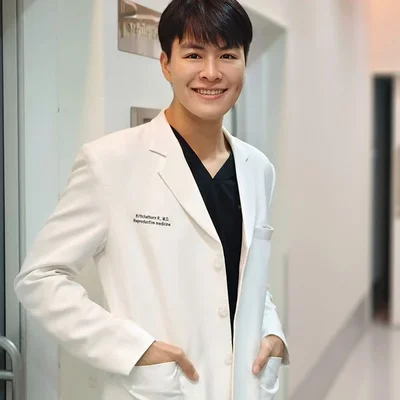
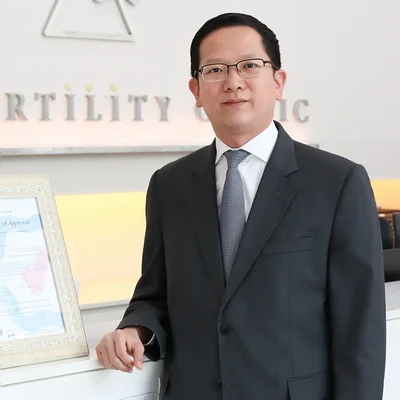
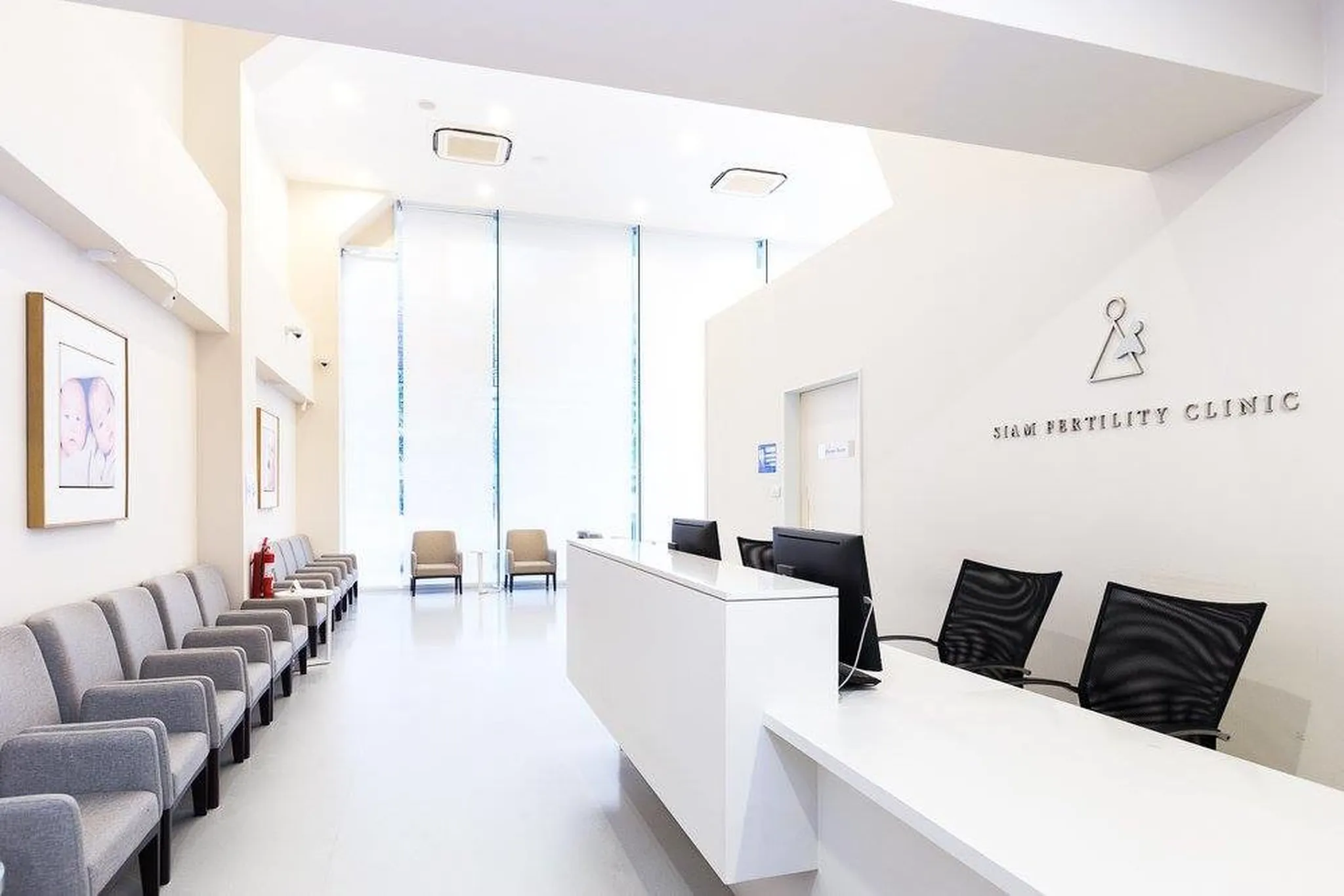
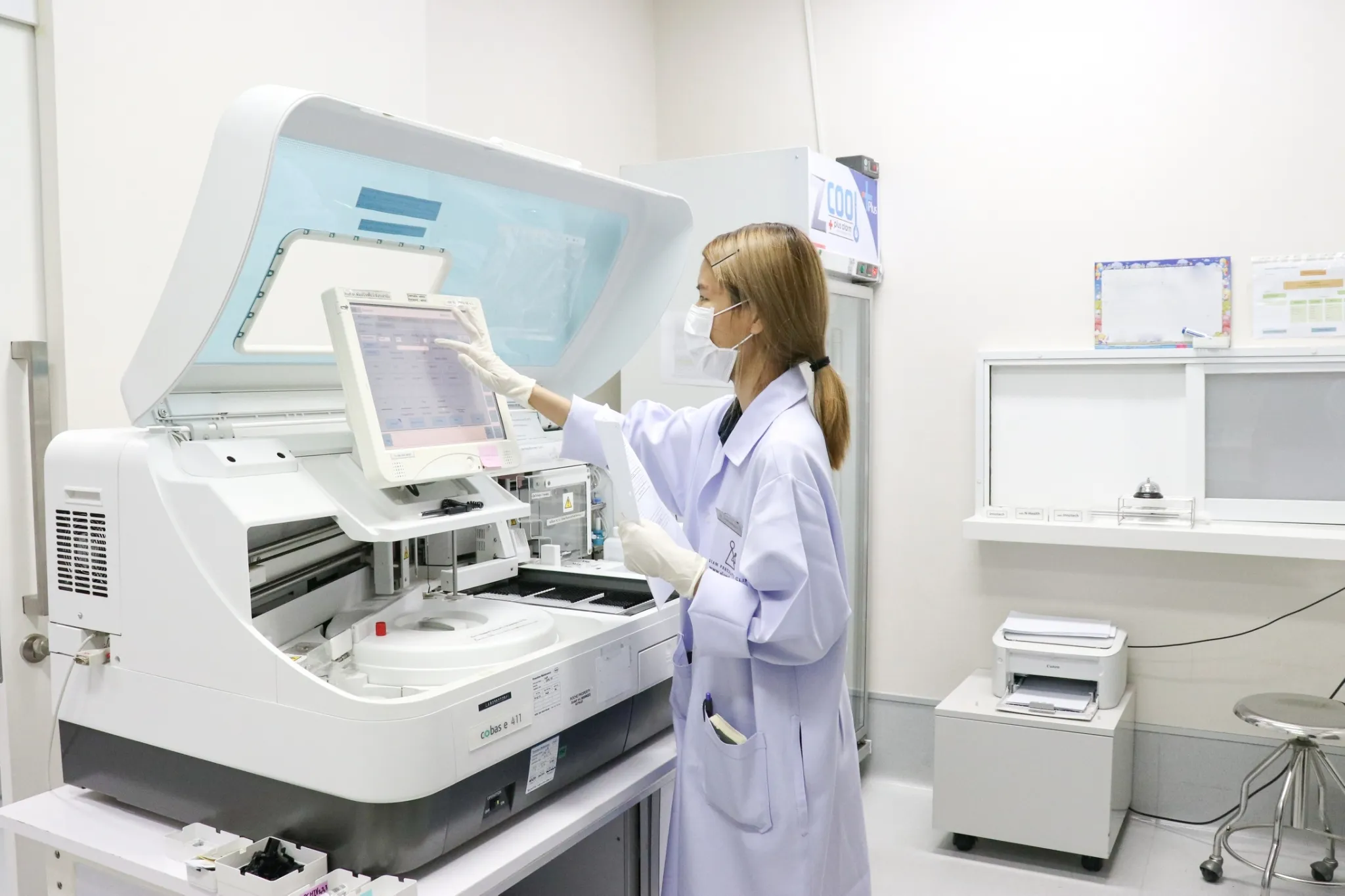
Siam Fertility Clinic opened in 2016 on the 18th floor of the One Origin Sanampao building in Phayathai, Bangkok. It is a standalone fertility practice rather than a hospital department: consultation rooms, an embryo laboratory and a genetics bench sit under one roof, and both treating physicians are obstetrician-gynecologists with a subspecialty in reproductive medicine.
The clinical team — doctors, nurses, medical technologists and embryologists — reports more than ten years of infertility practice, and the doctor page puts the specialists’ combined experience in assisted reproduction at over 20 years. Medical Director Dr. Surachai Pornwiroon came from First Fertility and PGS Center and Safe Fertility and Genetic Center before taking on the leadership of the practice; his published case load is more than 700 IVF/ICSI transfer cycles and more than 200 laparoscopic and hysteroscopic procedures a year.
Success rates come from two different pages on the clinic’s own site, and they are not the same kind of number. The IVF service page states an average success rate of about 40-50% per cycle; the IUI page states about 10-15% per cycle (clinic website, as of September 2026). The directory listing at findbestclinic.com repeats those same two ranges. Both are self-reported sentences with no denominator, no reporting year and no age bands attached, so read them as the clinic’s headline claim rather than audited outcomes.
A separate statistics page publishes something narrower and more specific: the proportion of frozen embryo transfers using the patient’s own eggs that resulted in an hCG pregnancy and in a live birth over 2020-2025. That data is shown as a chart image, no per-age-band figures are published as text, and none are reproduced here. The same page gives the clinic’s case mix — 96.26% of patients had ICSI and 71.96% had genetic testing in 2024, against 100% and 82.20% in 2022 — and states plainly that not every treatment cycle reaches egg collection, transfer or cryopreservation. Thailand has no mandatory ART registry comparable to CDC or SART reporting, so nothing here is externally verified, and age, weight and cause of infertility shift individual results substantially. Ask the clinic for outcomes on your own age band and diagnosis, on a per-transfer basis, before treating any published range as your expectation.
Accreditations & Awards
- RTAC accreditation (2019) — accredited as an assisted reproductive technology provider by the Reproductive Technology Accreditation Committee, a subcommittee of the Council of the Fertility Society of Australia. RTAC is the accreditation regime clinics in Australia, New Zealand and Singapore work to. This is a clinic-reported accreditation; the RTAC register of accredited units is a dynamic listing, so the entry itself could not be captured offline.
- ISO 9001:2015 — Quality Management System certificate of registration issued by the British Standards Institution (BSI), reported by the clinic on its About page.
- ESHRE-certified laboratory staff — the clinic’s chief laboratory officer holds ESHRE Certified Clinical Embryologist (2018) and Certified Senior Embryologist (2021) credentials. This is individual professional certification of lab personnel, not an institutional accreditation.
- Third-party directory data — findbestclinic.com records 4.6 out of 5 from 33 ratings and independently repeats the RTAC and ISO 9001:2015 accreditations; WhatClinic’s page for the clinic shows a service score of 6.1 across 8 user interactions. Both directories rest on small, self-selected patient samples.
- Not accredited by — searches returned no JCI, CAP, SART, HFEA or ISO 15189 record for this clinic. It does not claim them, and neither do third-party listings.
- Thai facility and physician licence numbers are not published on the clinic’s website or in searchable medical council records, so they are left blank here.
Why Choose Siam Fertility Clinic
- RTAC-standard lab and clinical workflow: the clinic runs to the Australian accreditation framework rather than only to Thai minimum requirements, which matters most for the laboratory steps where embryo handling and vitrification quality are decided
- High-volume medical director: more than 700 IVF/ICSI transfer cycles and 200+ laparoscopic and hysteroscopic procedures a year (clinic doctor page), so surgical causes of infertility are treated in-house instead of referred out
- Genetic testing in-house, by NGS: PGT-A screens all 24 chromosomes at a stated 99.9% accuracy, and PGT-M covers single-gene conditions such as thalassaemia; ERA analyses 248 endometrial genes to time transfer
- EmbryoScope Plus time-lapse culture: images are taken every ten minutes inside the incubator, so embryologists assess development without removing embryos from their culture environment
- Sperm selection beyond count and motility: HA-ICSI binds morphologically normal sperm to hyaluronan, and MACS uses Annexin V magnetic sorting to strip apoptotic, DNA-fragmented sperm before injection
- Built for overseas patients: coordinators cover English, Mandarin and Vietnamese, contact runs through LINE and WeChat, and the clinic is open seven days a week from 07:30
IVF & Fertility Services
- IVF (In Vitro Fertilization): ovarian stimulation for 8-15 days, egg collection, free fertilization in the lab, embryo culture to day 2-6 and transfer
- ICSI (Intracytoplasmic Sperm Injection): single sperm injected into each egg, used for low count, poor motility, abnormal morphology, surgically retrieved sperm (MESA/PESA/TESE/TESA) and prior fertilization failure
- IUI (Intrauterine Insemination): ovulation is driven and timed with medication, then prepared sperm is placed into the uterus around it; the clinic’s own criteria are at least one normal fallopian tube and a semen count of at least 5 million
- PGT-A: preimplantation screening for chromosome aneuploidy by next generation sequencing, offered for advanced maternal age, recurrent implantation failure and recurrent miscarriage
- PGT-M: preimplantation testing for single-gene disorders in families with a known inherited condition
- Sperm preparation: HA-ICSI and MACS magnetic sorting of apoptotic sperm
- EmbryoScope Plus: time-lapse incubation with EmbryoViewer analysis for embryo selection
- Frozen embryo transfer (FET): thawed blastocyst transfer, positioned by the clinic as the preferred route after stimulation because it lowers OHSS risk and gives the endometrium time to recover
- Cryopreservation: egg, sperm and embryo freezing, including an oocyte freezing program for planned delay of childbearing
- Hysteroscopy: diagnostic and operative work on abnormal uterine bleeding, endometrial polyps, intrauterine adhesions and fibroids, and it is listed for recurrent implantation failure too; done 5-7 days after a period ends, under general anesthesia, with 8 hours of fasting beforehand
- AMH testing: ovarian reserve blood test, with the clinic’s reference bands from very low (<0.3 ng/ml) to high (>6.8 ng/ml)
- ERA test: endometrial biopsy and gene-expression profiling to locate a displaced window of implantation, aimed mainly at recurrent implantation failure
Fees & Packages
The clinic publishes fixed-price packages in Thai baht. Converted at roughly 36 THB per US dollar for orientation only — the clinic quotes and bills in THB (prices as of September 2026):
| Package | Price (THB) | Approx. USD |
|---|---|---|
| SKYLIGHT ICSI | 169,000 | approx. 4,700 |
| Oocyte Freezing | 215,500 | approx. 6,000 |
| HOPE ICSI | 230,500 | approx. 6,400 |
| ICSI WISH | 255,500 | approx. 7,100 |
| ICSI WISH PLUS | 274,500 | approx. 7,600 |
What each tier includes is published in images on the clinic’s package pages rather than as text, so the inclusions and exclusions — medication, storage years, additional transfers, anesthesia — must be confirmed in a written quote before you commit. Medication is the usual variable: the clinic’s own guide lists the stimulation, trigger, antagonist and luteal-support drugs used (Gonal-F, Menopur, Orgalutran, Cetrotide, Ovidrel, Progynova, Utrogestan, Duphaston among them), and dosages differ markedly between protocols.
Patient Journey
- Enquiry and appointment: contact by phone, email, LINE or WeChat; Mandarin and English coordinators triage the case and schedule the consult
- Baseline workup for both partners: AMH blood test and cycle history for her, semen analysis for him, plus ultrasound as indicated
- Protocol design: the specialist sets stimulation drug and dose from ovarian reserve and prior history, and explains the plan step by step
- Stimulation and monitoring: injections for roughly 8-15 days with scan and blood monitoring, ending in trigger
- Retrieval and fertilization: egg collection, then IVF or ICSI in the laboratory, with HA-ICSI or MACS sperm preparation where indicated
- Culture to blastocyst in EmbryoScope Plus, followed by PGT-A or PGT-M if testing was chosen
- Endometrial preparation and transfer: the lining is built over a prep cycle with oral and injected medication, and transfer timing is set against progesterone exposure; ERA profiling is offered when transfer timing has previously failed, and freezing all embryos for a later FET is the route the clinic suggests when OHSS risk or lining quality argues against a fresh transfer
- Pregnancy test, follow-up and home-country handover: coordinators stay in contact after the pregnancy test, which is the practical reason the clinic keeps messaging channels open rather than closing the file at transfer
Local Legal Framework
Thailand regulates assisted reproduction primarily through the Protection of Children Born by Assisted Reproductive Technology Act B.E. 2558 (2015). In outline, the Act governs medically assisted conception and establishes the legal parentage of children born through it; it permits surrogacy only on a non-commercial basis between relatives, with at least one intended parent Thai, which means commercial and international surrogacy programs are not lawful options here. The Act also constrains gamete and embryo donation and the disposition of stored embryos, and clinics must hold a licence for the relevant category of medical establishment under the Medical Facility Act B.E. 2541, with physicians licensed by the Medical Council of Thailand.
Two caveats worth stating: Siam Fertility Clinic’s own English-language website does not quote these statutes, so the description above reflects the Thai regulatory framework in general rather than the clinic’s published position. And because IVF, ICSI, IUI and PGT for medical indications are all routine and lawful in Thailand, most international patients using this clinic are unaffected by the surrogacy and donation restrictions — but you should confirm current requirements with the clinic and, where parentage or birth registration is involved, take independent legal advice before treatment.
Location
- Address: 1015 One Origin Sanampao Building, 18th Floor, Phayathai, Bangkok 10400, Thailand
- Phone: +66 632025075