'%20d='m0%200%2016%2011h61%2061%2061%2061%2060L47%2037h61%2061%2060%2061L16%2063h61%2061%2061%2061%2060L47%2089h61%2061%2060%2061L16%20115h61%2061%2061%2061%2060L47%20141h61%2061%2060%2061L16%20166h61%2061%2061%2061%2060L47%20192h61%2061%2060%2061L16%20218h61%2061%2061%2061%2060z'/%3e%3c/svg%3e)

About Washington University Fertility and Reproductive Medicine Center
This is the IVF practice of Washington University School of Medicine, on the Forest Park Avenue medical campus in the Central West End. The program traces to 1983, when WashU Medicine and Barnes-Jewish Hospital together opened the first IVF program in Missouri; the state’s first IVF babies were born to patients treated there in 1985. The clinic’s own “40 years of IVF” framing belongs to that joint WashU/Barnes-Jewish program rather than to a standalone company, and the physicians who practice here today are its current staff.
The clinical unit is an academic reproductive endocrinology division, not a private chain. Its roster mixes credentials in a way that matters when you are choosing a doctor: reproductive endocrinologists, one board-certified urologist who handles male-factor surgery, and one reproductive surgeon with the academic title Assistant Professor of Obstetrics and Gynecology. A three-year REI fellowship trains clinical fellows on site, and the center lists an NIH-backed multi-site genetics study on male infertility (GEMINI) among its ongoing studies alongside its own recruiting projects. One caution when you read the center’s own pages: a standing sentence on the about and team pages says every doctor is board-certified in both obstetrics/gynecology and reproductive endocrinology and infertility, and its referring-physicians page repeats the claim for REI alone. The individual physician pages do not match that blanket statement, so check certification doctor by doctor.
The outcomes, stated the way the registry states them. The four numbers in the chart above come from the SART 2023 final clinic summary report for clinic ID 1951 and measure live births per intended egg retrieval, counting all embryo transfers, using the patient’s own eggs: 54.1% under 35, 42.0% at 35-37, 27.3% at 38-40, and 10.2% at 41 and over. The national row in the same table comes from the same registry and the same reporting year, so the two can be read against each other: the center sits above the national figures in every band, by 0.9 points under 35, 2.1 points at 35-37, 1.1 points at 38-40 and 0.8 points over 40. That is an advantage, but a thin one — it is not the same as being an outlier.
Three qualifiers belong with those percentages. Cycle starts per band were 231 under 35, 119 at 35-37, 66 at 38-40, 53 at 41-42 and 35 over 42, so the 38-and-up rows rest on small numbers: SART’s published confidence interval for 41-42 runs 4.1 to 22.3 percent, and for 38-40 it runs 16.5 to 38.0. The single figure shown for over-40 is a cycle-weighted blend of the 41-42 and over-42 bands (13.2% and 5.7% respectively), because the registry splits that age range and this page reports one column. And the center’s own success-rates page describes the 54.1% figure as the share of “embryos transferred” that produced live births, which is not what the SART cell containing 54.1% measures; the registry’s per-intended-retrieval denominator is the one used here.
Volume and reporting are worth a look too. The 2023 report header shows 1,025 total cycles and a retrieval start report rate of 95.2%, meaning the center documented 95 of every 100 retrieval starts for SART — reasonably complete reporting, which is what makes the age-band table usable at all. That 1,025 is the report’s top-line total, which includes embryo and oocyte banking cycles rather than only retrievals. The 932-cycle national average carried in this page’s fields is SART 2023 cycles divided across reporting clinics, so treat 1,025 against 932 as a sense of scale — a busy academic program, not a low-volume lab — rather than a same-denominator ratio. The center also appears in the CDC ART report under its own clinic ID; because that registry’s latest year for it predates the SART table above and uses different denominators, the two sets are not lined up here.
Patient-reported ratings on this page — 4.5 out of 5 across 153 reviews — are the clinic listing’s aggregate Google figure, which mostly records scheduling and front-desk experience rather than clinical results. Separately, the center states that more than 2,000 families are evaluated and treated for infertility each year at WashU Medicine; that is a health-system number covering more than this one practice, so do not read it as the caseload of this address.
Accreditations & Awards
- SART membership since 1992, with cycle-level reporting that produced the 2023 table above. Roughly 90% of US clinics are SART members, by the center’s own page; the practical benefit is public data you can pull yourself.
- CLIA-certified and CAP-accredited IVF laboratory — clinic-stated, on a 4,900-square-foot facility housing the embryology lab, the andrology lab and hormone assay work. No certificate numbers are published in our sources.
- Center of Excellence in the OPTUM Fertility network (UnitedHealth Group). The criteria the center publishes are high success rates plus high single-embryo-transfer rates. The center states it holds the same designation from Cigna and is one of only two Missouri fertility clinics to receive it — a self-reported ranking.
- Program firsts, on the record: Missouri’s first IVF program (1983) and the state’s first IVF babies born through it (1985).
- LGBTQ+ recognition from the Human Rights Campaign: the center cites a 2022 Healthcare Equality Leader listing and a 2024 HRC High Performer designation, plus a regional Center of Excellence designation on its own family-building page.
- Multiple-gestation record, as reported by the clinic: triplet-and-higher live birth rate under 1%.
- Active clinical studies, including the NIH Genetics of Male Infertility Initiative (GEMINI), a lifestyle-and-ovarian-aging project (LORE) and a randomized trial on pregnancy of unknown location.
- No Joint Commission International accreditation appears anywhere in the center’s materials or in the third-party lookups run at collection time. If a listing claims otherwise, it is not this unit.
Why Choose Washington University Fertility and Reproductive Medicine Center
- Male-factor care inside the same practice. Most St. Louis patients referred for surgical male infertility see a urologist somewhere else. Here the center’s board-certified urologist handles vasectomy reversal, testicular biopsy and varicocele treatment, and works with the embryology lab on MESA, PESA and TESE retrieval, since surgically retrieved sperm require IVF with ICSI.
- A reproductive surgeon for structural causes. Hysteroscopy, laparoscopy and robotic surgery for fibroids, polyps, endometriosis, ovarian cysts, uterine septum and hydrosalpinx are covered by a surgeon whose staff appointment is in obstetrics and gynecology rather than by an outside referral.
- ICSI is not automatic. The center states plainly that it reserves ICSI for sperm-related infertility, arguing that with normal sperm ICSI can fertilize worse than conventional insemination. If a clinic quotes ICSI for every cycle, that difference is worth asking about.
- Transfer policy aimed at singleton pregnancy. Patients under 37 are offered single-embryo transfer, and the clinic’s stated reason is the OPTUM Center of Excellence criterion set — high success rates with high single-transfer rates.
- In-house embryology, outsourced genetics. Biopsy happens in this lab at the blastocyst stage (days 5 to 7), embryos are frozen while testing runs, and samples go to several outside reference laboratories for PGT. Results typically return 1-2 weeks after biopsy. For PGT-M, lab test development takes 6-12 weeks after DNA samples arrive, and no IVF cycle gets scheduled before it finishes.
- A stated embryo-survival figure: about 97% for embryos biopsied and later thawed, described as the center’s own experience rather than an audited number.
- Cancer and adolescent preservation. The center belongs to the National Physicians Cooperative of the Oncofertility Network, discounts egg and embryo freezing for patients without fertility benefits, runs the LIVESTRONG Fertility discount program, and — through an Integrated Care & Fertility Preservation Program co-directed with pediatric gynecology and St. Louis Children’s Hospital — offers ovarian and testicular tissue freezing for children who have no time for standard egg or embryo freezing. Oocyte and embryo freezing can be completed in two weeks start to finish when timing allows.
- Every case goes before the team before an IVF start, per the center’s referring-physician materials. That is an academic habit: the plan gets reviewed by more than one physician’s eye.
- Monitoring that fits a job. The center runs labs and ultrasound Monday through Friday with limited Saturday services, offers remote IVF monitoring in Shiloh and Carbondale, Illinois and in Springfield, Missouri, and runs a telemedicine clinic in Springfield with CoxHealth where labs, ultrasounds and medications are coordinated locally while procedures stay in St. Louis. Physicians here hold Missouri and Illinois licenses.
- An honest eligibility limit. The program does not offer IVF with a patient’s own eggs at age 45 and above, citing published success rates under 2%; at 45 plus, the conversation is about donor eggs.
IVF & Fertility Services
- IVF: controlled ovarian stimulation, monitoring, retrieval under anesthesia, insemination or ICSI, embryo culture to day 3 or day 5 (blastocyst), transfer, and freezing of extras.
- ICSI (intracytoplasmic sperm injection): used for severe sperm problems or prior fertilization failure, not as a default.
- Non-IVF medical therapy: letrozole and clomiphene citrate for ovulation induction — letrozole favored first-line for PCOS on the center’s own reading of the evidence — plus metformin where insulin resistance shows, injectable gonadotropins, and IUI with partner or donor sperm. The center notes clomiphene plus IUI remains its first-line approach for unexplained infertility, typically three cycles before moving to IVF.
- PGT-A, PGT-M and PGT-SR: chromosome screening, single-gene disease testing and structural-rearrangement testing, with genetic counseling required before any PGT cycle. The center treats PGT-A as an add-on with genuine debate about who benefits, not routine care.
- In-house genetic counseling with a certified counselor on staff, plus carrier screening.
- Egg donation: locally recruited anonymous donors, known donors, coordination with outside agencies, and frozen eggs through DonorEggBank USA and MyEggBank, both of which the center says offer guarantee programs. Donors are recommended to be under 35, most commonly 21 to 32.
- Donor sperm insemination through FDA-compliant sperm banks, with samples stored in the center’s andrology lab.
- Embryo donation for parties already known to each other, involving testing of both couples, a reproductive counselor visit and a three-month wait before transfer.
- Gestational carrier cycles for intended parents who bring their own carrier; the center does not supply carrier volunteers and evaluates each potential carrier medically and psychologically before acceptance.
- Fertility preservation: egg, embryo and sperm freezing, before chemotherapy or radiation, before gender-affirming hormone therapy or surgery, and electively.
- LGBTQ+ family building: IUI and IVF with anonymous or known donor sperm, donor egg with a gestational carrier, and reciprocal arrangements for female couples.
- Fertility surgery: hysteroscopic removal of polyps, fibroids, retained tissue and scar tissue, septum incision; laparoscopic treatment of endometriosis, ovarian cysts and damaged tubes.
- Male infertility surgery: varicocele repair, sperm-duct microsurgery, microsurgical sperm retrieval and vasectomy reversal.
- Recurrent pregnancy loss evaluation (defined by the center as two or more losses), diminished ovarian reserve, PCOS, Asherman’s syndrome and endometriosis workups.
- Diagnostic testing: AMH and other hormone assays, semen analysis and viability staining, hysterosalpingography, sonohysterography, and infectious disease screening.
- Telemedicine and remote monitoring, as described above.
Two lab details our sources do not settle: whether time-lapse embryo culture is available here, and the center’s written default single-embryo-transfer policy beyond the under-37 offer. Ask both on the consultation.
Fees & Packages
There is no published price list. The center does not post cycle fees, medication costs or a self-pay IVF package price anywhere in its patient materials, so a written estimate for your own plan is the only reliable number. What the center does state:
- A cost framing, not a quote: the financing page puts IVF at roughly $16,000 as a general figure and says significant out-of-pocket costs — over $5,000 — remain even for patients who have employer fertility benefits, with such benefits concentrated at larger employers.
- Fee-for-service: pay for what you get, which the center defines as monitoring, blood tests, anesthesia, egg retrieval and embryo transfer. Micromanipulation procedures bill separately.
- Self-pay packages at a discounted rate, available to patients who have no or limited fertility benefits, who have exhausted them, who choose not to bill insurance for privacy, or who use the center out of network. Insurance refunds on package services go back to the insurer.
- ARC payment plans through Advanced Reproductive Care: treatment packages, installment financing, refund-guarantee packages and pharmacy financing.
- Published line items that do exist: sperm banking at $341.25 per visit or specimen, with the page noting a $356.25 rate effective July 1, 2020, and a $213.75 cryopreservation refund if a sample proves unfreezable; genetic carrier screening around $200 to $350 per person. Insurance rarely covers the banking visit itself, and the center lists CPT codes 89310 and 89259 with diagnosis code Z31.84 for your own benefits call.
- Grants: two philanthropic funds sit under the Barnes-Jewish Hospital Foundation umbrella, the DragonFly Fund and the Gateway Family Fertility Fund. DragonFly awards up to $6,000 per recipient toward future WashU/BJH professional fees on a self-pay IVF cycle — anesthesia, cryostorage and PGT are excluded — and requires current-patient status, household income under $170,000, a diagnosis of infertility or miscarriage, age under 41 by January 1, 2027, BMI under 41, day 2-5 FSH under 15 and AMH above 0.5. Funds must be used within 12 months, awards depend on fundraising, applications open and close by year, and the page said it was not accepting applications when the material was collected. Recipients agree to share their story publicly.
- Medication assistance: EMD Serono’s Compassionate Care program, Ferring’s ReUniteRX, and EMD Serono’s Compassionate Corps for military families.
- Discounted preservation for cancer patients without fertility benefits, through the center’s own pricing and the LIVESTRONG Fertility program.
Insurance. The center works with major carriers, verifies your benefits after the consultation on your behalf, and warns that a benefit determination can push cycle scheduling back 15-30 days. Preauthorization is not payment: the center states an insurer can preauthorize a service and still refuse it later, and that patients remain responsible for anything unpaid. Missouri has no statewide fertility-coverage guarantee — the center notes most large Missouri employers do not offer fertility benefits — while Illinois, where the center also sees patients, is one of 15 states whose law requires employers to cover fertility treatment, which the center describes as reaching up to four IVF cycles, with carve-outs that exclude some Illinois patients and workers.
Patient Journey
- Call or request online, and expect the first visit on video. New patients register by phone with reason for visit and insurance information, then get a MyChart account; the initial consultation defaults to Epic Video Client, with an in-person option if you ask for it before scheduling.
- Complete paperwork on time or lose the slot. New-patient forms open seven days ahead, and the center cancels appointments whose questionnaire is not submitted two days before the visit. Partner forms, genetic screening forms, records release, prior semen analysis, HSG images on disc and flowsheets from earlier IVF cycles all move the first visit forward.
- A 60-90 minute first conversation, used for history, gaps in testing and a discussion of options rather than a formality. Genetic counseling may be offered at that visit.
- Workup: exam, hormone blood work, pelvic ultrasound, semen analysis and hysterosalpingography as indicated, with results typically back within 10 days. Benefits verification runs in parallel.
- Plan and clearance. Medical and financial clearance, an individualized protocol, cycle scheduling. Everyone’s case goes before the clinical team before an IVF start.
- Stimulation and monitoring. Baseline testing, injectable or oral medications, blood work and ultrasound multiple times in a cycle — Monday through Friday here, with limited Saturday coverage, or at a partner site in Springfield, Shiloh or Carbondale under the remote-monitoring arrangements.
- Retrieval and transfer. Egg retrieval takes place in one of two procedure rooms with four private recovery rooms, with anesthesia from board-certified Washington University anesthesiologists on Barnes-Jewish staff. Fertilization runs conventional or by ICSI; culture goes to day 3 or day 5; biopsy happens at blastocyst stage if PGT is planned, with embryos frozen while the reference lab tests them; transfer follows fresh or frozen, and remaining embryos or eggs are vitrified.
- Pregnancy test and follow-up, then hand-off of ongoing prenatal care to a local obstetric provider.
- Support services through treatment: guided meditation and mindfulness resources, plus in-house genetic counseling for anyone considering PGT.
Timelines to plan around, per the center’s own pages: PGT results 1-2 weeks after biopsy; PGT-M test development 6-12 weeks after DNA samples reach the lab; egg or embryo preservation in about two weeks when a cancer-treatment window allows it, with ovarian tissue freezing as the faster option when it does not.
Local Legal Framework
Missouri has no omnibus assisted-reproduction statute in the materials collected here, and the center publishes no state-law page of its own. So read this as what the sources actually document, plus what they do not.
Parentage with donated eggs or sperm. The center’s donor-egg FAQ states the operative Missouri rule as it applies to its patients: the person who delivers the baby is the legal parent, except under a pre-arranged gestational carrier agreement, and patients who conceive with a donated egg do not need to file anything to establish parentage. Donors sign consent relinquishing all rights and responsibilities for the donated eggs. That is the clinic’s patient-facing summary, not a statute citation — confirm it with a Missouri reproductive attorney before your cycle.
Gestational carriers. Third-party reproduction happens here on one condition: intended parents identify their own carrier, because the center does not provide carrier volunteers. Agencies are the usual route, and staff can supply agency lists, coordinate the cycle and run the carrier’s medical and psychological evaluation. Our sources document no Missouri statute governing the enforceability of surrogacy agreements, and no state rule on compensation limits. The commonly repeated claim that Missouri restricts commercial surrogacy agreements appears in the Chinese edition of this page without a source behind it; it has been dropped here rather than repeated. Get independent legal advice on parentage orders before transfer.
Embryo legal status. The Chinese edition states that Missouri law defines embryos as not persons. Our sources contain no Missouri statute or case on embryo legal status, so the claim is not carried over. What is documented is practical: embryos are cryopreserved, biopsied for PGT, donated to another family when both parties are known to each other, and subject to the disposition consent you sign when they are created.
Donor screening is federal, not state. Egg and sperm donation runs under FDA rules on tissue donation, which the center states it follows. Sperm must be purchased from an FDA-compliant bank for anonymous use, with donors tested for HIV 1/2, syphilis, gonorrhea, chlamydia and hepatitis B and C; known donors require agency-arranged mental-health screening and recent infectious-disease testing before a cycle here.
PGT. PGT-A, PGT-M and PGT-SR are performed for Missouri patients at this center, with mandatory genetic counseling first; our sources note no Missouri restriction on the type of testing.
Reporting obligation. Every clinic, SART member or not, must report its success rates to the CDC by law — the reason both the table above and its federal counterpart exist.
Coverage law differs across the river. Illinois mandates employer fertility coverage for many plans, up to four IVF cycles by the center’s description, while Missouri imposes no such requirement. Patients licensed and treated in both states should ask which law their own plan falls under, since the mandate does not reach everyone living or working in Illinois.
Location
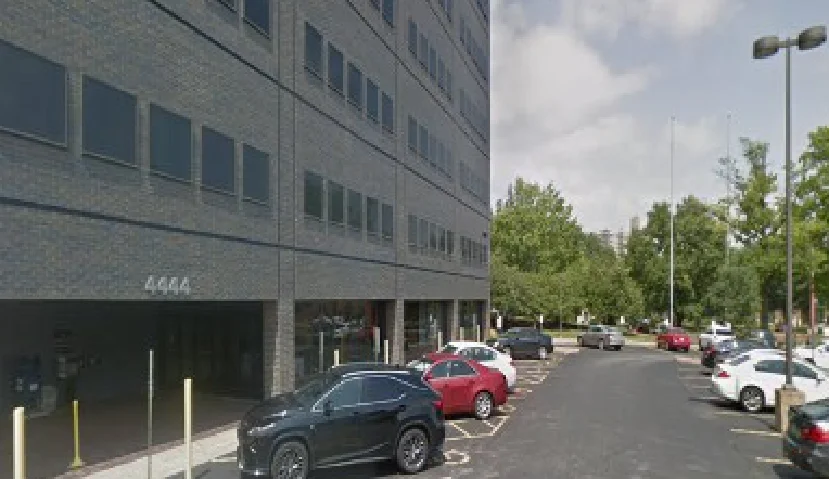
- Address: 4444 Forest Park Ave Suite 3100, St. Louis, MO 63110
- Phone: +1 314-286-2400