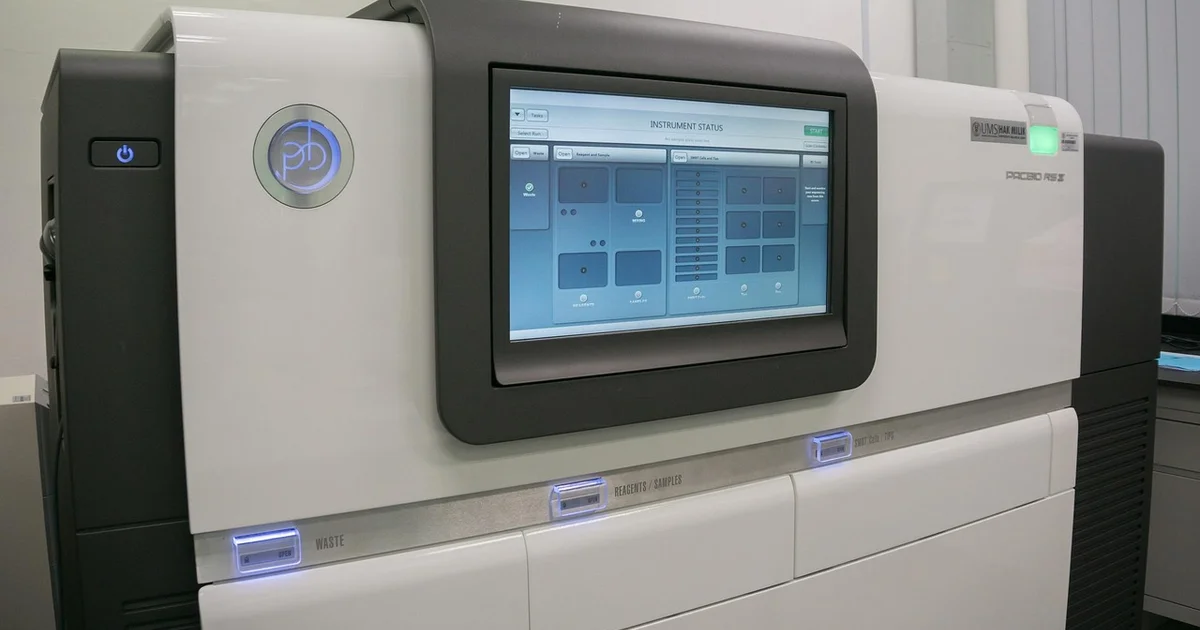
Yes — IVF with preimplantation genetic testing (PGT) reports embryo sex as a by-product of chromosome screening, with an error rate that is effectively nil: across 21,356 PGT-A cycles, sex-chromosome misdiagnosis ran 0.0% on day-5 blastocyst biopsies versus 0.48% on day-3 array testing [3]. Whether you may act on that result depends on your country’s laws, your clinic’s written policy, and how many euploid embryos one cycle yields — often only 0–2.
The Embryo Math Most Guides Skip
The technology is simple; the arithmetic is not. Egg and fertilisation ranges below follow CDC national ART surveillance [11], the euploidy row comes from 15,169 consecutive trophectoderm biopsies [4], and the last row is a coin flip:
| Milestone | Typical outcome | Individual variability |
|---|---|---|
| Eggs retrieved | 8-15 | Age and AMH |
| Mature eggs | 7-12 (80-90% of retrieved) | Falls sharply after 40 |
| Normally fertilized (2PN) | 5-10 (70-80% of mature) | ICSI lowers fertilization-failure risk |
| Blastocysts (Day 5-6) | 2-6 (40-55% of fertilized) | Age-decisive: ~60% under 35, only 20-30% at 42+ |
| Euploid (chromosomally normal) after PGT-A | 1-4 | Cohorts yielding no euploid embryo: 2-6% at ages 26-37, 33% at 42, 53% at 44 [4] |
| About 50% of those are the desired sex | 0-2 embryos | Pure chance, not age |
The hard truth: one cycle usually yields 0–2 chromosomally normal embryos of your preferred sex, and the risk of zero is a question of age — no euploid embryo at all in 2–6% of cohorts at 26–37, 33% at 42 and 53% at 44 [4]. Treat that curve as a planning baseline.
How Does Gender Selection with IVF Actually Work?
How PGT-A Reveals Embryo Sex
PGT-A screens embryos for the abnormal chromosome numbers that cause implantation failure, miscarriage or genetic disease, and the laboratory reports the sex chromosomes as a by-product: XX or XY.
There is no separate “gender test” — sex appears in every PGT-A report, at no extra cost or risk — PGT genetic screening guide.
The Step-by-Step Process
| Step | What happens | Timeline | What you experience |
|---|---|---|---|
| ICSI fertilization | One sperm injected into each mature egg | Retrieval day | Lab step |
| Blastocyst culture | Embryos grow in the incubator to Day 5-6 | Days 17-22 | Day 5 call with the embryo count |
| Trophectoderm biopsy | 3-5 cells removed from each blastocyst’s outer layer | Day 22-23 | Lab step |
| PGT-A analysis | Cells sent to a genetics laboratory | 7-14 business days | The hardest phase — waiting |
| Embryo transfer | Selected embryo thawed and transferred | Next cycle (1-2 months later) | 10-minute procedure; beta-hCG test 10-12 days later |
Why Gender Selection Requires Frozen Embryo Transfer
Gender selection almost always requires a frozen embryo transfer (FET): PGT-A takes 7–14 business days, so embryos are vitrified after biopsy and thawed in a later cycle.
Day 5-6 biopsy is also the accurate choice — in that same 21,356-cycle series, day-3 array testing misdiagnosed sex in 0.48% of cycles (day-3 FISH 0.12%) versus 0.0% on day-5 biopsies [3].
Transfer follows 1-2 months later in a medicated lining cycle, and the freeze is not the penalty patients fear: in a cohort of 20,887 vitrified blastocyst warming cycles, singletons born after vitrified transfer carried 14% less preterm risk (adjusted RR 0.86), 33% less low-birthweight risk and 40% less small-for-gestational-age risk than singletons from fresh transfer [7].
For the full walkthrough, see our IVF step-by-step process guide.
Key Decisions Before You Choose Embryo Gender
Two questions to settle before the first injection — both the kind of detail the ASRM Ethics Committee expects clinics to put in writing [1].
Decision 1: Do You Have Enough Embryos for Selection to Be Meaningful?
Make this call before treatment: your blastocyst count decides whether selection is a realistic goal or a long shot.
| Age | Expected blastocysts per cycle | Expected euploid embryos | Chance ≥1 matches your preferred sex |
|---|---|---|---|
| Under 35 | 4-7 | 2-5 | 75-97% (coin flip only) |
| 35-37 | 3-5 | 1-3 | 50-88% |
| 38-40 | 2-4 | 1-2 | 50-75% |
| 41-42 | 1-3 | 0-1 | 0-50% |
| Over 42 | 1-2 | 0-1 | 0-50% |
The last column is arithmetic, not a study finding: with k euploid embryos the chance none is your preferred sex is 0.5^k — 1 = 50%, 2 = 75%, 3 = 87.5%, 5 = 96.9%. Multiply by the odds of reaching k euploids at all, where age takes over: 94-98% of biopsied cohorts at 26-37 produce at least one, 67% at 42, 47% at 44 [4]. The other columns are ProIVF planning estimates from CDC ART surveillance [11]; your yield tracks AMH and follicle count more than birth year.
For family balancing with no known genetic condition, PGT-A alone suffices — sex chromosomes appear on every report. An X-linked disorder such as hemophilia A requires PGT-M instead: roughly $5,000 - $10,000 and 14-21 days more, because the laboratory must first validate a custom assay against your family’s F8 variant.
Decision 2: How Many Cycles Can Your Budget Cover?
For patients over 38, one cycle is often not enough — planning for multiple cycles is strategy, not pessimism.
Cost-per-euploid framework (US pricing):
| Scenario | Cost per cycle | Expected euploid embryos | Cost per euploid embryo |
|---|---|---|---|
| Under 35 | $18,000 | 3-5 | $3,600 - $6,000 |
| 35-37 | $20,000 | 2-3 | $6,700 - $10,000 |
| 38-40 | $22,000 | 1-2 | $11,000 - $22,000 |
| 41-42, low reserve | $22,000 | 0-1 | $22,000+ |
Where selection is legal, expect a written policy, a signed consent naming the desired sex, and a counseling session; ASRM’s Ethics Committee leaves that decision to each practice [1]. Transfer one embryo, not two: the joint ASRM/SART guidance on embryo-transfer limits exists because double transfers drive multiple pregnancies [8].
Is IVF Gender Selection Legal in Your Country?
Most high-income countries prohibit non-medical sex selection, each with its own rule, so legality is the first filter — not price. Where it is banned at home, the table below becomes your care pathway.
| Country | Sex Selection Allowed? | Cost (1 cycle + PGT) | Key Restriction |
|---|---|---|---|
| United States | ✅ Yes | $15,000 - $30,000 | No federal ban; each clinic sets its own policy [1] |
| Mexico | ✅ Yes | $8,000 - $15,000 | No specific federal ban |
| Cyprus | ✅ Yes | €8,000 - €15,000 | Allowed under the 2015 Human Reproduction Law; 30–50% below Western European prices |
| UAE / Dubai | ✅ Yes | $12,000 - $20,000 | Limited to family balancing |
| United Kingdom | ❌ No | — | HFEA: selection for any reason other than preventing serious inherited illness is “strictly prohibited” [9] |
| Canada | ❌ No | — | Assisted Human Reproduction Act 2004, s. 5 — prohibited practice |
| Australia | ❌ No | — | Prohibited under NHMRC ethical guidelines |
| China | ❌ No | — | Medical necessity only |
| India | ❌ No | — | PC-PNDT Act prohibits sex selection |
| Thailand | ⚠️ Restricted | $10,000 - $15,000 | Banned for non-medical reasons |
| Greece | ⚠️ Restricted | €7,000 - €12,000 | Only for X-linked disorders |
| Spain and most EU countries | ❌ No | — | National prohibitions |
How Much Does IVF Gender Selection Cost?
Cost structures differ sharply by country and by pricing model — package or itemized.
Cost Comparison by Country
| Component | United States | Mexico | Cyprus | UAE / Dubai |
|---|---|---|---|---|
| IVF cycle (stimulation, retrieval, transfer) | $12,000 - $20,000 | $5,000 - $10,000 | €5,000 - €9,000 | $9,000 - $15,000 |
| Medications | $3,000 - $6,000 | $1,500 - $3,000 | €1,000 - €2,000 | $2,000 - $4,000 |
| ICSI | $1,500 - $3,000 | $500 - $1,000 | €500 - €1,000 | $1,000 - $2,000 |
| Biopsy fee | $1,000 - $2,500 | $500 - $1,500 | €500 - €1,200 | $1,000 - $2,000 |
| PGT-A (up to 8 embryos) | $3,000 - $7,000 | $2,000 - $4,000 | €2,000 - €4,000 | $3,000 - $5,000 |
| Typical total | $15,000 - $30,000 | $8,000 - $15,000 | €8,000 - €15,000 | $12,000 - $20,000 |
| Travel and accommodation | Not applicable (local) | $2,000 - $5,000 | $3,000 - $6,000 | $3,000 - $7,000 |
Package vs Itemized Billing
- PGT-A package (cycle + ICSI + biopsy + testing): $13,000 - $22,000, versus $17,500 - $32,500 itemized
- Shared-risk / refund programs: $25,000 - $40,000 for up to 3 cycles, with refund if there is no live birth
- Always ask: “Is the biopsy fee included in the quoted cycle price?” Clinics that quote the cycle alone add biopsy and PGT as extras — a surprise $4,000 - $8,000. See our 2026 IVF cost guide.
Three Real Patient Stories
Anonymized composites from multiple real patients; costs and clinical figures come from published averages and patient self-reports.
Case 1: From Sydney to Bangkok — A Daughter After Two Sons
Emily, 38, already had two healthy boys. Sex selection is banned in Australia, so the couple chose a Bangkok clinic offering family balancing.
Total cost: about AUD 22,000 (≈ $14,700) for cycle, PGT-A and flights. She produced 9 eggs and 4 blastocysts; PGT-A showed 2 euploid embryos — one female, one male.
“I refreshed my email at 6 a.m. every morning, and on day 12 I called the lab — ‘still in analysis.’ When the counselor finally said ‘you have one healthy girl and one healthy boy,’ I couldn’t speak for about 30 seconds.”
The female embryo was transferred; Emily is now 28 weeks pregnant with a daughter. At 38 with four blastocysts, both sexes were likely.
Case 2: From London to Cyprus — The Low-AMH Gamble
Jack, 41, and Priya, 37, already had two boys. Sex selection is banned in the UK, so they chose Cyprus — legal and 30–50% cheaper.
Priya’s AMH was only 0.8 ng/mL — the doctor warned of just 2-3 eggs. They paid €5,500 for the cycle plus €4,500 for PGT-A, and about €2,000 for flights.
Retrieval yielded 5 eggs and 3 blastocysts; PGT-A identified 1 euploid female and 1 euploid male.
“Three embryos, only two normal. I kept thinking — what if the healthy one is a boy?” Jack said. “When the doctor confirmed the girl embryo was healthy, Priya grabbed my hand so hard I still had a bruise the next day.”
Their daughter was born at 39 weeks weighing 3.2 kg. Two euploid embryos meant a 1-in-4 chance that neither was a girl (0.5²) — exactly why the estimator matters before stimulation.
Case 3: Sex Selection for a Medical Reason
Meghan, 33, chose sex selection for a medical reason — to avoid passing on hemophilia A, an X-linked bleeding disorder.
“My brother has severe hemophilia. I watched him miss school, miss sports, spend weeks in hospital. I could not knowingly pass that on,” she said. The medical indication meant partial insurance cover; out-of-pocket was $8,500.
“We retrieved 8 eggs and 5 reached blastocyst; the PGT-M results took almost three weeks. The counselor said unaffected embryos would keep the hemophilia risk below 0.1%. When she called to say we had 2 unaffected female embryos, I collapsed onto the kitchen floor.”
The first transfer succeeded; their daughter is now 18 months old and free of hemophilia. A medical indication changes the insurance, the test and the wait: 14–21 days for PGT-M versus 7–14 for PGT-A.
The Ethics of Sex Selection
Neither professional body draws the line patients expect. The ASRM Ethics Committee holds that practitioners “are under no ethical obligation to provide or refuse to provide nonmedically-indicated methods of sex selection,” and tells clinics to publish their policy [1].
“UK law is very clear that selecting the sex of your child for any reason other than preventing serious inherited illness is strictly prohibited. Any licensed UK clinic found to be offering sex selection in the UK for non-medical reasons would automatically be in breach of the law.” — Human Fertilisation and Embryology Authority, 2018 [9]
ESHRE’s Task Force on Ethics and Law split without a unanimous verdict [2], so the settled answer is statutory, not professional: where a regulator holds legal power, non-medical selection is unavailable. Ethical clinics in permitted countries still walk you through those tensions at consent, to confirm the decision is well-considered.
Clinic Evaluation Checklist
| Assessment area | What to ask | Ideal answer | Red flag |
|---|---|---|---|
| PGT-A experience | ”How many PGT-A cycles do you run per year?” | More than 100 per year | Under 30, or “we send it out” |
| Lab accreditation | ”Which lab certifications do you hold?” | CAP, CLIA, or JCI | ”No specific certification” |
| Biopsy technique | ”Who performs the biopsy?” | Dedicated embryologist, 500+ biopsies | ”Whoever is on duty” |
| Genetics lab partner | ”Which genetics laboratory do you use?” | A recognized lab (Natera, Igenomix, CooperGenomics) | In-house only |
| Mosaicism policy | ”How do you handle mosaic embryos?” | Transparent policy; low-level mosaics transferable | ”We discard all mosaics” |
Bottom line: a clinic that won’t answer these transparently is the wrong clinic.
FAQ
Q: How accurate is gender selection with IVF?
Sex reporting is as reliable as the assay: across 21,356 cycles, sex-chromosome misdiagnosis ran 0.0% on day-5 biopsies (95% CI 0-0.26%), 0.48% on day-3 array tests and 0.12% on day-3 FISH [3]. The rare genuine errors trace to embryonic XX/XY mosaicism; prenatal testing (NIPT) confirms sex in pregnancy.
Q: Can you choose gender without IVF?
No — flow-cytometric sperm sorting enriches a sample; it does not select an embryo. In the MicroSort trial data, FISH analysis shifted a 50:50 X:Y preparation to roughly 90% X or 75% Y [5].
Biopsy reads the chromosomes of the embryo about to be transferred, as our IUI vs IVF comparison guide explains.
Q: Does insurance cover IVF gender selection?
Almost never for non-medical use. For X-linked disease PGT-M is often partially reimbursable — Meghan’s out-of-pocket in Case 3 was $8,500 — and some plans cover PGT-A for advanced maternal age, as our IVF insurance coverage guide explains.
Q: How many embryos do you need for gender selection?
At least one euploid embryo of the desired sex — a two-stage calculation. Stage one is cohort yield, which age controls [4]; stage two is the coin flip: 2 euploids give 75%, 3 give 87.5%, 5 give 96.9%.
Q: Does the embryo biopsy hurt the baby?
No harm has been demonstrated — the biopsy takes 3-5 cells from the trophectoderm, which becomes the placenta — never from the inner cell mass that becomes the fetus. A 2024 meta-analysis of 13 studies covering 11,469 biopsied and 20,438 comparison births found no rise in low birthweight (OR 1.01, 95% CI 0.85-1.20), and its initial preterm signal (OR 1.12) disappeared under sensitivity analysis (OR 0.97, 95% CI 0.84-1.11) [6].
Long-term child data after PGT stays observational — worth raising at consent.
Q: What is the difference between PGT-A and PGT-M for sex selection?
PGT-A screens chromosome number, sex chromosomes included; PGT-M tests single-gene mutations such as F8 in hemophilia A — $1,000 - $3,000 more, and 14-21 days versus 7-14.
Q: How long does the whole process take?
About 6–8 weeks from stimulation start to PGT-A results, transfer in the following cycle, and 3–5 months from first consultation to pregnancy test. See our IVF timeline guide.
Q: What if all my euploid embryos are the same sex?
The odds come from embryo count: 2 euploid embryos share a sex 1 time in 4, 3 share one 1 time in 8. Options: transfer the best regardless of sex, run another cycle, or bank embryos until the cohort covers both — a good clinic discusses this before treatment (see our low AMH IVF guide).
The Roadmap to Your Gender Selection Journey
Step 1 — Verify the legal status. If selection is banned where you live, identify permitted countries and check medical-visa requirements.
Step 2 — Assess ovarian reserve. AMH, FSH and antral follicle count determine your likely egg yield.
Step 3 — Screen 2–3 clinics against the checklist above. Demand blastocyst formation rates and annual PGT-A volume, not website claims, and get written quotes stating whether biopsy and PGT-A sit inside the cycle price.
Step 4 — Arrange logistics. Book accommodation near the clinic for 3–5 weeks, plus a shorter return trip for the transfer.
Ready to start? Browse our global IVF hospital directory, read the complete IVF beginner guide, or consult our how to choose an IVF clinic guide.
How This Guide Was Created
Researched by the ProIVF Medical Editorial Team and reviewed by the ProIVF Medical Advisory Board — ASRM and ESHRE ethics opinions, CDC ART surveillance, UK HFEA and Canadian statutory text, plus four peer-reviewed series covering 21,356 PGT-A cycles, 15,169 biopsies and 31,907 births.
References
Eleven sources underwrite the figures above, each with a DOI or PMID so it can be checked independently.
- ASRM Ethics Committee. Use of reproductive technology for sex selection for nonmedical reasons: an Ethics Committee opinion. Fertil Steril. 2022;117(4):720-726. DOI: 10.1016/j.fertnstert.2021.12.024 — PMID: 35105444
- Dondorp W, De Wert G, Pennings G, et al. ESHRE Task Force on Ethics and Law 20: sex selection for non-medical reasons. Hum Reprod. 2013;28(6):1448-1454. DOI: 10.1093/humrep/det109 — PMID: 23578946
- Ravichandran K, Guzman L, Escudero T, et al. Causes and estimated incidences of sex-chromosome misdiagnosis in preimplantation genetic diagnosis of aneuploidy. Reprod Biomed Online. 2016;33(5):550-559. DOI: 10.1016/j.rbmo.2016.08.011 — PMID: 27720366
- Franasiak JM, Forman EJ, Hong KH, et al. The nature of aneuploidy with increasing age of the female partner: a review of 15,169 consecutive trophectoderm biopsies. Fertil Steril. 2014;101(3):656-663.e1. DOI: 10.1016/j.fertnstert.2013.11.004 — PMID: 24355045
- Schulman JD, Karabinus DS. Scientific aspects of preconception gender selection. Reprod Biomed Online. 2005;10(Suppl 1):111-115. DOI: 10.1016/S1472-6483(10)62217-1 — PMID: 15820020
- Mao D, Xu J, Sun L. Impact of trophectoderm biopsy for preimplantation genetic testing on obstetric and neonatal outcomes: a meta-analysis. Am J Obstet Gynecol. 2024;230(2):199-212.e5. DOI: 10.1016/j.ajog.2023.08.010 — PMID: 37595823
- Li Z, Wang YA, Ledger W, et al. Clinical outcomes following cryopreservation of blastocysts by vitrification or slow freezing: a population-based cohort study. Hum Reprod. 2014;29(12):2794-2801. DOI: 10.1093/humrep/deu246 — PMID: 25316444
- ASRM Practice Committee and SART Practice Committee. Guidance on the limits to the number of embryos to transfer: a committee opinion. Fertil Steril. 2021;116(3):651-654. DOI: 10.1016/j.fertnstert.2021.06.050 — PMID: 34330423
- Human Fertilisation and Embryology Authority. HFEA statement on sex selection. 2018.
- Government of Canada. Assisted Human Reproduction Act, S.C. 2004, c. 2, section 5 — prohibited practices.
- Centers for Disease Control and Prevention. ART Success Rates: national surveillance data.
Last updated: 2026-07-29. Informational only — not medical advice. Sex-selection laws vary by state and clinic, so verify current policy with the clinic and its regulator before treatment.
Questions? Contact our team.