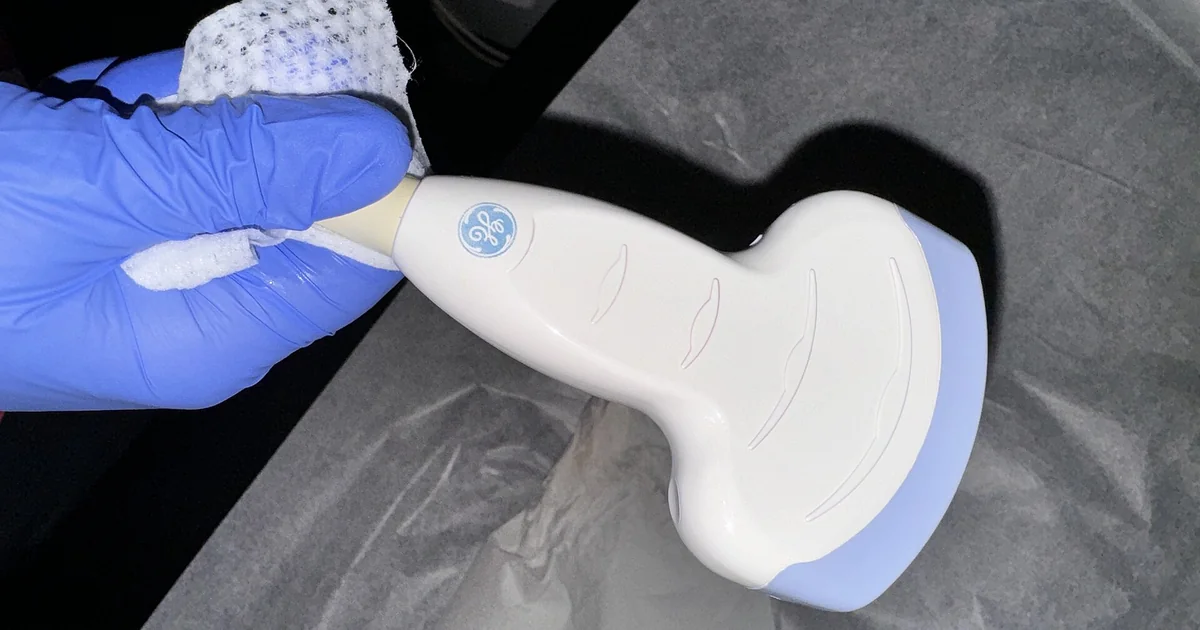
Fertility testing is not one test — it is four questions: how many eggs you have left (ovarian reserve), whether you are actually ovulating, whether your tubes and uterus are open, and whether the male partner is contributing. The timing rule is fixed: a full workup is warranted after 12 months of trying under age 35, or 6 months at 35 and older — ACOG Committee Opinion 781.
Infertility affects about 15% of couples, and the male partner is a contributing or co-contributing cause in 40–50% — his semen analysis belongs in the first round, not the last. And the number most women fear — AMH (anti-Müllerian hormone, a rough proxy for the remaining egg supply) — predicts pregnancy far more weakly than it sounds. Among 750 women aged 30–44 never diagnosed with infertility, those with AMH below 0.7 ng/mL conceived within 6 cycles at 65% versus 62% for normal-AMH women — no statistically significant difference — JAMA 2017.
Sources are peer-reviewed, PubMed-indexed studies, the American College of Obstetricians and Gynecologists, ACOG committee opinion on infertility workup, and CDC ART surveillance data. ProIVF does not sell testing kits or clinic services and endorses no laboratory.
What Do Fertility Tests Actually Check?
A complete female workup covers three axes that ACOG names explicitly: ovarian reserve, ovulatory function, and structural abnormalities — ACOG 781. No single test covers two axes, and the partner’s semen analysis makes four.
| Question | What it decides | First-line tests |
|---|---|---|
| How many eggs remain? | How much stimulation you would need, and how urgent treatment is | AMH, antral follicle count on ultrasound, cycle day 2–4 FSH and estradiol |
| Are you ovulating? | Whether timed intercourse, IUI (intrauterine insemination) or ovulation induction can work at all | Cycle history, mid-luteal progesterone, LH-based ovulation kits, thyroid and prolactin |
| Are the tubes and uterus normal? | Whether sperm and egg can physically meet, and whether an embryo can implant | Hysterosalpingography (HSG) or saline-infusion sonography, transvaginal ultrasound |
| Is the male partner a factor? | 40–50% of couples have a male contributing cause | Semen analysis — ideally two samples, 4–5 days of abstinence |
Ovarian reserve: quantity, not quality
Ovarian reserve means the number of oocytes left in the ovary — a count, not a quality rating. ASRM is blunt about its limits.
“Reserve markers are useful as predictors of oocyte yield following controlled ovarian stimulation… [but] are poor predictors of reproductive potential independently from age.” — ASRM Practice Committee, Fertility and Sterility, 2020, Fertil Steril 2020
AMH tells your clinic how you will respond to gonadotropins (the injectable hormones that drive egg growth); it does not tell you whether you will get pregnant.
In a cohort of 22,920 AMH results from women aged 18–45, median AMH dropped below 1.2 ng/mL by age 36, and the share meeting the definition of diminished ovarian reserve (AMH <1.2 ng/mL) rose from 15.9% at age 18 to 96% at age 45 — Front Endocrinol 2025. Age-specific reference ranges show the same curve — BJOG 2020.
Ovulation: the cheapest axis to check first
Ovulation testing is the cheapest axis and the first place to look when periods are irregular — a treatable cause is often right there. The classical confirmation is a mid-luteal serum progesterone: 3 ng/mL or higher was present in 90.5% of cycles in infertile women confirmed to have ovulated — Fertil Steril 1977.
Urine LH (luteinizing hormone) kits are a reasonable home alternative. In a crossover study of 23 women, LH kits correctly identified 100% of luteal phases versus 87% for cervical-mucus and basal-temperature charting alone — J Am Board Fam Med 2014.
Structure: tubes, uterus and the chlamydia question
Tubal and pelvic factors are invisible on blood work, which is why imaging is a required axis rather than an optional add-on. Where a cause can be named, infection history matters: modelling of serum antibody titers attributed 28.0% to 46.8% of tubal factor infertility to prior Chlamydia trachomatis infection — Am J Epidemiol 2017 — a chlamydia screen usually accompanies the first workup.
When Should You Get a Fertility Workup?
Timing is defined, not guessed: ACOG defines infertility as failure to conceive after 12 months of unprotected intercourse for women under 35 and after 6 months for women 35 and older — ACOG 781.
| Age group | When to start the workup | Why the clock shortens |
|---|---|---|
| Under 35 | After 12 months of trying | 6-cycle cumulative pregnancy 62.0% at ages 28–30 |
| 35 and older | After 6 months | Expedited evaluation; treatment decision at 6 months |
| Over 40 | Immediately | Immediate evaluation and treatment are warranted |
| Any age, known cause | Immediately | Endometriosis, PCOS, prior pelvic surgery, chemotherapy, irregular cycles |
In a North American cohort of 2,962 couples, cumulative pregnancy over 6 cycles fell from 62.0% for women aged 28–30 to 27.6% for women aged 40–45; over 12 cycles it fell from 79.3% at ages 25–27 to 55.5% at ages 40–45 — Am J Obstet Gynecol 2017.
Which Test Measures What — and on Which Cycle Day?
Each fertility test has its own cycle-day requirement, yet clinics order them as one package — so a “fertility panel” booked on the wrong days produces uninterpretable numbers.
| Test | What it measures | When it must be done |
|---|---|---|
| AMH | Oocyte quantity (ovarian reserve) | Any cycle day; variability is low between cycles |
| FSH + estradiol | Ovarian reserve, pituitary signalling | Cycle day 2–4 |
| Antral follicle count (ultrasound) | Number of small follicles, 2–10 mm | Cycle day 2–5, ideally same phase each time |
| Progesterone | Whether ovulation occurred | Mid-luteal phase or day 21 of a 28-day cycle |
| TSH, prolactin | Thyroid and prolactin causes of anovulation | Any day, fasting not required |
| HSG or saline sonography | Tubal patency, uterine cavity | After menstruation, before ovulation |
| Semen analysis | Sperm concentration, motility, morphology | After 4–5 days of abstinence, ideally two samples |
What does AMH predict — and what does it not?
AMH is the marker that predicts egg yield best and pregnancy worst. A meta-analysis of 32 studies found a non-linear positive relation between AMH and cumulative live birth after IVF/ICSI (intracytoplasmic sperm injection), but “no discriminant AMH threshold… below which live birth could not be achieved” — Hum Reprod 2023.
In the JAMA cohort, low-AMH (<0.7 ng/mL) women conceived by 12 cycles at 84% (95% CI 70–91%) versus 75% (95% CI 70–79%) for normal-AMH women — a difference that was not statistically significant — JAMA 2017.
AMH is also more variable than its reputation suggests. Across non-consecutive cycles in healthy women, biological variability was 9.61% (CV) against analytical variability of 3.46%, and intra-cycle variation exceeded inter-cycle variation — Clin Chem Lab Med 2022. A single borderline value — 1.1 versus 1.3 ng/mL — is closer to noise than diagnosis.
Day 2–4 FSH and estradiol: the older workhorse
FSH (follicle-stimulating hormone) is read on cycle days 2–4, always together with estradiol, because a high estradiol can mask a rising FSH. The JAMA cohort used >10 mIU/mL as the abnormal threshold — women above it conceived by 6 cycles at 63% versus 62% below, no meaningful difference — JAMA 2017.
FSH’s real value is in IVF stimulation planning.
Antral follicle count: accurate, but not perfectly reproducible
The antral follicle count is a transvaginal ultrasound count of small follicles in the early follicular phase, and it predicts ovarian response about as well as AMH. It is operator- and cycle-dependent, however — a different sonographer can shift your number — Gynecol Endocrinol 2017.
If you are tracking a trend, ask for the same clinic and the same phase of cycle.
Progesterone and LH kits: confirming ovulation
A mid-luteal progesterone of 3 ng/mL or higher confirms that ovulation happened — Fertil Steril 1977; home LH kits detect the surge 24–36 hours before it — J Am Board Fam Med 2014.
They cannot tell you whether the follicle ruptured — a luteinised unruptured follicle produces an LH surge and releases no egg. With irregular periods, ultrasound monitoring remains the reference standard.
HSG and saline sonography: what imaging can and cannot prove
HSG has been the standard tubal test for decades, with one caveat. In the classic meta-analysis against laparoscopy, its sensitivity was 0.65 and its specificity 0.83 — Fertil Steril 1995.
High specificity means an abnormal HSG is usually real; low sensitivity means a normal HSG cannot fully exclude peritubal adhesions or endometriosis.
The contrast medium is now a decision point: meta-analyses show oil-based contrast increases pregnancy rates versus water-based, while the most common reported complication is intravasation — 2.7% with oil versus 2.0% with water media — Reprod Biomed Online 2021.
A pilot randomized trial of 48 patients complicates the picture: ongoing pregnancy was 17% (4/24) in the oil-contrast group versus 37% (9/24) with saline, and the oil group showed a small post-procedure rise in TSH (geometric mean ratio 1.18, 95% CI 1.02–1.38) — F S Rep 2023. The “flushing effect” is real but unsettled.
Can At-Home Fertility Tests Replace a Clinic Workup?
At-home panels measure AMH from a finger-prick dried blood spot, and the assay holds up. Dried blood spot AMH showed strong agreement with serum across the assay range, with within-assay variability of 4.7–6.5% and between-assay variability of 3.5–7.2%; samples remained stable for 2 weeks at room temperature and 4 weeks refrigerated — Hum Reprod 2012.
What a home kit cannot do is answer the other axes. There is no at-home test for tubal patency, no substitute for a day 2–4 FSH and estradiol read, no ultrasound for antral follicle count or uterine anatomy, and no home semen analysis for your partner. Use a home AMH result as one input and a reason to book a clinic workup, not as a verdict.
How Much Does a Fertility Workup Cost?
Prices for one recommended panel vary more than threefold within a country. A cross-sectional study priced an identical workup (FSH, LH, estradiol, progesterone, semen analysis, ultrasound, HSG) in the most populous city of each US state: $835 in Oregon to $2,986 in Alaska, with the highest regional average in the Midwest at $1,651 F S Rep 2024).
Clinic price lists break it into units: ovarian reserve testing (AMH, FSH, antral follicle count) typically runs $150–$400, a hormone panel $150–$300, infectious disease screening $200–$500, and semen analysis $100–$300 — see our itemized IVF fee breakdown. Ask for the package price before you book; the same panel gets quoted $900 at one clinic and $2,400 at another.
Patient Stories: Three Workups, Three Different Answers
The stories below are composite accounts based on multiple real cases, shared to illustrate common situations; names and identifying details have been changed.
Case 1: “My AMH was 1.1 and I thought it was over”
Mei, 33, in Shanghai, had been trying for 7 months when a private clinic sold her an AMH test on its own. The result was 1.1 ng/mL, and she was told to “start IVF before it is too late.”
She spent ¥3,800 (about $530) on a full hospital workup instead: day-3 FSH 7.4 mIU/mL, regular ovulation confirmed by progesterone, open tubes on HSG, and a normal semen analysis for her husband. Nothing was wrong except the calendar, and she conceived naturally in the fifth month. “The number that scared me was the only number that does not predict pregnancy — nobody told me that part,” she said.
Case 2: “Eight months of trying, and the answer was one image”
Priya, 38, in Los Angeles, had been trying for 8 months and assumed her age was the whole story. Her AMH was 0.9 ng/mL, expected at 38 — but her HSG showed bilateral tubal obstruction, a finding no blood test can produce.
The workup cost $1,180 out of pocket, and she moved to IVF with a clear diagnosis instead of continuing to wait. “I wish I had skipped the app and done the tube test at month three. We spent eight months waiting for something that was never going to happen on its own,” she recalled.
Case 3: “The cheapest test found the real problem”
Lin, 30, in Chengdu, had cycles ranging from 26 to 47 days for a year. She came in asking for AMH; her AMH was 2.6 ng/mL — normal — but her prolactin was elevated at 48 ng/mL (reference typically under 25) and her mid-luteal progesterone was below 3 ng/mL, meaning she was not reliably ovulating.
A ¥1,500 (about $210) hormone workup plus a repeat prolactin four weeks later led to treatment and a pregnancy within a year. “I wanted a report that told me how many eggs I had. The number that mattered was the one that said I was not releasing any,” she said.
FAQ
Q: On which day of my cycle should I do each fertility test?
AMH can be measured on any cycle day, since its variability is modest — Clin Chem Lab Med 2022; FSH and estradiol must be drawn on days 2–4.
Progesterone is drawn about 7 days before your expected period; HSG after bleeding stops and before ovulation; semen analysis after 4–5 days of abstinence, ideally two samples.
Q: Does a low AMH mean I cannot get pregnant?
No — in the 750-woman JAMA cohort, low-AMH women conceived at rates statistically indistinguishable from normal-AMH women — JAMA 2017: AMH predicts the number of eggs retrieved, not the chance of pregnancy.
A meta-analysis found no AMH threshold below which live birth is impossible — Hum Reprod 2023. Low AMH argues for a faster plan, not a hopeless one.
Q: Can supplements or diet raise my AMH?
No supplement has been shown to enlarge the underlying follicle pool; the decline is age-driven, as the 22,920-result study above shows.
Reported “improvements” are usually measurement variation — with a CV of 9.61% — Clin Chem Lab Med 2022, 1.2 ng/mL can legitimately re-test at 1.3. The actionable response to low AMH is a review of protocol and timing; our low-AMH IVF guide covers protocol differences and real per-cycle outcomes.
Q: My HSG was normal — does that rule out a tubal problem?
It makes a tubal blockage much less likely, but HSG’s sensitivity of only 0.65 against laparoscopy cannot exclude peritubal adhesions — Fertil Steril 1995.
If your history suggests endometriosis or prior pelvic infection — Am J Epidemiol 2017, a normal HSG does not close the file.
Q: Is an HSG painful, and does the contrast medium matter?
Comfort varies, and the medium is a real clinical choice: meta-analyses link oil-based contrast to higher pregnancy rates, with intravasation in 2.7% of oil-based versus 2.0% of water-based procedures — Reprod Biomed Online 2021.
The 48-patient pilot found the opposite direction, and which medium is better remains unsettled — F S Rep 2023; ask your clinic which one they use and why.
Q: Do I need testing if my partner already had a semen analysis?
Yes — the three female axes are independent of each other — ACOG 781 — and many couples with a male factor also have a female one: half the picture is not the whole picture.
Semen values also fluctuate: WHO’s sixth edition set the lower reference limit at 16 million/mL and warns against treating a single cutoff as a diagnosis — WHO manual review, 2021. See our semen analysis guide for how to read the report.
Q: Everything came back normal. Does that mean I will conceive?
It means no correctable cause was found — a different statement: in the JAMA cohort even normal-AMH women had a 12-cycle conception probability of 75%, roughly one in four not conceiving despite normal testing — JAMA 2017.
Unexplained infertility is a diagnosis of exclusion and a reason to discuss timing, not a promise. Our guide to the signs of infertility explains which symptoms matter.
Q: How much should a full fertility workup cost?
In the US, an identical panel ranged from $835 to $2,986 depending only on where you live, and insurance mandates did not predict the price — F S Rep 2024. Itemized clinic pricing is in the cost section above.
Always ask for the package price in writing before the first blood draw.
Planning Your Next Step
Three practical rules for getting tested without wasting a cycle:
- Book the correct days first. Follow the cycle-day table above; a panel ordered on the wrong day is money spent twice.
- Test both partners at the same time. Two samples — not one — are the standard — WHO 6th edition.
- Ask for the interpretation, not just the report. A single abnormal value sits inside known measurement variability; ask what the number changes about your plan.
If you are comparing where to be tested, our global hospital directory lists centres by country and our 2026 IVF cost guide explains how clinics structure charges; you can also contact the ProIVF team for help finding one that quotes a complete package price. How a clinic explains testing is a fair preview of how it will explain treatment.
This article was written by the ProIVF Medical Editorial Team and reviewed by the ProIVF Medical Advisory Board. It is based on the peer-reviewed, PubMed-indexed literature cited throughout, together with the ACOG committee opinion on infertility workup and CDC surveillance data. The goal is to provide objective and accurate information for patients.
Medical disclaimer: This article is for educational purposes only and does not replace individualized advice from your reproductive endocrinologist or gynecologist. Test selection and interpretation must follow your physician’s judgment. Seek immediate medical care if you experience severe pelvic pain, fever after a procedure, or heavy bleeding.
Last updated: September 16, 2026