After an embryo transfer, implantation usually begins within 1–2 days and is complete by day 4–6, and a blood β-hCG test at day 12–14 is the gold-standard confirmation. Implantation succeeds in roughly 50–55% of transfers for women under 35 and 5–10% over 42, so timing and expectations matter as much as the embryo itself.
The data in this article comes from the ASRM Practice Committee opinion on recurrent implantation failure, Fertility and Sterility 2026, the CDC’s assisted reproductive technology program, annual public reports from the Society for Assisted Reproductive Technology, SART, peer-reviewed research on implantation timing, and American Society for Reproductive Medicine patient guidance. It was compiled by the ProIVF Medical Editorial Team and reviewed by the ProIVF Medical Advisory Board.
What Is IVF Implantation and How Does It Happen?
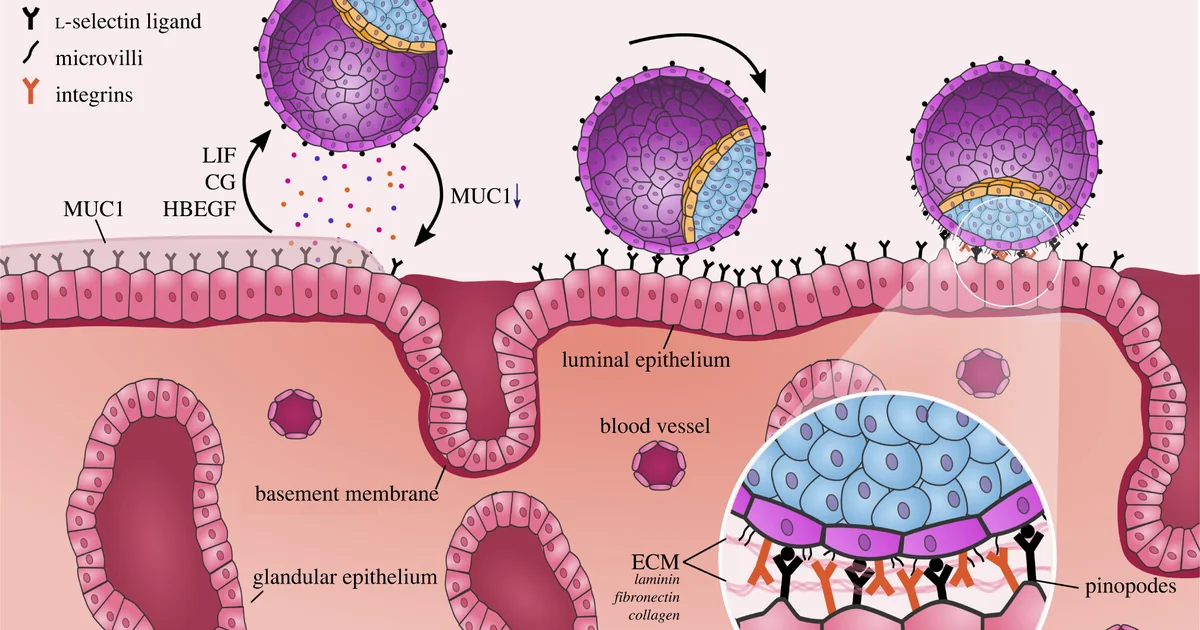
Implantation is the process by which a developing embryo attaches to and embeds itself in the endometrium (the uterine lining) — the single most decisive biological event after transfer. It unfolds in three stages:
1. Apposition (days 1–2 after transfer). The hatched blastocyst positions itself against the endometrial surface, which estrogen and progesterone have prepared to a receptive state during the IVF cycle.
2. Adhesion (days 2–4). The embryo’s outer cell layer (trophectoderm) forms molecular bonds with endometrial cells, assisted by specialized proteins such as integrins and selectins.
3. Invasion (days 4–6, continuing through day 10). Trophectoderm cells penetrate the lining, anchor the embryo, and remodel maternal blood vessels to establish the early blood supply. hCG (human chorionic gonadotropin) secretion begins here and gradually rises to levels detectable in blood and urine.
The window of implantation (WOI) — when the endometrium is most receptive — typically spans cycle days 20–24 (7–11 days after the LH surge) in natural cycles. In programmed (“artificial”) IVF cycles, doctors prepare the lining with exogenous estrogen and progesterone to approximate that window. Research suggests the WOI is displaced — too early or too late — in roughly 10–20% of women, one reason some patients with apparently normal embryos still experience repeated implantation failure.
IVF Implantation Timeline: From Transfer to Positive Test
For a Day 5 blastocyst transfer, the body moves through implantation day by day. If you want the full picture of the IVF cycle, see our step-by-step IVF process guide.
| Days After Transfer | What Happens |
|---|---|
| Day 1–2 | The blastocyst hatches from its shell and begins apposition to the uterine lining |
| Day 2–4 | Adhesion stage: outer embryo cells bond to the endometrium (within the implantation window) |
| Day 4–6 | Invasion stage: trophoblast cells penetrate the lining; hCG secretion begins |
| Day 7–10 | Implantation bleeding, if it occurs, usually appears here; hCG rises quickly |
| Day 9–10 | Blood hCG becomes detectable on sensitive assays (>5 mIU/mL) |
| Day 10–12 | Home pregnancy tests may show a positive (sensitivity 25 mIU/mL) |
| Day 12–14 | Clinic blood β-hCG test — the gold standard for confirming pregnancy |
The key point: implantation is a gradual 4–6 day process, not a single moment. Having no symptoms during this window does not mean implantation failed.
Is Implantation Bleeding Normal — and When Is It a Warning?
Implantation bleeding is among the most discussed and most misunderstood early-pregnancy signs.
How common is it? About 15–25% of pregnant women experience some bleeding in early pregnancy, but a large share of it does not come from implantation itself. Many women with successful IVF pregnancies notice no implantation bleeding at all — no bleeding does not mean no implantation, and bleeding is not proof of implantation either.
What implantation bleeding looks like:
- Color: light pink or brown — not bright red
- Amount: very small — spotting or light streaks, not enough to need a pad
- Timing: usually 5–10 days after transfer, most often around days 7–10
- Duration: a few hours to 2–3 days at most
Important distinction: progesterone medications used in IVF (vaginal suppositories, injections, or oral forms) can also cause light spotting or brown discharge, which does not necessarily signal implantation. Conversely, no spotting does not mean implantation failed.
Contact your clinic if you have:
- Heavy bleeding (soaking a pad within one hour)
- Bright red blood, especially with clots
- Bleeding with severe abdominal pain
- Bleeding with fever
The practical difference from a period: implantation bleeding is lighter, shorter, and pink-brown, while a period grows heavier over time and turns bright red.
When Does Implantation Happen After Transfer?
For a Day 5 blastocyst transfer, implantation typically follows this schedule:
- Begins: about 1–2 days after transfer (day 6–7 after fertilization)
- Completes: about 4–6 days after transfer (day 9–11 after fertilization)
- hCG detectable: about 9–10 days after transfer on a sensitive blood test (see the timeline above)
For a Day 3 cleavage-stage transfer, the timeline shifts slightly:
- Begins: about 3–4 days after transfer (day 6–7 after fertilization)
- hCG detectable: about 11–12 days after transfer
Implantation timing affects outcomes. Multiple studies have found that markedly delayed completion — still unfinished around day 6 after a Day 5 blastocyst transfer — is associated with a higher risk of early pregnancy loss. That is why synchronizing embryo development with endometrial receptivity, and choosing transfer timing carefully, matters for success.
How Soon After Implantation Can I Take a Pregnancy Test?
The stretch between transfer and testing is famously called the “two-week wait” (TWW), but the right testing day depends on the method.
| Test Method | When to Test | Reliability |
|---|---|---|
| Home pregnancy test (urine) | Day 10–12 after transfer | Moderate (false-negative risk) |
| Blood β-hCG (clinic draw) | Day 12–14 after transfer | Gold standard |
| High-sensitivity early test | Day 9–10 after transfer | Moderate (higher false-negative risk) |
Note: some brands advertise “detectable from day 6 after transfer.” That refers to greater analytical sensitivity than standard strips — not a guarantee every woman will test positive that early. An early negative proves nothing; rely on the day 12–14 blood test.
Why wait until day 12–14 for the blood draw? hCG rises exponentially after implantation, roughly doubling every 48 hours in early pregnancy. Testing too early invites false negatives and needless anxiety, and the single blood hCG test at day 12–14 is the most reliable confirmation.
Bloating, breast tenderness, fatigue, and mood swings during the wait are mostly normal effects of progesterone medication — they are neither proof of pregnancy nor evidence of failure. Only heavy bleeding, severe pain, or fever warrants a call to the clinic (see the warning signs above).
Reading your β-hCG result — β-hCG (beta human chorionic gonadotropin) is the form of hCG measured in pregnancy blood tests, and reference ranges vary slightly between laboratories:
- <5 mIU/mL: not pregnant
- 5–25 mIU/mL: borderline — repeat the test after 48 hours
- >25 mIU/mL: pregnancy confirmed
- >100 mIU/mL: usually a sign the pregnancy is progressing well, though a single value cannot predict the outcome — what matters is the doubling 48–72 hours later
About biochemical pregnancy: if blood hCG turns positive initially but then rises slowly or falls, and no gestational sac ever appears on ultrasound, this is a biochemical pregnancy. It is an early pregnancy loss, most often caused by natural factors such as embryonic chromosomal abnormalities, and one biochemical pregnancy says nothing about the next transfer’s outcome.
What Factors Affect Implantation Success?
Many things influence whether an embryo implants, and knowing them helps patients and doctors decide what is actually worth changing.
Embryo factors:
- Chromosomal status (euploidy): euploid embryos implant significantly more often than aneuploid ones — the single strongest embryo-level predictor.
- Morphology grade: a grade A blastocyst implants at a higher rate than a grade C one, though even C-grade embryos can produce healthy pregnancies.
- Developmental speed: blastocysts reaching full expansion by day 5 have more implantation potential than slower developers.
Uterine factors:
- Endometrial receptivity: the lining must be at the right stage to accept an embryo; chronic endometritis, polyps, fibroids (especially submucosal), and intrauterine adhesions all lower receptivity.
- Endometrial thickness: thresholds are debated, but most clinics consider 7–14 mm ideal; thickness alone is a weak predictor, though linings under 6 mm may reduce success.
- Cavity abnormalities: a T-shaped or septate uterus and similar structural issues can affect implantation.
Maternal factors:
- Age: the strongest predictor of embryo chromosomal normality, because the share of euploid embryos declines with age.
- Endocrine factors: thyroid dysfunction (over- or hypothyroidism), elevated prolactin, and insulin resistance can all impair endometrial receptivity.
- Lifestyle: smoking significantly reduces implantation rates; high BMI, heavy alcohol use, and unmanaged stress may also hurt.
Technical factors:
- Pooled evidence from randomized controlled trials and systematic reviews shows ultrasound-guided embryo transfer outperforms “clinical feel” transfer.
- Soft catheters produce better outcomes than rigid ones, supported by systematic reviews.
- The experience of the physician performing the transfer also matters.
What Are Implantation Success Rates by Age?
Implantation rates per transfer fall steeply with age, mainly because age drives embryo chromosomal normality. The figures below are from CDC and SART national data for blastocyst transfers without PGT-A testing:
| Age Group | Implantation Rate per Transfer (Approx.) |
|---|---|
| Under 35 | 50–55% |
| 35–37 | 40–45% |
| 38–40 | 30–35% |
| 41–42 | 15–20% |
| Over 42 | 5–10% |
With PGT-A: transferring an embryo confirmed euploid lifts implantation rates to roughly 50–65% at every age, although age-related uterine factors and other variables still apply.
With frozen embryo transfer (FET): some studies find FET implantation rates slightly higher than fresh transfers, especially in high responders — attributed to the freeze-all approach avoiding the potential impact of stimulation drugs on endometrial receptivity.
IVF Implantation Myths vs Facts
During the wait, countless “implantation hacks” circulate online, and most have no scientific backing. The four most common claims:
| Myth | Fact |
|---|---|
| You must stay on strict bed rest after transfer | Current research does not support bed rest improving implantation; normal light activity is safe, and prolonged rest actually raises clot risk and anxiety |
| Specific foods (pineapple, yams, soy milk) aid implantation | No scientific evidence that any single food lifts implantation rates — a balanced diet is enough |
| More symptoms mean more likely pregnancy | Progesterone side effects mimic early pregnancy symptoms; how many you feel has no reliable link to the outcome |
| A negative test on day 8 means failure | Blood hCG may still be below urine-test sensitivity at that point — confirm with the day 12–14 blood test |
Rather than hunting for “implantation signs” all day, focus on taking medication on schedule and keeping a regular routine — the most evidence-supported self-care available during the two-week wait.
Recurrent Implantation Failure: What If Implantation Doesn’t Happen?
RIF means no clinical pregnancy after multiple transfers of good-quality embryos; a common working threshold is three or more consecutive failed transfers, though definitions vary between societies.
“A systematic evaluation should be performed for patients who have experienced multiple failed embryo transfers.” — ASRM Practice Committee opinion on recurrent implantation failure, Fertility and Sterility, 2026
Common causes of RIF include:
- Embryo factors: aneuploidy is the most frequent cause — even young patients do not have all chromosomally normal embryos.
- Uterine factors: chronic endometritis (found in 30–60% of RIF patients), endometrial polyps, submucosal fibroids, intrauterine adhesions
- Endometrial receptivity: a displaced window of implantation (receptive too early or too late)
- Immunological factors: debated, but some studies suggest certain immune abnormalities may affect implantation
- Thrombophilic factors: clotting disorders that may compromise blood supply to the developing embryo
A comprehensive RIF workup typically includes hysteroscopy, endometrial biopsy to rule out chronic endometritis, assessment of uterine cavity shape, and a review of embryo quality and genetic testing strategy. To understand how embryos develop before transfer, see our embryo development guide.
FAQ
Q: Can implantation happen with no symptoms at all?
Yes — and it is common. Implantation itself produces no detectable “signal”: sensations like mild twinges or light spotting also occur in cycles that never implant.
The reliable approach is to keep taking medication as prescribed and wait for the day 12–14 blood test rather than auditing symptoms daily.
Q: Does implantation bleeding mean I’m pregnant?
Not necessarily. Spotting around 5–10 days after transfer can come from implantation, from progesterone medications, or from the transfer procedure itself, and only the day 12–14 blood hCG test confirms pregnancy.
Heavy bleeding, severe pain, or fever are the signs that warrant calling the clinic.
Q: Can implantation still happen after day 6 post-transfer?
Yes, in a minority of cycles. After a Day 5 blastocyst transfer, implantation usually starts on days 1–2 and completes by days 4–6 (about day 9–11 after fertilization), and successful pregnancies do occur with later completion.
Note, though, that markedly delayed completion is linked to a higher risk of early pregnancy loss — which is why clinics test at a fixed day instead of daily.
Q: Do abdominal twinges mean implantation is happening?
Mild twinges can be a normal sensation during the 4–6 day implantation process after transfer, but progesterone medications cause them too. Severe or worsening pain should always be evaluated by your doctor.
Q: What percentage of transferred embryos actually implant?
On average 30–50% of transferred blastocysts implant, depending on age, embryo quality, and uterine factors. With a PGT-A-confirmed euploid embryo, the rate rises to about 50–65%.
Q: What is the window of implantation?
The WOI is the roughly 4–5 day period when the endometrium is most receptive, falling around cycle days 20–24 in natural cycles. Some centers use endometrial receptivity testing (ERA being one example) to check whether an individual’s window is displaced, but evidence that such tests improve pregnancy outcomes remains disputed — discuss it thoroughly with your doctor first.
Q: What can I do after transfer to support implantation?
You cannot control implantation directly, but you can build a healthy environment: stop smoking and alcohol, take medications exactly as prescribed, keep activity gentle (avoid strenuous exercise), and manage stress — the day 12–14 blood test, not symptom-hunting, is what tells you the outcome. Our embryo transfer aftercare guide covers diet, medication, and activity in full.
Q: When should I see a specialist about recurrent implantation failure?
After 3 or more failed transfers of good-quality embryos, ASRM recommends a systematic RIF evaluation, typically performed by a reproductive endocrinologist covering uterine, endocrine, and embryology factors.
Planning Your Implantation Journey
The implantation phase is one of the most emotionally demanding parts of IVF. Practical guidance by stage:
Before transfer: make sure the endometrial preparation protocol is optimized for your case, and if you have a history of failed transfers, discuss whether uterine evaluation (hysteroscopy or ERA) is needed.
After transfer: follow the medication schedule exactly — progesterone support is critical for maintaining the lining through the implantation window. A symptom diary is fine; over-interpreting every sensation is not.
During the two-week wait: distract yourself with normal activity within reason, skip early testing (it adds anxiety without reliable answers), and join a support group or speak with a counselor if the wait becomes overwhelming.
If implantation fails: this is not a personal failure — most failed transfers stem from embryonic chromosomal abnormalities, a natural biological process. Review with your doctor what can be optimized for the next cycle.
Compare clinics and protocols on ProIVF’s hospital directory, or contact our team for help finding a program that fits your situation.
This article was written by the ProIVF Medical Editorial Team and reviewed by the ProIVF Medical Advisory Board. The editorial process is based on the latest publicly available data from ASRM, the CDC, SART, and peer-reviewed medical literature, and aims to provide objective, accurate health information.
Last updated: September 3, 2026.
Medical disclaimer: This article is for informational purposes only and does not constitute medical advice. Individual results vary. Consult a qualified reproductive endocrinologist for personalized guidance.