'%20d='m0%200%2016%2011h61%2061%2061%2061%2060L47%2037h61%2061%2060%2061L16%2063h61%2061%2061%2061%2060L47%2089h61%2061%2060%2061L16%20115h61%2061%2061%2061%2060L47%20141h61%2061%2060%2061L16%20166h61%2061%2061%2061%2060L47%20192h61%2061%2060%2061L16%20218h61%2061%2061%2061%2060z'/%3e%3c/svg%3e)
About Cleveland Clinic Fertility Center
Cleveland Clinic Fertility Center is the reproductive endocrinology and infertility practice of Cleveland Clinic in northeast Ohio. Its base is the Beachwood Family Health and Surgery Center, at 26900 Cedar Road, and the group also sees patients at the Cleveland Clinic main campus and at family health centers in Avon, Bath, Solon, Strongsville and Twinsburg. The 1921 date carried on this page is Cleveland Clinic’s founding year as a health system, not the ART program’s; the center does not publish a founding date for the fertility practice itself.
SART’s 2023 final clinic report records 1,562 treatment cycles under this clinic’s registration (SART clinic ID 2271), against a national per-clinic average near 932. Services run the full range — monitored ovulation induction and IUI, IVF with ICSI, preimplantation genetic testing, donor eggs, egg, embryo and sperm freezing, and reproductive surgery — with male-factor evaluation and surgical sperm retrieval handled inside the same system by the Glickman Urological & Kidney Institute.
What the outcome numbers actually say. SART’s 2023 final report states this clinic’s headline rates as live births per intended egg retrieval, counting all embryo transfers from that retrieval — not per cycle start, and not per transfer. Under age 35 the center reported 57.7% (national average that year: 53.2%). At 35-37 it reported 35.1% against a 39.9% national figure, and at 38-40, 24.8% against 26.2% — both slightly below the country. The frozen-thaw rows sit on a different denominator again (live births per thawed transfer, second transfers only): 56.1% under 35, 52.6% at 35-37 (10 of 19), 57.1% at 38-40 (8 of 14), and 0 of 1 above 42. On the all-transfer basis the over-42 group was 0 of 16. Ask for the SART clinic report itself before you compare two clinics: the denominators differ, and a per-transfer number is not a per-retrieval number. Cleveland Clinic’s own success-rate page currently shows “coming soon” rather than clinic-reported outcomes, so SART and CDC reporting is the only independent source here.
The care model is worth understanding before you book. Stimulated cycles at this center are monitored by advanced practice providers — four nurse practitioners and a physician assistant work alongside the reproductive endocrinologists on monitoring ultrasounds, bloodwork and injection teaching. That staffing is also what lets the center arrange follicle-tracking appointments for patients who do not live in the Cleveland area, at nearer Cleveland Clinic sites or through monitoring set up for patients in and outside Ohio, instead of requiring a drive to Beachwood during stimulation. International patients route through the health system’s Global Patient Services office.
One caution on reviews: the Google rating displayed on this page rests on six ratings. That is too small a sample to rank clinics, which is why the SART cycle data above carry the weight here.
Accreditations & Awards
- CAP-accredited embryology laboratory with CLIA certification — the two accreditations that govern how your eggs, sperm and embryos are handled and tested
- SART member clinic, reporting every cycle to SART and the CDC under clinic ID 2271, which is why the age-band results above are independently checkable
- Laboratory direction by Nina Desai, PhD, HCLD, director of the center’s IVF and andrology laboratories
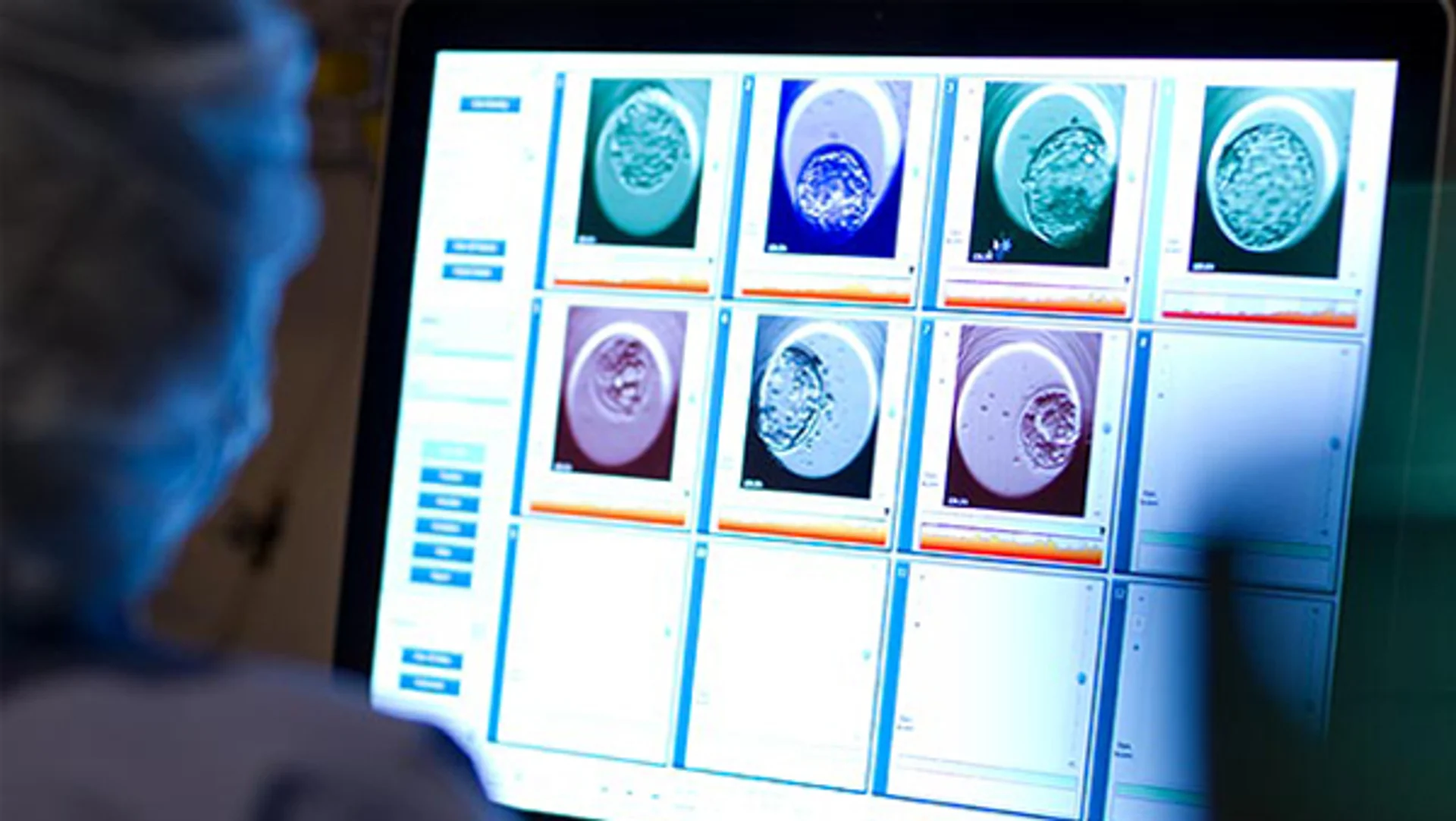
- Early EmbryoScope adopter: the center was among the first ART programs to use time-lapse incubator imaging for embryo culture, which records development instead of sampling it at fixed intervals
- Regional first in preimplantation genetic diagnosis: PGD was introduced here in 2002, and the program now screens blastocysts by trophectoderm biopsy with Genesis-24 chromosome testing
- Program-wide assisted hatching: the IVF lab thins the embryo shell before transfer on all embryos, as a standing laboratory practice rather than a per-request option
- Robotic and laparoscopic surgery: a surgeon on this staff is credited by the center with one of the world’s first fully robotic gynecologic operations
- Volume: 1,562 ART cycles in the 2023 SART final report under this registration
Cleveland Clinic’s national hospital rankings are a measure of the health system, not an accreditation of this fertility center. The lab accreditations, SART reporting and cycle counts above are the clinic-level facts.
Why Choose Cleveland Clinic Fertility Center
- Cycle volume most Ohio patients cannot get locally: 1,562 cycles in the 2023 SART report, versus 932 at the average US clinic. In assisted reproduction, lab and monitoring teams improve with repetition.
- The lab, the embryologists and the genetic testing sit with the clinic: an in-house CAP-accredited, CLIA-certified laboratory, time-lapse culture, blastocyst biopsy for PGT-A and PGT-M, vitrified embryo freezing at day 3 or day 5-6, and single-sperm cryopreservation.
- Nurse practitioners and a physician assistant on the monitoring team: more appointment slots during stimulation, and the same familiar clinician reading your follicle scans and estrogen levels across a cycle.
- Surgical reproductive medicine, not just embryo transfer: laparoscopic and robotic surgery for endometriosis, fibroids, pelvic adhesions, tubal blockage and uterine anomalies, plus tubal reversal — for patients whose infertility has a correctable anatomical cause.
- Male factor handled in the same system: andrology laboratory services, microsurgical vasectomy reversal, vasoepididymostomy, varicocele repair and testicular or epididymal sperm retrieval, through the Glickman Urological & Kidney Institute.
- Preservation on an oncology clock: cancer patients facing chemotherapy or radiation can be offered same-day or next-day appointments for egg, embryo or sperm freezing.
- A donor egg program with FDA-compliant screening, run with My Egg Bank.
- Language access at Beachwood: at least one clinician on the fertility team sees patients in Ukrainian, Russian and Polish in addition to English.
IVF & Fertility Services
- In Vitro Fertilization (IVF): individualized ovarian stimulation, follicular monitoring, egg retrieval, insemination or ICSI, culture through day 5-6, and embryo transfer
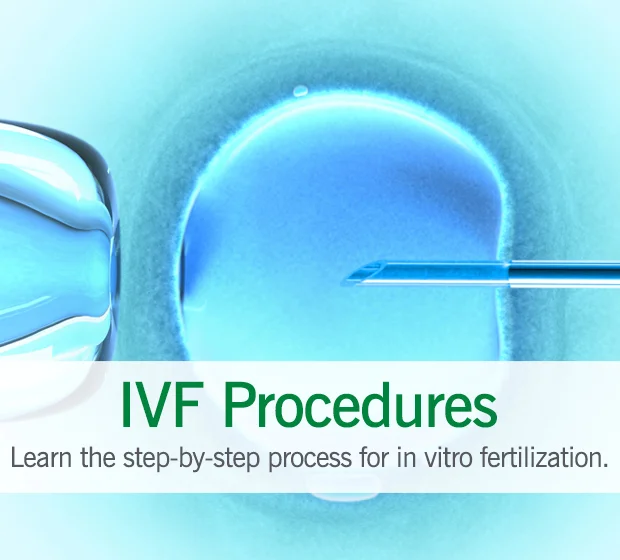
- ICSI (Intracytoplasmic Sperm Injection): used for low sperm count, impaired semen parameters or prior fertilization failure
- Assisted hatching: performed routinely on all embryos before transfer
- PGT-A: trophectoderm biopsy at the blastocyst stage with Genesis-24 chromosome screening for aneuploidy
- PGT-M: preimplantation testing for known single-gene conditions, offered at the center since 2002
- Embryo freezing: vitrification at the day-3 (6-8 cell) or blastocyst stage, with banked embryos available for frozen transfer cycles
- Egg freezing: oocyte cryopreservation, no longer classified by the center as experimental
- Ovarian tissue cryopreservation: offered alongside egg and embryo freezing, and still classified by the center as investigational
- Sperm freezing and single-sperm cryopreservation, including testicular tissue freezing
- IUI and monitored ovulation induction: the center’s andrology laboratory performs close to 1,200 inseminations and about 1,000 semen analyses a year
- Advanced semen testing: Kruger strict morphology, sperm viability testing, hypo-osmotic swelling, antisperm antibody and leukocytospermia assays, plus sperm preparation for ICSI
- Male infertility surgery: microsurgical vasectomy reversal, vasoepididymostomy for epididymal obstruction, microsurgical varicocelectomy, and testicular or epididymal sperm retrieval for IVF with ICSI
- Donor egg cycles: screened donors through the center’s My Egg Bank partnership
- Reproductive surgery: laparoscopic and robotic treatment of endometriosis, fibroid removal, adhesiolysis, tubal reversal, opening of blocked tubes, and repair of uterine anomalies
- Fertility assessment: hormone panels including AMH, transvaginal ultrasound, uterine cavity imaging and semen analysis
- Telehealth: follow-up visits and result review through the MyChart patient portal
Fees & Packages
There is no published price list. The center does not post dollar figures for a cycle, medications, PGT or frozen transfer, so none are quoted on this page — request a written estimate for your own plan before medications start.
What the center’s own materials do state:
- A patient financial advocate reviews insurance benefits and self-pay options with you, since fertility testing and treatment may fall outside your coverage.
- The center states that service fees are included in a single consolidated quote covering the plan of care.
- Financing runs through ARC Fertility (Advanced Reproductive Care), which offers cycle package loans, multi-cycle money-back guarantee programs and a fertility pharmacy program.
- The center has employer agreements that discount fertility benefits for employees of participating companies — worth checking with your HR benefits contact before you assume a plan excludes treatment.
Patient Journey
- Book a new-patient appointment with a reproductive endocrinologist or one of the center’s nurse practitioners or physician assistant. Prior records, labs and operative notes should be moving to the clinic before the visit; international patients are assigned a Global Patient Services coordinator.
- Evaluation: hormone and ovarian reserve testing, transvaginal ultrasound, uterine cavity assessment and semen analysis, with the plan discussed on results. The center notes that most patients who come in for assessment can be treated by simpler methods than IVF.
- Treatment plan and cost review: the physician sets the protocol while the patient financial advocate verifies coverage and lays out self-pay options, ARC Fertility financing and money-back programs.
- Stimulation and monitoring: injectable medications with follicle-tracking ultrasounds and bloodwork, usually read by the advanced practice providers on the team. Patients living outside the Cleveland area, in Ohio or elsewhere, can have monitoring coordinated at nearer sites.
- Egg retrieval: a scheduled procedure once follicles are mature, followed by insemination or ICSI in the on-site laboratory and culture through day 5-6, with PGT where elected.
- Transfer: fresh transfer, or freezing embryos for a later frozen transfer cycle. Assisted hatching is performed on all embryos.
- Pregnancy test and follow-up: a blood beta-hCG test roughly 10-14 days after transfer, continuing monitoring until a fetal heartbeat is confirmed, then referral to obstetric care. MyChart carries results, messaging and follow-up visits between appointments.
Local Legal Framework
Donor gametes. Ohio Revised Code Chapter 2108 governs the donation of sperm, eggs and embryos. Donation is lawful and performed here, and it runs on a written agreement in which the donor relinquishes parental rights. Intended parents should still have parentage for a donor-conceived child documented under Ohio law rather than assuming the birth certificate follows the genetics.
Surrogacy. Ohio Revised Code §3111.97 deals with assisted reproduction and parentage, and Ohio statute prohibits commercial surrogacy agreements; traditional surrogacy may be permitted under defined conditions. There is no comprehensive Ohio surrogacy statute, so gestational carrier arrangements are worked out case by case, usually with a court order establishing parentage. Retain an Ohio reproductive-law attorney before a cycle that involves a carrier.
Genetic testing. PGT-A and PGT-M face no Ohio-specific restriction beyond standard informed consent and CLIA laboratory standards, which is the framework the center’s own laboratory works under.
LGBTQ+ family building. Ohio’s statutory protection for LGBTQ+ parents and patients is limited, which is a legal issue rather than a clinical one: the center will treat same-sex couples and single patients, but parentage for a non-genetic partner has to be secured through Ohio proceedings. Get that advice before the first appointment, not after birth.
Embryos. Ohio has not defined the legal status of stored embryos. Disposition after treatment, divorce, separation or death is controlled by the consent agreement you sign when the embryos are created. Read that document carefully and update it when your circumstances change.
Coverage. Nothing in the center’s published materials describes a state-level insurance guarantee for IVF. Benefits verification through the center’s financial advocacy office is where coverage gets settled in practice.
Location
- Address: 26900 Cedar Rd, Suite 220, Beachwood, OH 44122
- Phone: (216) 444-6601