'%3e%3cpath%20fill='red'%20d='M0%200h720v480H0z'/%3e%3cpath%20fill='%23000095'%20d='M0%200h360v240H0z'/%3e%3cg%20fill='%23fff'%3e%3cpath%20d='m154%20126.9-2.5%209.6%209.4%202.6-1.8-7.1zm46.9%205.1-1.8%207.1%209.4-2.6-2.5-9.6zm-41.8-24-5.1%205.1%201.9%206.9z'/%3e%3cpath%20d='m155.9%20120-1.9%206.9%205.1%205.1z'/%3e%3cpath%20d='m154%20113.1-6.9%206.9%206.9%206.9%201.9-6.9zm14%2027.8%205.1%205.1%206.9-1.9zm18.9%205.1%209.6%202.5%202.6-9.4-7.1%201.8z'/%3e%3cpath%20d='m192%20140.9%207.1-1.8%201.8-7.1zm-31.1-1.8%202.6%209.4%209.6-2.5-5.1-5.1zm19.1%205%206.9%201.9%205.1-5.1z'/%3e%3cpath%20d='m173.1%20146%206.9%206.9%206.9-6.9-6.9-1.9zm-12.2-45.1-9.4%202.6%202.5%209.6%205.1-5.1zm-1.8%2031.1%201.8%207.1%207.1%201.8zm45-12%201.9-6.9-5.1-5.1z'/%3e%3cpath%20d='m168%2099.1-7.1%201.8-1.8%207.1zm32.9%208.9-1.8-7.1-7.1-1.8zm5.1%2018.9%206.9-6.9-6.9-6.9-1.9%206.9z'/%3e%3cpath%20d='m200.9%20108-8.9-8.9-12-3.2-12%203.2-8.9%208.9-3.2%2012%203.2%2012%208.9%208.9%2012%203.2%2012-3.2%208.9-8.9%203.2-12z'/%3e%3cpath%20d='m200.9%20132%205.1-5.1-1.9-6.9zm5.1-18.9%202.5-9.6-9.4-2.6%201.8%207.1zm-6.9-12.2-2.6-9.4-9.6%202.5%205.1%205.1zm-26-6.9-9.6-2.5-2.6%209.4%207.1-1.8zm6.9%201.9-6.9-1.9-5.1%205.1z'/%3e%3cpath%20d='m186.9%2094-6.9-6.9-6.9%206.9%206.9%201.9z'/%3e%3cpath%20d='m192%2099.1-5.1-5.1-6.9%201.9zM173.1%20146l-9.6%202.5%204.5%2016.6%2012-12.2zm-5.1%2019.1%2012%2044.9%2012-44.9-12-12.2zm-7.1-26-9.4-2.6-4.4%2016.4%2016.4-4.4z'/%3e%3cpath%20d='m147.1%20152.9-12%2045.1%2032.9-32.9-4.5-16.6zm-12-20.9L102%20165.1l45.1-12.2%204.4-16.4z'/%3e%3cpath%20d='m154%20126.9-6.9-6.9-12%2012%2016.4%204.5zm0-13.8-2.5-9.6-16.4%204.5%2012%2012z'/%3e%3cpath%20d='M135.1%20108%2090%20120l45.1%2012%2012-12zm90%2024-16.6%204.5%204.4%2016.4%2045.1%2012.2z'/%3e%3cpath%20d='m199.1%20139.1-2.6%209.4%2016.4%204.4-4.4-16.4zm-12.2%206.9-6.9%206.9%2012%2012.2%204.5-16.6zm19.1-19.1%202.5%209.6%2016.6-4.5-12.2-12z'/%3e%3cpath%20d='m192%20165.1%2033.1%2032.9-12.2-45.1-16.4-4.4zm7.1-64.2%209.4%202.6%204.4-16.4-16.4%204.4z'/%3e%3cpath%20d='M225.1%20108%20258%2075.1l-45.1%2012-4.4%2016.4zm-12.2-20.9L225.1%2042%20192%2075.1l4.5%2016.4zm12.2%2044.9%2044.9-12-44.9-12-12.2%2012z'/%3e%3cpath%20d='m206%20113.1%206.9%206.9%2012.2-12-16.6-4.5zm-38-38L135.1%2042l12%2045.1%2016.4%204.4z'/%3e%3cpath%20d='m160.9%20100.9%202.6-9.4-16.4-4.4%204.4%2016.4z'/%3e%3cpath%20d='m147.1%2087.1-45.1-12%2033.1%2032.9%2016.4-4.5zm39.8%206.9%209.6-2.5-4.5-16.4-12%2012z'/%3e%3cpath%20d='M192%2075.1%20180%2030l-12%2045.1%2012%2012z'/%3e%3cpath%20d='m173.1%2094%206.9-6.9-12-12-4.5%2016.4z'/%3e%3c/g%3e%3ccircle%20cx='180'%20cy='120'%20r='51.1'%20fill='%23000095'/%3e%3ccircle%20cx='180'%20cy='120'%20r='45.1'%20fill='%23fff'/%3e%3c/g%3e%3c/svg%3e)
About Dr. Wang Reproductive Fertility Center
Dr. Wang Reproductive Fertility Center, branded W BestIVF, is an infertility specialty clinic at the corner of Xinyi Road and Keelung Road in Taipei’s Xinyi district, close to Taipei 101. It is a clinic rather than a hospital, and the layout is deliberate: consultation rooms, blood testing, egg retrieval and embryo culture all sit in the same building, so nothing in your cycle is handled somewhere else.
Founder Dr. Chia-Wei Wang opened it in 2016. He graduated from National Taiwan University’s medical school, earned a PhD in Clinical Medicine from Taipei Medical University, and trained as a reproductive endocrinology and infertility research scholar at the NYU Fertility Center in New York, working at the embryology bench there. Before that he was Chief of the Infertility Division and Deputy Chief of the Obstetrics and Gynecology Department at Taipei Medical University Hospital, and he has close to 30 years of practice in obstetrics, gynecology and reproductive medicine (official English site).
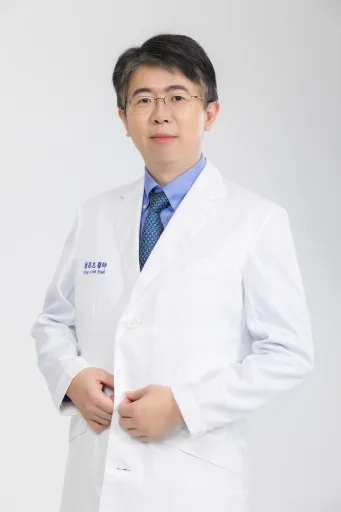
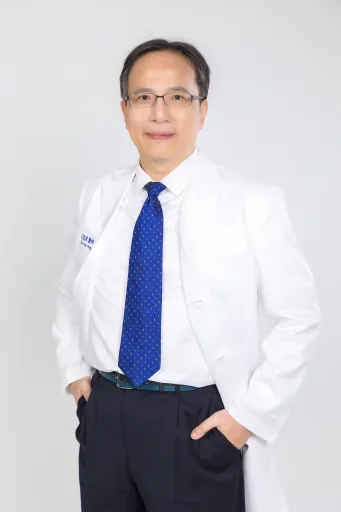
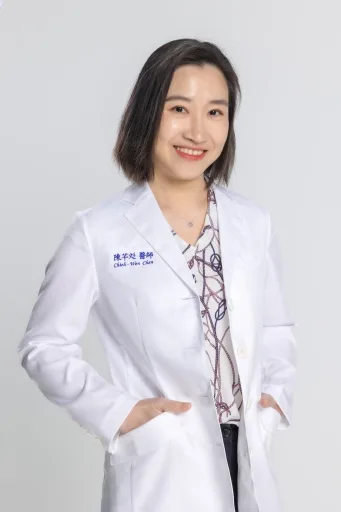
Treatment is delivered by a small, fixed team: four reproductive-medicine physicians (Dr. Wang and Vice Directors Dr. Chang-Chih Hsieh, Dr. Chien-Wen Chen and Dr. Po-Chia Lu), senior embryologists, and consultation nurses who stay with you from the first scan to the pregnancy test. Patients rate the clinic 4.8 out of 5 across 696 Google Maps reviews (as of September 2026); the clinic’s own figure is 99% patient satisfaction, and reviews consistently mention unhurried consultations and being treated like family. In 2025 the group added a second site, W BestIVF Fertility Center at No. 525 Guangfu South Road, which takes international patient and egg-freezing visits.
On results: this center publishes no age-specific success rates, so there is no per-clinic figure to compare on this page. What it cites instead is Taiwan’s national reporting — the Health Promotion Administration (HPA) assisted reproduction results, which put IVF live birth rates broadly in the 40-50% range depending on age and embryo status, among the best figures in Asia. Your own odds turn on age, ovarian reserve, sperm quality and embryo chromosome status, so the estimate your physician gives at the first consultation matters more than any single percentage.
Accreditations & Awards
Taiwan controls assisted reproduction by licensing institutions, not by accrediting them. Under the Artificial Reproduction Act, an ART clinic must hold a license from the Ministry of Health and Welfare; there is no JCI or CAP-equivalent program for a private fertility clinic, and this center displays no third-party accreditation badge on its website. Its status is a lawfully registered fertility specialty clinic, which is what to look for on any Taiwan listing.
The team’s academic record is the documented quality signal:
- Dr. Chien-Wen Chen (Vice Director) — Best Poster Award, 7th Asia-Pacific Initiative for Reproductive Medicine (ASPIRE), Kuala Lumpur 2017; Best Oral Paper Award, Taiwan Society for Reproductive Medicine (TSRM) annual meeting 2016
- Dr. Po-Chia Lu (Vice Director) — First Prize oral presentation, TSRM 2021; Prize Poster, TSRM annual meeting 2020; oral presentations at the ASRM annual meetings in 2022 and 2023
- Lab-side research — outstanding paper award, TSRM annual meeting 2022, on spindle observation in poor-responder cycles, from the center’s senior embryology staff
- Professional roles — the physicians are TSRM members; Dr. Wang sits on the TSRM board, is a director of the Taiwan Association for Minimally Invasive Gynecology (TAMIG) and secretary-general of the Asia-Pacific Association for Gynecological Endoscopy (APAGE)
- Google Maps 4.8/5 across 696 reviews (as of September 2026)
Why Choose Dr. Wang Reproductive Fertility Center
- The founder still runs the center. Dr. Wang is not a name on the door: he leads treatment at the clinic he opened in 2016, with an NTU medical degree, a Taipei Medical University PhD in Clinical Medicine, years as Chief of the Infertility Division at TMU Hospital, close to 30 years of practice, and hands-on embryology training from the NYU Fertility Center. Hard cases — advanced maternal age, repeated IVF failure, low ovarian reserve — are managed with individualized mild stimulation protocols built for exactly those patients.
- A four-physician team, rated by the patients who used it. Dr. Wang and three vice directors — Dr. Chang-Chih Hsieh, Dr. Chien-Wen Chen and Dr. Po-Chia Lu — are the reproductive medicine team; senior embryologists and consultation nurses carry the day-to-day of your cycle, from scan appointments to injection teaching. Google Maps shows 4.8 stars across 696 reviews (September 2026), and the clinic reports 99% patient satisfaction.
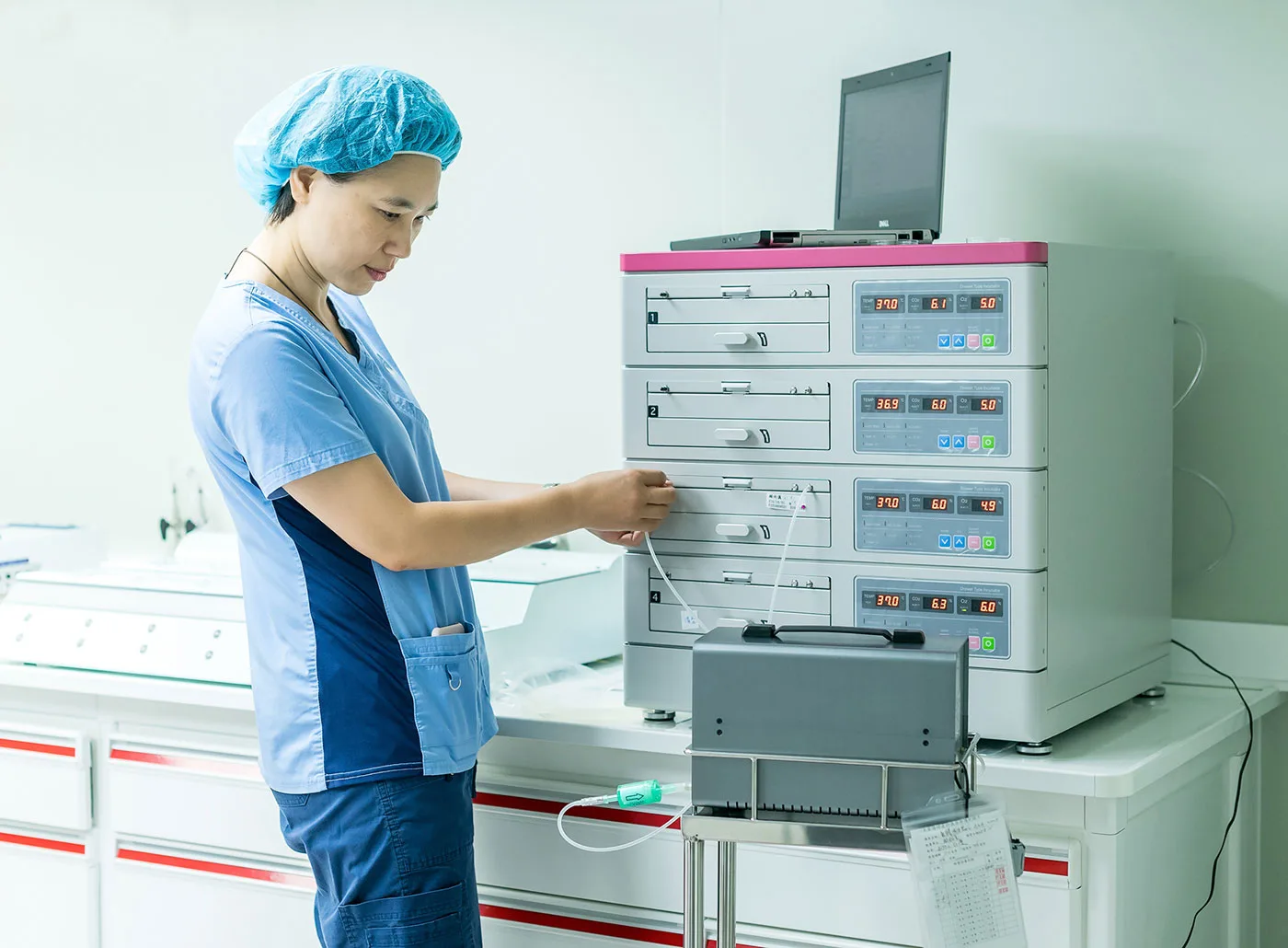
- Your embryos never leave the building. The on-site W Lab has its own sperm room, retrieval room and embryo culture lab, built to a cleanroom class above ISO 6 with air showers and dust suits at the entry. Inside it: low-oxygen flat-plate incubators (EC6S and EC9 by Astec, K-System 210), time-lapse culture that watches development continuously instead of pulling embryos out to check them, ICSI micromanipulation stations, spindle imaging, and vitrification for eggs, sperm and embryos. Blood work for E2, P4 and LH plus strict Kruger semen analysis also runs on site, with same-day reports, so a protocol can be changed inside the same cycle.
- A second campus, opened in 2025. W BestIVF Fertility Center at No. 525 Guangfu South Road adds room for more families, and it is where international patient and egg-freezing appointments are held (phone +886 2 2758 6162).
- International patients get a department, not a favor. The center has its own international medical department: remote consultation before you commit to travel, multilingual coordinators, an online intake form for non-Taiwan residents, and help lining up appointment dates, lodging and transport around your cycle. The share of overseas patients has been rising, which is why that desk exists.
- Recurrent miscarriage and failed transfers get an immune workup in house. An attending physician trained in rheumatology, allergy and clinical immunology runs an infertility immunology clinic inside the center — covering autoimmune disease, cellular immune factors including natural killer cells and helper T cells, and clotting or thrombophilia problems — and sees patients who have already tried IVIG, TNF-blocker biologics or intralipid without success. No referral out to another hospital for that part of the investigation.
IVF & Fertility Services
- IVF-ET and IVF-FET: stimulation, monitoring, retrieval and transfer, using fresh or previously frozen embryos; mild protocols for advanced maternal age and low ovarian reserve
- ICSI: one sperm injected per egg for male factor infertility — low count, poor motility, abnormal morphology — or prior fertilization failure
- Blastocyst culture and grading, supported by time-lapse imaging and spindle observation in the W Lab
- PGT-A and PGD: chromosome screening of embryos before transfer, and genetic diagnosis for known single-gene conditions
- Laser-assisted hatching: a laser thins the embryo’s outer shell to help it implant, used for repeated implantation failure and for older patients
- IUI with ovulation induction: washed, concentrated sperm placed through the cervix without anesthesia; you rest 15-30 minutes and go home
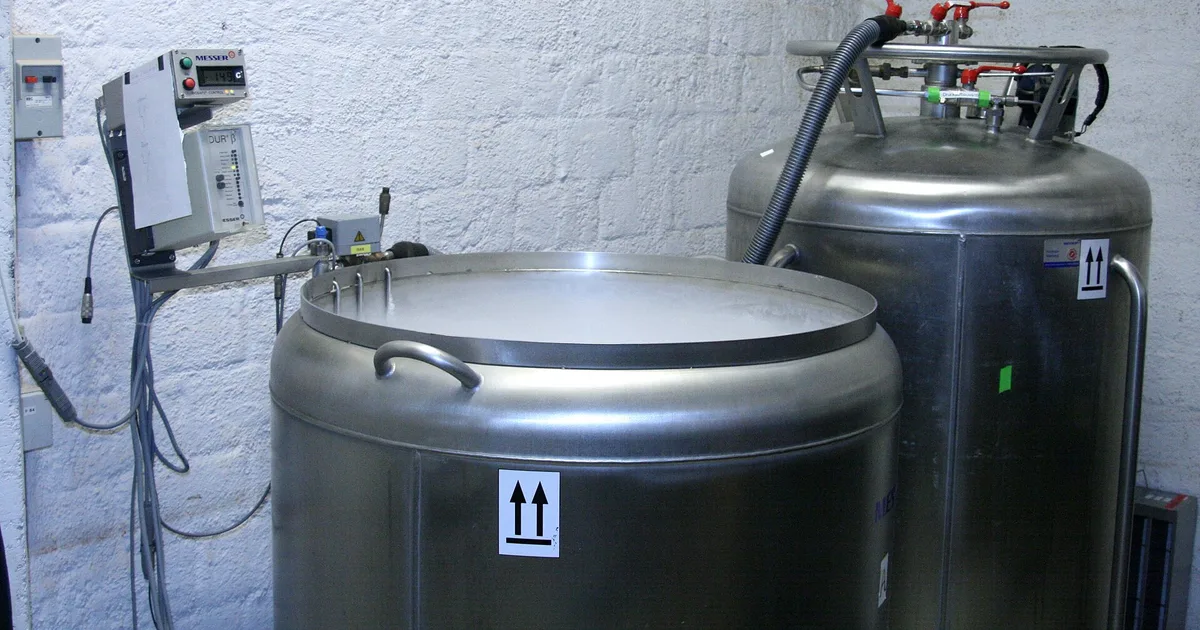
- Egg freezing: elective freezing for planned delay, or medical preservation before chemotherapy; eggs stored in liquid nitrogen at -196°C
- Sperm, egg and embryo cryopreservation by vitrification, including storage for a second child later
- Donor egg, donor sperm and donor embryo programs: legal in Taiwan, run through the licensed clinic with HPA matching review and notarized consent; counseling on the process for premature ovarian insufficiency or age-related decline
- Fertility assessment for both partners: AMH and hormone panels, ovarian reserve workup, and strict Kruger semen analysis, reported on site
- Reproductive immunology clinic: autoimmune, cellular-immune and clotting evaluation for recurrent miscarriage and repeated implantation failure, seen inside the clinic
Fees & Packages
There is no published price list. The center is a self-pay clinic: cost depends on which protocol your physician picks, how much medication you need, and whether the cycle adds PGT-A, laser hatching, freezing or a donor program — so the number has to come from the clinic before you commit. Ask its international medical department for an itemized estimate for your situation; nothing published online will tell you what your cycle costs. Note also that the clinic does not take credit cards; payment is cash or bank transfer, per its own registration rules.
Two public subsidy programs changed in 2026, and both apply to Taiwan residents rather than to visiting patients. The HPA’s in vitro fertilization subsidy relaunched as “IVF Subsidy 3.0+” with the new rules taking effect 1 September 2026, and several local governments increased their egg-freezing subsidies from mid-2026 (both announced on the clinic’s own notice board, dated 2026.08.20 and 2026.06.06). If you hold Taiwanese insurance and residency, ask which rounds you qualify for; if you are traveling in, treat the subsidy question as unresolved and budget the full self-pay figure until the clinic confirms otherwise.
Patient Journey
- Book the first visit online — first appointments go through the clinic’s own booking system, which opens the slot 90 days out at midnight each day. A staff member calls you the day before with your number and arrival time; there is a waitlist form if you need in sooner. Non-Taiwan residents fill in the international medical intake form and a coordinator contacts them.
- Initial consultation, any day of your cycle — no waiting for a specific phase. You get counseling plus the basic infertility workup, and the clinic asks you to bring every prior record and test result, including recent AMH and semen analysis reports.
- Your protocol is set with the physician — IUI, IVF-ET, frozen embryo transfer, ICSI, egg freezing, or a mild stimulation plan, chosen from your age, ovarian reserve and the cause of infertility.
- Stimulation and monitoring — you are seen on cycle days 1-3, then self-inject gonadotropins subcutaneously, usually around the abdomen, for about 7-10 days, typically one to two injections daily. Two to three monitoring visits follow, combining ultrasound with same-day E2, LH and P4 blood tests; samples drawn before 3 pm are reported within about an hour. A consultant teaches you the injections after you collect medication, and bringing your partner to the first lesson is normal.
- Trigger and retrieval — hCG trigger 34-36 hours before collection. Transvaginal ultrasound-guided retrieval takes about 10-15 minutes and is usually done under light IV anesthesia, though local or no anesthesia is possible; you rest roughly 30 minutes in the recovery room and go home the same day, with no incision. If your partner cannot attend on retrieval day (cycle days 10-14), his sample can be frozen in advance — though for IUI the clinic advises against frozen sperm because motility drops.
- Fertilization and culture in the W Lab — conventional IVF or ICSI, 2-5 days of culture, optional PGT-A and laser-assisted hatching, with surplus embryos vitrified. Your embryologist tracks development on the time-lapse system rather than moving embryos out of the incubator.
- Transfer, pregnancy test, next steps — transfer 2-5 days after retrieval, then progesterone support and a blood hCG test about two weeks later, roughly cycle days 26-28. If positive, you are seen every two weeks early on for ultrasound and blood work. If not, you discuss the next cycle with your physician on that same visit.
For a stimulated cycle in Taipei, plan on a 2-3 week stay. The international medical department sequences your appointment dates around that window and helps with lodging and local transport, and appointments and questions can also run through the clinic’s official LINE account.
Local Legal Framework
Assisted reproduction in Taiwan is governed by the Artificial Reproduction Act, administered by the Health Promotion Administration (HPA) of the Ministry of Health and Welfare. Licensed institutions perform treatment; this center is one of them, which is why its donor programs involve more government paperwork than the same programs abroad.
- Who may be treated: ART services, including egg and embryo donation, are limited by law to married couples
- Donor egg, sperm and embryo programs: legal only through licensed institutions. The HPA reviews donor-recipient matching, donors and recipients may not be related within the fourth degree, and consent must be notarized. Matching itself runs 3-6 months, HPA review about a month, and the full paperwork cycle roughly three months — so build the wait into your plan, not the reverse
- Egg freezing: permitted, with a statutory storage limit of 10 years, renewable for another 10 after paperwork; clinics must report records into the national ART database
- Surrogacy: still illegal in Taiwan, whether paid or unpaid. A surrogacy bill has been moving through the legislature for years and had not passed as of 2026, so the clinic offers no gestational carrier program
- Documents if you come from overseas: expect to provide identity and marriage documents when arranging treatment, and confirm your own country’s rules on returning with donor-conceived or frozen embryos
Location
- Address: No. 60, Sec. 2, Keelung Rd., Xinyi Dist., Taipei City 110, Taiwan — at the Xinyi Road / Keelung Road corner near Taipei 101; a 5-10 minute walk from either Taipei 101 Station or Xinyi Anhe Station on the Red Line, about 10-20 minutes from Liuzhangli Station, with several paid parking garages nearby
- Phone: +886 2 2758 6966
- Second campus: W BestIVF Fertility Center, 1/F, No. 525, Guangfu S. Rd., Xinyi Dist., Taipei City 110, Taiwan; phone +886 2 2758 6162 — where international patient and egg-freezing appointments are held