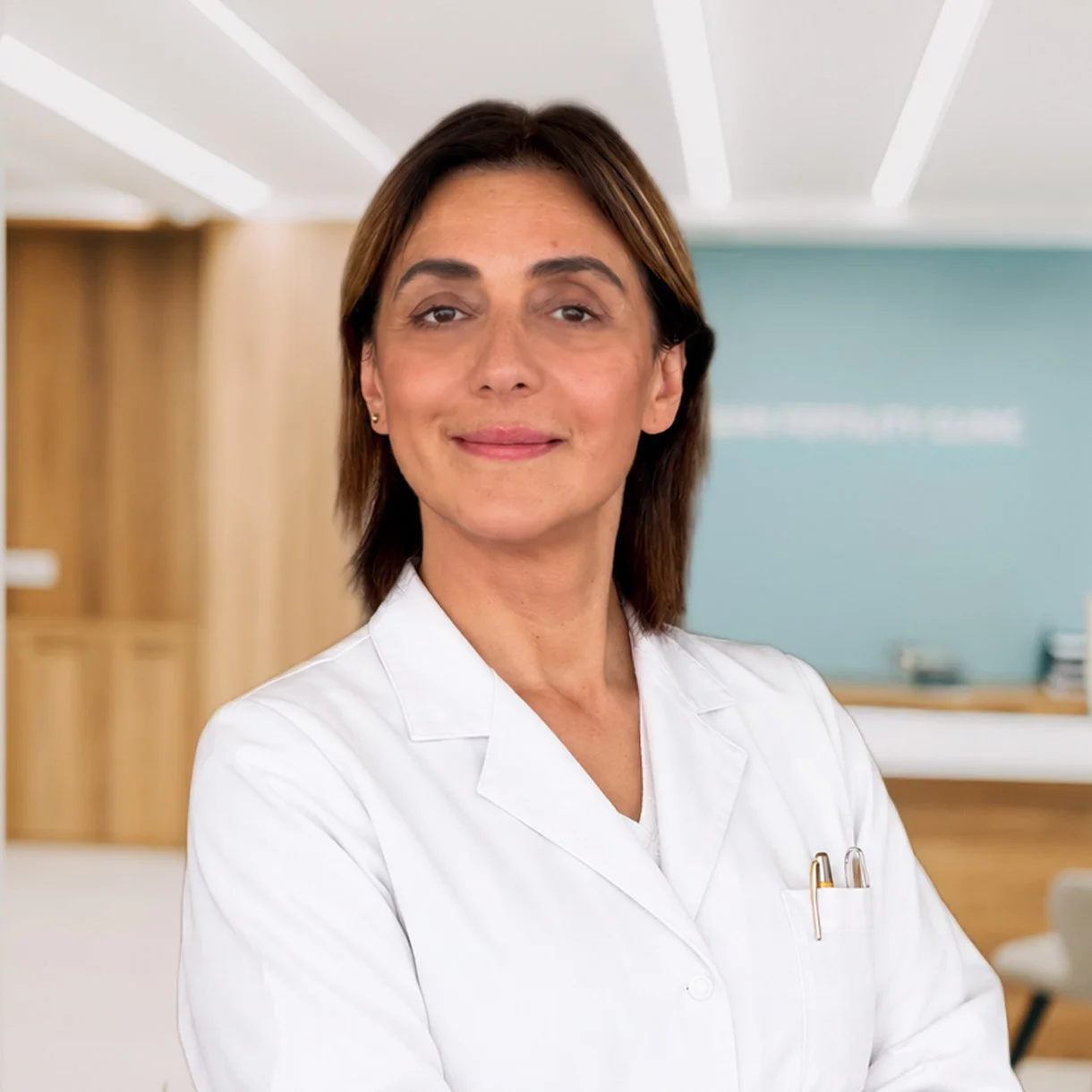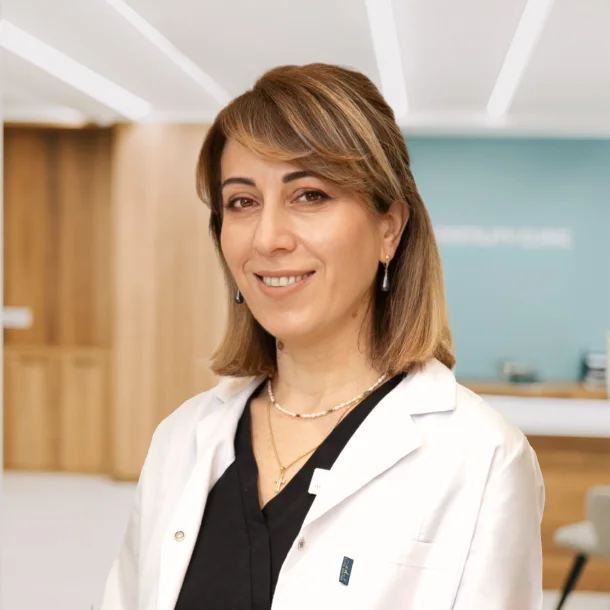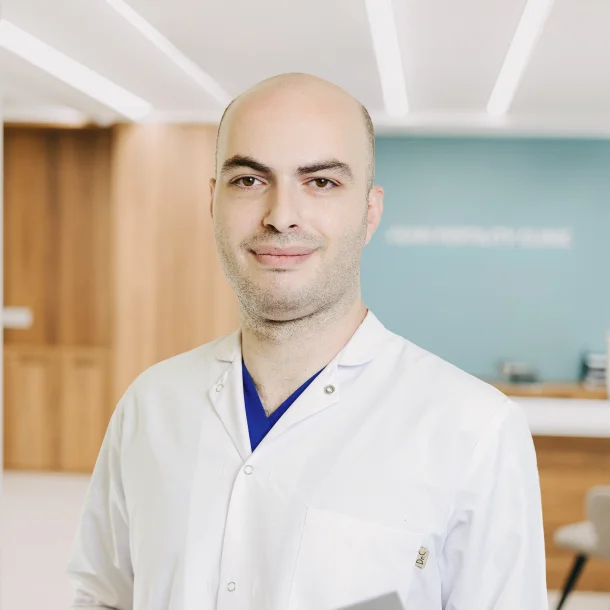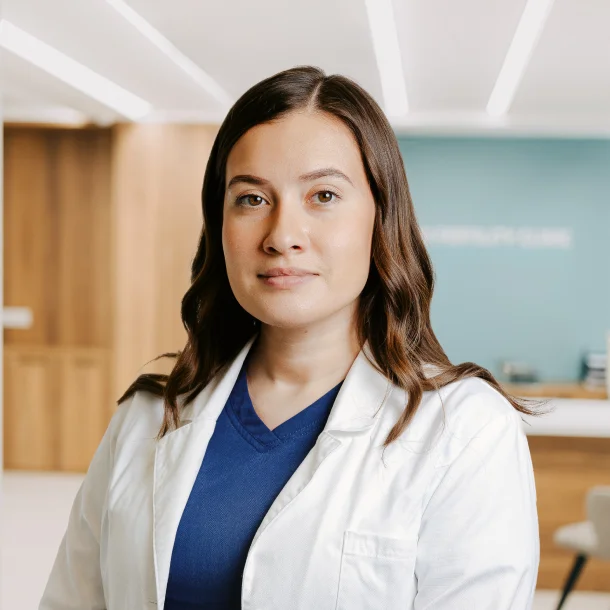
About European Fertility Clinic
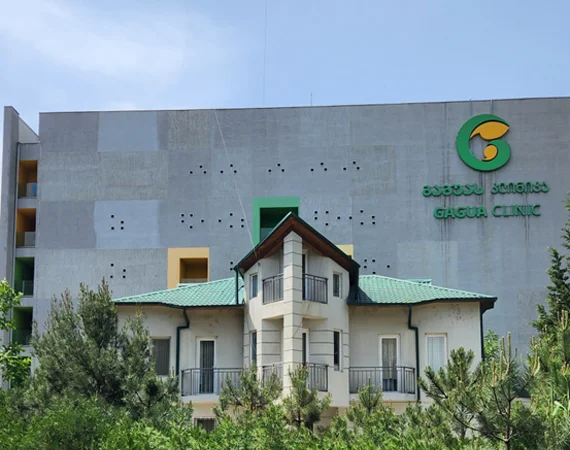
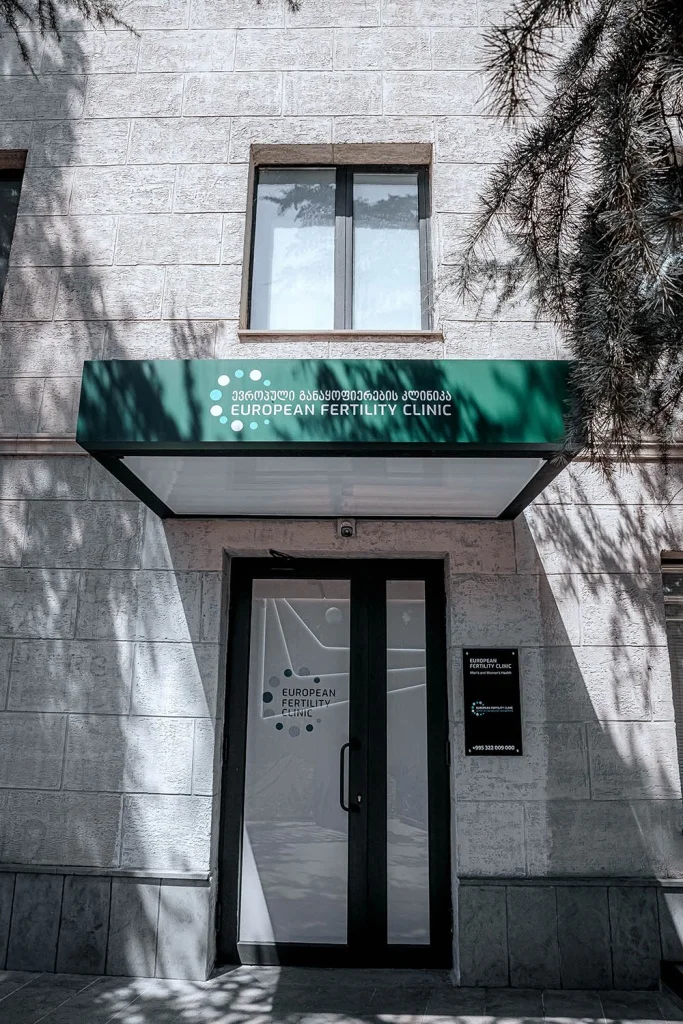
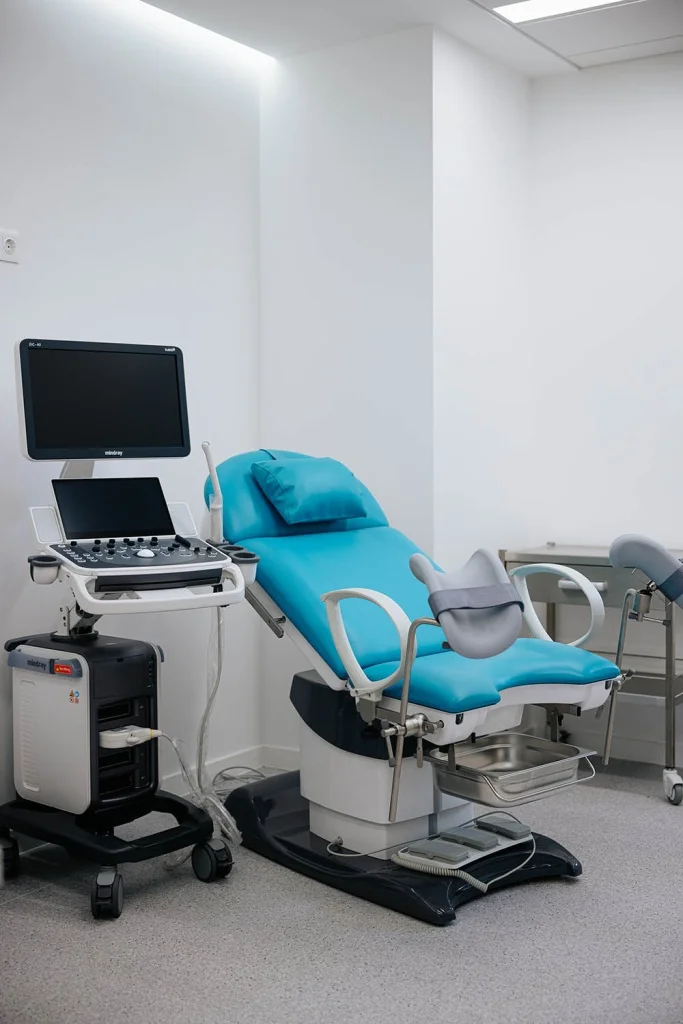
European Fertility Clinic is a reproductive medicine and genetics center in the Krtsanisi district of Tbilisi, about 18 km from the international airport. It opened on 17 July 2023 in a four-storey building of its own, and the operating entity is European Fertility Clinic LLC. The egg retrieval room sits directly next to the embryology laboratory, which shortens the time oocytes spend outside the incubator.
The clinic covers the full assisted reproduction lineup: diagnosis and treatment of primary and secondary infertility, IVF, ICSI, intrauterine insemination, donor egg, donor sperm and donor embryo programs, gestational surrogacy, preimplantation genetic testing, fertility preservation and prenatal care. Stimulation is individualized across long, short, mild, natural-cycle and frozen protocols. The clinic also uses delayed retrieval and delayed transfer to lower risk in the cycle and early pregnancy, and single embryo transfer is the standard recommendation rather than a two-embryo transfer. Age is not an automatic exclusion: IVF is normally offered up to 50, and after 48 the decision is made case by case once medical contraindications are ruled out. Patients turned away elsewhere on age, or with several failed cycles behind them, are invited to send their records for an online review before booking travel.
Georgia operates no public clinic-level outcome registry comparable to CDC/SART in the United States or HFEA in the United Kingdom, and this clinic publishes no age-banded pregnancy or live birth rates. There is therefore no verifiable per-age outcome figure for it. The general numbers the clinic itself states are not stratified and carry no denominators: roughly an 80% chance of success with ICSI, a cumulative chance of pregnancy near 90% after three attempts within a year under favorable conditions, and 15-20% with intrauterine insemination. Marketing copy also claims that more than 2,000 families became parents through the clinic and that the team has 15 years of experience; both statements predate the 2023 opening of this Tbilisi entity and appear to describe the founding team and its affiliated practice rather than this center’s own cycle history, so they are not comparable with registry-reported data.
The practice is built around international patients. A dedicated coordinator is assigned to each case, a Chinese-language service site operates alongside the English one, and the donor egg, sperm and embryo databases are maintained in-house rather than sourced from external banks.
Accreditations & Awards
- Listed as an official exhibitor at The Fertility Show LIVE 2026 in London, stand B40 — an industry event record, not a medical accreditation.
- Physicians present at the 41st ESHRE annual meeting, GYN Armenia 2026, a June 2025 reproductive medicine event in Brussels, and the national surrogacy and egg donation conference in Sydney.
- One reproductive specialist has been an active ESHRE member since 2020 and serves as the Georgian board representative to EUROPAG, a European human genetics organization. The clinic’s embryologists hold ESHRE clinical embryologist training certification and one is a member of the Russian Association of Human Reproduction.
- Georgian national medical licenses for the clinic’s obstetrician-gynecologists are cross-checkable on the country’s physician practice information platform, which shows specialty licenses in obstetrics and gynecology, colposcopy and reproductive medicine for the senior fertility specialist.
- No institutional accreditation appears on JCI, CAP, CLIA, ISO 15189, SART or HFEA records. Georgia licenses fertility clinics through the Ministry of Health and the Social Service and does not require them to publish accreditation, so an empty record here is the normal state for a Georgian clinic rather than evidence of a lapse. The clinic’s own license download is a template file from another jurisdiction that carries no Georgian registration number, and the state register could not be reached online for verification.
Why Choose European Fertility Clinic
- Its own donor database. Egg, sperm and embryo donor records are maintained by the clinic, and donors are screened on medical grounds and then matched to applicants by personal characteristics such as appearance. In a donor egg cycle only the intended father needs to travel, to provide the sample — which compresses both the time and the cost of a trip to Georgia.
- A second opinion for older patients and failed cycles. The clinic accepts patients over 40 and over 45, decides individually after 48, and sets 50 as the usual ceiling. Prior records and failed-cycle documentation can be reviewed online before you commit to travel.
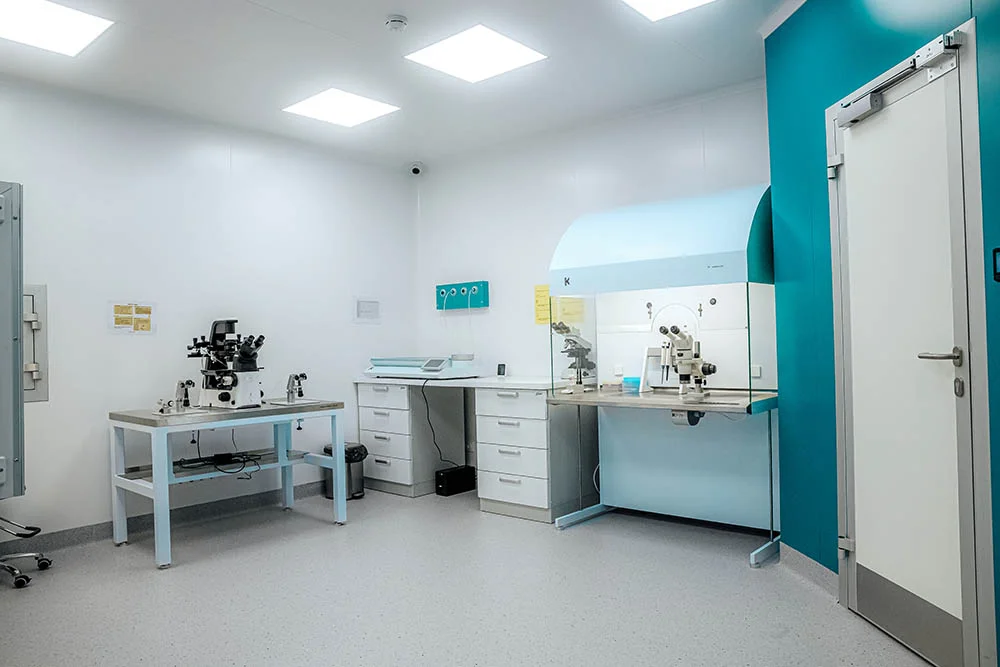
- A laboratory designed for IVF, not converted to it. Georgian and visiting foreign embryologists specified the lab: positive-pressure ventilation, multi-stage air filtration with an airlock, and the exclusion of paints, sealants and particleboard that off-gas volatile compounds. Chlorine-based disinfectants are not used inside the facility. The IVF work area is physically separated from the other departments and from other tenants in the building, and entry requires a change of clothing and shoes and a sticky mat.
- Freeze-all and transfer later. Where there is a risk of ovarian hyperstimulation, a poorly timed endometrium, pending additional testing, or PGT results still on the way, the clinic vitrifies all embryos and schedules a thawed transfer instead of pushing a fresh one.
- One named coordinator, in your language. A physician, an embryologist and a coordinator handle each case as a single team. The coordinators work in Georgian, Russian and English plus a dozen other languages, including Chinese and Hebrew, and the clinic staffs separate international patient support and donation program roles.
- Surrogacy paperwork run in-house. Recruiting the surrogate, the notarized intended-parent and surrogate agreement, certified translations, the birth certificate and the child’s exit documents are sequenced by the clinic’s own legal and coordination team. The agreement can be signed remotely under a power of attorney, so neither party has to be present at the same time.
- Prices in writing. Package prices for IVF and for each surrogacy program are published, which is uncommon among Georgian clinics; most quote “price on request.”
IVF & Fertility Services
IVF and insemination
| Program | What it covers |
|---|---|
| IVF | Long, short, mild stimulation, natural cycle and frozen protocols |
| ICSI | Injection of a single sperm, used for male factor infertility, prior fertilization failure or unusual sperm morphology; the embryologist makes the call |
| IUI | Intrauterine insemination for mild infertility factors — simpler and lower cost per cycle |
| Menopausal and advanced-age IVF | Individualized assessment for diminished ovarian reserve and the perimenopausal patient |
| Frozen embryo transfer | A vitrified embryo thawed into the best window of endometrial preparation |
Donor programs and fertility preservation
- Donor egg IVF — matched from the clinic’s own oocyte database by medical criteria and personal characteristics
- Donor sperm — from the sperm bank, and available to single women
- Donor embryo — embryos donated by other couples, or frozen embryos shipped in from abroad
- Cryopreservation — vitrification and long-term liquid nitrogen storage of eggs, sperm and embryos
Genetics and prenatal screening
- PGT-A — embryo chromosome screening for aneuploidy, to ESHRE-recommended indications
- PGT-M — preimplantation testing for known single-gene conditions
- NIPT — non-invasive prenatal genetic testing
- Spousal karyotyping, semen analysis with MAR test and sperm DNA fragmentation
Andrology, surgery and obstetrics
- Micro-TESE — microsurgical testicular sperm retrieval and management of azoospermia
- Hysteroscopy and hysteroscopic surgery, gynecological surgery, urological surgery
- Pregnancy care — first, second and third trimester ultrasound plus specialist screening scans
Fees & Packages
IVF packages are published in US dollars as “from” prices (as of November 2026):
| Program | From |
|---|---|
| IVF with your own eggs | US$6,400 |
| IVF with donor eggs | US$7,900 |
| IVF with donor sperm | US$4,900, US$6,500 and US$7,200 appear on three different pages of the site — confirm the current figure before booking |
Surrogacy program totals:
| Program | Total from | First payment on signing |
|---|---|---|
| Surrogacy guarantee program | US$73,500 | — |
| Surrogacy with your own eggs | US$59,500 | US$15,500 |
| Surrogacy with donor eggs | US$65,500 | US$17,500 |
| Surrogacy with frozen embryos | US$56,500 | US$10,500 |
Surrogacy pricing includes surrogate compensation and two embryo transfers. Clinic fees fall due in three installments — on signing, at confirmation of the fetal heartbeat, and at 18 weeks — and the surrogate’s compensation is paid to her directly. If both transfers fail and embryos remain, an additional transfer is US$1,200 each. Cesarean section, twins and neonatal care are quoted item by item before signing. Prices also include airport transfers, three nights of hotel for two people, a dedicated coordinator, and ultrasound reports in image, text or video form during pregnancy.
Consultations and tests are priced in Georgian lari: a first reproductive specialist visit 150 and a follow-up 80, urologist-andrologist 90, endocrinologist 90 first / 60 follow-up; semen analysis 120, MAR test 50, sperm DNA fragmentation 600, colposcopy 110, NIPT 1,090, expert pelvic ultrasound 100, trimester scans 110 / 140 / 140, and the 11-13 and 18-21 week specialist screens 120 / 140.
Patient Journey
- Online consultation. A video visit of about an hour. The physician reviews prior testing, your history and any failed cycles, then advises whether travel to Georgia makes sense and roughly what the plan would be.
- Workup and calendar. A full reproductive assessment sets the treatment timeline and its checkpoints. The clinic is explicit that these tests can be done at its own facility or with your local provider.
- Stimulation and monitoring. Follicles are driven on the chosen protocol and tracked by ultrasound, typically every three to four days; a cycle involves roughly nine to eleven clinic visits in total.
- Retrieval and fertilization. Eggs are collected under anesthesia as day surgery, and most patients leave about two hours afterward. Fertilization and embryo development are observed in the lab through day 5.
- Genetic testing and transfer timing. Where PGT is indicated, embryos are tested; if results are still pending, the transfer moves to a later frozen cycle.
- Transfer and luteal support. The embryo with the best development potential is transferred, remaining usable embryos are frozen, and medication supports implantation and early pregnancy with continued follow-up.
- Pregnancy test. An HCG test and first ultrasound follow two weeks after transfer. A full IVF cycle averages four to six weeks depending on protocol and medical indications.
Surrogacy adds steps outside the medicine: the contract with the clinic, embryo creation from your own or donated gametes or from embryos already frozen, legal preparation with a notarized intended-parent and surrogate agreement plus certified translation, surrogate matching with medical and psychological screening (a surrogate who fails medical criteria can be replaced), the transfer itself, pregnancy monitoring and delivery at one of Tbilisi’s leading maternity hospitals, and finally the birth certificate and the child’s exit documents. International parents usually travel twice — once to provide genetic material and once at the birth. Citizens of the United States, Canada, the European Union, the United Kingdom, Israel and Australia enter Georgia visa-free, commonly for stays of up to a year.
Local Legal Framework
Georgia regulates assisted reproduction in written law, principally the Law of Georgia on Health together with third-party reproduction rules in force since 1997.
- Surrogacy is legal. Georgia is one of the few European countries where it is, and the governing law has been in force since 1997. The surrogate holds no rights over the child born and is not recognized as the legal mother; the signed written consent establishes the intended parents as legal parents.
- Gamete and embryo donation. Article 144 of the Law on Health permits egg and sperm donation and allows donor identity to be disclosed to the intended parents. Article 35 confirms that any woman of fertile age is entitled to artificial insemination and embryo transfer.
- Who can be treated. Surrogacy programs are open only to heterosexual couples in a registered marriage or a civil partnership of at least one year. LGBTQ+ couples and single individuals cannot become parents through surrogacy in Georgia; single women can still receive donor insemination or donor sperm IVF.
- Surrogate criteria. Candidates are healthy women aged 20 to 40 who already have a healthy child of their own and no harmful habits, drawn from Georgia, Russia and Kazakhstan. Every candidate passes medical and psychological evaluation plus alcohol, nicotine and drug testing, is monitored throughout pregnancy, and can be substituted on medical grounds.
- Compensation is lawful. Georgia permits paying a surrogate, and that compensation is folded into the program price — the core difference from the United Kingdom, Canada, Australia and New Zealand, where only reimbursement of actual expenses is allowed.
- Birth certificate and parentage. The birth certificate is issued roughly five days to one month after delivery and names the intended parents only; no separate relinquishment by the surrogate is required. Georgia recognizes the intended parents as legal parents, but citizenship and documentation for the child back home must still satisfy your own country’s rules, so arrange that before you travel.
- Regulatory environment. Fertility care runs on Ministry of Health and Social Service licensing. The state publishes no clinic-level success rates and does not require clinics to display international accreditation, which is why outcome and accreditation records for Georgian clinics are thin across the board.
Location
- Address: 33 Krtsanisi II Line, Tbilisi, Georgia
- Phone: +995 322 009 000