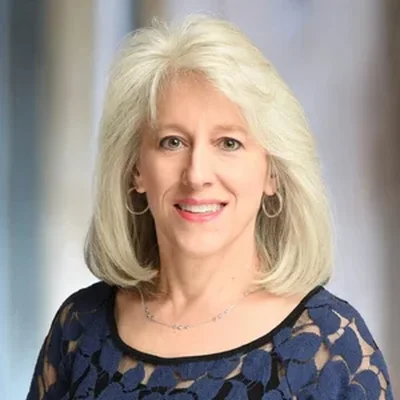
No — there is no way to tell that a person was conceived by IVF. Not from appearance, not from behavior, not from development.
Every major long-term study since 1978 has reached the same conclusion: IVF-conceived children have no distinguishing markers at all.
Behind the question sits a very real worry for IVF families: will my child seem “different”? Will anyone know if we never say? The evidence-based answer is clean — no physical, behavioral or developmental trait separates an IVF baby from a naturally conceived one. Data here comes from the CDC’s National ART Surveillance System, UK HFEA registry data, peer-reviewed cohort studies in Human Reproduction and Fertility and Sterility, and public ASRM guidance, compiled by the ProIVF Medical Editorial Team and reviewed by the ProIVF Medical Advisory Board.
“I always wondered if there would be a ‘day of reckoning’ when all the IVF babies would come down with something.” — Louise Brown, the world’s first IVF baby, speaking on her 30th birthday (BMJ, 2008). Forty-five-plus years and 12 million IVF births later, that day of reckoning never arrived.
Do IVF Babies Look Different From Naturally Conceived Children?
No visible physical differences exist — that is the definitive answer across four decades of research.
Since Louise Brown was born in 1978, more than 12 million IVF-conceived people have been born worldwide (see our explainer on what “IVF baby” means). Across that entire population, no study has identified a single recognizable physical feature of IVF conception.
| Dimension | Research finding | Evidence level |
|---|---|---|
| Facial features | No differences in facial morphology | Multiple cohort studies |
| Height and weight | Normal variation, no IVF-specific pattern | Finnish study of 62,000 children |
| Motor development | Crawling, walking milestones reached normally | Meta-analysis of 15 studies |
| Cognitive development | IQ in normal range, no gap vs natural conception | Danish cohort of 12,000 children |
| Birth weight | Slightly lower on average, still within normal range | CDC ART surveillance |
| Congenital anomalies | Slightly raised risk (~1.3x), absolute risk still low | Multiple registry databases |
Why Do IVF Babies Look Exactly Like Everyone Else?
Because IVF does not change a person’s DNA sequence — that is the whole explanation.
A child created with a couple’s own eggs and sperm inherits exactly 50% of the DNA from each parent, identical to any naturally conceived child. The only difference is where fertilization happened — a petri dish instead of a fallopian tube — and location leaves no mark on the genetic blueprint. Even with donor eggs, donor sperm or donor embryos, the child’s appearance reflects their genetic parents (the donors), not the technique.
Do IVF Babies Develop the Same Way as Other Children?
Yes — large follow-up studies converge on the same answer on every track:
- Motor development: IVF children sit, crawl and walk at the same ages as naturally conceived peers; a Finnish study of 62,000 IVF-conceived children found no clinically meaningful differences in early motor development.
- Cognitive development: Multiple studies, including a Danish registry cohort following over 12,000 IVF children into adulthood, find no differences in IQ, school performance or educational attainment.
- Social and emotional development: Research published in Human Reproduction and Fertility and Sterility reports normal social development, emotional regulation and peer relationships in IVF children and adolescents.
What About Language Development?
A 2023 meta-analysis of 18 studies found no significant language-development difference between IVF-conceived and naturally conceived children. The slightly higher preterm-birth rate in IVF pregnancies can occasionally touch early language, but that traces to multiple-pregnancy rates and maternal factors — not the IVF procedure itself.
Are IVF Babies Healthy?
This is the most-studied question in the field (for how the treatment itself works, see our step-by-step IVF process guide).
Overall health: very good. The vast majority of IVF children are perfectly healthy. Studies following IVF cohorts into their 20s, 30s and — for the earliest births — their 40s confirm normal overall health, normal chronic-disease rates and normal life expectancy.
Slightly raised relative risks — with very low absolute numbers:
| Condition | Relative risk (vs natural) | Absolute risk (IVF babies) |
|---|---|---|
| Major birth defects | ~1.3x | 4–5% (vs 3–4% naturally) |
| Low birth weight | ~1.5x | Mostly tied to multiple pregnancies |
| Preterm birth | ~1.5x | Mostly tied to multiple pregnancies |
| Imprinting disorders (e.g., Beckwith-Wiedemann) | ~2–3x | Still extremely rare (<0.1%) |
Key context: These elevated risks are tiny in absolute terms. Major birth defects occur in roughly 3–4% of the general population and 4–5% of IVF babies — meaning 95–96% of IVF babies have none. Much of the increase tracks to multiple pregnancies (twins/triplets) and the underlying fertility conditions that made IVF necessary, not to the technique itself.
Can You Tell by Behavior or Personality?
No — there is no evidence of an IVF behavioral profile or personality type.
A large Dutch study comparing IVF-conceived adolescents with naturally conceived peers found similar scores across all major personality dimensions (openness, conscientiousness, extraversion, agreeableness, neuroticism). Once parental age and socioeconomic status are controlled for, IVF children show no excess of behavioral problems.
The “IVF Personality” Myth
Online claims that IVF babies are “tougher,” “more special” or even “genetically superior” are social narratives, not findings. IVF families often invest extra emotional and financial resources in parenting, which can shape family dynamics — but that is a nurture effect, not a biological marker.
If Parents Stay Silent, Will Anyone Find Out?
When parents ask “can you tell if a baby came from IVF,” what they usually mean is:
“If I never tell anyone my child was conceived by IVF, will they find out?”
They will not — unless you say so. No medical test, physical exam or observation can determine IVF conception after birth. The IVF part of the story ends at birth; from then on, growth and development follow the identical biological path as any other child.
What This Looks Like at Each Age
- Infancy: Nobody can tell. The baby looks like any baby, with traits inherited from their genetic parents.
- Childhood: No differences in growth, development or behavior; teachers and pediatricians cannot distinguish IVF children.
- Adolescence: Normal milestones; IVF-conceived teens are indistinguishable from peers.
- Adulthood: IVF-conceived adults lead ordinary lives, build ordinary careers and start their own families — many conceive their own children naturally.
What Do IVF-Conceived Adults Say About Themselves?
Stories shared with consent; names and identifying details changed.
Mr. Wang, 34, Shanghai
Mr. Wang, 34, learned he was an IVF baby at 16 and once searched his own face in the mirror for a giveaway; today he is married and expecting his first child with his wife, who conceived naturally.
“I learned I was an IVF baby at 16. At first I wondered whether I really was ‘different’ — I even studied my own face in the mirror looking for a giveaway. But growing up taught me that nothing about my life has anything to do with how I was conceived. I’m 180 cm tall, I have my father’s nose and my mother’s sense of humor. I’m married now, my wife conceived naturally, and we’re expecting our first child. Honestly, even I worried when I heard the news — but the doctor told me my fertility is no different from anyone else’s. Being an IVF baby just means my parents wanted me badly enough to get through a lot to have me.”
Ms. Liu, 29, Guangzhou
Ms. Liu, 29, was told she was conceived by IVF at 10; she looks like her parents and lives an ordinary life, and says people only find out because she tells them.
“My parents told me when I was 10. I asked my mother: ‘Can people tell?’ She laughed and said, ‘Only if you tell them.’ Truthfully, I’ve never felt special or different because of it. I look like my parents, I went to an ordinary school, I have an ordinary circle of friends. When people find out, they’re surprised — not because they can see anything, but because they didn’t realize IVF has existed since the 1970s.”
Mr. Chen, 26, Chengdu
Mr. Chen, 26, says not one colleague has guessed he was conceived by IVF — he works as a product manager, plays basketball and guitar, and considers himself an ordinary person.
“The most surprising thing is how many people assume IVF babies must look ‘different’ somehow. A friend once asked whether I had a ‘sign’ — a certain ear shape, say, or unusual height. I said: ‘The only sign is that my parents have a very expensive hospital bill.’ We laughed, but it made me think — the question says more about how little people know about IVF than about any real difference. We really are just ordinary people. I’ve worked for three years and I’m a product manager now; I play basketball and guitar. Not one colleague has guessed.”
Can Doctors Tell If a Child Was Conceived by IVF?
No. Pediatricians and other physicians cannot determine conception method from any examination.
The only record of IVF sits in the family’s private medical history, and routine care gives no reason for it to surface (for more common questions, see our IVF baby FAQ explainer).
- Pediatric checkups: standard exams reveal nothing about conception method.
- Genetic testing: standard panels do not show IVF status.
- Routine bloodwork: no biomarker or genetic signature identifies IVF conception.
- Hospital records: unless the family discloses it, no chart reflects conception method.
FAQ
Q: Are IVF babies more intelligent?
No — multiple large studies, including a Swedish registry analysis covering more than 2 million births, find identical cognitive ability and academic achievement once parental education and socioeconomic status are controlled.
The “smarter IVF child” idea is a myth; extra parental attention can look like a biological edge, but it is not one. For related misconceptions, compare IUI vs IVF.
Q: Are IVF babies more often twins?
Historically yes — but because clinics often transferred 2 or more embryos per cycle, not because of anything intrinsic to IVF. Modern practice favors elective single embryo transfer (eSET), which has cut IVF twin rates sharply.
Twins conceived through IVF are biologically identical to naturally conceived twins.
Q: Can a DNA test reveal who was conceived by IVF?
No — IVF does not alter DNA sequence (an IVF child still inherits 50% of their genes from each genetic parent), and no test can detect an “IVF trace.” Some studies have observed subtle epigenetic differences, but they are not diagnostic and do not affect any visible trait.
Q: Do IVF babies get sick more often as adults?
Long-term follow-up of the earliest IVF cohorts — now in their 40s — shows normal rates of diabetes, heart disease and cancer. The slight elevation in birth-period risks does not translate into adult disease; a 2024 meta-analysis confirmed no increased cardiovascular or metabolic risk in adults conceived by IVF.
For clinic-level US outcomes, see the SART reports.
Q: Can IVF-conceived people have children of their own?
Research is ongoing. Some studies suggest sons conceived via IVF for male-factor infertility may show slightly lower sperm counts — a genetic inheritance from the father, not a consequence of the technique.
Daughters conceived by IVF appear to have normal fertility. Overall, most IVF-conceived adults — the earliest cohorts now in their 40s — have had children, many with no fertility treatment at all.
Q: How do IVF-conceived people feel about their origins?
Psychological studies consistently find the outlook is broadly positive: research published in Reproductive BioMedicine Online found that the majority of IVF-conceived adults — a population now exceeding 12 million worldwide — see IVF as a meaningful part of their life story, but not what defines them.
Many report that learning how hard their parents worked to have them strengthened family bonds.
Q: How many IVF babies have been born worldwide?
More than 12 million as of 2024, per the International Committee for Monitoring Assisted Reproductive Technologies (ICMART) — with roughly 500,000 added each year. In some countries IVF-conceived children now account for 2–5% of all births.
Q: Should parents tell their child they were conceived by IVF?
Child psychologists and fertility counselors generally recommend age-appropriate disclosure: a 2022 longitudinal study in Human Fertility found children told early showed no emotional or behavioral differences from children who were not told. The American Society for Reproductive Medicine, ASRM encourages starting early with simple, positive language, and disclosure itself causes no harm.
What This Means for Families Considering IVF
If long-term outcomes are your worry, the evidence is reassuring: your child will be indistinguishable from any other child. They will inherit your features, your temperament and your family health history — exactly as nature arranges them, with science helping the first step along.
If you are evaluating treatment, compare centers in our global IVF clinic directory.
IVF gives families who cannot conceive naturally the chance to have a biological child. Once that child is born, the conception method becomes a medical footnote, not a defining trait. More than 12 million living people prove it: IVF babies grow up to be teachers, doctors, artists, parents and entrepreneurs — just like everyone else.
Medical Disclaimer
This article is for educational purposes only and does not constitute medical advice. Every IVF journey is unique — consult a board-certified reproductive endocrinologist for guidance on your own situation.
Written by the ProIVF Medical Editorial Team and reviewed by the ProIVF Medical Advisory Board, based on the latest public data from the CDC, HFEA, ASRM, SART, ESHRE and peer-reviewed medical literature.
Last updated: July 31, 2026