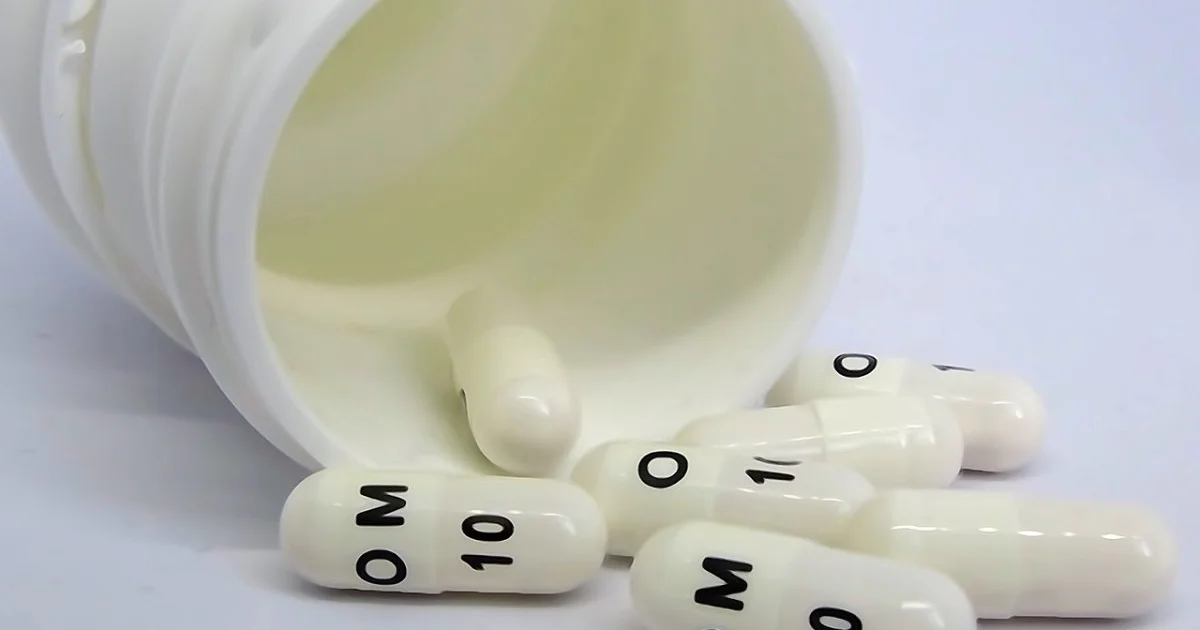
For most women, having an abortion does not reduce the ability to have a baby later. A Finnish nationwide register study of 88,522 induced abortions found no such effect.
Neither the method used, nor the gestational age, nor any complication was linked to later IVF use — PLoS One 2019.
This guide was compiled by the ProIVF medical editorial team from peer-reviewed studies indexed on PubMed. The sources include nationwide register data from Finland and a 1,436-patient IVF cohort from Hefei, China, plus patient resources from the WHO, ACOG, ASRM and the NHS. It was reviewed by the ProIVF medical advisory board. ProIVF does not provide treatment, and this article cannot replace advice from your own doctor.
What the largest studies found
Two large bodies of evidence point in slightly different directions, and understanding the difference matters when you plan what to do next. Population-wide register studies find no overall link between abortion and future fertility, while one Chinese IVF cohort reported a modest association between abortion history and lower success per transfer.
The Finnish register: 88,522 women
Finland keeps a complete record of every induced abortion, which makes it one of the few places where this question can be studied without relying on what patients remember years later. Researchers linked the national abortion register — all 88,522 abortions performed between 2000 and 2009 — to later fertility treatment records: 379 of those women subsequently used IVF, and compared with 7,434 women who delivered spontaneously 12–24 months after an abortion, neither gestational age at abortion (≤12 or >12 weeks) nor abortion method nor post-abortion complications significantly increased the odds of needing IVF — PLoS One 2019.
Older register data point the same way. Among all Finnish women treated with IVF in 1996–1998, 12% had a previous induced abortion — a proportion similar to the background rate in the general population — and 72% of those IVF patients had their most recent abortion more than ten years before treatment — Hum Reprod 2008.
A Chinese IVF cohort that points the other way
Not every study is reassuring, and one deserves your attention. A retrospective cohort of 1,436 women treated with IVF for the first time at a hospital in Hefei, China, found that the 95 patients (6.6%) with a history of induced abortion had lower odds of clinical pregnancy per transfer (OR 0.71, 95% CI 0.53–0.95) and lower odds of live birth per pregnancy (OR 0.52, 95% CI 0.30–0.90) after adjustment for confounders — Eur J Obstet Gynecol Reprod Biol 2021.
Why the two studies may disagree
Different study designs answer slightly different questions. The Finnish register covers the entire national population, where most abortions are early and medication-based; the Hefei cohort is a single IVF center with a small abortion group (95 women), and in China a history of repeated abortion often travels together with other factors — such as tubal disease — that the statistical adjustment cannot fully separate.
The honest reading is that abortion itself is not a diagnosis, but a complicated abortion with surgical evacuation is not risk-free, which the next section explains.
“Intrauterine adhesions are rare after induced termination of pregnancy, but surgical evacuation is a risk factor.” — Mentula and colleagues, BJOG, 2018
Does the method of abortion matter?
Neither medication abortion nor vacuum aspiration has been shown to reduce future fertility. The one scenario with a documented fertility risk is surgical evacuation of retained tissue after a termination, which raises the odds of intrauterine adhesions about fivefold.
| Abortion method | Intrauterine adhesion risk (Finnish nationwide data) |
|---|---|
| Medication abortion | 1.5 cases per 10,000 |
| Surgical abortion (vacuum aspiration) | 2.0 cases per 10,000 (no significant difference from medical, P = 0.19) |
| Re-evacuation of retained tissue | 5.5-fold higher odds of adhesions (OR 5.50, 95% CI 1.46–20.79) |
Medication abortion — mifepristone and misoprostol
Medication abortion ends a pregnancy with pills rather than instruments, so there is no instrumentation of the uterine cavity. In the Finnish nationwide cohort, the rate of intrauterine adhesions after medically induced terminations was 1.5 per 10,000 — statistically indistinguishable from the 2.0 per 10,000 after surgical terminations — BJOG 2018.
Surgical abortion — vacuum aspiration
Vacuum aspiration is a short procedure, and large outcome studies have not shown it to impair subsequent fertility by itself — Acta Obstet Gynecol Scand 2003. Problems arise mainly when the uterus needs to be re-instrumented.
Retained tissue: the 1.5-in-10,000 complication
Out of 79,960 eligible terminations in Finland, only 12 women were diagnosed with intrauterine adhesions — about 1 in 6,700 — BJOG 2018. The risk was not spread evenly: women who needed surgical evacuation of retained products of conception after the termination had 5.5-fold higher odds of adhesions (OR 5.50, 95% CI 1.46–20.79, P = 0.012).
Adhesions can make periods lighter or stop them, and severe ones require hysteroscopic surgery before an embryo transfer can be planned.
Does birth control affect fertility later in life?
No — hormonal contraception does not deplete your egg supply, and fertility returns quickly after stopping. A meta-analysis of 22 studies including 14,884 women found that 83.1% conceived within 12 months of discontinuing contraception (95% CI 78.2–88%; Contracept Reprod Med 2018).
Pills: what happens after you stop
The pooled 12-month pregnancy rate after stopping the pill sits in the same range as after stopping barrier methods — the delay, if any, is measured in weeks, not years — Contracept Reprod Med 2018. If you are preparing an IVF cycle, our guide on birth control pills before IVF explains the very different, deliberate use of pills for cycle scheduling.
IUDs: what happens after removal
An IUD works while it is in place and does not linger: fertility after removal is comparable to never-users. ACOG’s practice bulletin on long-acting reversible contraception summarizes the evidence that neither copper nor levonorgestrel IUDs impair subsequent fertility — Obstet Gynecol 2017.
A review from a Stanford group notes that most removal-to-conception studies were done in women who had given birth before, and that couples trying after long-term levonorgestrel IUD use in nulliparous women still have thinner data — J Assist Reprod Genet 2020 — thinner, not negative.
Long-term use: does 10 years of pills matter?
Duration of use has not been shown to cause lasting harm in women with regular cycles. The NHS contraception pages state plainly that contraceptive methods do not affect your future fertility, and the WHO family planning fact sheet makes the same point for global audiences.
Age — not years on the pill — is what moves the numbers, which our IVF success rates by age guide quantifies.
Does emergency contraception affect fertility?
No. Emergency contraception works by delaying or blocking ovulation before fertilization happens, and it does not harm your ability to conceive afterwards.
How levonorgestrel actually works
Levonorgestrel pills act on ovulation, not on an implanted embryo: reviews of the mechanism conclude the drug mainly delays or inhibits the release of an egg and has no ability to interrupt an established pregnancy — Hum Reprod Update 2004.
Does Plan B end an existing pregnancy?
The evidence says no. A systematic review of the mechanism found levonorgestrel at standard doses cannot impair sperm function or disrupt a pregnancy that has already begun — Linacre Q 2016, which is also the position of ACOG in its patient materials.
Taking emergency contraception — even several times — does not make it harder to get pregnant later.
Can abortion make you more fertile?
No — this is a myth worth retiring. After an abortion, fertility returns to its pre-pregnancy baseline, neither higher nor lower; what changes is that ovulation can resume as early as two weeks after the pregnancy ends.
That fast return is why clinicians raise contraception at the post-abortion visit — not because abortion boosts fertility, but because you can be fertile again before your next expected period.
When to see a doctor about fertility after an abortion
Most couples conceive within a year of regular attempts, whether or not there was an abortion in the past. A fertility workup is worth starting earlier when specific risk factors are present.
The 12-month and 6-month rules
Under 35, evaluation is standard after 12 months of trying; at 35 or older, after 6 months. Come sooner if your periods became much lighter or stopped after a dilation and curettage — that pattern can signal intrauterine adhesions — or if you have known tubal disease, endometriosis or irregular cycles.
Our guide to fertility tests for women walks through what the first round of testing involves, and the low AMH guide explains what ovarian reserve numbers do and do not predict.
If you are heading toward IVF
Abortion history does not disqualify anyone from IVF, but it belongs in your file so your reproductive endocrinologist can check the uterine cavity with ultrasound or hysteroscopy before transfer. What matters most for outcomes remains age, ovarian reserve, sperm quality and the clinic you choose — our overview of what affects IVF success rates ranks the factors by effect size.
Patient stories: three different paths
The stories below are composites built from common consultation scenarios, with names and details changed to protect privacy; they illustrate patterns, not guarantees.
Lin, 31, Shenzhen — “I was sure the abortions were the reason”
Lin had two early first-trimester abortions in her twenties and spent eight months blaming them for not conceiving. Her workup — AMH 2.4 ng/mL, patent tubes on HSG, normal semen analysis for her husband — cost about 250 US dollars and came back normal, and she conceived naturally in the tenth month.
“Nobody ever told me the abortion probably had nothing to do with it,” she said. “I lost almost a year to that fear.”
Priya, 29, Kuala Lumpur — “Eight years on the pill”
Priya started combined pills at 20 and stopped at 28 when she and her husband began trying. Her first cycle after stopping was 45 days, the second 32, and she was pregnant in the fifth month.
She spent about 300 US dollars on baseline bloodwork she later learned was optional at her age. “I thought eight years of pills meant years of recovery,” she said. “It took two cycles to feel normal.”
Ana, 35, Hangzhou — “The one case where it really was the abortion”
Ana’s second-trimester termination needed surgical evacuation of retained tissue, after which her periods shrank from five days to one. A hysteroscopy confirmed intrauterine adhesions; adhesiolysis (about 3,000 US dollars) restored her cycle, and after one failed IUI she moved to IVF in Thailand (about 12,000 US dollars including travel) with a euploid single-embryo transfer that led to her daughter.
“Knowing the exact problem made it fixable,” she said.
FAQ
Q: Does abortion cause infertility?
No — uncomplicated abortion does not cause infertility: in the Finnish nationwide register of 88,522 abortions, method, timing and complications showed no significant link to later IVF use — PLoS One 2019.
The rare exception is intrauterine adhesions after surgical evacuation of retained tissue, seen in roughly 1.5 per 10,000 terminations — BJOG 2018.
Q: How long after an abortion can you get pregnant?
Ovulation can return about two weeks after a first-trimester abortion, so pregnancy is possible before your next period; most clinicians advise waiting until bleeding stops — typically 1–2 weeks — before intercourse for infection-avoidance reasons, not fertility ones.
Q: Do birth control pills affect fertility years later?
No: a meta-analysis of 22 studies and 14,884 women found 83.1% of former contraceptive users conceived within 12 months of stopping (95% CI 78.2–88%; Contracept Reprod Med 2018).
Pills suppress ovulation temporarily; they do not reduce the egg supply you were born with.
Q: Does Plan B affect future fertility?
No: levonorgestrel emergency contraception — the standard 1.5 mg dose — delays ovulation and does not damage sperm, eggs or an implanted pregnancy (Hum Reprod Update 2004; Linacre Q 2016).
Repeated use has no documented effect on future conception.
Q: Can an IUD cause infertility?
An IUD in place prevents pregnancy; after removal, fertility returns promptly and is comparable to never-users — Obstet Gynecol 2017. The historical infertility scare traces to an older, discontinued IUD design (the Dalkon Shield) from the 1970s, not to modern copper or hormonal devices.
Q: What are the warning signs of intrauterine adhesions?
The classic pattern is periods that become much lighter or stop altogether after a dilation and curettage — for example shrinking from five days to one — sometimes with cyclic cramping; it matters most after retained tissue requiring re-evacuation, the group with 5.5-fold higher odds of adhesions (OR 5.50, 95% CI 1.46–20.79; BJOG 2018); a hysteroscopy before investing in fertility treatment cycles is worth the one-day recovery.
Q: Should I wait before trying to conceive after an abortion?
Physically, you can try once bleeding has stopped — typically 1–2 weeks — and ovulation returns about 2 weeks after a first-trimester abortion; large cohort data after miscarriage even show intervals under 6 months carry lower repeat-loss risk (RR 0.82; Hum Reprod Update 2017). Emotionally, the right interval is the one you can sustain — and starting a prenatal vitamin with 400 micrograms of folic acid now costs nothing.
Planning your next step
If a past abortion or years of contraception is weighing on your plans, the fastest way to replace worry with numbers is a basic fertility workup — AMH, antral follicle count, tubal patency and a semen analysis for your partner.
Our hospital directory lists reproductive centers across Thailand, the United States, Japan and beyond with published success-rate data, and you can contact ProIVF to compare destinations and ask the questions this article raised. Authoritative patient resources from ACOG, the WHO abortion fact sheet, ASRM and the NHS can help you frame the conversation with your own doctor.
This article was written by the ProIVF medical editorial team and reviewed by the ProIVF medical advisory board. It summarizes peer-reviewed research for general information only and is not medical advice; consult a qualified obstetrician or reproductive specialist about your individual situation. ProIVF does not provide treatment or brokerage services and does not endorse any clinic mentioned.
Last updated: October 2, 2026





