IVF success is never one number: live birth rates per embryo transfer exceed 50% for women under 35 yet fall below 5% over 42 using their own eggs (CDC data). The outcome is driven by age, egg and sperm quality, embryo chromosome status, uterine health, lifestyle, and clinic lab standards combined.
This guide draws on public clinical guidelines and annual reports from the US Centers for Disease Control and Prevention (CDC), the Society for Assisted Reproductive Technology (SART), and the American Society for Reproductive Medicine (ASRM), and breaks down each factor, the real risks, and what a fair expectation looks like.
The Biology of IVF Success: Age, Eggs, and Embryos
Why Age Matters More Than Anything
Age is the strongest predictor of IVF success because it directly sets both the number and the genetic quality of your eggs. A woman is born with all the eggs she will ever have, and both quantity and quality decline steadily over time.
| Age Group | Live Birth Rate per Cycle (CDC, own eggs) |
|---|---|
| Under 35 | 50–55% |
| 35–37 | 38–42% |
| 38–40 | 25–30% |
| 41–42 | 10–15% |
| Over 42 | <5% |
These figures cover single fresh, non-donor embryo transfers. The steep drop after 35 is driven mainly by rising chromosomal abnormalities — about 70% of eggs at age 40 are chromosomally abnormal — a pattern worth understanding alongside what counts as one full IVF cycle. For age-by-age detail, see our IVF success rate by age guide. Data source: CDC ART Success Rates.
China’s National Health Commission ART registry data points the same way: clinical pregnancy rates of roughly 52% under 35, about 42% at 35–37, and about 30% at 38–40, closely matching the CDC figures.
Does age matter on the male side too? Yes. Men produce sperm for life, but once paternal age passes 40–45, sperm DNA fragmentation rises, fertilization rates fall, and miscarriage risk increases.
Egg Quality, Sperm Health, and Embryo Chromosomes
Even at the same age, egg quality varies widely between individuals. Ovarian reserve markers — AMH, antral follicle count, and FSH — estimate roughly how many eggs a stimulation will yield, but quantity never guarantees quality.
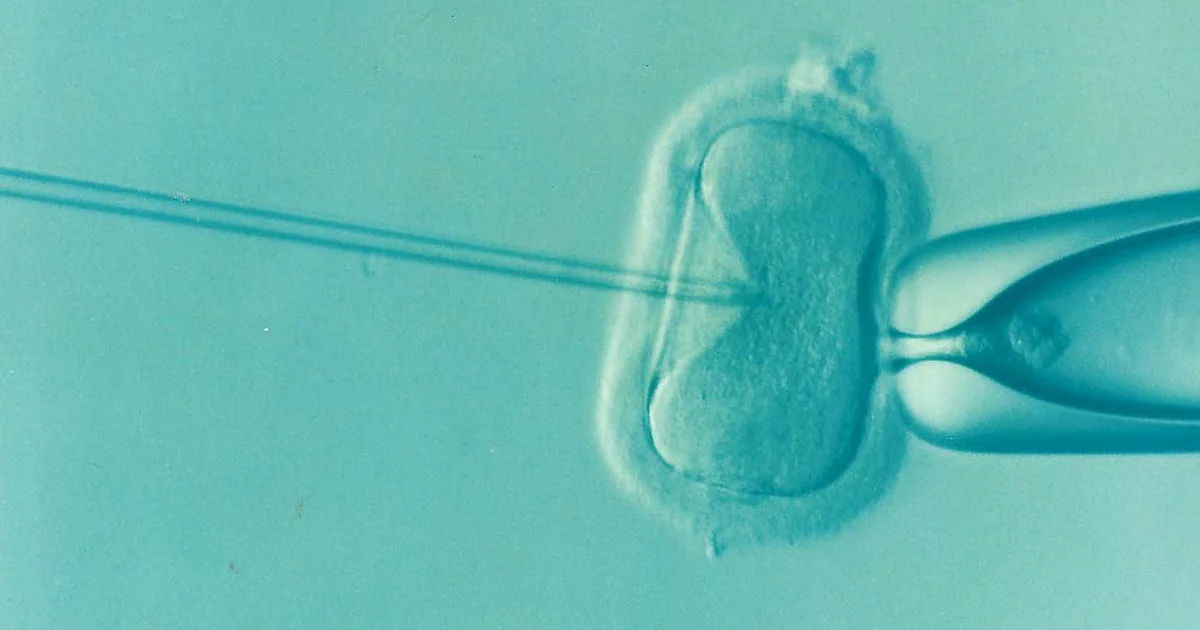
Sperm quality is measured by semen analysis: concentration, motility, morphology, and DNA fragmentation index. When parameters are poor, ICSI (intracytoplasmic sperm injection) can still achieve fertilization, but severely damaged sperm may reduce blastocyst formation and implantation.
Chromosomally normal (euploid) embryos implant best. About 30–50% of embryos are euploid for women under 38, dropping to 15–25% by 40. PGT-A screens embryos before transfer and raises the implantation rate per transfer, at an added cost of roughly $3,000–$5,000 — who benefits is covered in our PGT genetic screening guide. Source: ASRM guidance on embryo genetic screening.
The uterine lining must also be receptive. Key factors are endometrial thickness (target 7–14 mm), uterine abnormalities such as polyps, fibroids, or adhesions, and chronic endometritis — a low-grade inflammation that is usually symptomless but lowers success. Post-transfer care also shapes the outcome, as outlined in our embryo transfer aftercare guide.
New to the treatment itself? Our step-by-step IVF process guide explains where each factor acts.
Preparing Your Body and Choosing the Right Clinic
Lifestyle Changes That Make a Real Difference
These factors have documented effects on IVF outcomes:
| Factor | Impact on IVF Success |
|---|---|
| Smoking | Cuts success rates by up to 50%; smokers need roughly twice as many cycles |
| BMI over 30 | Lower implantation and live birth rates; higher miscarriage risk |
| BMI under 18.5 | May blunt ovarian response to stimulation |
| Heavy alcohol use | Harms both egg quality and sperm DNA integrity |
| Excessive caffeine | Moderate intake (under 200 mg/day) is safe; high intake may reduce success |
| Stress | High stress correlates with lower pregnancy rates, though direct causation is debated |
Why Clinic Standards Vary So Much
Success rates between clinics in the same city can differ by 20–30 percentage points. The differentiators that matter:
- Embryology lab quality — air filtration, incubator technology, and embryologist experience
- Freezing technology — vitrification survival rates above 95% mark a high-quality lab
- Physician experience — doctors performing 100+ retrievals per year tend to achieve better outcomes
- Protocol personalization — stimulation tailored to individual response, not one-size-fits-all
Our guide to choosing an IVF clinic shows how to evaluate these systematically, and you can compare centers in our global fertility clinic directory.
Three Patients, Three Different Paths
Case 1: At 34, Lifestyle Changes Led to a First-Transfer Success
Austin, US | Unexplained infertility | Live birth after first transfer
Sarah’s AMH was 2.8 ng/mL and her husband’s semen analysis was normal — every test looked fine, yet 14 months of trying produced no pregnancy. She quit smoking, cut alcohol, and switched to a Mediterranean diet 3 months before her cycle.
“I didn’t realize how much smoking was affecting my fertility until the doctor showed me the numbers. Quitting was harder than I expected — the first month I chewed gum all day and snapped at everyone; my husband said I was a different person. During stimulation I injected my own belly every day, and my hand shook for ten minutes before the first shot. But when they retrieved 14 eggs and 5 reached blastocyst, every unsmoked cigarette and every needle felt worth it.”
On day 8 of stimulation her lead follicle measured 18 mm; she triggered that night and retrieved 36 hours later. The cycle produced 14 eggs, 10 fertilized by ICSI, 5 blastocysts, and 2 euploid embryos after PGT-A. The first frozen transfer succeeded, confirmed by blood test on day 12. Total cost with PGT: about $22,000.
Case 2: At 39, Low AMH and Three Cycles to Success
Denver, US | Diminished ovarian reserve | Live birth after the third cycle
With an AMH of only 0.6 ng/mL, Elena’s odds with her own eggs were slim. The first cycle retrieved just 3 eggs — none reached blastocyst.
“After the first failure I stayed in bed all weekend. My husband kept saying ‘let’s try again,’ but I was already preparing myself for a life without children. The new clinic mapped my AMH and follicle-count trend, then put me on a mini-stimulation protocol — 150 IU per day, half my previous 300 IU — and it took 12 days of injections to reach retrieval. My doctor said my ovaries needed ‘gentle handling.’ It sounded counterintuitive, but my body truly responded better.”
Cycle 2 at the new clinic (conventional 300 IU, 8 days): 5 eggs, 2 embryos, 1 euploid — bleeding on day 9 after transfer, and the day-12 blood test confirmed failure. Cycle 3 (mini-stim 150 IU, 12 days): 4 eggs, 2 embryos, 1 euploid — beta-hCG of 682 on day 14 after the frozen transfer confirmed pregnancy. Combined cost of the three cycles: about $62,000.
Case 3: Male Factor Solved with ICSI at 31
Seattle, US | Severe male factor infertility | Live birth, first cycle
Maya’s husband had a sperm concentration under 500,000/mL — far below the WHO reference of 15 million/mL — with only 1% normal forms and a DNA fragmentation index of 38%.
“The urologist drew a diagram of the sperm and said only 1% were shaped normally. My husband didn’t speak the entire drive home. I assumed donor sperm was our only path, but the andrologist explained that ICSI bypasses this — they pick the single best-shaped sperm and inject it straight into the egg. He was told to abstain 3-5 days before retrieval so the sample would be better. With the right technology, one healthy sperm is enough. On the retrieval table I still worried they wouldn’t find a single normal one — then the nurse told me all 12 eggs had fertilized, and I cried.”
Her husband abstained for 3 days before collection; the sample was prepared by density-gradient centrifugation, and embryologists selected normal, motile sperm under the microscope for ICSI. Of 12 injected eggs, 10 fertilized normally, forming 8 embryos; one Day 5 blastocyst was transferred fresh and the rest frozen. The day-12 blood test confirmed a successful singleton pregnancy, and their child is now 2 years old. Total cost including ICSI: about $18,000.
Understanding the Risks and Real Costs
Medical Risks
Ovarian hyperstimulation syndrome (OHSS): Mild OHSS (bloating, nausea) affects 20–33% of cycles; moderate to severe cases run about 1–3% and may require hospitalization.
Patients with PCOS and high AMH face the highest risk. Source: ASRM practice guidance on OHSS.
Multiple pregnancy. Transferring 2 or more embryos sharply raises the chance of twins or higher-order multiples, with greater risks of preterm birth, preeclampsia, and gestational diabetes. Elective single embryo transfer (eSET) is now the recommended standard for good-prognosis patients. See also our IVF twins statistics guide. Source: ASRM committee opinion on preventing multiple pregnancies.
“The elective transfer of a single good-quality embryo in appropriate patients is the optimal strategy to reduce the risk of twin or higher-order pregnancies.” — American Society for Reproductive Medicine (ASRM), committee opinion on the number of embryos transferred, 2013
Ectopic pregnancy occurs in about 2–5% of IVF pregnancies, slightly above natural conception, with higher risk when fallopian tubes are damaged. Source: HFEA data on IVF risks.
Miscarriage tracks maternal age closely — roughly 15% under 35, rising above 40% over 42 — and in older women the dominant cause is embryonic chromosomal abnormality.
Financial and Emotional Reality
A single US IVF cycle runs about $15,000–$25,000 including medications. Cumulative success grows with each attempt — roughly 60–70% of women under 40 achieve a live birth after 3 cycles — and some clinics offer multi-cycle packages or refund programs.
Country-by-country pricing is compared in our IVF cost guide.
Daily injections, frequent monitoring, and the anxiety of the two-week wait take a real psychological toll, so patients should prepare for multiple cycles both financially and emotionally.
FAQ
Q: Which single factor affects IVF success most?
The age of the egg provider. With your own eggs, success starts falling noticeably after 37.
With donor eggs, the donor’s age governs outcomes, and live birth rates reach 50–60% per cycle regardless of the recipient’s age. Source: SART annual report.
Q: Do lifestyle changes really improve IVF success?
Yes. Quitting smoking alone can lift success rates by nearly 50%.
A healthy BMI, moderate exercise, and reduced alcohol all help — but no lifestyle change can reverse the age-related decline in egg quality.
Q: Can the number of eggs retrieved predict success?
Partially. More retrieved eggs raise the odds of at least one euploid embryo, but quality outweighs quantity — most clinics target 8–15 mature eggs per cycle.
Q: How much does clinic choice affect outcomes?
A great deal: clinics in the same city can differ by 20–30 percentage points in success rates. When comparing published data, check whether results are stratified by age and diagnosis.
Q: Is frozen embryo transfer more successful than fresh?
Large studies show frozen embryo transfer (FET) yields slightly higher live birth rates than fresh transfer, because the lining is not exposed to stimulation hormones and FET pairs naturally with PGT-A screening — an add-on that costs roughly $3,000–$5,000. Source: ASRM practice guidance.
Q: Are IVF babies healthy?
Yes, the absolute risk is low. Large population studies find a small increase in birth defects (about 1–2% versus 2–3% naturally), most likely tied to the underlying infertility rather than the procedure, and IVF-conceived children show no meaningful difference in cognitive or physical development.
Source: ASRM patient education.
Q: What is the cumulative success rate after multiple cycles?
Cumulative live birth rates rise with each cycle. For women under 40 using their own eggs:
| Cycles | Cumulative Live Birth Rate |
|---|---|
| 1 | 40–50% |
| 2 | 55–65% |
| 3 | 60–70% |
| 6 | 75–80% |
Source: SART. These are population-level statistical models, not simple addition — individual results shift with age and diagnosis.
Q: How do I find a clinic with genuinely high success rates?
Use public databases — CDC ART for the US, HFEA for the UK — and focus on live birth rates per embryo transfer, stratified by age and diagnosis. The effort pays off: clinics in the same city can differ by 20–30 percentage points.
You can compare vetted centers in our fertility clinic directory.
What Should Your Next Step Be?
IVF outcomes combine age, biology, lifestyle, and clinic quality. You cannot change your age or diagnosis, but you can choose a clinic matched to your situation, optimize your health before treatment, and budget for the possibility of multiple cycles.
Start by researching clinics that fit your profile — browse our global fertility clinic directory or contact our team for personalized guidance.
Last updated: July 6, 2026. This article is for informational purposes only and does not constitute medical advice. IVF outcomes vary by individual history, clinic quality, and location; success rate figures reflect US national averages from CDC and SART data, and individual clinic rates may differ. Consult a licensed fertility specialist and verify actual costs with clinics before making treatment decisions.
Written by the ProIVF Medical Editorial Team and reviewed by the ProIVF Medical Advisory Board. The editorial process includes topic research, cross-verification against at least two independent authoritative sources, clinical review, and fact-checking. Content is based on public data and clinical guidelines from ASRM, CDC, SART, and HFEA; patient cases are adapted from real clinical scenarios with all identifying information anonymized. We update this article regularly to reflect new research and data.
Sources:
- Centers for Disease Control and Prevention (CDC) — ART Success Rates
- Society for Assisted Reproductive Technology (SART) — Annual Summary Reports
- American Society for Reproductive Medicine (ASRM) — Patient Education
- Human Fertilisation and Embryology Authority (HFEA) — UK IVF Success Rates