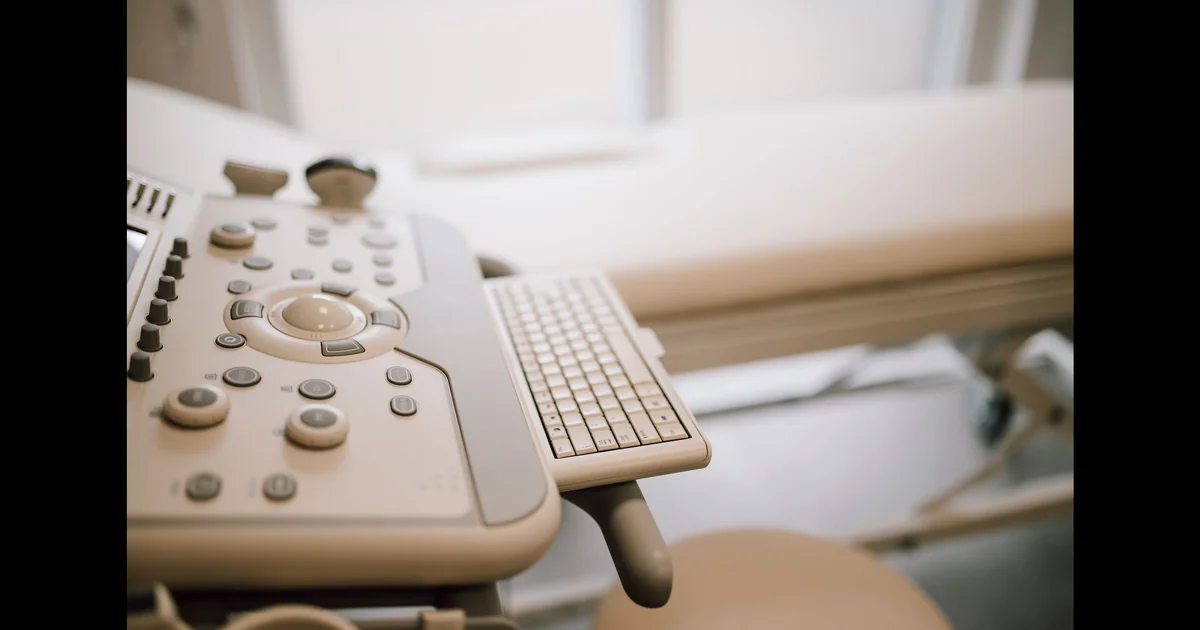
Egg retrieval — medically, transvaginal ultrasound-guided oocyte aspiration — is the minimally invasive procedure that collects mature eggs from your ovaries, and it usually takes only 15-30 minutes under sedation, with same-day discharge. It sits at the end of 8-14 days of ovarian stimulation and a trigger injection timed to the hour, after which the embryology lab takes over.
“The two weeks before retrieval — injection discipline and precise trigger timing — decide how smoothly the procedure goes. The procedure itself is the part patients fear most and regret least.” — ProIVF Medical Advisory Board, 2026
What Is Egg Retrieval and Why Does IVF Require It?
The medical name is transvaginal oocyte retrieval (TVOR): under real-time ultrasound guidance, your doctor passes a thin needle through the vaginal wall into each follicle and uses gentle suction to draw out the fluid containing the egg. Every needle pass is watched live on the screen.
This is the raw-material step of in vitro fertilization — without retrieved mature eggs there is no fertilization, no embryo culture, and no transfer. A stimulated cycle grows one cohort of follicles together, and retrieval harvests that cohort in a single session.
One clarification patients need: retrieval only collects the follicles this cycle’s medication recruited — it does not borrow from your future ovarian reserve. In a natural cycle most recruited follicles would atresia and be reabsorbed anyway, which is why fertility resources stress that a single retrieval does not measurably accelerate ovarian aging. For age-specific expectations, see our average number of eggs retrieved by age guide, built on CDC data.
The data in this article comes from the NHS IVF patient guide, the American Society for Reproductive Medicine, ASRM, the CDC ART surveillance system, and the UK HFEA.
What Happens Before Retrieval Day: Stimulation to Trigger Shot?
Retrieval is not an isolated day — its prelude spans about two weeks:
| Stage | Approximate timing | What you do |
|---|---|---|
| Cycle start workup | Day 2-3 of your period | Blood hormone tests plus a baseline transvaginal ultrasound |
| Ovarian stimulation | About 8-14 days | Daily gonadotropin injections, regular monitoring visits |
| Trigger shot | About 34-36 hours before retrieval | hCG or GnRH agonist injection to mature the eggs |
| Retrieval day | 34-36 hours after the trigger | Fast as instructed, complete the procedure |
The trigger shot is the single most time-critical step. Its job is to push each egg through its final meiotic maturation so it becomes fertilizable, and the 34-36 hour window before retrieval is a carefully calculated sweet spot — too early and eggs are immature, too late and ovulation may already have happened.
That is why clinics insist: once your trigger time is set, keep it within about 15 minutes — neither earlier nor later. From that moment, work through the retrieval-day checklist:
- Fast as instructed — retrieval uses sedation or general anesthesia, so your center will require no food or drink starting several hours beforehand; follow your anesthesia instructions exactly
- Wear loose, easy on/off clothing — no makeup or jewelry on the day
- Arrange an escort and transport — you cannot drive after sedation, so someone must take you home
- Bring your documents — ID, cycle medication orders, and prior stimulation records
What Happens During Egg Retrieval, Step by Step?
Retrieval is performed in the clinic’s day-surgery room — no hospital admission — and the morning unfolds in four steps:
Step 1: Check-In and Verification
A nurse confirms your name, protocol, and allergies, verifies your fasting status, and places an IV line.
Step 2: Anesthesia
Most centers use IV sedation (conscious sedation) — medication that leaves you drowsy, relaxed, and essentially pain-free while you breathe on your own. Some centers use general anesthesia as standard, or for patients with many follicles or hard-to-reach ovaries.
An anesthesiologist or anesthesia nurse monitors you throughout, until you wake.
Step 3: The Aspiration
The doctor uses the ultrasound-guided needle to locate each follicle on screen and aspirates them one by one. The whole aspiration usually takes just 15-30 minutes, and the collected follicular fluid is handed immediately to the embryology lab next door.
Step 4: Observation and Going Home
You rest in the recovery area for 1-2 hours while staff check your blood pressure, bleeding, and pain. Once stable you go home, with a nurse reviewing your medications — typically infection prevention or luteal support — and discharge instructions.
Does Egg Retrieval Hurt?
Under sedation or anesthesia, most people feel little to nothing during the procedure itself — this is the single most common patient question, and the honest answer is that the fear usually outweighs the sensation. What you do feel afterward is typically mild lower-abdominal soreness similar to period cramps.
Three factors shape the anesthesia choice:
- Clinic standard practice — some centers use IV sedation for everyone, others prefer general anesthesia; ask your target clinic’s default first
- Follicle count and position — with many expected eggs or high-positioned ovaries, the anesthesia team may recommend general anesthesia so the aspiration stays smooth
- Your anesthesia history — allergies to sedation drugs or relevant medical conditions must be declared at the anesthesia assessment
Whichever method is used, the precondition for a painless procedure is following the fasting rule — breaking it raises anesthesia risk significantly. For a deeper evidence-based comparison of retrieval anesthesia options, see our complete IVF egg retrieval guide.
How Do You Recover After Egg Retrieval?
After retrieval your ovaries are mildly enlarged — a normal physiological response — and most discomfort eases within 1-2 days:
| Time | What is normal | What to do |
|---|---|---|
| Retrieval day | Lower-abdominal soreness, light spotting, drowsiness | Rest, hydrate well, take medication as prescribed |
| Days 1-2 | Peak bloating, possible constipation | Light meals in small portions, avoid lifting heavy objects |
| After day 3 | Bloating usually eases noticeably | Gradually return to normal activity |
| Weeks 1-2 | Ovaries shrinking back | Most centers advise avoiding vigorous exercise, swimming, and intercourse |
Contact your clinic or go to the emergency department immediately if you notice: progressively worsening bloating or abdominal pain, difficulty breathing, sharply reduced urination, fever, or heavy vaginal bleeding. These can signal ovarian hyperstimulation syndrome (OHSS) or another complication — recognition and graded management are covered in our egg retrieval complications and OHSS prevention guide.
Where Do the Retrieved Eggs Go? The Lab Takes Over
While you are resting in recovery, the follicular fluid is already in the embryology lab, where the embryologist works through four steps under the microscope:
- Find the eggs — identify and pick the egg-cumulus complexes out of the aspirated fluid
- Check maturity — determine which are mature MII oocytes, which need more culture, and which are unusable
- Fertilize — apply conventional IVF or ICSI (intracytoplasmic sperm injection) depending on the sperm sample
- Culture and monitor — fertilized embryos begin dividing day by day; retrieval day is defined as embryo development “Day 0”
From here the baton belongs to the lab. Embryos pass through fertilization, cleavage, and blastocyst stages, each with medical decisions attached — pair this guide with our day-by-day IVF embryo development guide to understand what happens during the “invisible days” after retrieval.
What Should You Ask Your Clinic Before Retrieval?
Take these six questions into your next consultation — they matter even more when you are traveling abroad for treatment:
- Who administers the anesthesia, and by what method? Confirm an anesthesiologist or anesthesia nurse is present throughout
- What is the OHSS plan if many eggs are expected? Ask about hormone and ultrasound monitoring, and when a cycle would be canceled or switched to freeze-all
- Is retrieval day-only or does it require an overnight stay? This directly affects your travel itinerary
- How is cost handled if no mature eggs are retrieved? Understand cycle boundaries and any retry or refund policy
- When will fertilization results be confirmed? Ask whether the lab calls the same day
- Will transfer be decided on retrieval day? Usually you wait until days 3-5 to see embryo development — review our how many days after egg retrieval is embryo transfer guide beforehand
Retrieval workflows genuinely differ between countries and clinics — anesthesia standards, day-surgery prevalence, and lab processes. When comparing destinations, put these details on your clinic shortlist.
What Does Retrieval Day Feel Like? One Patient’s Story
The following patient story is shared with consent. Names and identifying details have been changed to protect privacy.
Lin, 37, did IVF at an overseas fertility center because of bilateral tubal problems. She stimulated for 10 days, arrived at 8 a.m. on retrieval morning, and was finished before 10:
“They put in my IV before I went into the procedure room, and the anesthesiologist kept talking to me the whole time. The next thing I knew I was in recovery — like a very short dream. My first sensation was a period-like ache in my belly, but nothing close to real pain. I retrieved 9 eggs and 7 were mature. Back at the hotel I rested and drank water all afternoon; by the next day it was only mild bloating. Honestly, the most nerve-wracking part was giving myself the stimulation injections the week before — the retrieval itself was far less scary than I imagined.”
Lin’s worry pattern is typical: she spent her energy anxious about whether retrieval would hurt, when the real preparation was injection discipline beforehand and two quiet recovery days after. Her yield of 9 eggs sits in a common range for her age — compare age-specific averages in our eggs retrieved by age guide.
FAQ
Q: Is egg retrieval done under general anesthesia or while awake?
Both exist. Most centers use IV sedation (conscious sedation) — drowsy and relaxed but breathing on your own through the 15-30 minute procedure — while some use general anesthesia depending on follicle count, position, and your history.
The final call comes from your center’s anesthesia assessment; the non-negotiable part is the fasting rule.
Q: How long does egg retrieval take? Do I need to stay in hospital?
The aspiration itself typically takes 15-30 minutes, and with preparation and recovery observation the whole visit is about half a day. It is overwhelmingly a day procedure — almost everyone goes home the same day.
Q: How long do I need to fast before egg retrieval?
Rules differ by center, but typically nothing to eat or drink starts several hours before the procedure — for example after midnight the night before, or a strict 6-hour cutoff. Follow your anesthesia assessment instructions exactly; do not relax them on your own.
Q: How many eggs is normal to retrieve?
It varies widely, driven mainly by age, ovarian reserve (AMH), and stimulation protocol — and medically, more is not automatically better, since egg quality and developmental competence matter most. In Lin’s story above, 9 eggs retrieved at 37 (7 mature) sat in a common range for her age; our average eggs retrieved by age guide maps the full ranges.
Q: Does egg retrieval use up my eggs or speed up aging?
No. Each natural month recruits a cohort of follicles, and almost all of them would atresia and be reabsorbed before ovulation.
Stimulation simply lets that month’s cohort survive, and retrieval collects the mature eggs from it — it does not touch reserves still queued in the ovary, so 1 retrieval does not measurably accelerate the natural decline of ovarian reserve.
Q: Is bloating normal after retrieval, and when should I worry?
Mild bloating and pelvic soreness are normal and usually ease within 1-2 days. If bloating worsens progressively, urination drops sharply, breathing becomes difficult, or you develop fever, suspect OHSS and contact your clinic — see the OHSS prevention guide.
Q: How soon after egg retrieval is the embryo transferred?
In a fresh cycle, transfer happens on day 3 (cleavage stage) or day 5-6 (blastocyst) after retrieval. If OHSS risk, the lining, or hormones call for freeze-all, transfer moves to a later frozen cycle — the full timeline is in our embryo transfer timing guide.
Q: Is retrieval abroad very different from at home?
The framework is essentially the same everywhere — stimulation, trigger, aspiration. Real differences concentrate in 4 areas: anesthesia preferences, day-surgery prevalence, lab quality systems, and cost structure.
Ask who administers anesthesia, whether the lab is accredited, and how retrieval day is scheduled, and check destinations against the hospitals directory.
Why Retrieval Is the Midpoint, Not the Final Exam
Retrieval is the most medically intensive single day of an IVF cycle, but it is also the most predictable one: the two weeks of stimulation before it decide how smoothly it goes, anesthesia carries you through those 15-30 minutes, and the lab’s relay over the following days decides the outcome.
Share this timeline with your partner or support person in advance. When you know exactly which step you are on and what comes next, anxiety gives way to a sense of control — which is why we wrote this guide. When you are comparing fertility centers for retrieval and beyond, browse the ProIVF hospital directory or contact our team for one-on-one guidance.
This article was written by the ProIVF Medical Editorial Team and reviewed by the ProIVF Medical Advisory Board, based on publicly available patient resources from the NHS, ASRM, the CDC ART surveillance system, and the HFEA, to provide objective, accurate information for readers.
Medical disclaimer: This article is for educational purposes only and does not constitute medical advice. Retrieval protocols, anesthesia methods, and recovery requirements vary by center and follow your doctor’s instructions; treatment decisions are made individually with your fertility clinic.
Last updated: September 6, 2026