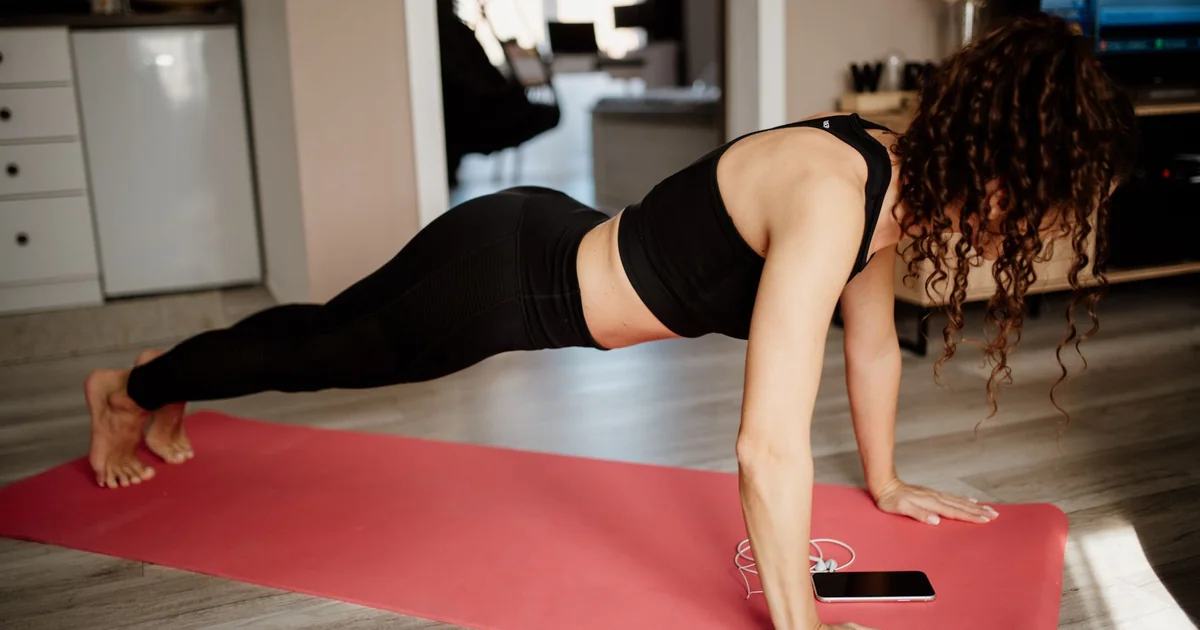
Yes — for most patients, exercise during IVF is not only safe but probably beneficial, as long as intensity matches the cycle phase. A 2026 study of 2,576 patients and 6,850 IVF cycles found women who exercised 1–2 times per week had the highest cumulative live birth rate (43.1% per retrieval), versus 37.2% for non-exercisers and 37.1% for those training 3 or more times weekly — and after transfer, a meta-analysis of 5 randomized trials found bed rest does not improve pregnancy rates at all.
The data here comes from peer-reviewed studies indexed on PubMed and public guidance from the American College of Obstetricians and Gynecologists (ACOG), compiled by the ProIVF Medical Editorial Team and reviewed by the ProIVF Medical Advisory Board. What actually matters is matching activity to each phase, avoiding a few genuinely risky windows, and listening to your body.
Can Exercise Hurt Your IVF Cycle?
The evidence says normal, moderate physical activity does not hurt IVF outcomes — and some research links it to better ones. Real risk concentrates in just two windows: around egg retrieval, when enlarged ovaries need protection, and any time you attempt unfamiliar high-intensity exercise while already on stimulation medication.
Everything else is mostly about comfort, stress regulation, and keeping life normal. Use this phase-by-phase quick reference; the sections below explain the evidence.
| Phase | Generally fine | Limit or avoid |
|---|---|---|
| Before the cycle / baseline | Brisk walking, jogging, cycling, swimming, strength training, yoga | Starting an extreme new training program right before stimulation |
| Ovarian stimulation | Light-to-moderate cardio, walking, yoga, light weights | New HIIT, heavy lifting, contact sports, and anything that twists or jolts the abdomen as ovaries enlarge |
| After egg retrieval (first 5–7 days) | Gentle walking once you feel well | High-impact exercise, heavy lifting, running, jumping — enlarged ovaries raise torsion risk |
| After transfer / two-week wait | Normal daily activity, walking, gentle yoga, stairs | Prolonged bed rest (no benefit), hot yoga, exhausting workouts, any activity causing pelvic pain |
| Pregnant after IVF (first trimester) | Moderate activity per obstetric guidance (~150 min/week in healthy pregnancies) | Extreme exertion; stop and call your doctor for bleeding or pain |
What Does the 2026 Evidence Say About Exercise and Live Birth?
The most direct study on this question comes from University Hospital Basel in Switzerland.
Geiger et al. (Frontiers in Endocrinology, 2026) analyzed 2,576 patients and 6,850 IVF cycles with embryo transfer between 2000 and 2021, sorting women by self-reported weekly activity: no regular exercise (group A), 1–2 times per week (group B), and 3 or more times per week including competitive athletes (group C).
The results form a clear “moderate is best” curve. In the cumulative rows, outcomes are counted per egg retrieval across all transfers from that retrieval, not per single transfer:
| Outcome | No regular exercise (A) | Exercise 1–2×/week (B) | Exercise ≥3×/week (C) |
|---|---|---|---|
| Pregnancy rate per transfer | 32.5% | 34.8% | 29.7% |
| Live birth rate per transfer | 23.0% | 25.6% | 22.4% |
| Cumulative pregnancy rate per retrieval | 52.5% | 58.7% | 49.5% |
| Cumulative live birth rate per retrieval | 37.2% | 43.1% | 37.1% |
Two points stand out. Group B — regular but moderate exercisers — scored highest on every outcome, and the relationship was not linear: the most active group C landed close to the sedentary group A, pointing to a sweet spot rather than “more is better.”
One limitation matters: this is a retrospective cohort, not a randomized trial, so it shows association, not proof that exercise caused better outcomes. Women exercising 1–2 times weekly may differ in health, stress, or lifestyle in ways the study cannot fully separate — though the finding fits the wider fertility literature, where moderate activity tracks with better metabolic health and extreme training loads can disrupt cycles.
Is Bed Rest After Embryo Transfer Necessary?
No — bed rest after transfer is the most widespread well-meaning myth in IVF, and the evidence rejects it. In Chinese-speaking patient communities especially, families often insist on strict bed rest for 48–72 hours after transfer.
Randomized-trial evidence. A systematic review and meta-analysis by Cozzolino et al. (Archives of Gynecology and Obstetrics, 2019) pooled 5 randomized controlled trials with 1,002 women. Clinical pregnancy rates did not differ between bed rest and immediate mobilization (risk ratio 0.86, 95% CI 0.74–1.00) — a risk ratio below 1 means the outcome was less common in the bed-rest group, and because the confidence interval includes 1.00, even that small difference could be chance. Live birth, ongoing pregnancy, and miscarriage rates were also unchanged.
“Bed rest after embryo transfer should not be recommended.” — Cozzolino et al., meta-analysis of 5 randomized trials (1,002 women), Archives of Gynecology and Obstetrics, 2019
Real-world activity data. A French cohort (Remy et al., Journal of Gynecology Obstetrics and Human Reproduction, 2026) followed 212 women after single frozen embryo transfer, recording work, physical activity, and sexual activity on transfer day and the 3 following days. Active and inactive women had the same outcomes: professional activity on transfer day carried an adjusted odds ratio of 1.13 and day 3 an adjusted OR of 0.76 — an adjusted OR compares relative odds between groups (above 1 favors the active group, below 1 against it), and neither figure reached significance.
Wearable-device data. The SSTEP trial (Jacobs et al., Fertility and Sterility, 2026) gave 82 women undergoing programmed FET a Fitbit for their entire cycle — roughly 40 days of continuous data each. The 51 women who conceived and the 31 who did not showed no difference in daily steps, active minutes, heart rate, calories burned, or sleep before or after transfer, and salivary cortisol and perceived stress were equally similar.
Bottom line: after transfer you can walk, climb stairs, cook, and resume daily life — no evidence shows gravity or normal movement dislodges an embryo. A short rest is fine if it calms you, but it is comfort, not medicine. For the full first-days checklist, see our embryo transfer aftercare guide.
Is Yoga Safe During IVF?
Yoga is the add-on patients ask about most after acupuncture (covered separately in our acupuncture for IVF guide), and the research supports one benefit clearly: stress relief.
A 2022 systematic review in Holistic Nursing Practice identified 24 studies of yoga in people with infertility across 9 countries. Yoga had positive effects on stress, anxiety, and depression, and the authors recommended it as adjunctive therapy during IVF. Some included studies reported better pregnancy outcomes among yoga practitioners, but those studies were small and heterogeneous — read that part cautiously.
In practice, treat yoga as a tool for the two-week wait and the emotional swings of treatment, not something that changes embryo quality or implantation. Gentle hatha or restorative yoga, breathing exercises (pranayama), and meditation are all reasonable choices.
Yoga cautions during IVF:
- Skip hot yoga (Bikram-style heated rooms) — high heat is not recommended in early pregnancy and can be uncomfortable during stimulation.
- Avoid deep twists and strong abdominal compression once stimulation has enlarged your ovaries.
- After egg retrieval, keep to gentle stretching until fully recovered (usually several days to a week), and skip inversions like headstands in that window.
- During the two-week wait, keep sessions gentle — stop any pose that causes cramping or pain.
Red-Flag Signals: When to Stop and Call Your Clinic
Exercise is generally safe, but these 4 signals mean stop immediately and contact your clinic:
- Severe or one-sided pelvic pain during stimulation or after retrieval — a possible sign of ovarian torsion, a medical emergency.
- Rapidly worsening bloating, nausea, or shortness of breath after retrieval — possible ovarian hyperstimulation syndrome (OHSS); do not try to “exercise it off.”
- Vaginal bleeding after transfer or once pregnant — stop and call your doctor.
- Dizziness, chest pain, or unusual shortness of breath during exercise at any phase.
The general rule: stop at pain or dizziness, and follow any specific restrictions your clinic sets — for example after a high egg count. No workout is worth risking your cycle.
Patient Stories: Three Ways to Stay Active
These stories are shared with consent; names and identifying details have been changed to protect privacy.
”I spent my first transfer in bed — and my second one on walks” — Yan, 36, Los Angeles
Yan spent her first transfer under three days of strict bed rest and the cycle ended in a negative beta-hCG test; on her second transfer she did two 20-minute walks daily and her son was born at 39 weeks.
Yan’s mother flew in from Guangzhou for her first frozen embryo transfer and enforced strict bed rest: three days lying flat, meals brought to the bedside. Yan complied and suffered — constipation, back pain, mounting anxiety — and the cycle ended in a negative beta-hCG blood test. Before her second transfer her doctor said plainly, “There is no evidence bed rest helps. Go for a walk.” Two 20-minute walks daily plus gentle stretching followed, and the transfer worked; her son was born at 39 weeks. “I honestly believe the walks did more for my mental state than any amount of lying down."
"Moderate routine, then five quiet days” — Mei, 32, Bangkok
Mei kept 3 moderate treadmill sessions weekly through stimulation, switched to slow walks for 5 days after 16 follicles were retrieved, and conceived — due in early 2027.
Mei kept her normal routine through a PGT-A cycle at a Bangkok clinic: 30 minutes on the treadmill at moderate pace 3 times weekly, plus weekend swimming, with her doctor’s support during stimulation. Then 16 follicles were retrieved, and caution followed. “The risk of ovarian torsion is real when your ovaries are the size of grapefruits,” her nurse explained. Mei switched to slow walks for 5 days, resumed swimming before her frozen transfer, and conceived — due in early 2027. “I never stopped living my life — I just turned the volume down."
"Yoga gave me somewhere to put my anxiety” — Elena, 38, Denver
After two failed cycles, Elena did 20 minutes of restorative yoga every evening through her third two-week wait; that transfer produced a clinical pregnancy and her daughter was born in June 2026.
After two failed IVF cycles, Elena’s anxiety during the two-week wait became overwhelming, and her therapist suggested gentle yoga and breathing practice. She did 20 minutes of restorative yoga every evening of her third wait — some nights crying on the mat, some nights genuinely relaxed. She never expected yoga to change the medical outcome, and her third transfer produced a clinical pregnancy. “I can’t tell you yoga is why it worked. I can tell you it made the waiting survivable.” Her daughter was born in June 2026.
FAQ
Q: Can I run during ovarian stimulation?
Light-to-moderate jogging is usually fine if you feel well and your clinic sets no restrictions, but avoid starting a new high-intensity running program during stimulation. The 2026 Basel cohort’s “moderate is best” pattern applies here.
Some clinics advise switching to walking, swimming, or cycling in the final days as ovaries enlarge — with a high follicle count or OHSS risk, confirm limits with your clinic.
Q: How soon after egg retrieval can I exercise again?
Most clinics advise avoiding high-impact exercise, heavy lifting, and running for about 1 week after retrieval, because enlarged ovaries carry a higher torsion risk. Gentle walking is fine once you feel comfortable, and the exact timeline depends on how many eggs were retrieved — follow your clinic’s individualized advice.
Q: Do I have to lie flat after embryo transfer?
No. Across the 5 randomized trials pooled in the 2019 meta-analysis, clinical pregnancy rates were no better with bed rest than immediate mobilization (risk ratio 0.86, 95% CI 0.74–1.00).
You can walk out of the clinic, climb stairs, and resume daily life; lying down briefly is relaxation, not treatment.
Q: Can I climb stairs after transfer?
Yes. The 2026 French cohort of 212 women found no outcome difference between active and inactive women after single frozen embryo transfer.
Normal stair use is everyday physical activity with no evidence of harming implantation.
Q: Is yoga safe during the two-week wait?
Gentle yoga is safe and helps anxiety: the 2022 systematic review of 24 studies across 9 countries found yoga eased stress, anxiety, and depression in fertility patients, though no reliable evidence it raises pregnancy rates. Avoid hot yoga, deep abdominal twists, and any pose causing pain — and stop and call your clinic for bleeding or severe cramping.
Q: Can exercise stop an embryo from implanting?
No evidence shows normal physical activity prevents implantation. In the SSTEP wearable study of 82 women, daily step counts before and after transfer did not differ between those who conceived and those who did not.
Extreme exertion is unnecessary, and the 2026 Basel cohort found moderate activity associated with the best outcomes.
Q: What counts as “moderate” exercise during IVF?
Moderate means you can still hold a conversation: brisk walking, easy cycling, swimming, light jogging, gentle yoga, or Pilates. The practical benchmark used in research and public health guidance is about 150 minutes per week, while the Basel cohort’s best results appeared at just 1–2 sessions weekly.
Q: I’m pregnant from IVF — can I keep exercising in the first trimester?
Yes, for a healthy pregnancy: ACOG’s committee opinion on physical activity supports about 150 minutes of moderate activity per week. Resume gradually if you scaled back during treatment, avoid activities with fall or abdominal-impact risk, and stop for bleeding or pain.
How to Build Your Exercise Plan Around IVF
A workable framework across the whole cycle:
- Ask your clinic at the start of every phase. Before stimulation, retrieval, and transfer, ask “any activity restrictions for me specifically?” and write down the answers — if you are new to treatment, our step-by-step IVF process guide maps what happens in each phase.
- Aim for the moderate sweet spot. Based on the 2026 cohort, 1–2 regular moderate sessions per week is a reasonable target — not zero, not a marathon.
- Make walking your default. Walking is the safest activity in every phase, including right after transfer.
- Use yoga for the mental load. If the two-week wait is emotionally hard, a gentle home yoga or breathing routine is a low-risk coping tool.
- Respect the two danger windows. Protect enlarged ovaries around retrieval, and at any phase stop for pain, bleeding, or dizziness and call your clinic.
Comparing clinics for your next cycle? Activity counseling after retrieval and transfer makes a useful interview question alongside the medical essentials. Browse IVF clinics by country on ProIVF or contact us for help shortlisting.
This article was written by the ProIVF Medical Editorial Team and reviewed by the ProIVF Medical Advisory Board, based on publicly available data from the Geiger et al. 2026 Basel cohort, the 2019 bed-rest meta-analysis, the 2026 French post-transfer activity study, the SSTEP wearable trial, the 2022 yoga systematic review, and the Gaskins et al. EARTH study.
Disclaimer: This article is for informational purposes only and does not constitute medical advice. Always follow your fertility clinic’s specific instructions and consult your doctor before changing activity levels during treatment.
Last updated: 2026-09-03