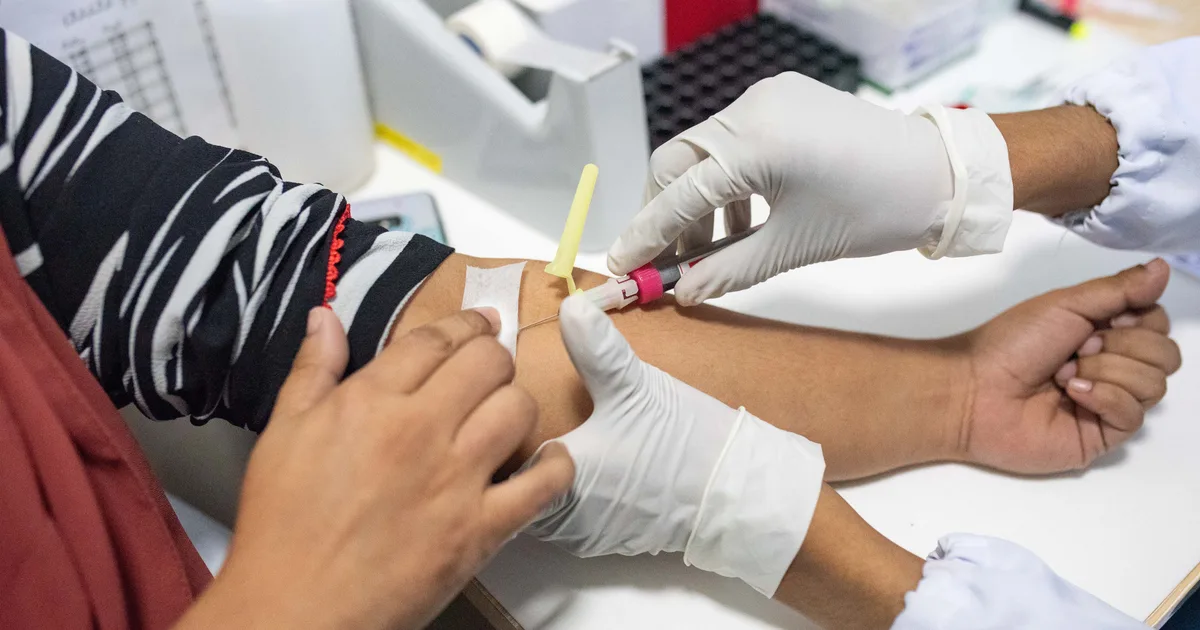
Follicle-stimulating hormone (FSH) is the fertility number people most want to turn into a pass-or-fail line. A draw on cycle day 2, 3 or 4 reports how hard the brain is pushing the ovaries right now — not how many good eggs remain. The American Society for Reproductive Medicine (ASRM) states that ovarian reserve tests, used alone, are poor predictors of reproductive potential [1]; the European Society of Human Reproduction and Embryology (ESHRE) goes further, recommending antral follicle count (AFC) or AMH rather than any other reserve test to predict response [2]. FSH is still worth testing — it is the most indirect of the three. In a 2024 meta-analysis of 26 studies, AMH and AFC outperformed basal FSH and estradiol at flagging poor and high responders, AMH giving the highest pooled log diagnostic odds ratio: 2.68 (95% CI 1.90–3.45) for poor response, 2.76 (1.57–3.95) for high response [9].
What FSH Actually Measures
FSH comes from the anterior pituitary gland and acts on the small follicles just starting to grow in the ovary. When the ovary weakens, the brain shouts louder, so blood FSH rises — an amplified, indirect reading. A review of poor-prognosis groups spells out the consequence: FSH is only an indirect marker of reserve, rises noticeably once reserve is substantially depleted, and predicts response with consistently moderate sensitivity and specificity [5]. “High FSH means my reserves are gone” is a late signal — and one normal FSH does not prove the reserve is adequate.
FSH, estradiol, AMH: three questions on one lab slip
| Marker | What it answers | Use in an IVF decision | Source |
|---|---|---|---|
| Basal FSH | How hard the brain is pushing now | A prompt to check AFC and AMH, not a plan-maker on its own | [1][5] |
| Basal estradiol | Read with FSH, so high E2 doesn’t mask high FSH | Prognostic value not established; no recommendation | [2] |
| AMH and AFC | Size of the recruitable follicle pool | The markers the guideline names for response | [2][9] |
LH/FSH ratios and PCOS are covered in PCOS and IVF.
Why the draw has to be cycle day 2–4
FSH moves across a cycle, so only an early-follicular value — clinics say day 2–4, and “day 3 FSH” means the same thing — is comparable between patients and between your own cycles [1][4]. “Day 1 is the first day of real bleeding” is about comparability, not accuracy. With irregular cycles the day is ambiguous anyway, and AMH and AFC carry more weight, since AMH is comparatively stable [1].
Is My FSH Normal? Two Tables People Mix Up
“Normal FSH levels by age chart” has two layers: a laboratory reference interval says where a number sits in a population, a clinic’s interpretation band says roughly how many eggs a cycle will get. They come from different data and cannot substitute for each other.
FSH rises about 1 IU/L every nine years
Day-3 blood from 192 regularly cycling women showed FSH (and estradiol) rising linearly with age: about 0.11 IU/L per year, or 1 IU/L across nine years. The authors computed age-specific percentiles and concluded that anything above the 95th counts as a warning of declining reserve [4]. The slope implies a day-3 FSH roughly 0.6 mIU/mL higher at 30, 1.1 higher at 35 and 1.7 higher at 40 than at 25 — derived figures, not published percentiles, and far smaller than the spread between women of the same age. Direction, not a grade.
What the range printed on your lab slip says
A 2026 IFCC-methodology study of 250 women sampled in the early follicular phase put mean FSH near 7.0 mIU/mL at ages 19–29, 7.5 at 30–39, about 25 in the perimenopausal 40–49 band, and 65–70 after 50 [15] — single digits through the reproductive years, then a tenfold jump. Single centre, few samples per band, and some confidence intervals that don’t reconcile with the reported means: direction, not a threshold source. Numbers are not interchangeable between labs or assay platforms, so read against the interval printed on your own slip and repeat at the same lab.
The thresholds clinics actually use
| Day 2–4 FSH | How the literature words it | Source | Consequence for IVF |
|---|---|---|---|
| <10 mIU/mL | Usually treated as normal | [4][5] | Doesn’t prove good reserve alone; needs AFC/AMH |
| 10–15 mIU/mL | Poor-response cut-offs “spread across 10 to 15 IU/L” | [5] | Grey zone — AFC and AMH decide |
| >15–20 mIU/mL | Few patients reach it, which “limits the usefulness” | [5] | Clearly reduced reserve, still not an independent fertility predictor [1] |
| Low, with low E2 and sparse periods | Points to the hypothalamic–pituitary side | [16] | Different stimulation logic; address the cause first |
IU/L and mIU/mL are numerically identical.
Low FSH is the opposite problem, most often functional hypothalamic amenorrhoea: 20–35% of secondary amenorrhoea, second only to PCOS, and 41.9–46.7% of cases also show polycystic ovarian morphology on ultrasound, inviting a PCOS misdiagnosis [16]. Low FSH with low estradiol belongs with a reproductive endocrinologist, not a supplement cart.
Can You Get Pregnant With High FSH?
Searching “what is a normal FSH level to get pregnant” is asking about natural conception, and a prospective cohort answers it. Time to Conceive enrolled women aged 30–44 with no infertility history who gave blood at entry, defined diminished reserve as AMH <0.7 ng/mL or FSH ≥10 mIU/mL, and followed outcomes past three years. Adjusted for age, race, obesity, contraceptive use and enrolment year, the live-birth risk ratio was 1.28 (95% CI 0.97–1.70) by the FSH definition and the fecundability ratio among women actively trying 0.86 (0.55–1.36) — neither significant. The authors warned against reading these biomarkers as predictions of future fertility [7]. Scope: 30–44, no infertility history, natural conception — it does not transfer to someone already diagnosed with infertility and starting stimulation.
The older infertility literature reads differently, and both findings survive. A 1995 study screened about 1,200 women at an infertility practice with the clomiphene challenge test: abnormal results meant significantly lower pregnancy rates that did not improve with younger age [8]. One measured “can this ovary still be pushed” in patients, the other “will she conceive within three years” in a community. And FSH counts the queue, not the chromosomes: aneuploidy tracks age, and ASRM positions reserve markers as predictions of oocyte number [1]. For quality, see how to improve egg quality for IVF and embryo testing with PGT-A.
High FSH and IVF: From “Can I Start?” to “How Many Eggs?”
No guideline makes one FSH value a reason not to treat: response is predicted with AFC or AMH rather than other reserve tests [2], and the April 2026 update widened the guideline to 21 key questions and 121 recommendations, 17 on monitoring and 8 on preventing hyperstimulation [3]. If a clinic discourages you on a single number, ask them to put AFC, AMH and your previous cycle response beside it.
Bologna and POSEIDON sort risk, not destiny
| System | How someone is placed in it | Source |
|---|---|---|
| Bologna (ESHRE consensus) | Any two of: age ≥40; previous poor response; abnormal reserve (AFC <5–7 or AMH <0.5–1.1 ng/mL); or two poor responses after maximal stimulation | [6] |
| POSEIDON 1 and 2 | Normal markers (AFC ≥5, AMH ≥1.2 ng/mL) with unexpected poor response (<9 oocytes); under vs at least 35 | [5] |
| POSEIDON 3 and 4 | Abnormal reserve markers; under vs at least 35 | [5] |
What sets the groups is age, AFC, AMH and prior retrieval numbers — FSH appears in neither threshold table [5][6]. The POSEIDON review adds two figures for the consultation table: group 3 needs roughly 4–7 oocytes per euploid embryo, group 4 about 12. Its suggested regimens include recombinant FSH at 300 IU/day (plus rLH in group 4), double stimulation in one cycle, and freeze-all transfer; androgen adjuncts “need further research before they can be recommended,” and donor eggs enter the discussion only in group 4 [5].
Does 450 IU beat 150 IU? A randomised trial says no
| Evidence | Comparison | Result | Takeaway |
|---|---|---|---|
| Dutch multicentre RCT, 511 women | AFC ≤7: 450 vs 150 IU/day; AFC 8–10: 225 vs 150 IU/day | Cumulative live birth 42.4% (106/250) vs 44.8% (117/261); RR 0.95 (0.78–1.15), P = 0.58; €1,099 more per woman | Escalating the dose did not beat 150 IU/day [10] |
| ESHRE guideline | Dose in predicted poor responders | Above 300 IU: not recommended (strong). Exceeding 150 IU: unclear. Under 150 IU vs standard: no studies found | A consensus ceiling, an evidence gap in the middle [2] |
So when FSH is high, the lever that changes outcomes is protocol and cycle planning, not more injections (IVF stimulation protocols guide). Once treatment starts, monitoring is ultrasound-led: adding estradiol is “probably not recommended,” as are an estradiol/progesterone/LH panel and routine endometrial thickness measurement [2]. After you begin injecting, blood FSH no longer describes your own reserve — the number reflects the drug.
Brands, doses and hyperstimulation risk
Guidelines rate rFSH, hMG, purified and highly purified FSH as equivalent [2], so the pricier brand is no efficacy argument (IVF medications explained, fertility drugs). Hyperstimulation (OHSS) has eight prevention recommendations of its own [2][3], but that risk sits at the predicted-high-response end, which AMH and AFC track best [9], antagonist protocols being strongly recommended there [2]. A high basal FSH with a small follicle pool means the other problem: few eggs or a cancelled cycle, not bloating and ascites (IVF injections guide).
Can You Lower Your FSH Before IVF?
“How to lower FSH levels” searches expect a drug that makes the lab slip look better. FSH is a reading, not the lesion: suppressing it does not enlarge the follicle pool, consistent with a guideline calling estrogen before an antagonist cycle “probably not recommended” [2]. TESTOPRIM randomised 63 Bologna-defined poor responders to testosterone gel 12.5 mg/day for 56 days, for 10 days, or nothing: mature oocyte counts were 2.16, 2.71 and 2.91 (P = 0.719), with no cycle parameter differing except testosterone itself [11]. The 2024 Cochrane review of DHEA or testosterone in assisted reproduction found evidence insufficient for routine use [12]. Coenzyme Q10 looks more promising: in 186 women in POSEIDON group 3, 60 days of pretreatment lowered gonadotropin dose and raised oocyte yield (median 4, IQR 2–5), with fewer cancellations for poor embryo development (8.33% vs 22.89%, P = 0.04) — but 17 participants dropped for poor compliance and live birth was not the primary outcome [13]. Nothing is shown to lower basal FSH and raise the number of babies brought home. One odd value is also just a fluctuation: repeat it at the same lab on the same cycle day, read with AFC and AMH [1][2]. Postponing a cycle because this month’s number looked better pays with age — the predictor that, in ASRM’s framing, still works [1].
FSH in Men: Same Blood Draw, Different Question
In men FSH tracks the sperm-producing side of the testis and climbs with age: means for 250 men aged 19–70 rose from about 4.0 mIU/mL at 19–29 to about 16.0 at 60–70 [15]. It characterises azoospermia rather than scoring fertility. Evidence does not support routine pre-operative hormonal treatment to raise sperm retrieval in non-obstructive azoospermia, though retrieval success is higher with normal than low testosterone (OR 1.63, 95% CI 1.08–2.45, P = 0.02) — which keeps it relevant for the hypogonadal subset [14].
Two FSH Reports, Two Different Plans
These accounts are composites of several real patients; names are pseudonyms and details changed.
Maya, 37 — FSH 12.6, AMH 1.9, AFC 9. A clinic called the number “already high — wait longer and it’s over” and pushed her to sign that week. She sat in the 10–15 grey zone [5] with AMH and AFC still on POSEIDON’s normal-reserve side [5]. She repeated the FSH at the same lab (10.4), recounted AFC (10), started at standard dose, retrieved 9 eggs. “The line I keep is what my doctor said: ‘This time we’re betting on numbers, not on that one number.’”
Dana, 43 — FSH 19.8, AMH 0.35, AFC 2. POSEIDON group 4 [5]. Her consultation was arithmetic, not permission: group 4 needs about 12 oocytes per euploid embryo, and her last cycle produced 3 [5]. Two retrievals to accumulate oocytes, PGT-A on all of them, donor eggs explicitly on the table [5]. “I expected a ‘don’t bother.’ He said, ‘let’s work out how many cycles this takes.’”
Frequently Asked Questions
Q: What is a normal FSH level?
Population studies put early-follicular FSH around 7 mIU/mL [15]; clinic thresholds spread across 10–15 mIU/mL [5]. Spread within one age group far exceeds the age shift of about 1 IU/L per nine years [4], and intervals differ by lab — anchor on your own lab’s range and let AFC and AMH drive action [2].
Q: Is FSH 12 too high to do IVF?
No — no guideline makes a single FSH value a contraindication [1][2]. A 12 sits in the 10–15 grey zone [5], and the plan turns on whether you cross POSEIDON’s abnormal-reserve lines (AFC <5, AMH <1.2 ng/mL) [5]. Escalating to 450 IU/day did not beat 150 IU/day for cumulative live birth [10], so the useful conversation is protocol and cycle count [2].
Q: What is a normal FSH level to get pregnant?
There isn’t one. In women aged 30–44 with no infertility history, FSH ≥10 mIU/mL did not predict fewer live births within three years (RR 1.28, 95% CI 0.97–1.70) [7]. High FSH can matter greatly for how a stimulation cycle runs while saying little about conceiving naturally.
Q: How can I lower my FSH before IVF?
Nothing is proven to lower basal FSH and improve outcomes — testosterone failed in a randomised trial [11], Cochrane finds the androgen evidence insufficient [12], and the CoQ10 trial ended on embryo quality, not live birth [13].
Q: What’s the difference between FSH and AMH?
FSH comes from the brain and reflects how hard the ovary is being driven this week; AMH comes from the growing follicles and tracks pool size [1][5]. ESHRE names AMH and AFC for predicting response [2] — read AMH levels by age and IVF and, if yours is low, IVF with low AMH.
References
- Practice Committee of the American Society for Reproductive Medicine. Testing and interpreting measures of ovarian reserve: a committee opinion. Fertil Steril 2020;114:1151–1157. DOI · PMID 33280722
- Ovarian Stimulation TEGGO, Bosch E, Broer S, et al. ESHRE guideline: ovarian stimulation for IVF/ICSI. Hum Reprod Open 2020;2020:hoaa009. DOI · PMID 32395637
- ESHRE Guideline Group on Ovarian Stimulation, Ata B, Bosch E, et al. ESHRE guideline: ovarian stimulation for IVF/ICSI: an update in 2025. Hum Reprod 2026;41:498–514. DOI · PMID 41732035
- Grisendi V, Spada E, Argento C, et al. Age-specific reference values for serum FSH and estradiol levels throughout the reproductive period. Gynecol Endocrinol 2014;30:451–455. DOI · PMID 24805832
- Grisendi V, Mastellari E, La Marca A. Ovarian reserve markers to identify poor responders in the context of POSEIDON classification. Front Endocrinol 2019;10:281. DOI · PMID 31139145
- Ferraretti AP, La Marca A, Fauser BC, et al. ESHRE consensus on the definition of ‘poor response’ to ovarian stimulation for in vitro fertilization: the Bologna criteria. Hum Reprod 2011;26:1616–1624. DOI · PMID 21505041
- Harris BS, Jukic AM, Truong T, et al. Markers of ovarian reserve as predictors of future fertility. Fertil Steril 2023;119:99–106. DOI · PMID 36460524
- Scott RT, Opsahl MS, Leonardi MR, et al. Life table analysis of pregnancy rates in a general infertility population relative to ovarian reserve and patient age. Hum Reprod 1995;10:1706–1710. DOI · PMID 8582965
- Salemi F, Jambarsang S, Kheirkhah A, et al. The best ovarian reserve marker to predict ovarian response following controlled ovarian hyperstimulation: a systematic review and meta-analysis. Syst Rev 2024;13:303. DOI · PMID 39695880
- van Tilborg TC, Torrance HL, Oudshoorn SC, et al. Individualized versus standard FSH dosing in women starting IVF/ICSI: an RCT. Part 1: The predicted poor responder. Hum Reprod 2017;32:2496–2505. DOI · PMID 29121326
- Subirá J, Algaba A, Vázquez S, et al. Testosterone does not improve ovarian response in Bologna poor responders: a randomized controlled trial (TESTOPRIM). Reprod Biomed Online 2021;43:466–474. DOI · PMID 34312088
- Naik S, Lepine S, Nagels HE, et al. Androgens (dehydroepiandrosterone or testosterone) for women undergoing assisted reproduction. Cochrane Database Syst Rev 2024;6:CD009749. DOI · PMID 38837771
- Xu Y, Nisenblat V, Lu C, et al. Pretreatment with coenzyme Q10 improves ovarian response and embryo quality in low-prognosis young women with decreased ovarian reserve: a randomized controlled trial. Reprod Biol Endocrinol 2018;16:29. DOI · PMID 29587861
- Caroppo E, Colpi GM. Hormonal treatment of men with nonobstructive azoospermia: what does the evidence suggest? J Clin Med 2021;10:387. DOI · PMID 33498414
- Ahamed Y, Ashraf SB, Dauty RT, et al. Sex and age specific hormonal patterns in healthy Chinese individuals: a cross-sectional study of reproductive hormones. Sci Rep 2026;16:8299. DOI · PMID 41673051
- Ott J, Robin G, Hager M, et al. Functional hypothalamic amenorrhoea and polycystic ovarian morphology: a narrative review about an intriguing association. Hum Reprod Update 2025;31:64–79. DOI · PMID 39378412
Where This Number Should Take You Next
FSH needs company: it points at a direction, AFC and AMH decide the action, age decides the prognosis [1][2]. With a fresh result, ask what cycle day the blood was drawn on, what the AFC and AMH are, and which POSEIDON group that makes you.
Compare fertility clinics in the hospital directory, or contact our advisory team to have someone read your report with you.
Written by the ProIVF Medical Editorial Team from the ASRM committee opinion, the ESHRE ovarian stimulation guidelines (2020 and the 2025 update) and the trials cited above; reviewed by the ProIVF Medical Advisory Board. Figures are population-level reference values, not individual predictions. Patient accounts are composites under pseudonyms. Informational, not medical advice. Editorial standards: ProIVF about page. Last updated: 2026-10-29.