Nothing you do the night before an embryo transfer has been shown to change your chance of a baby. In a 2022 umbrella review of 32 systematic reviews covering 353 studies and 132,747 women, the factors linked to better pregnancy rates were almost all clinic-side.
Ultrasound-guided placement, a catheter free of blood and mucus, and a cavity checked beforehand.
What you control is narrower and mostly negative: no bed rest afterwards, no endometrial scratching bought as a success product, progesterone at the hour you were told, and no rituals the evidence never asked for.
This review evaluated the effects of various preparation techniques on ET outcomes. The evidence is generally of low or very low certainty and therefore should be interpreted with caution. … No specific implications for practice are made based on the available evidence.
—— Yamaji et al., Cochrane Database of Systematic Reviews, 2026
This guide was written by the ProIVF Medical Editorial Team and reviewed by our Medical Advisory Board, using randomised trials, Cochrane reviews and meta-analyses indexed on PubMed, plus guidance from US and UK regulators. It is educational and does not replace your own clinic’s written instruction, which takes priority.
Does What You Do the Night Before Change Anything?
Not measurably. No randomised trial has tested a night-before behaviour — sleep, diet, a bath, a walk — against embryo transfer outcome.
That absence is not a licence to dismiss the question. Two things genuinely change outcomes, and neither is a ritual: the medication schedule you follow and the instructions you observe on the day. Everything else you invent at 2 a.m. is neutral.
So Why Do Clinics Give Long Instructions?
Because the transfer is timed to the minute against your hormone cycle, and the two mechanical variables that matter — bladder fill and catheter path — are patient-dependent.
A full bladder straightens the cervix-to-uterus angle, which is why centres ask for one. As a success intervention the evidence shows no benefit; as a procedural instruction it is standard practice.
What the Cochrane Review Found
The 2026 Cochrane update on preparation techniques before embryo transfer included 11 studies with 2,524 women, of which six (1,341 women) tested the three main preparation methods.
The three were full versus empty bladder, removing cervical mucus, and loading the embryo only after the catheter entered the cavity. None was recommended. Full versus empty bladder gave a pregnancy risk ratio of 1.01 (95% CI 0.69 to 1.48) from two studies with 273 participants, on very low-certainty evidence. Removing cervical mucus produced 52 live births per 220 cycles versus 42 per 205 — little to no effect.
Five Things That Do Move a Transfer
These are the items where pooled estimates exist, and four of the five sit on the clinic’s side of the room.
Ultrasound-Guided Placement
In the umbrella meta-analysis of transfer optimisation, transferring under ultrasound guidance carried higher ongoing pregnancy odds than a blind transfer: OR 1.48 (95% CI 1.14 to 1.93).
Ask whether transfers are done under ultrasound as standard. Many centres do it for every patient; a few reserve it for difficult passes.
A Catheter That Arrives Clean
The same review found blood left on the catheter tracked with lower ongoing pregnancy odds (OR 0.41, 95% CI 0.19 to 0.87), as did cervical mucus contamination (OR 0.58, 95% CI 0.34 to 1.00).
This is a technique variable, not something you caused. It belongs in the conversation about why one cycle failed.
A Uterine Cavity Checked First
Assessment of the uterine cavity before transfer was associated with higher ongoing pregnancy odds in the pooled data: OR 2.00 (95% CI 1.37 to 2.93).
In practice that means a saline sonogram or hysteroscopy (a camera through the cervix) before the transfer cycle, looking for polyps, adhesions and submucous fibroids. Our saline sonography guide covers what each finding costs in probability.
Progesterone: the Hour and the Level
This is the largest item on your side of the ledger. In artificial cycles with no corpus luteum, luteal progesterone below the lab’s threshold carried an ongoing pregnancy relative risk of 0.72 (95% CI 0.62 to 0.84) and 0.73 for live birth (0.59 to 0.90).
The miscarriage risk ratio was 1.48 (1.17 to 1.86). Two of its authors were employed by a drug manufacturer and a consultancy — worth knowing when you read a pharmaceutical dose recommendation.
A separate meta-analysis of frozen transfers in blastocyst cycles using vaginal progesterone alone found serum levels above the 10 ng/mL threshold carried a risk ratio of 1.47 for ongoing pregnancy or live birth (95% CI 1.28 to 1.70), and 0.62 for miscarriage (0.50 to 0.77).
The instruction is narrow: take each dose at the hour you were told. Where the start time of progesterone was calculated for your blastocyst, a four-hour drift is a different biological day.
How Many Embryos Are Placed
Transferring one rather than two cuts the risk of a twin pregnancy sharply, and single-embryo policy is where national guidance has moved.
The pooled blastocyst-versus-cleavage comparison showed no significant ongoing pregnancy difference (OR 1.26, 95% CI 0.97 to 1.64), so this is a risk decision made with your clinic rather than a luck lever.
Our breakdown of how many embryos are transferred sets out the trade-off by age.
Why Lying Down Afterwards Can Work Against You
Bed rest after transfer is the most common thing patients invent, and the most studied thing they should stop.
A 2013 randomised trial allocated 240 women undergoing donor-oocyte IVF to a 10-minute rest after transfer or to getting up straight away. Live birth came out 41.6% with bed rest and 56.7% without; implantation rates were comparable, and miscarriage was 27.5% versus 18.3% — a gap that did not reach statistical significance. The authors concluded the rest was not merely unhelpful but plausibly harmful.
A 2019 meta-analysis of 5 randomised trials with 1,002 women found no significant difference: with bed rest as the exposed group, clinical pregnancy carried RR 0.86 (95% CI 0.74 to 1.00) and live birth RR 0.93 (95% CI 0.51 to 1.69). Both point estimates sit below 1.0 — still favouring getting up — but every interval crosses the line of no effect, which is why the authors’ recommendation is that bed rest simply should not be advised.
One caution for honesty: pooled estimates do not agree across reviews, and the umbrella analysis above reported the opposite direction for longer rest. The randomised evidence and the reviews’ own conclusions still advise against it, and no guideline asks you to stay flat. Getting up, using the toilet and walking to the car is what most discharge instructions say; the post-transfer timeline covers what follows.
Endometrial Scratching: the Biggest Expectation Gap
Lightly abrading the uterine lining was sold for years as a way to “wake up” implantation. The definitive trial settled it.
In a 2019 randomised trial in the New England Journal of Medicine, 1,364 women were assigned to a pipelle scratch between day 3 of the preceding cycle and day 3 of the transfer cycle, or to nothing. Live birth was 180 of 690 (26.1%) with the scratch and 176 of 674 (26.1%) in controls — adjusted odds ratio exactly 1.00 (95% CI 0.78 to 1.27).
It is not free: median pain scored 3.5 on a 0-to-10 scale (interquartile range 1.9 to 6.0).
Two related techniques now get asked about instead. Endometrial thickness of 7 mm or less appeared in only 2.4% of 10,724 cycles in a 22-study meta-analysis, where clinical pregnancy was 23.3% versus 48.1% above that line — yet the authors called its discriminatory capacity “virtually absent” and advise against cancelling on it.
And endometrial compaction — the lining thinning slightly as progesterone starts — showed no overall benefit across 18 cohorts and 16,164 cycles, except in the subgroup where the reduction reached 15% or more, where ongoing pregnancy carried a risk ratio of 1.99 (95% CI 1.61 to 2.47). That is a clinician’s reading of your scan, not yours.
What Not to Bother With
The UK fertility regulator classifies fertility “add-ons”, and most of what reaches transfer patients sits in the no-evidence tier. Its add-ons register is worth ten minutes before you agree to anything extra.
- Bed rest, and the reverse: exhaustive rest for a week. Neither is supported; one appears harmful.
- Acupuncture on transfer day. Trial evidence for pregnancy benefit is inconsistent; for procedure anxiety it is steadier. Our acupuncture guide sets out both.
- Special diets, detoxes and “implantation” supplements. No randomised trial of a transfer-week diet reports a live-birth outcome.
- Extra progesterone “for safety” without a measured level. Dose escalation should follow a blood result, not a feeling.
- Checking whether you are pregnant before the blood test. Home tests before the clinic’s blood draw produce false positives from trigger residue far more often than early news.
The pattern is consistent: the add-ons sold hardest sit closest to a moment when a patient feels she should be doing something.
Your Night-Before Checklist
This list is logistics: its purpose is that nothing goes wrong in the morning, not that it changes the biology.
- Confirm the time and the address in writing the evening before, including which suite you go to.
- Set out the medication you take that night and the next morning, with the exact hour for each.
- Read the drinking instruction and work out when to start, because a comfortably full bladder takes about an hour to build.
- Pack the documents: ID, consent forms, and your partner’s ID if he is attending.
- Choose comfortable clothes, and leave at home any jewellery that has to come off.
- Ask who to call if you bleed, or if you cannot make the appointment.
- Sleep when you can. No trial links one poor night to an outcome; tiredness is not a risk factor to add to your worry list.
Patients report the waiting as the hardest part. Building the evening around something ordinary — a film, a meal with someone who will not discuss follicles — is the only uncited advice here, and the one most repeat.
The Morning of the Transfer
Arrive earlier than you think you need to, on the drinking schedule your clinic set.
- No perfume, scented lotion or nail-polish remover. Volatile compounds from cosmetics reach the culture dish; embryology labs ask for this consistently.
- Empty your bladder at the last moment only if your clinic told you to; otherwise follow its fill instruction.
- Eat normally unless you were told otherwise. Transfer needs no anaesthetic in most programmes.
- Hand over the correct medication list, including anything started at a different hour than planned.
- Ask, before you are covered, what will happen if the pass is difficult — whether the team changes catheter or cancels and freezes.
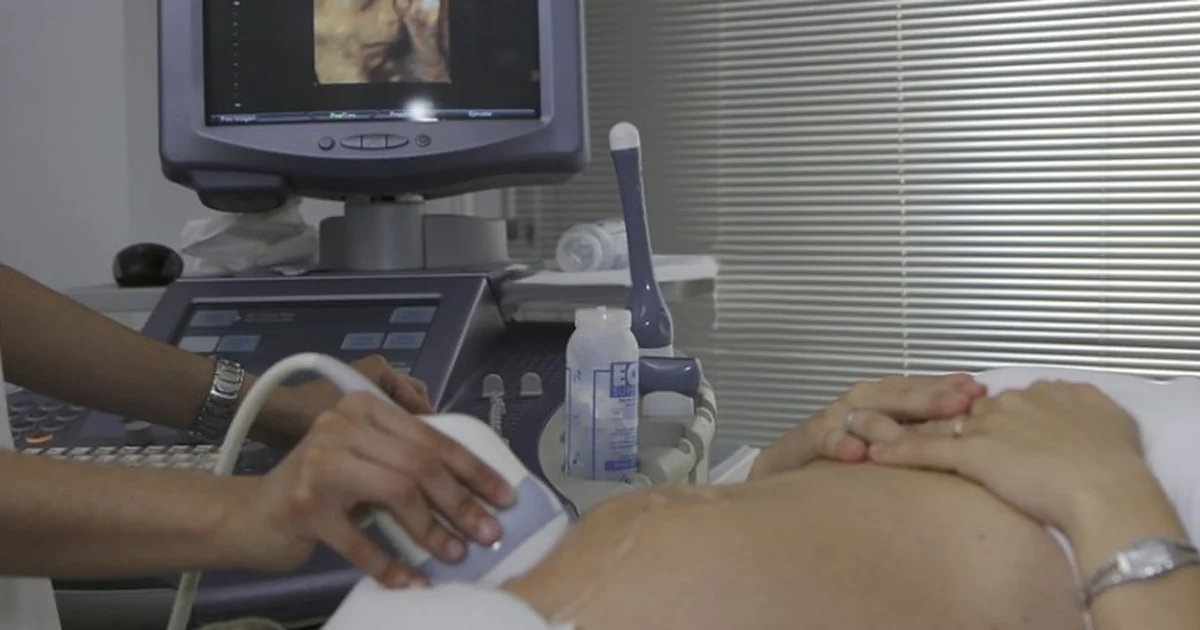
The procedure takes a few minutes: a speculum, an abdominal scan, a thin catheter through the cervix, then a minute or two lying still while the team confirms placement.
Frozen Transfers Start Their Clock Earlier
In a frozen embryo transfer cycle, most decisions were made well before the transfer morning.
In artificial cycles, oestradiol starts on day 2 or 3, a scan checks the lining around day 10 to 14, and progesterone begins once the lining is accepted. From that first progesterone dose the clock is fixed: a day-5 blastocyst is transferred on the fifth full day of progesterone exposure.
That timing has been tested. A 2026 randomised trial of 338 women transferring day-6 blastocysts compared six versus seven days of progesterone and found live birth of 45.0% and 40.2% — adjusted relative risk 0.90 (95% CI 0.70 to 1.14), no significant difference.
The honest reading: the window is wider than the anxiety suggests, and your clinic’s protocol was chosen for your embryo stage and lining. Our frozen embryo transfer guide walks through the sequencing; progesterone levels after transfer covers what the blood tests are for.
If a transfer has already failed, the questions for a review appointment are in our recurrent implantation failure guide.
Two Women, Two Preparations
These two accounts are composites assembled from the patterns above. Names, identifying details and money figures are invented illustrative estimates, not identifiable records or price quotes.
Zhao, 37, Chengdu → Bangkok: the Four-Hour Dose
Zhao was transferring a day-5 blastocyst in a programmed frozen cycle, with progesterone starting at 8 a.m. Two weeks in, a work flight moved one dose to midday.
She said nothing at the transfer, assuming a few hours could not matter. Her clinic’s audit found serum progesterone below the level they expected that morning, and offered a freeze-back instead of transferring. She paid THB 42,000 (about USD 1,180) for the cycle and lost the window, though not the plan: a second blastocyst was still frozen.
“I thought keeping it to myself was protecting the cycle,” she said. “It was the reporting that would have protected it.” She transferred the following spring, on schedule, and had a live birth at 38.
Erin, 33, Manchester: the Bed Rest She Could Not Avoid
Erin’s clinic told her to get up and go home. Her mother-in-law did not believe that, and Erin spent her first transfer cycle lying on a sofa from 11 a.m. to 9 p.m., too polite to explain.
She had a negative blood test at 14 days, then a positive one the next cycle, after she showered, ate and walked on transfer afternoon. Both cycles cost GBP 4,150 including medication.
“The second time I made a joke of it and went to the shops,” she said. “I don’t think the shopping helped. I think lying still made me mad.”
Her account is anecdote, not evidence, and the randomised data point the other way from the sofa.
FAQ
Q: What should I do the day before my embryo transfer?
Confirm the appointment time and address in writing, set out the medications with their exact hours, and read the drinking instruction so you know when to start — a full bladder usually needs 500 to 750 mL and 45 to 60 minutes to build. Sleep when you can.
No randomised trial links any night-before behaviour to live birth, so treat this as preparation for a smooth morning rather than for implantation.
Q: Should I drink a lot of water before an embryo transfer?
Follow your clinic’s number rather than a general rule. Many centres ask for a comfortably full bladder because it straightens the cervix-to-uterus angle, but the 2026 Cochrane review found a pregnancy risk ratio of 1.01 (95% CI 0.69 to 1.48) for full versus empty bladder — that is, no demonstrated benefit, on very low-certainty evidence.
It remains standard procedure because it makes the pass technically easier.
Q: How long should I lie down after embryo transfer?
Longer than a few minutes is probably wrong. In a 240-woman randomised trial, 10 minutes of bed rest produced live birth in 41.6% against 56.7% when women got up straight away, and a meta-analysis of 5 randomised trials covering 1,002 women found no significant difference in pregnancy (RR 0.86, 95% CI 0.74 to 1.00) either way.
Q: Is endometrial scratching worth doing before a transfer?
No, if the goal is a baby. The 2019 randomised trial of 1,364 women found live birth of 26.1% in both arms, an adjusted odds ratio of 1.00, and median pain of 3.5 out of 10.
It is invasive, it costs you pain, and its effect on the outcome you are paying for was exactly nil.
Q: Can I eat before my embryo transfer?
Yes. Transfers are done without anaesthesia in most programmes, so there is no fasting requirement, and no diet has a trial showing a live-birth effect.
Eat what you normally eat, avoid foods that upset your stomach that day, and ask your clinic if it uses sedation — that is the one situation where fasting applies. Diet is worth planning in the 3-to-6-month window before transfer, not the 3 days before it.
Q: Does exercise before a frozen transfer cycle help?
Nothing in the transfer-week evidence supports adding or removing exercise to change implantation. Follow the activity limits your clinic set for the stimulation phase, where ovarian torsion risk is real.
Our preparation checklist covers the 3-to-6-month window where lifestyle changes do have time to act.
Q: What if I took my progesterone late?
Tell the clinic the same day rather than the next appointment. In artificial cycles without a corpus luteum, sub-threshold luteal progesterone carried an ongoing pregnancy relative risk of 0.72 (95% CI 0.62 to 0.84), so a dosing error is reportable, and the usual fix is a blood level and a shifted transfer date.
A shift of one day costs you nothing if the programme is adjusted to match; concealing it can cost the cycle.
Q: Should my partner be there for the transfer?
Ask at booking, since some units need a partner’s ID for consent paperwork even when he does not enter the room. Clinics differ, and the transfer itself takes only minutes.
Nobody has tested who stands in the room: none of the 11 studies in the 2026 Cochrane review addressed partner presence. It is a comfort question, not an evidence one.
Where to Start
Write down the four items you control: the progesterone hour, the drinking schedule, the medication list you hand over, the instruction not to rest all day. Then ask two questions — whether transfers are routinely ultrasound-guided, and whether your uterine cavity has been imaged in the last 12 months.
Comparing centres? A programme that publishes its transfer technique and single-embryo rates is showing you its work. CDC’s ART success-rate data and the US registry let you look those numbers up, and ASRM’s practice documents set the guidance behind them. Compare clinics that fit your situation in our hospital directory, or send your cycle records through our contact page.
This article is educational and does not replace individualised medical advice. Your clinic’s written transfer instruction takes priority wherever this guide and that instruction disagree.
Every figure above links to its PubMed record or the cited regulator page, and the ProIVF Medical Advisory Board reviewed the final text. About the team: our about page.
Last updated: 28 September 2026.