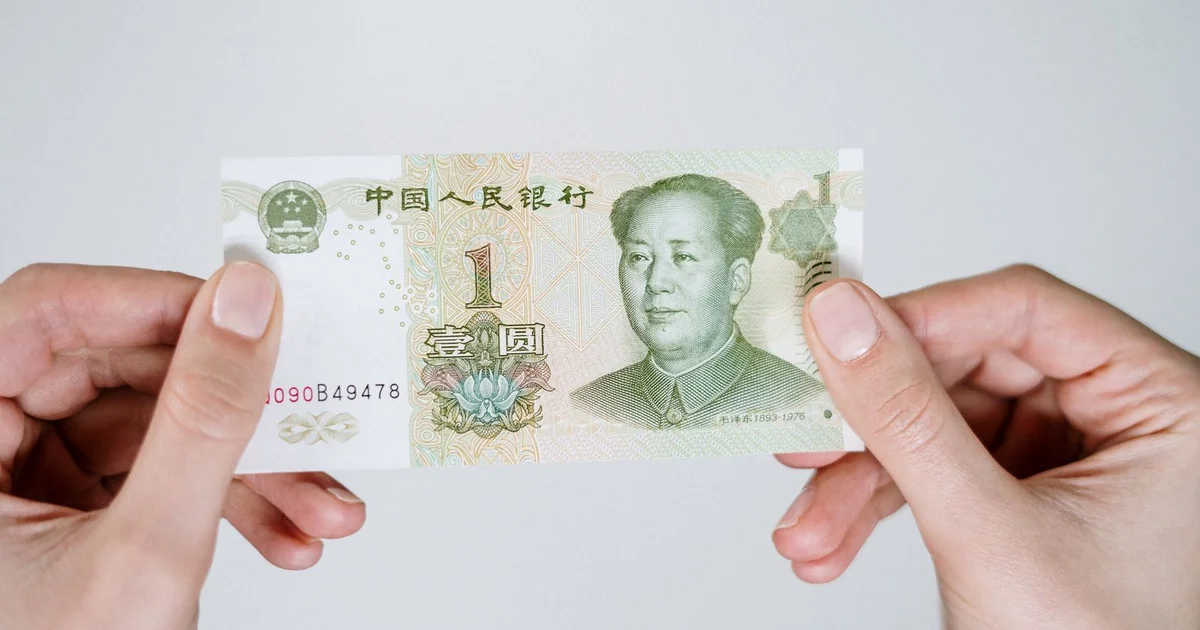
A fresh ICSI cycle in mainland China typically bills 30,000–50,000 yuan in medical fees, with insurance covering part of retrieval, embryo culture and transfer while medication, storage and genetic testing usually remain self-paid.
This guide was compiled by the ProIVF medical editorial team from National Healthcare Security Administration data, provincial insurance documents, verified mainstream reporting and peer-reviewed literature, and reviewed by the ProIVF Medical Advisory Board.
What Does One IVF Cycle Cost in Mainland China in 2026?
Standard IVF costs 20,000–30,000 yuan and ICSI 30,000–50,000 yuan in medical fees, with total outlay typically reaching 35,000–60,000 yuan once tests, drugs and lost work are added, before any insurance rebate.
Three independent sources converge on that range. The reproductive centre at Guangxi Medical University’s First Affiliated Hospital put a transfer cycle at 30,000–40,000 yuan (People’s Daily, 2024); a Shanghai tertiary hospital put average spending at 35,000–40,000 yuan (Yicai, 2025); and Xinhua quoted specialists at “about 30,000 yuan for one ICSI cycle” (Xinhua, 2023).
| Item | Typical range | Covered by insurance |
|---|---|---|
| Couple screening before treatment | 3,000–6,000 yuan | Some tests |
| Ovarian stimulation medication | 5,000–15,000 yuan | Mostly self-paid |
| Retrieval with anaesthesia | 5,000–9,000 yuan | Covered in most provinces |
| Embryo culture and transfer | 8,000–15,000 yuan | Covered in most provinces |
| ICSI surcharge | 3,000–6,000 yuan | Covered in most provinces |
| Embryo freezing and storage | 2,000–4,000 yuan per year | Mostly self-paid |
| PGT testing | 15,000–30,000 yuan | Usually self-paid |
| Travel, lodging and lost work | 3,000–10,000 yuan | Not covered |
Line-item prices above are commonly observed ranges from 2025–2026 public hospital price lists and patient bills, not government-set tariffs. The table also shows where quotes mislead: the “30,000 yuan” headline usually covers procedures and laboratory work only, not drugs, storage or PGT.
What Do IVF, ICSI and PGT Cost?
Standard IVF runs 20,000–30,000 yuan, ICSI 30,000–50,000 yuan, and PGT 50,000–80,000 yuan.
People’s Daily Health Client reported those tiers when Beijing added ART to insurance: about 20,000–30,000 yuan for standard IVF in tubal factor, 30,000–50,000 yuan for ICSI in male factor, and 50,000–80,000 yuan for PGT because of embryo culture and genetic testing (People’s Daily Health Client, 2023).
| Technique | Total per cycle | What the extra money buys |
|---|---|---|
| IVF | 20,000–30,000 yuan | — |
| ICSI | 30,000–50,000 yuan | Micromanipulation, consumables, embryologist time |
| PGT | 50,000–80,000 yuan | Biopsy, genetic testing billed per embryo, frozen transfer |
PGT’s premium is not only the test itself but the calendar: results take two to four weeks, fresh transfer is usually impossible, and a separate frozen transfer adds cost and travel. Because testing is billed per biopsied embryo, high responders see the bill climb fastest.
Which Items Does Insurance Actually Cover?
Insurance covers therapeutic ART services — mostly procedures and laboratory work — not most medication or storage.
Start dates differ by province — Beijing opened in July 2023 and Guangxi in November 2023 — but by 2025 every province covered items such as egg retrieval and embryo culture. In 2025 the scheme recorded 3.24 million treatment visits benefiting 1.60 million people (Xinhua, 2026). In May 2025 the National Healthcare Security Administration said all 31 provinces and the Xinjiang Production and Construction Corps had joined, benefiting more than one million people (Xinhua, 2025).
| Region | Included since | Items | Reimbursement |
|---|---|---|---|
| Beijing | July 2023 | 16 therapeutic items | Outpatient Class A, at the outpatient ratio |
| Guangxi | November 2023 | Selected therapeutic items | 70% employees, 50% residents, no deductible, two cycles |
| Shanghai | 2024 | Selected therapeutic items | 7,000–10,000 yuan out of pocket, 70%–85% covered |
In June 2023 the National Healthcare Security Administration consolidated ART price items into 12 categories; by May 2024, 20 provinces had moved from market pricing to government-guided pricing, and Inner Mongolia’s average price fell 20% (People’s Daily, 2024). Prices are converging across provinces, but reimbursement ratios remain a local fund decision.
“All 31 provinces and the Xinjiang Production and Construction Corps have included assisted reproduction in medical insurance, benefiting more than one million people.” — National Healthcare Security Administration, Xinhua, May 2025
Class A and Class B matter here. Class A items carry no upfront co-payment and are reimbursed directly at the plan ratio; Class B items usually require 10% co-payment before the remainder is reimbursed. The same hospital can bill both.
Why Does One Patient Get 10,000 Yuan Back and Another 3,000?
The gap usually comes down to insurance type, hospital tier, cross-province filing and how much of the bill is self-pay, not the headline ratio.
Seven months into Beijing’s policy, 27,000 employees had been treated at a total cost of 220 million yuan, with 150 million yuan from the fund — roughly two thirds covered and about 2,600 yuan of average out-of-pocket cost (People’s Daily, 2024). Guangxi over a similar period settled 70,200 outpatient visits with an average reimbursement of 58.94%. Same policy family, very different individual outcomes.
- Insurance type: employee schemes generally reimburse more than resident schemes, matching the 70% versus 50% split in Guangxi.
- Hospital tier and designation: non-designated providers cannot settle directly, and some cannot reimburse at all.
- Cross-province filing: unfiled outpatient care outside your home province is reimbursed at a lower ratio, and some items drop out entirely.
- Share of self-pay items: medication, storage and PGT can exceed half the total and do not move with the reimbursement ratio.
So a 10,000 yuan refund and a 3,000 yuan refund are often the same policy applied to different bills. Separate covered from uncovered spend before you compare percentages.
What If the First Cycle Fails?
The cumulative live birth rate after one complete cycle is about 50.7%, and an optimistic 81.4% after four, but cost accumulates with each cycle.
A 2024 meta-analysis in Scientific Reports put the cost at 23,901 yuan per complete cycle and 67,002 yuan per live birth in China; for women aged 20–34 the cost per live birth was 54,165 yuan, rising to 89,935 yuan at 35–49 (Huang et al., Sci Rep, 2024). The 23,901 figure sits below today’s market ranges because it is a modelled complete-cycle cost built from success rates and price inputs, not a hospital quote.
| Scenario | Estimated medical cost | Notes |
|---|---|---|
| One retrieval, one fresh transfer, live birth | 30,000–50,000 yuan | Best case |
| One retrieval, two frozen transfers | 40,000–70,000 yuan | Frozen transfer 6,000–12,000 yuan each |
| Two retrievals, three transfers | 80,000–140,000 yuan | Common after 38 |
| PGT with two retrievals | 100,000–160,000 yuan | Testing billed per embryo |
The “67,000 yuan per live birth” figure is a more honest planning number than “30,000 per cycle” because it absorbs failed cycles. The scenarios above are our arithmetic on the 2025–2026 line items and that meta-analysis, so read them as planning envelopes rather than quotes. Budget for two complete cycles rather than one success.
Public, Private or Abroad?
Public centres sell government-priced care, private clinics sell service and scheduling, and going abroad buys a legal pathway or eligibility.
| Option | Cost per cycle | What you pay a premium for |
|---|---|---|
| Mainland public tertiary hospital | 30,000–50,000 yuan | No premium; queues and fixed processes |
| Mainland private clinic | 50,000–100,000 yuan | One-to-one service, flexible booking, packages |
| Thailand | about 40,000–80,000 yuan | Chinese-language service; travel and lodging extra |
| United States | USD 12,000–30,000 | Legal pathways, laboratory depth, medication |
For the full international comparison, see the 2026 global IVF cost guide.
One caution on private domestic packages: medication and storage are frequently excluded, so write the exclusions into the contract rather than comparing headline totals. The Thailand and United States figures are indicative package ranges rather than audited averages, so confirm current pricing directly with each clinic. Clinic selection is covered in how to choose an IVF clinic.
Can You Claim Across Provinces?
Yes, but you need to file in advance, and outpatient cross-province settlement is still incomplete.
Yicai reported that some patients travelling to Shanghai could not use their home-province insurance at all, because local policies do not align (Yicai, 2025). Three steps matter: file for out-of-province treatment in your home province, confirm the hospital is a designated cross-province provider, and confirm ART outpatient items are inside direct settlement. Miss one and you may pay in full and claim manually later.
What Do Patients Actually Experience?
The three cases below are composites written to illustrate cost structure; they contain no identifiable information, and the amounts are rounded.
Case 1 — Wuhan, age 31, ICSI, first transfer worked: male factor meant ICSI. Medical fees were 39,000 yuan, medication 7,200 yuan and screening 4,200 yuan. Insurance reimbursed 12,000 yuan across eight items, leaving 38,000 yuan out of pocket. “The most useful line on the statement told me what wasn’t covered. That was clearer than any percentage.”
Case 2 — Xi’an, age 39, PGT-SR, two retrievals: a balanced translocation led to PGT-SR. The first retrieval produced five eggs and no transferable embryo; the second produced nine eggs and two transferable embryos, one of which led to a live birth. Two retrievals plus testing cost 124,000 yuan, insurance paid 11,000, and the couple paid 113,000. His advice: “Ask whether testing is charged per embryo or per cycle, and whether the fee is refunded when no embryo is transferable.”
Case 3 — Shanghai, age 36, one retrieval and two transfers: the fresh transfer failed and the frozen transfer worked. Total cost was 46,000 yuan, insurance reimbursed about 30,000, and she paid 16,000. “The frozen transfer was cheaper than I expected. The first cycle’s medication was the real expense.”
FAQ
Q: What is the cheapest IVF option in mainland China?
Standard IVF is the lowest-cost route at roughly 20,000–30,000 yuan; after provincial insurance, some patients pay under 20,000 yuan in medical fees, excluding travel and lost work.
Q: Does insurance cover IVF in China?
Yes, with limits. By 2025 all provinces covered items such as retrieval and embryo culture, mainly procedures and laboratory work; medication, storage and PGT generally remain self-paid.
Q: Why is PGT so much more expensive?
Embryo biopsy and genetic testing cost 15,000–30,000 yuan, usually billed per embryo. PGT also requires a frozen transfer and a longer timeline, adding 50%–100% to an ICSI cycle.
Q: Is there a limit on how many cycles insurance will cover?
Some provinces do. Guangxi allows 2 reimbursed cycles counted against the annual fund cap; check your local insurance office for the exact number and ceiling.
Q: How much does embryo storage cost per year?
Typically 2,000–4,000 yuan a year, usually outside insurance and renewable annually; confirm the storage and destruction policy before you let the annual fee lapse.
Q: Can you get a refund if IVF fails?
Public hospitals bill per item and do not refund failures: a 30,000–50,000 yuan ICSI bill stands. Some private clinics sell “money-back” packages at higher prices with stricter eligibility, so check the refund ratio, exclusions and embryo disposition terms.
Q: Can you claim IVF costs outside your home province?
Yes, if you complete 3 steps: file for out-of-province treatment, use a designated cross-province provider, and confirm ART outpatient items are inside direct settlement; otherwise you may pay first and claim manually.
What Should You Do Next?
Get an itemised quote, split it into covered and uncovered columns, and only then calculate the percentage.
If you are still choosing, put public, private and overseas quotes in one table and compare total out-of-pocket cost rather than headline prices. ProIVF lists clinics by country and city with cost ranges, success rates and language support (browse clinics). If you already have a quote and want to check whether an item is covered, walk through it with us via contact.
This article is general education, not individual medical or insurance advice. Provincial catalogues, ratios and prices change; confirm with the hospital insurance office and your local medical insurance bureau before paying.
On how this article was produced: the topic came from readers repeatedly asking what mainland China reimburses, and the figures come from National Healthcare Security Administration and provincial documents, verified People’s Daily and Xinhua reporting, Yicai’s hospital interviews and a peer-reviewed cost meta-analysis. Each figure is tied to a year and a place, and no medical-tourism agency quote was used as a source. The text was cross-checked by the ProIVF medical editorial team and reviewed by the ProIVF Medical Advisory Board; author and reviewer details are on our about page.
Last updated: 24 November 2026