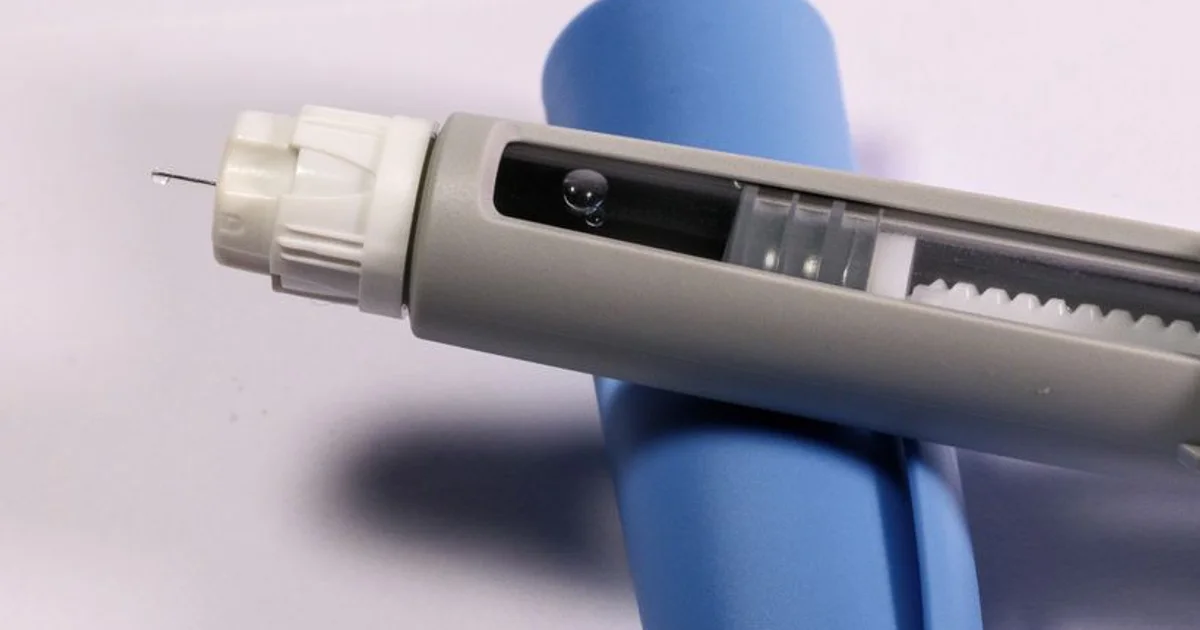
Ozempic is not a fertility drug: no trial has shown that semaglutide raises live birth, and its label tells women to stop at least 2 months before a planned pregnancy. What it can do is produce enough weight loss to restore ovulation in some women with obesity or PCOS.
This guide was prepared by the ProIVF medical editorial team from the 2026 reviews, randomized trials and meta-analyses cited below, and reviewed by the ProIVF Medical Advisory Board. It separates the metabolic effect from the fertility effect and marks where the evidence stops.
Does Ozempic improve fertility?
Only indirectly, and only in some women.
GLP-1 receptor agonists do not act directly on the ovary or the uterus. They change appetite, insulin signalling and body weight, and they may also influence the hypothalamic-pituitary-ovarian axis, so fertility sometimes follows.
What GLP-1 drugs actually do
Semaglutide mimics glucagon-like peptide-1, a gut hormone that slows gastric emptying and increases satiety. Tirzepatide adds a second incretin signal, GIP, and produces greater average weight loss than semaglutide in trials.
Neither drug is licensed to treat infertility. Both are licensed for type 2 diabetes, and semaglutide and tirzepatide are also licensed for weight management in adults with obesity or overweight with a weight-related condition.
Why weight loss can restore ovulation
Obesity and insulin resistance push the ovary toward excess androgen production and irregular or absent ovulation. Losing weight improves insulin sensitivity, lowers testosterone and can bring back regular cycles.
In women with PCOS, a 2026 review by Porterfield and colleagues notes that GLP-1 receptor agonists improve insulin resistance and androgen profiles and may improve menstrual regularity. That is a mechanism, not proof of a baby.
What the randomized evidence shows
The most relevant randomized synthesis comes from a 2026 meta-analysis of three randomized trials that compared GLP-1-based treatment with metformin alone in 252 women with PCOS.
| Outcome | Effect (95% CI) | What it means |
|---|---|---|
| Natural pregnancy | OR 3.10 (1.74–5.49) | A real signal, but from a small evidence base |
| Overall pregnancy | OR 1.41 (0.81–2.45) | Not statistically significant |
| IVF pregnancy | OR 1.01 (0.36–2.85) | No effect detected |
| Live birth | Not reliably pooled | Trials were not powered for it |
Read the first row with caution: 252 women is a small evidence base, and the comparator was metformin rather than placebo.
“Evidence regarding fertility outcomes and pregnancy safety remains limited.” — Porterfield et al., Endocrinology and Metabolism Clinics of North America, 2026
How much weight do these drugs actually produce?
Enough to change metabolism: about 15% of body weight with semaglutide and about 21% with tirzepatide in the pivotal trials.
Semaglutide: 14.9% at 68 weeks
The STEP 1 trial randomized 1,961 adults with overweight or obesity to weekly semaglutide 2.4 mg or placebo. Mean weight loss was 14.9% with semaglutide and 2.4% with placebo at 68 weeks.
Tirzepatide: 20.9% at 72 weeks
SURMOUNT-1 randomized 2,539 adults and reported 20.9% weight loss at the 15 mg dose after 72 weeks, compared with 3.1% on placebo. The two trials used different populations, so do not read the numbers as a direct comparison.
What happens when you stop
Weight regain is the rule rather than the exception, according to a 2026 systematic review of withdrawal studies. That matters for fertility planning, because the metabolic benefit that restored ovulation can fade within months of stopping.
Does Ozempic affect IVF success?
No trial has been designed to test GLP-1 drugs as an IVF adjunct, and the only pooled randomized comparison detected no effect on IVF pregnancy, with a confidence interval wide enough to include both benefit and harm.
What we know about obesity and IVF
Obesity is associated with lower live birth, higher miscarriage and more cycle cancellation, according to a 2025 systematic review of IVF outcomes in Cureus. The intuitive fix is to lose weight first, but the randomized evidence is less tidy.
A 2024 meta-analysis in Fertility and Sterility pooled 16 randomized trials with 3,588 women. Preconception weight-loss interventions raised the chance of pregnancy (RR 1.24, 95% CI 1.07–1.44) but not live birth (RR 1.19, 95% CI 0.97–1.45).
The same review found no overall change in miscarriage (RR 1.17, 95% CI 0.79–1.74), but in the subgroup of women who went on to fertility treatment, miscarriage was higher in the intervention groups (RR 1.45, 95% CI 1.07–1.96).
That gap is the central paradox of this field: pregnancy rates can improve while the endpoint that matters most does not move.
Men: sperm morphology improved in a 25-man trial
In a 2025 randomized trial of 25 men with obesity, type 2 diabetes and functional hypogonadism, 24 weeks of semaglutide raised morphologically normal sperm from 2% to 4% (p = 0.012) and increased total testosterone. The testosterone-replacement arm instead saw sperm concentration and total count fall.
A 2026 review of GLP-1 drugs and tirzepatide in men seeking fertility found the same pattern: testosterone often rises, semen parameters sometimes improve, and no adequately powered study has tested live birth or natural conception. The authors’ conclusion is blunt: these drugs should be used for metabolic indications, not as male infertility treatment.
What is still unknown
Nobody knows the optimal dose, the ideal duration before transfer, or whether the drug itself adds anything beyond the weight loss it causes. Sperm DNA fragmentation has not been studied in a powered trial.
Is Ozempic safe during pregnancy?
Not recommended. GLP-1 drugs should not be used in pregnancy, and semaglutide’s US label says to stop at least 2 months before a planned pregnancy.
What the label says
The Ozempic prescribing information states that women should discontinue the drug at least 2 months before a planned pregnancy because of the long washout period.
The label also carries a boxed warning about thyroid C-cell tumours seen in rodents with semaglutide, and the drug is contraindicated in people with a personal or family history of medullary thyroid carcinoma or MEN 2.
What observational data show
Two 2026 meta-analyses looked at pregnancies that were already exposed, and both are cautiously reassuring rather than definitive.
| Study | Exposed pregnancies | Key result |
|---|---|---|
| Liu et al., Endocrine Connections, 2026 | 43,577 of 286,599 women | Major malformations RR 1.02 (0.96–1.08) |
| Uysal et al., Scientific Reports, 2026 | More than 40,000 | Any malformation OR 1.11 (0.82–1.51); first-trimester major malformation OR 1.39 (0.73–2.65) |
Uysal’s group also found a urinary malformation signal (OR 1.24, 95% CI 1.05–1.47) that was based exclusively on unadjusted data, which is what residual confounding looks like rather than a proven drug effect.
What to do if you conceive while taking it
Stop the drug and contact your obstetric team the same week. Do not assume harm, and do not assume safety: a 2026 BJOG review concluded that observational data show no clear safety signal but are too limited to exclude a clinically important risk.
What is an “Ozempic baby”?
An “Ozempic baby” is a social-media label for a pregnancy that happens sooner than expected after starting a GLP-1 drug.
Why unplanned pregnancies happen
Weight loss restores ovulation, and fertility can return before the weight goal is reached. Some women also dismiss nausea and food aversion, both common on these drugs, as side effects rather than signs of pregnancy.
The contraception trap
Most GLP-1 agonists do not significantly change the pharmacokinetics of oral contraceptives, according to the 2026 Porterfield review. Tirzepatide is the exception: it may require backup contraception for 4 weeks after starting and after each dose increase.
Vomiting and diarrhoea can also reduce absorption of any oral pill, so a reliable non-oral method is the safer choice while you are losing weight and not trying to conceive.
What to do before you start treatment
Do a pregnancy test before the first dose, agree a contraception plan, and start 400 micrograms of folic acid daily if pregnancy is possible. If you are already in an IVF queue, tell your clinic that you are starting a GLP-1 drug.
Who should consider GLP-1 before IVF?
The best candidates are women with obesity and PCOS or insulin resistance, irregular ovulation, and enough time to lose weight before treatment.
| Situation | Reasonable to discuss | Notes |
|---|---|---|
| BMI ≥ 30 with PCOS and irregular cycles | Yes | The strongest signal is for spontaneous conception |
| BMI 27–29.9 with metabolic risk | Sometimes | Treat the metabolic problem, not the fertility label |
| Normal BMI and unexplained infertility | No | No evidence of benefit, and real side effects |
| Planning a frozen embryo transfer within 8 weeks | Not yet | The label requires a 2-month washout before pregnancy |
| Personal or family history of medullary thyroid cancer | No | Contraindicated |
A realistic timeline
Allow 3–6 months for weight loss, then stop the drug at least 2 months before a transfer or before trying to conceive. That adds up to roughly 5–8 months from the first injection to a safe transfer window.
What it does not replace
GLP-1 treatment does not replace a fertility workup, a semen analysis, a tubal assessment, or a clear indication for IVF. It also does not fix age-related egg quality, which becomes the dominant factor in IVF success in the late 30s and 40s.
What these decisions look like in three typical scenarios
The cases below are composites drawn from typical clinic patterns, not identifiable patients. Names and some details have been changed, and the prices are illustrative rather than audited bills.
”The doctor said fix the metabolism first”
A 32-year-old in Shenzhen with PCOS, a BMI of 34 and three years of trying started semaglutide after her endocrinologist refused to refer her straight to IVF. She lost 11 kg over six months, her cycles became regular, and she conceived spontaneously in month eight.
The drug cost about ¥18,000 out of pocket. “Nobody told me this was a fertility drug,” she said. “My doctor said the metabolism had to be fixed first."
"Two failed transfers, then a different starting point”
A 36-year-old in Manchester had two failed IVF cycles and a BMI of 38. She started tirzepatide, lost 15 kg over nine months, and stopped it two months before a frozen transfer.
She transferred one euploid embryo and delivered at 39 weeks. The drug cost about £2,400, and the transfer cycle about £4,200. “The first two cycles were me trying to force a pregnancy on a body that was not ready,” she said.
”The sperm report changed before the IVF decision”
A 38-year-old in Toronto had 2% normal morphology, a BMI of 36 and a total testosterone at the low end of normal. Six months of semaglutide raised morphology to 4% and testosterone into the mid-normal range.
His partner conceived spontaneously after 14 months. The drug cost about CAD 1,800. “We were about to pay for ICSI,” he said. “We spent it on a year of walking instead.”
Frequently Asked Questions (FAQ)
Q: Can Ozempic help me get pregnant?
It can help indirectly if excess weight or insulin resistance is preventing ovulation. In a small PCOS meta-analysis, the randomized signal was for spontaneous pregnancy versus metformin (OR 3.10), not for IVF (OR 1.01).
Q: How long before pregnancy should I stop semaglutide?
At least 2 months before a planned pregnancy, according to the US label. That is a washout rule based on the drug’s long half-life, not a sign that the drug is proven harmful.
Q: Does Ozempic improve IVF success rates?
No trial has shown that. The only pooled randomized comparison detected no effect on IVF pregnancy (OR 1.01, 95% CI 0.36–2.85), a range wide enough to include meaningful benefit or harm.
Q: Can men take Ozempic to improve sperm?
There is a signal, not a treatment. In 25 men, 24 weeks of semaglutide raised normal morphology from 2% to 4% and total testosterone, but no powered study has tested fatherhood.
Q: Is it safe if I get pregnant while taking Ozempic?
Observational data are reassuring but not conclusive: major malformations RR 1.02 in 43,577 exposed pregnancies. Stop the drug and speak to your obstetric team promptly.
Q: Does Ozempic make birth control less effective?
Semaglutide does not significantly change oral contraceptive levels. Tirzepatide may require backup contraception for 4 weeks after starting and after each dose increase, and vomiting or diarrhoea can reduce absorption of any oral pill.
Q: Will I regain the weight after stopping?
Usually yes, at least partly. A 2026 systematic review found weight regain after discontinuation of GLP-1 and dual GIP/GLP-1 drugs, which is why a maintenance plan matters before transfer.
Q: Should I delay IVF to lose weight with Ozempic?
Only if you have time and a metabolic reason. Preconception weight-loss trials, mostly of lifestyle programmes rather than GLP-1 drugs, raised pregnancy rates (RR 1.24) without a clear effect on live birth (RR 1.19, 95% CI 0.97–1.45).
How to plan your next step
Start with a metabolic review rather than a prescription: ask for fasting glucose, HbA1c, insulin, lipids, blood pressure and a menstrual history, and bring your IVF timeline to the same appointment.
If PCOS is part of the picture, read PCOS and IVF and how weight changes during IVF before you decide on a drug. For the IVF side, what affects IVF success rates explains which factors are modifiable and which are not, and IVF medications lists the drugs used inside a cycle.
Couples with a male factor should start with male infertility and IVF, because a GLP-1 prescription is not a substitute for a semen analysis. When you are ready to compare clinics, browse the ProIVF hospital directory or contact our editorial team with your timeline.
Medical disclaimer: This article summarises published evidence and does not replace individual medical advice. GLP-1 drugs are prescription medicines with contraindications and side effects; any decision about starting, stopping or timing one around fertility treatment should be made with your own clinician.
How this article was created: The ProIVF medical editorial team reviewed the 2026 systematic reviews and randomized trials cited above, checked each number against the published abstract, and verified the washout statement against the current US prescribing information. The draft was reviewed by the ProIVF Medical Advisory Board before publication. Read more about ProIVF.
Last updated: 9 November 2026.





