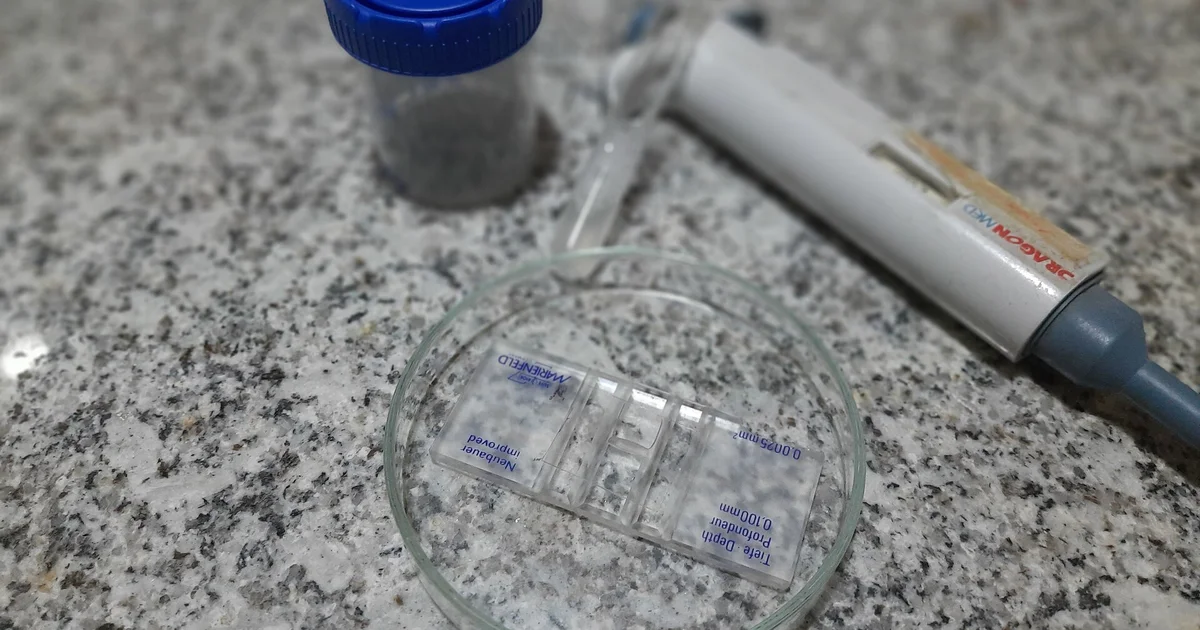
There is no reliable outward sign of high fertility in men: muscle mass, body hair, libido and semen volume do not predict sperm count, and a semen analysis is the only test that does.
This guide was prepared by the ProIVF medical editorial team from WHO reference values, meta-analyses and the AUA/ASRM male infertility guideline, and reviewed by the ProIVF Medical Advisory Board. It separates what people search for from what clinicians actually measure.
Is there such a thing as a “sign” of high fertility in men?
No — fertility is not visible from the outside, and no physical feature has been shown to predict sperm concentration, motility or morphology.
The signs people search for, and why they fail
Most online lists point to broad shoulders, deep voice, high libido, fast beard growth or a large semen volume. None of these is validated: libido reflects testosterone and mood rather than sperm production, and semen volume is mostly seminal fluid from the prostate and seminal vesicles, not sperm.
What fertility actually means for a man
Male fertility is a probability, not a trait: it depends on sperm number, movement and shape, on the partner’s age, and on how long the couple has been trying. A man can father a child with a low sperm count and fail with a normal one, which is why one semen analysis is a starting point rather than a verdict.
What does a semen analysis actually measure?
A semen analysis measures six WHO parameters, and the 6th edition (2021) sets the lower reference limits used by most laboratories.
| Parameter | WHO 6th edition lower limit |
|---|---|
| Semen volume | 1.4 mL |
| Sperm concentration | 16 million per mL |
| Total sperm number | 39 million per ejaculate |
| Total motility | 42% |
| Progressive motility | 30% |
| Normal morphology | 4% |
The six parameters, in plain language
Volume reflects the accessory glands, concentration and total count reflect sperm production, motility reflects the sperm’s ability to swim, and morphology reflects shape. The WHO laboratory manual sets these thresholds from the fifth percentile of fertile men, so “normal” means “not in the bottom 5%”, not “guaranteed fertile”.
What a normal result does and does not prove
A normal semen analysis makes fatherhood more likely but does not prove it, and an abnormal one does not rule it out. Male factors contribute to roughly half of couples’ infertility — solely in about 20% and partly in another 30–40% — so a normal male result shifts attention but does not close the file.
Which factors actually change sperm quality?
Age, smoking, body weight, heat exposure and varicocele are the factors with the most consistent evidence, and their effects are measured in millions of sperm rather than in appearances.
| Factor | Measured effect | Source |
|---|---|---|
| Age | Declines in volume, motility, morphology and DNA integrity; concentration does not fall with age | Johnson et al., 2015 |
| Smoking | Sperm count −9.72 million/mL; motility −3.48%; normal morphology −1.37% | Sharma et al., 2016 |
| Obesity | Total sperm number −19.56 million; progressive motility −5.95% | Li et al., 2024 |
| Heat anomalies | Lower concentration and motile count across 33,234 men | Xiao et al., 2024 |
| Varicocele repair | Concentration +12.32 million/mL; total motility +10.86% | Baazeem et al., 2011 |
Does age matter for men?
Yes, but differently from women. A meta-analysis of 90 studies and 93,839 men found that semen volume, total and progressive motility, normal morphology and DNA integrity all decline with age, while sperm concentration does not.
“Age-associated declines in semen volume, percentage motility, progressive motility, normal morphology and unfragmented cells were statistically significant.” — Johnson et al., Ageing Research Reviews, 2015
Smoking, weight and heat
The smoking meta-analysis covered 20 studies and 5,865 men, and the effect was larger in heavy smokers and in men already being investigated for infertility. The obesity meta-analysis pooled 50 studies and 71,337 men, and the heat study analysed 78,952 samples from 33,234 donors, finding that unusual heat and cold both reduce sperm quality.
Varicocele: the one structural cause worth examining
A varicocele is a dilated vein in the scrotum, present in roughly 15% of men and more common in those being assessed for infertility. It usually causes no symptoms, which is exactly why it is found on examination rather than by “signs” — and repair raises sperm concentration by about 12 million/mL, although the evidence for spontaneous pregnancy remains inconclusive.
Does a strong body mean strong sperm?
No — gym performance, testosterone levels and sexual function are poor proxies for sperm production, and the three can move in opposite directions.
Muscle, body hair and libido
These traits depend on androgens and genetics, while sperm production depends on the testicles’ ability to produce sperm under the right hormonal and temperature conditions. Men with high testosterone can be azoospermic, and men on testosterone therapy often become infertile because the hormone suppresses sperm production.
The testosterone trap
If a man has low libido or fatigue, the useful step is a proper evaluation, not a testosterone injection bought online. Exogenous testosterone can shut down sperm production, which is why testosterone, hCG and male fertility belong in the same conversation as any fertility plan.
When should a man get tested?
Get a semen analysis after 12 months of unprotected intercourse, or after 6 months if the partner is 35 or older, and immediately if there is a known risk factor.
The 12-month rule and its exceptions
The AUA/ASRM guideline recommends evaluating both partners after 12 months without conception, and earlier when there is a history of testicular surgery, chemotherapy, varicocele, undescended testes or a partner aged 35 or more.
What to do with an abnormal result
Repeat the analysis after 2–4 weeks, because sperm parameters fluctuate, then arrange a review with a reproductive urologist. Reading the report yourself is easier with our guide to how to read a semen analysis, and the treatment options are covered in male-factor infertility and IVF.
Three men, three results
The accounts below are anonymised composites based on patient-reported experiences; names, amounts and some clinical details have been changed.
”I was the fittest I had ever been”
A 34-year-old in Shenzhen trained for a marathon while his wife was investigated for infertility, assuming his fitness ruled out a male factor. His semen analysis showed 8 million/mL with 25% motility, and a varicocele was found on examination; after microsurgical repair and three months of follow-up, his concentration rose to 22 million/mL and the couple conceived in the next cycle without IVF.
”My testosterone was great, my sperm count was zero”
A 38-year-old in Manchester had used testosterone gel for two years for low energy, bought after an online consultation. His first semen analysis showed azoospermia; he stopped the gel with his endocrinologist, and sperm returned after seven months, which allowed a single ICSI cycle costing about £6,000.
”Everything looked normal, and it still took two years”
A 31-year-old in Toronto had a normal semen analysis (54 million/mL, 55% motility, 6% normal forms) and was told there was “no male factor”. The couple’s infertility remained unexplained and they moved to IVF after 18 months; he now describes the normal result as “reassuring and completely unhelpful at the same time”.
Frequently Asked Questions (FAQ)
Q: Can you tell if a man is fertile by looking at him?
No. There is no validated physical sign, and the only reliable test is a semen analysis with WHO 6th edition thresholds such as 16 million/mL and 42% total motility.
Q: Does a high sex drive mean high fertility?
No. Libido is driven mainly by testosterone and psychological factors, while fertility depends on sperm number, motility and morphology — a man can have a normal sex drive with a count of 5 million/mL, or a low one with 60 million/mL.
Q: Does semen volume indicate sperm count?
Not reliably. Volume comes mostly from the prostate and seminal vesicles, and a man with 5 mL of semen can still have a low concentration, which is why concentration is reported separately.
Q: How much does smoking reduce sperm quality?
About 9.72 million/mL in concentration, 3.48 percentage points in motility and 1.37 in normal morphology, based on 20 studies and 5,865 men.
Q: Does losing weight improve sperm?
The evidence points that way: obesity is associated with 19.56 million fewer total sperm and 5.95% lower progressive motility, and weight-loss studies suggest partial recovery after sustained loss.
Q: Can a varicocele be fixed?
Yes. Microsurgical repair raises concentration by roughly 12.32 million/mL and total motility by 10.86%, although the effect on spontaneous pregnancy is still debated.
Q: How often should a semen analysis be repeated?
Repeat after 2–4 weeks if the first result is abnormal, because sperm parameters vary; a single abnormal sample is not a diagnosis.
Q: Is a normal semen analysis enough to stop worrying?
No. It raises the chance of conception but does not guarantee it, and because male factors contribute to about 50% of couples’ infertility, a normal result still needs to be read alongside your partner’s evaluation.
How to plan your fertility check
Book a semen analysis before you buy supplements, and bring the report to a clinician who can examine for varicocele rather than interpret it in isolation.
To go deeper, read what sperm looks like, sperm morphology explained and low sperm motility; couples preparing for treatment can start with how to read a semen analysis and the semen analysis in IVF guide. If you are comparing clinics with andrology laboratories, browse the ProIVF hospital directory or contact our editorial team for help reading a report.
Medical disclaimer: This article summarises published evidence and does not replace individual medical advice. Semen analysis results must be interpreted by a clinician alongside your history, examination and your partner’s evaluation.
How this article was created: The ProIVF medical editorial team reviewed the WHO 6th edition reference values, the AUA/ASRM male infertility guideline and the meta-analyses cited above, then checked every number against the published abstracts. The draft was reviewed by the ProIVF Medical Advisory Board before publication. Read more about ProIVF.
Last updated: 8 November 2026.





